


100 years of David Attenborough, 70 years of an unmatched career in science communication. He is the world’s most recognised and influential voice on nature and the environment. Many of today’s environmental public policies are issues Attenborough has been warning us about for decades. Yet, as highlighted in a recent Financial Times article observing the centenary of the man long recognised as “Sir”, Attenborough has always known how to communicate with audiences – unsurprising, perhaps, given his background as a BBC executive. Through this, he built a relationship of trust with the public, without relying on an overtly political message, but instead delivering urgent warnings about biodiversity protection, global warming, and other activities harmful to the environment and nature.
There were other globally renowned science communicators in the second half of the 20th century, such as the French oceanographer Jacques Cousteau or the American cosmologist Carl Sagan, but neither lived long enough for their global impact to be compared with that of David Attenborough.
Did this biologist’s science communication have an impact on public policy?
Like any good communicator, Attenborough began by raising awareness among civil society, drawing attention to the extraordinary world of nature and to the growing threats it faces. Yet the impact at the level of public policy seems to have taken far too long to materialise, as biodiversity loss and climate change continue to accelerate. The editorial published by the Financial Times is clear: this cannot be attributed to any personal failing, because no single individual can, alone, dispute the global forces driving ecological decline. Without Attenborough, things might have been even worse. Public intervention is also the result of collective and strategic priorities, in which environmental concerns have only more recently gained prominence.
A few days ago, I finished reading Ian McEwan’s latest novel, and it is almost comical to have done so at the same time as David Attenborough celebrates his 100th birthday. In the book, one of the main characters, Francis Blundy, is a brilliant poet who ridicules his guests for believing in global warming. This part of the story takes place in 2014, at a time when the fallacies repeated by the poet had long since lost any scientific basis. Yet the most ironic aspect is that the novel is a dystopia. While some sections take place in 2014 and even earlier, others unfold in 2119, in a flooded world following an event known as “The Inundation”. The brilliance of McEwan’s book – much like Attenborough’s work – lies in not needing to spell out an explicit moral lesson. Francis Blundy is a fictional climate-change denier; Sir David Attenborough is a naturalist who has spent far too long warning humanity about the consequences of its actions. Today’s world has already vindicated one of them and (spoiler alert!) it is not fiction.
Who is the next David Attenborough?
In an increasingly fragmented political and media landscape, does it still make sense to look for “the next Attenborough”? Or should we divide to conquer? The truth is that science communication is flourishing in Portugal. More scientists are communicating in their own name through digital platforms like Instagram, TikTok and YouTube.
At INESC TEC, we believe the answer lies precisely in this plurality of voices. Not in a single irreplaceable figure, but in a community of researchers, managers and communicators who, each within their own field, make science more accessible, understandable and relevant to society. Of course, Attenborough is, for me, a landmark in science communication. By the time I was born, he had already been around for 63 years. When I began watching his shows on Saturday mornings, I didn’t even know what science communication was. To me, it was a gateway into a natural world I longed to understand better, though one he warned us was under threat. A little over a decade ago, I stopped working in corporate communications and moved into science communication; and I would say it was only then that I realised what he did was exactly what I wanted to do. He did it in his own name; I do it on behalf of an institution that advances science every day. His unmistakable voice has even greater impact when followed by the picture of him emerging from behind a tree in some human-threatened jungle. I may never have a jungle, but I do have an Institute full of stories worth telling, full of science worth explaining, and overflowing with innovation worth sharing.
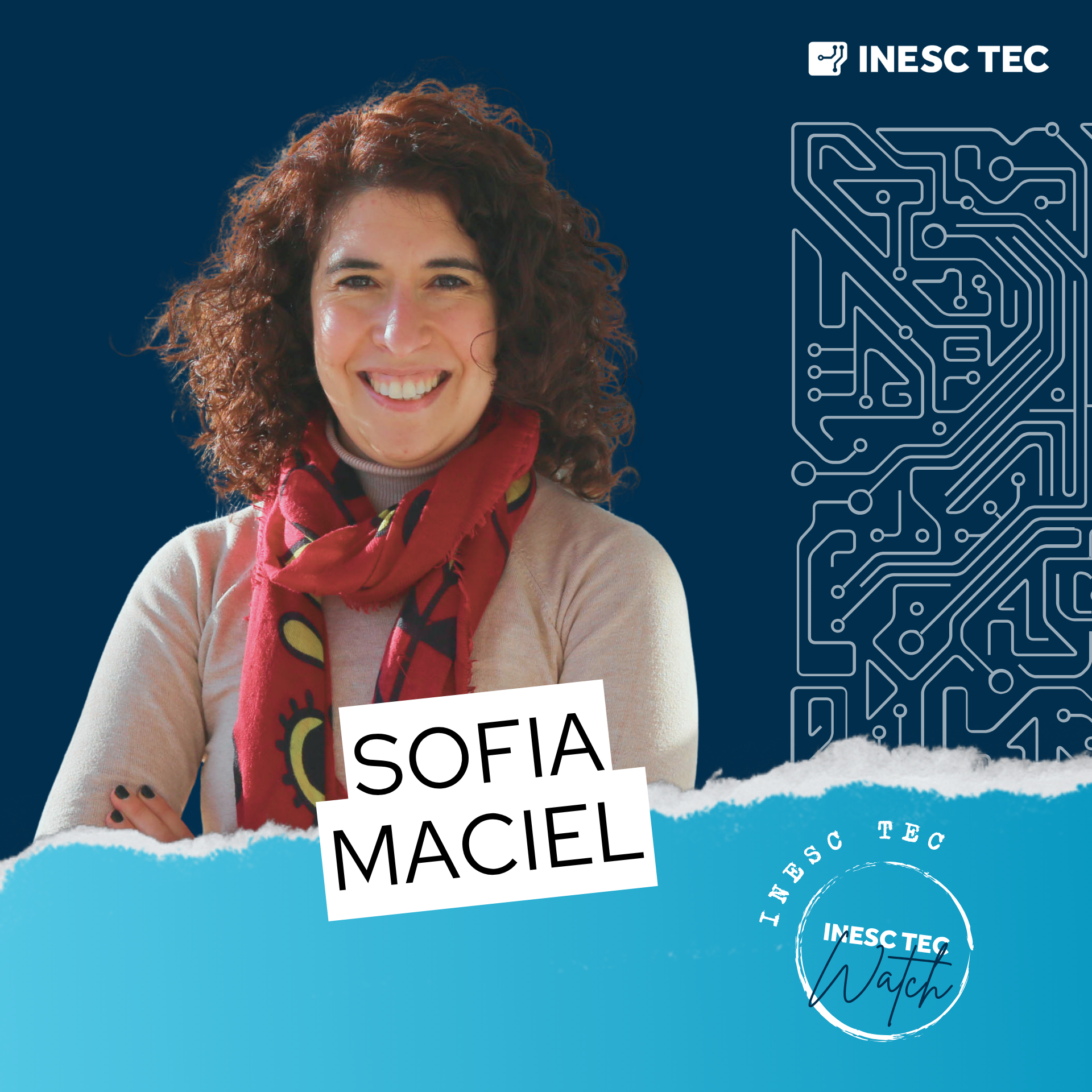
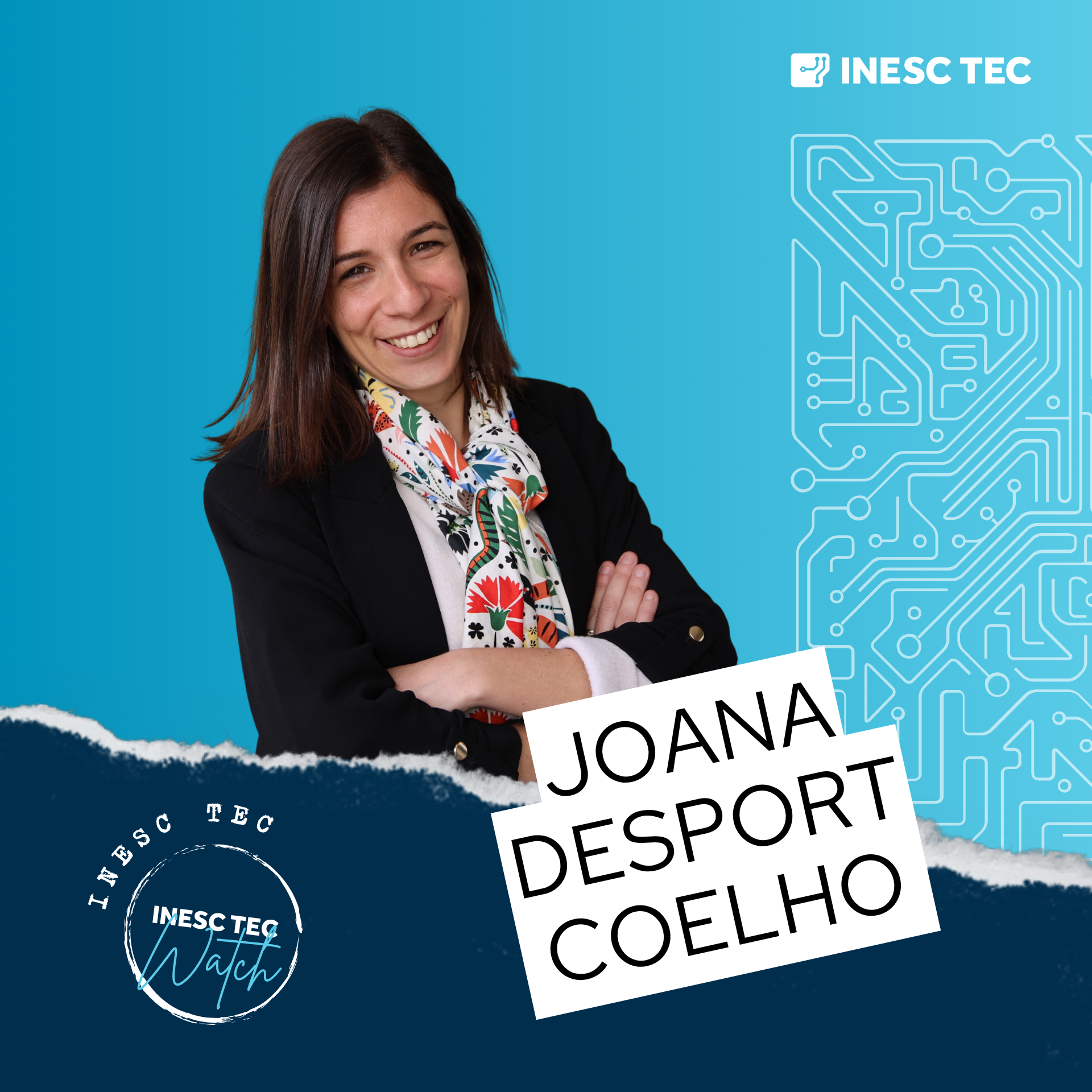
Sofia and I manage a team of science communicators. Some come from communications backgrounds (like the two of us), others from multimedia and design, and we even have a translator to ensure everything we do is bilingual. We try to humanise science. To show the faces of our scientists, share their achievements, communicate scientific progress to society and explain the impact it has on everyday life. We will never be David Attenborough – nor would we dare try it – but we strive for a more informed society, one that believes in science and uses science in the service of sound public policy.
We work in liaisong with other structures within our institution, such as the Office for Foresight and Public Policy, coordinated by another Joana – Joana Almodovar – with whom we speak almost daily.
Science is communicated by a wide range of organisations and profiles within the knowledge-production ecosystem, from Research and Development units to Associate Laboratories; from Technology and Innovation Centres to Collaborative Laboratories. “Within this ecosystem, knowledge is a crucial resource for evidence-based public policy capable of addressing an increasingly fast-changing context,” explained Joana Almodovar.
“More specifically, professionals working in research, technology and communication have significant potential within public policy as knowledge brokers, transmitting priorities to policymakers and raising society’s awareness of critical factors for action. This role of making knowledge available and translating it into contributions for public policy becomes even more relevant as technological, environmental, geopolitical and societal changes grow increasingly disruptive, requiring the best available evidence to inform strategies and instruments,” she continued.
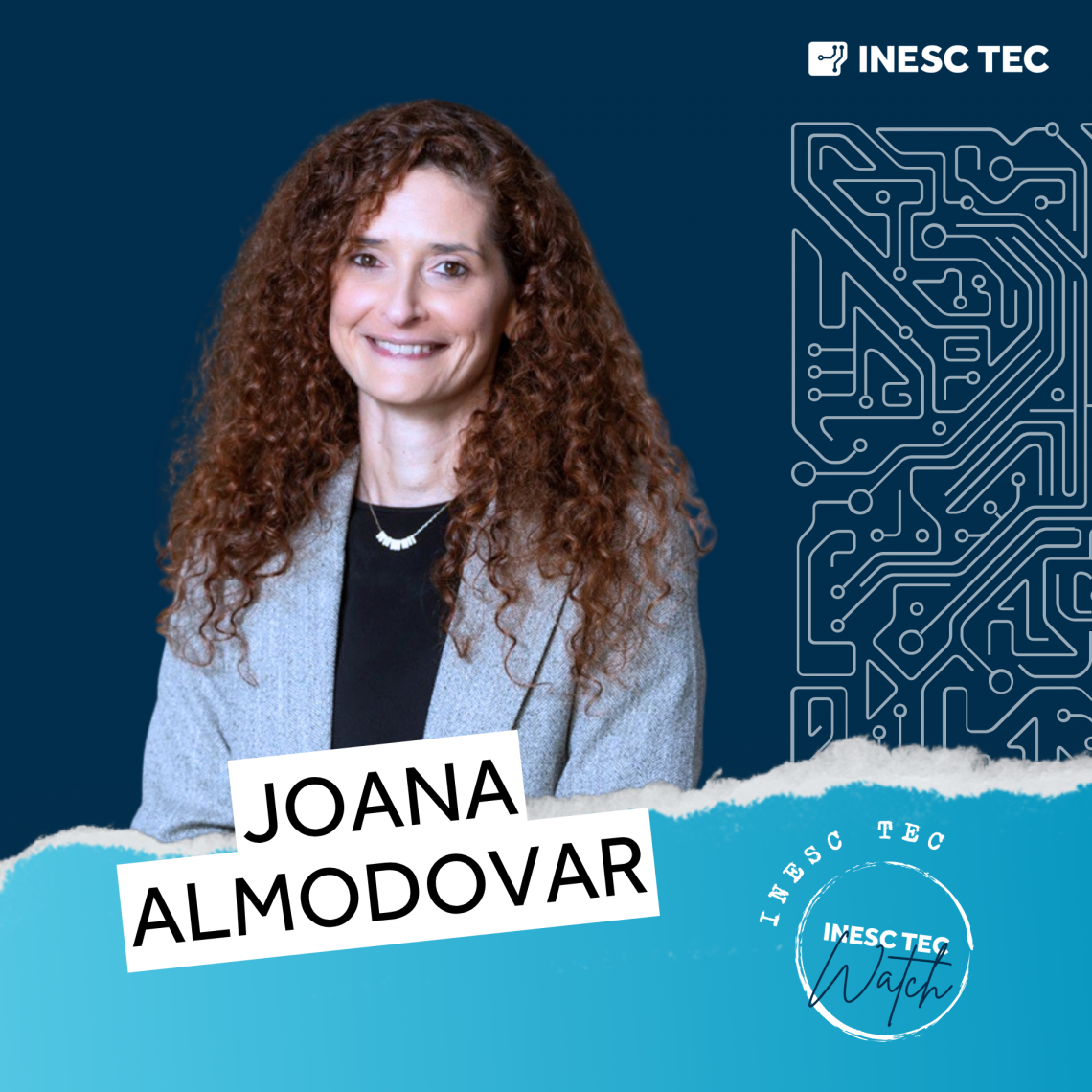
In celebrating Sir David Attenborough’s 100 years on planet Earth, the BBC highlighted, among other qualities of his work, storytelling, joy and devotion. “When translating these qualities into public policy, the emphasis on a narrative directed at target-audiences, the motivation to contribute to the use of knowledge in collective action, and dedication to this cause are essential to producing science with impact,” concluded Joana Almodovar.
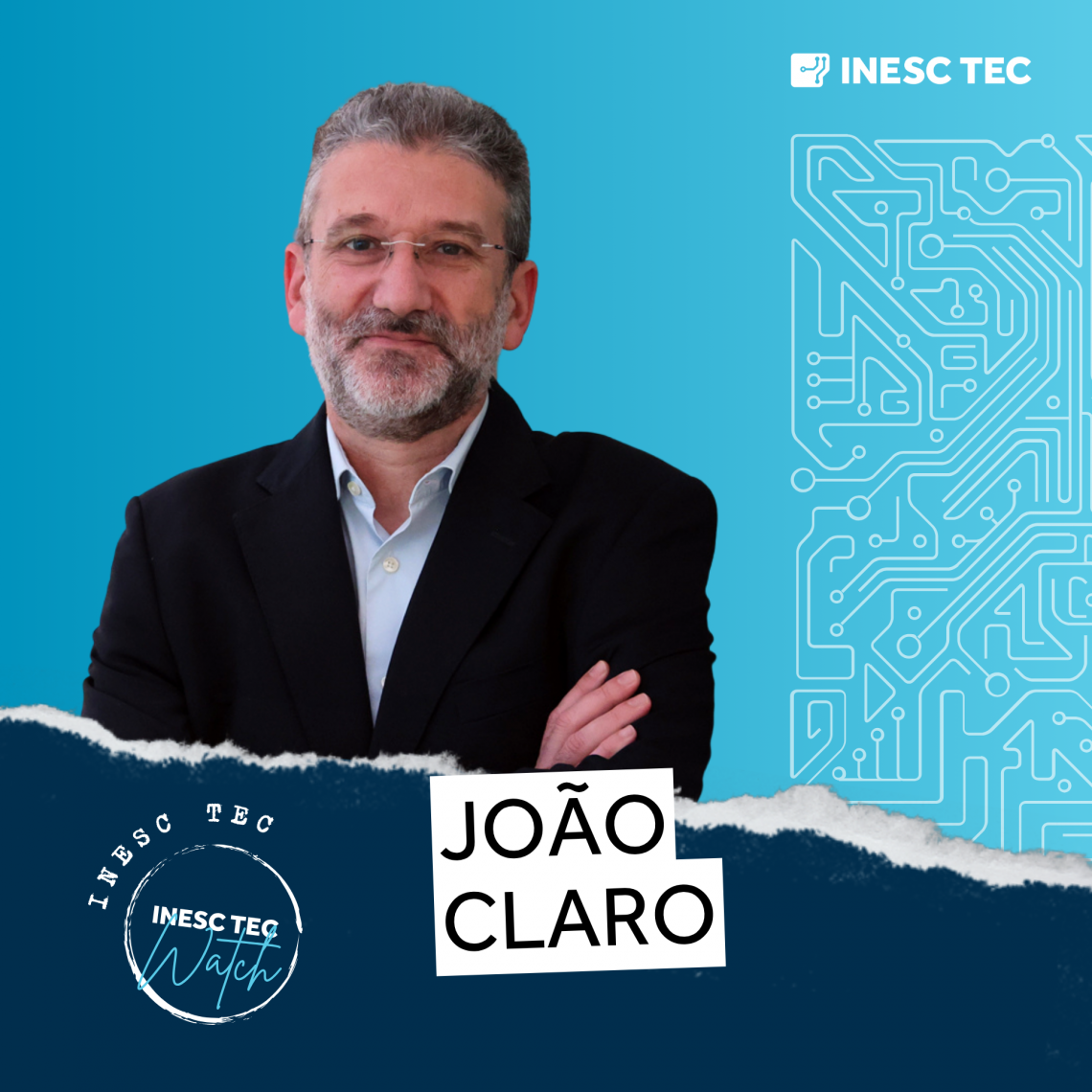
The importance of science communication is also emphasised by the Chairman of INESC TEC, João Claro – who, in the current term of the Institute’s Board of Directors, is also responsible for Communication.
“At INESC TEC, we perceive science communication as a central part of our public responsibility. The flow of information today is intense, fragmented and not always thorough. This requires us to contribute towards ensuring that new scientific knowledge is understandable, contextualised and useful for citizens, policymakers and organisations. In the areas in which we work – from Artificial Intelligence to Power & Energy, from Healthcare to the Ocean, from Robotics to Cybersecurity – science and technology have a direct impact on collective choices and people’s lives. Communicating effectively is an essential part of our mission: to explain clearly, acknowledge complexity, attend to society, strengthen trust and contribute to more informed decisions oriented towards the future,” explained João Claro.
How does one inspire through communication?
We do so in different ways, and we have scientists who are true ambassadors for their fields. But not only that – we also looked at public policy (once again, that “buzzword” whose complementarity with communication is so necessary) and identified where we could have an impact. One such area is STEM. For years, we have tried to inspire girls to pursue fields that lead to scientific careers. We also try to give visibility to our women scientists – those who can inspire younger generations and help undo the stereotype of the male scientist – because anyone can become a scientist, provided they are passionate about what they do.
“In this effort to take science, technology and innovation beyond our doors, our strategy over recent years has been to humanise our communication efforts. What do I mean by this? We want our communication to have a face. In this case, the faces of our people, precisely to deconstruct stereotypes and demystify possible prejudices about what it means to be a scientist, showing that this is a career open to anyone, especially girls and young women. Every year we mark the International Day of Women and Girls in Science. We run campaigns aimed not only at encouraging discussion around this day and prompting society to question why there are still so few women working in STEM fields, but also at showing, through examples, that it is possible to pursue these careers if this is what young women want and aspire to. If this is the future they seek, we will be here one day to help bring their work and achievements to the world,” said Sofia Maciel.
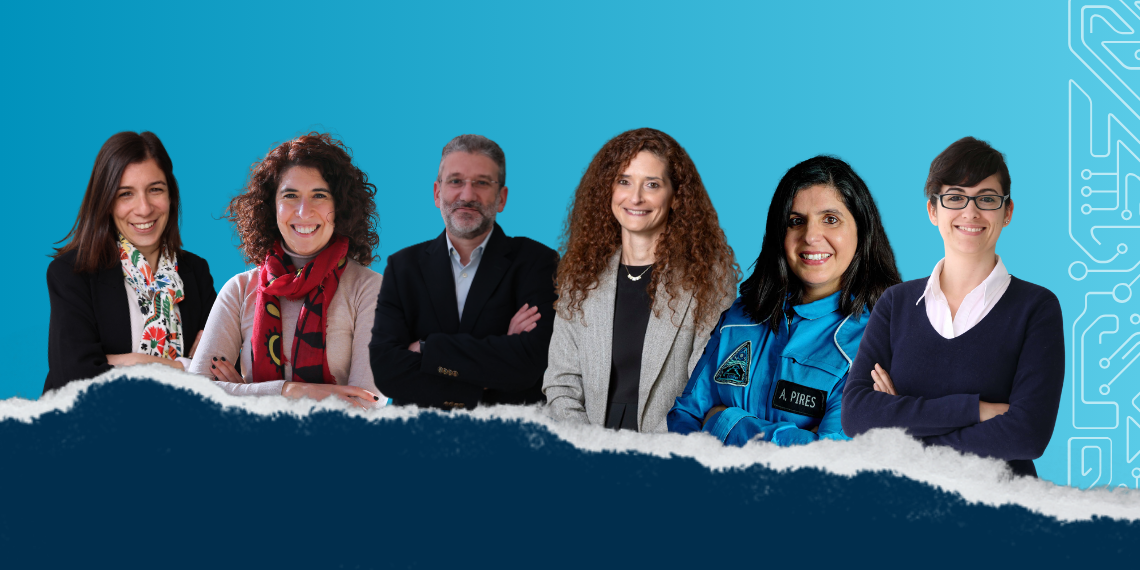
Ana Pires and Diana Guimarães are just two examples among many who remain deeply committed to this mission. The way they embrace not only the challenges we propose, but also (genuinely and proactively) the initiatives they themselves develop, is an act of love for science communication. They are involved in countless activities with younger generations, encouraging them towards scientific fields.
For these two scientists, just as Sir David Attenborough taught us over the course of a century, “you do not protect what you do not love, and you do not love what you do not know”. Ana and Diana believe that “communicating science is this act of love: transforming complexity into fascination”.
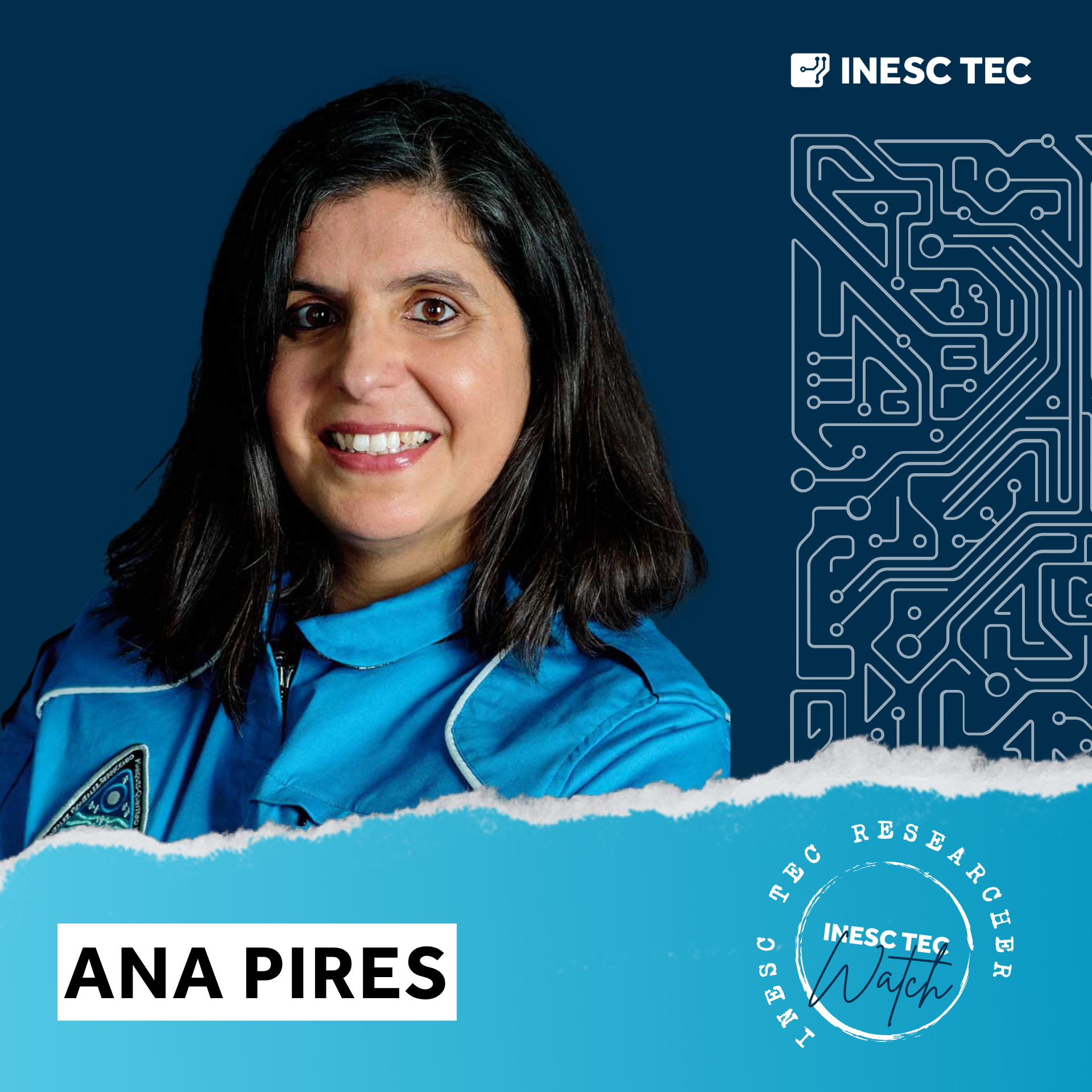
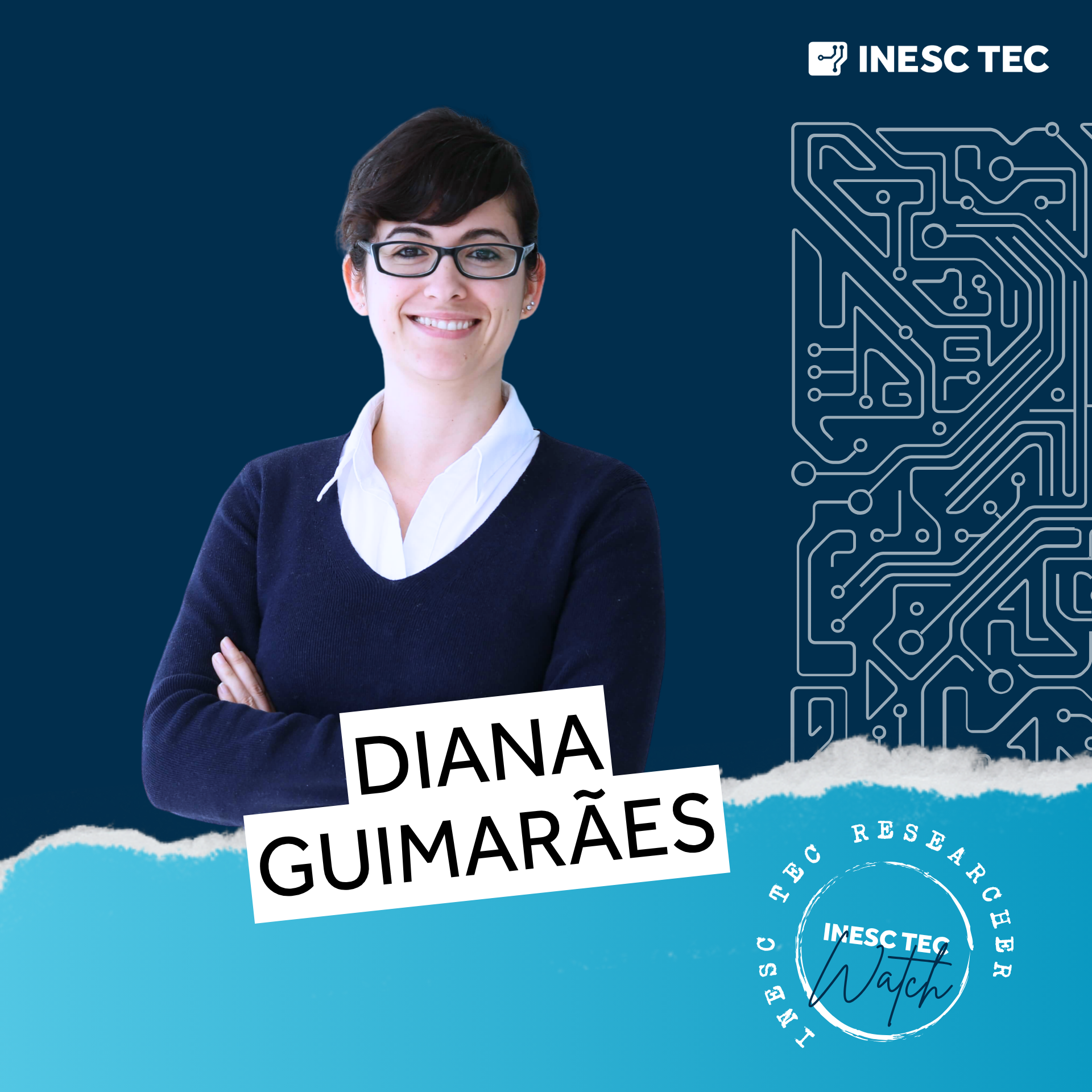
“By taking our place within STEM/STEAM, we want to be the mirror in which tomorrow’s young scientists can already see themselves today, proving that curiosity has no gender and that the future of the planet depends on every voice daring to ask ‘why?’,” the two researchers said.
“Saving the planet is a communication challenge”
It was Sir David Attenborough himself who said it – when, in 2020, he decided to create an Instagram account that obtained more than 1.3 million followers within just a few hours. I checked again six years later: he now has 5.5 million, and I am one of them.
The legacy Attenborough leaves us is proof that communicating science with accuracy, passion and consistency over time can change the way the world sees a problem. At INESC TEC, that commitment is present in the daily work of those who research, those who communicate, and those who transform knowledge into policy recommendations and practical solutions. We do not need a “next” Attenborough. We need to preserve what he represents, what he taught us and – from that – build an army of them.
 News, current topics, curiosities and so much more about INESC TEC and its community!
