


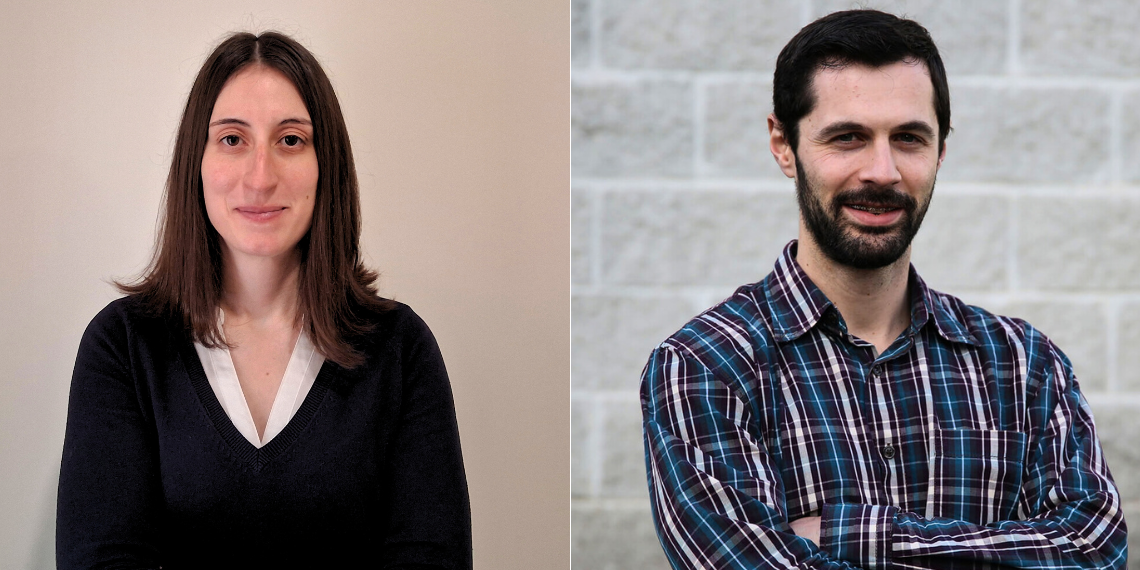
Mariana Cunha
“Mariana Cunha completed her PhD in Computer Science at FCUP, in June 2025 – a period during which she played a leading role in the European project PRIVATEER, with significant scientific, technical and management contributions. In particular, she developed a privacy toolkit that was used to anonymise sensitive information in data streams for anomaly detection in next‑generation networks. This modular tool, which can be easily extended to other types of data, was made available to the community as an open‑source project and can be used for privacy analysis and data anonymisation in different domains. In addition to this technical effort, she contributed several scientific publications warning of location‑privacy risks over wireless networks, while playing an active role in managing the PRIVATEER project, concluded at the end of 2025 – representing INESC TEC at project general assemblies and leading the drafting of one deliverable. We consider this recognition to be fully deserved, given her performance, dedication and contributions to the project during her PhD.”
– CRACS coordinators
Your PhD completion last year was mentioned; could you tell us a little more about the topic you explored, and how you combined this work with the activities at INESC TEC?
In an increasingly digital society, where there is a growing and continuous sharing of data, various challenges have emerged in maintaining and protecting users’ privacy. In this sense, the core theme of my PhD was the analysis of the risks inherent to accessing different types of data, which may be correlated with one another, and the proposal of privacy‑preserving mechanisms. The idea of developing a privacy toolkit stemmed from the need to address the lack of a systematic way to analyse and quantify privacy in different contexts. The fact that this tool is an open‑source, modular and easily extensible project fosters the involvement of the scientific community and acts as an motivation to promote Open Science. Within the scope of activities at INESC TEC, this toolkit has been an enabler for collaboration in projects such as PRIVATEER and for coordination with national and international research teams.
Your participation in the PRIVATEER project was also mentioned; beyond developing a privacy toolkit and drafting a deliverable, what else would you highlight in this project (main results, goals, differentiating factor, etc.)?
The main goal of the PRIVATEER project was to develop security enablers, focusing on privacy for 6G networks. In particular, the project addressed the growing security and privacy challenges in the context of next‑generation networks, embedding privacy principles from the design stage. Given the emerging relevance of Artificial Intelligence (AI), one aspect I would like to highlight in this project is the symbiosis between AI and the protection of security and privacy. As an example, anomaly detection was developed based on AI models, without neglecting privacy and the anonymisation of sensitive information coming from these networks’ data streams. I would also like to underline the diversity of the consortium, with partners from academia and industry, which enabled contact with different realities and contributed to the project’s success. Finally, it’s worth mentioning the Best Booth Award received by PRIVATEER at the EuCNC & 6G Summit conference in 2024, among other international projects.
What challenges did you face – or still face – throughout your activities?
Data have taken on a essential role in our society. On the one hand, we want data to be of the best possible quality so that they remain useful and relevant; on the other hand, it is crucial to protect the privacy and sensitive information that can be inferred from those same data. Thus, striking a balance between privacy and value will always be one of the main challenges in this field.
Which aspects of your job do you enjoy the most?
The possibility of building knowledge and working “on the shoulders of giants” is not only challenging, but also highly motivating. In addition, the freedom that research entails is one of the factors that makes me enjoy this work so much.
How do you comment on this nomination?
It is amazing to know that my work is recognised; I am grateful for this nomination, and I’d like to share it with all the “incredible” people I have met and collaborated with. Lastly, I would like to praise this INESC TEC initiative.
Miguel Melo
“The HUMANISE coordinators would like to nominate Miguel Melo, Associate Professor at the Department of Engineering at UTAD. This nomination stems from his inclusion in the World’s Top 2% Scientists 2025 ranking by Stanford University, promoted in partnership with Elsevier. This list includes and recognises researchers with proven scientific impact at global level, making this recognition particularly noteworthy. It is worth recalling that Miguel Melo has an h‑index of 25, as part of an extensive set of more than 120 publications, with over 2500 citations. In addition, over the last two years (2024 and 2025), he has published 25 papers indexed in Scopus, 13 of which in Q1 journals. This achievement is complemented by the supervision of master’s and PhD theses, as well as participation in several research projects – many of them linked to industry and institutions of social relevance.”
– HUMANISE coordinators
You featured in the World’s Top 2% Scientists 2025 list, promoted by Stanford University and Elsevier; how did you react to this nomination? How important is it, not only professionally, but also on a personal level?
I did not find out immediately, to be honest; I noticed that several Portuguese researchers were on the list and became curious to know who they were. But at the time, I did not have the chance to check the list and ended up forgetting about it. When a colleague told me that I was on the list and congratulated me, I was surprised and, of course, pleased with the news! Recognition is always welcome, but it also increases the responsibility to do more and better!
You are also responsible for supervising theses; is it easy to find a balance between your teaching and research roles? Or do you face challenges?
Our career has this particularity: we must focus on teaching and research, and both dimensions are very demanding. It is not easy at all, because time is always very limited for the volume of work we have, so we must make difficult decisions and learn to say “no” so as not to jeopardise all the work we have in hand due to overload.
Your participation in several (and different) projects was mentioned; is there any you would like to highlight (innovative factor, goals, potential, results and impact, sense of fulfilment or importance for your research career, etc.)?
It is difficult to single out one specific project among the many in which I have taken part or am currently involved! In terms of personal fulfilment, I am particularly pleased to have been involved in setting up the MASSIVE virtual reality laboratory – which has also been an important pillar in my scientific career and in the projects in which I participate. The opportunity to work in different areas – from education, productivity and industry to defence and radionuclear security – and with leading partners (both nationally and internationally) is also something that drives me. In each of these different projects the goal is always to add value.
Which aspects of your job do you enjoy the most?
The possibility of always being in touch with the latest technological advances and helping to create new solutions is something that motivates me, especially when we witness said solutions applied in real‑world settings, with a positive impact on people’s daily lives.
How do you comment on this nomination?
INESC TEC is a leading R&D institution, full of talented people, so I’m proud to be nominated among so many people who are doing amazing things.
 News, current topics, curiosities and so much more about INESC TEC and its community!
