


Portuguese researchers are using laser-induced plasma technology to transform both battery diagnostics and the wood-recycling industry.
What if laser analysis could be integrated into recycling centres, battery factories and waste-treatment facilities? Research led by the Institute for Systems and Computer Engineering, Technology and Science (INESC TEC), recently published in two prestigious scientific journals, presents an innovative and scalable solution to support circular-economy efforts in strategic sectors.
The researchers demonstrate two potentially transformative applications of this technology: battery diagnostics and waste sorting. The key lies in light. Material analysis is performed using optical emission spectroscopy, or LIBS (Laser-Induced Breakdown Spectroscopy), which can detect the elemental composition of a sample.
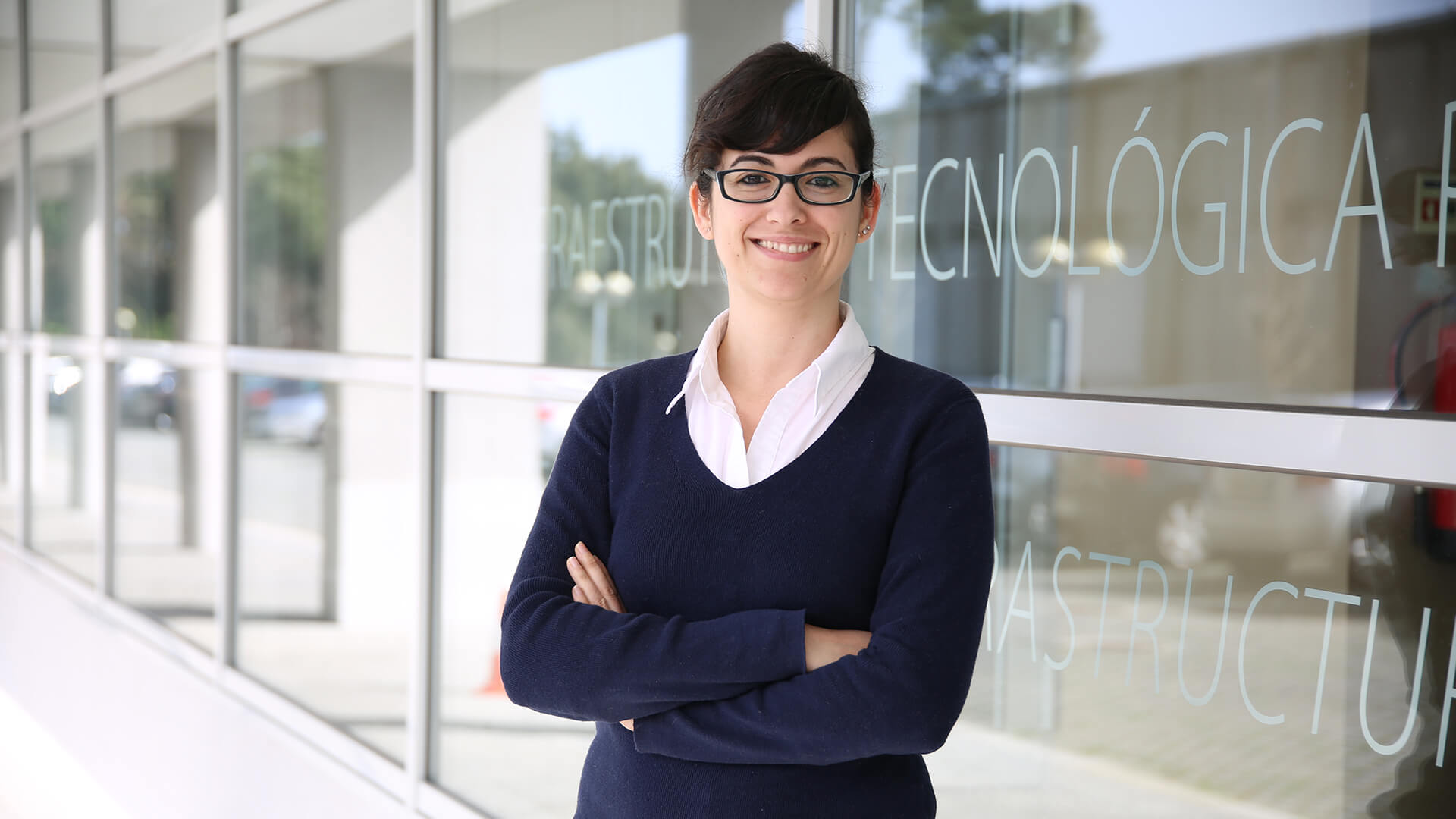
Here is how it works: a high-energy laser pulse is directed at the sample’s surface, vaporising the material and heating it to extremely high temperatures. This disturbance creates plasma. As the plasma cools, the emitted light reveals the sample’s composition, allowing the identification of specific elements. One potential use? Studying battery electrodes to understand lithium behaviour and deposition – something “essential to optimise the performance and safety of next-generation batteries”, explained Diana Guimarães, INESC TEC researcher.
The team applied this technique to the post-mortem study of current collectors from solid-state batteries. The approach enables the monitoring of degradation and the recycling potential of these batteries, and the analysis can begin without any need for complex sample preparation or chemical processing.
“The results may contribute to developing longer-lasting and more sustainable batteries, meeting the goals of the energy transition and electric mobility. Our method provides direct visual evidence of lithium-metal degradation patterns in next-generation battery architectures, enabling faster diagnostics with minimal environmental impact,” said Diana Guimarães, lead author of the study published in the Journal of Power Sources.
With the European Union committed to achieving carbon neutrality by 2050, rechargeable batteries are a key component in reducing dependence on fossil fuels. This study focused specifically on batteries designed without a physical anode – “a particularly demanding configuration”, developed by a research team at the Faculty of Engineering of the University of Porto (FEUP).
The study analysed anode-less solid-state batteries, considered the “next generation” of energy storage due to their increased safety and stability. However, impurities or inconsistencies in electrode layers or in the solid electrolyte can compromise both safety and cell performance.
“Understanding the spatial chemistry of battery failure is crucial for designing safer and longer-lasting devices, and LIBS gives us a fast and scalable way to do that,” summarised the researcher.
The scalable potential of laser-induced plasma technology was also demonstrated in a second study. This time, the researchers developed a simplified LIBS method that not only identifies hazardous elements in recycled wood but also produces intuitive visual outputs. This “eases the integration into real industrial processes and enables faster on-site decision-making,” stressed the INESC TEC researcher.
While the wood-recycling industry is a “good example” of adopting recycled materials – for instance, wood particleboard can contain up to 75% recycled wood – managing and reusing waste remains challenging due to the frequent presence of contaminants like arsenic and cadmium, both classified as carcinogens by the International Agency for Research on Cancer (IARC).
Moreover, quality-control methods are usually applied to the final product rather than during processing. The result? Contaminants are detected too late, and the product ultimately must be discarded. The researchers’ approach can improve decision-making and be extended to industrial sorting processes.
“This work is part of a broader vision we have been developing at INESC TEC, where advanced spectroscopy and spectral imaging are integrated into multimodal instruments for real-time industrial monitoring,” concluded Guimarães.
The study, published in the Journal of Hazardous Materials, was carried out in collaboration with Sonae Arauco, which provided the industrial context and material samples for testing.
Article corrected at 2:53 p.m. on 3 February: wood particleboard can contain up to 75% recycled wood, not plywood, as previously stated.
 News, current topics, curiosities and so much more about INESC TEC and its community!
