


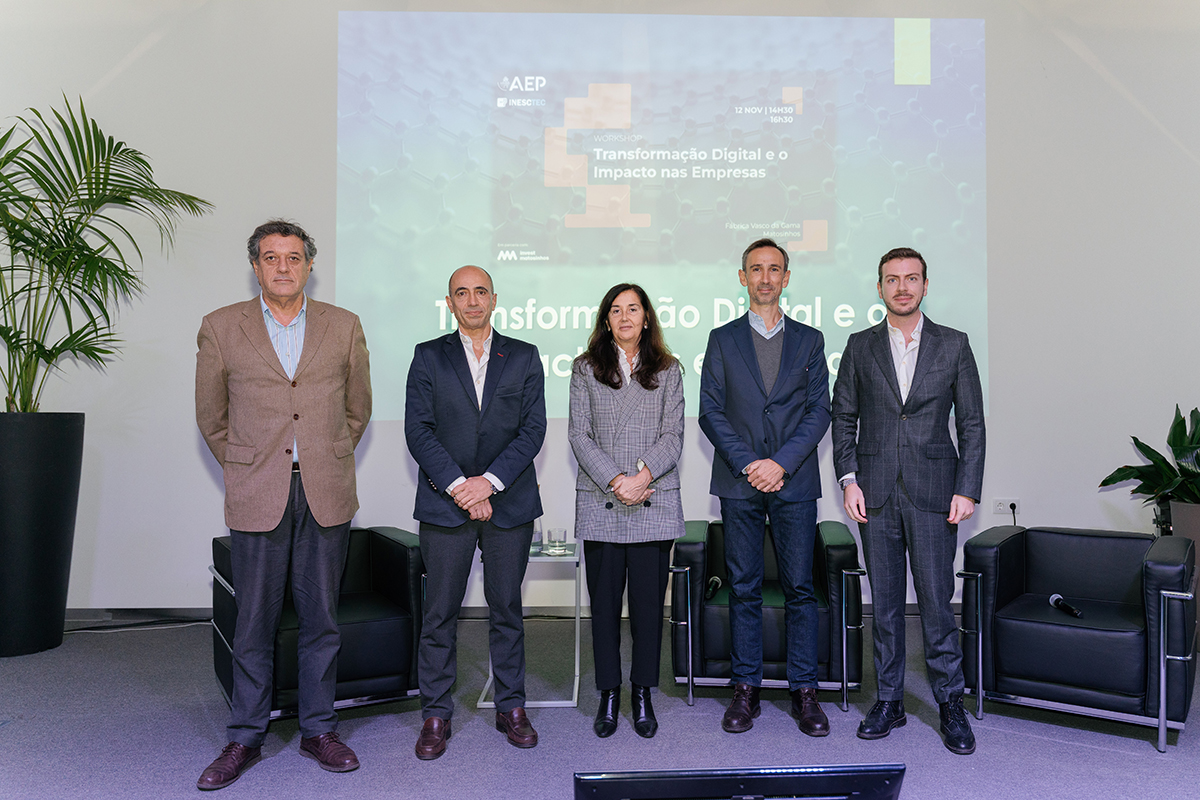
When it comes to the digital transformation of Small and Medium-sized Enterprises (SMEs), the risk is that an (often) endless list of questions becomes a barrier that prevents action from even starting: Where to begin? How much will it cost? How long will it take to see results? Is it worth it?
The answers are not always within everyone’s reach. The Municipality of Matosinhos, Matosinhos Invest and AEP – the Portuguese Business Association – promoted a set of initiatives as part of the fourth edition of the Mês das Empresas. INESC TEC was responsible for providing answers and helping to overcome difficulties through a workshop that explored digital transformation and the impact on companies.
According to Rui Rebelo, a researcher at INESC TEC in the field of Enterprise Systems Engineering, the relevance of the topic is unquestionable. “Digital transformation has become a decisive factor for business competitiveness, and SMEs today face demanding challenges: global competition, new business models, the need for fast decision-making and a lack of specialised resources.”
The path from theory to practice can be complex and discouraging; to address this, the workshop focused on helping SMEs understand how digitalisation and Artificial Intelligence can increase efficiency, improve decision-making, unlock new markets and strengthen organisational resilience.
“The main objective was to show, in a practical and realistic way, how to begin the digital transformation journey,” explained the researcher.
In Portugal, the “picture” of digitalisation is no longer black and white. Rui Rebelo stated that “most Portuguese companies have already taken some steps towards digitalisation, reaching the first levels of digital maturity, namely computerisation and connectivity”. Despite this progress, many SMEs are still far from fully exploiting their data and AI capabilities, and “important challenges remain, such as a lack of digital skills, investment constraints and work models that are still poorly adapted to new technologies,” he added.
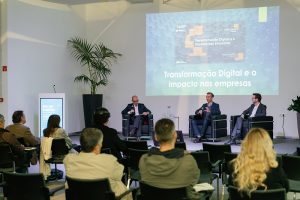
The workshop focused on benefits like productivity, business growth and increased efficiency, while also highlighting how technology can help companies respond more quickly and make informed decisions by using data, automation and AI tools.
In fact, INESC TEC aimed to convey several key ideas: “Digital transformation only works with a strategy; without a clear roadmap, investment loses focus and impact. Technology should serve people, not the other way around; skills, culture and change management are just as important as tools. SMEs today have a real opportunity to become more agile, efficient and future-ready by taking advantage of technologies that are increasingly accessible.”
While initiatives like this one act as strong drivers for change and innovation in support of businesses, they also allow INESC TEC to “get closer to companies, better understand their real challenges; share knowledge and research results, turning science into impactful solutions; inspire new partnerships, innovation projects and practical applications of emerging technologies; and strengthen the role as an interface between academia, technology and the economy,” Rui Rebelo recalled.
The researcher also mentioned that “these initiatives directly contribute to INESC TEC’s mission of creating a smarter, more sustainable and more competitive economy.”
The researcher mentioned in this news piece is associated with INESC TEC
 News, current topics, curiosities and so much more about INESC TEC and its community!
