


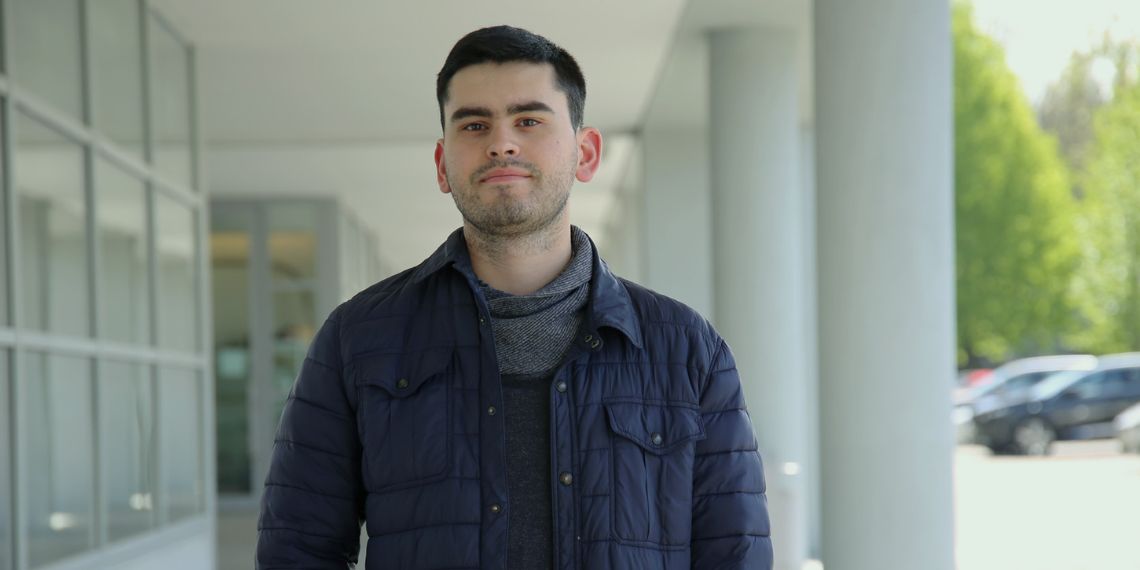
It is now possible to plan surgeries with greater detail and accuracy with the support of intelligent algorithms. One such example is the work developed by Ricardo Ferreira, INESC TEC researcher, who recently received the Best Student Paper Award at the 25th International Conference on BioInformatics and BioEngineering (BIBE 2025).
Using Artificial Intelligence as an intelligent assistant for surgeons is not new. However, the work “Assisted Vascular Analysis (AVA) for Deep Inferior Epigastric Perforators: Pipeline Analysis” goes a step further by using an algorithm capable of automatically identifying tissues and semi-automatically identifying surgically relevant blood vessels, analysing their characteristics even in low signal-to-noise scenarios, and generating a clear and detailed report for surgeons.
“AVA (Assisted Vascular Analysis) was designed to support surgical planning, particularly in breast reconstruction procedures. The tool enables the accurate identification and characterisation of deep inferior epigastric perforators (DIEPs), blood vessels that are essential for the success of this type of surgery,” explained Ricardo Ferreira.
Incorrect selection of these vessels can compromise tissue viability, increase the risk of complications, and delay surgery time. By automating and supporting this analysis, the tool contributes to faster and more precise planning, freeing up time for medical teams and having a direct impact on clinical practice and the future of computer-assisted surgery.
“The work stands out for the combined use of automatic and semi-automatic approaches, i.e., the system performs most of the work, while the physician can make small adjustments or verifications to ensure everything is correct,” added the researcher.
All identified structures can also be used in augmented reality, allowing surgeons to visualise them before surgery.
According to Ricardo Ferreira, the award received at BIBE 2025 is deeply connected to his research area at INESC TEC, representing an important scientific recognition.
“I believe this award will bring greater visibility to the work I am developing as a researcher, opening the door to future projects and international collaborations. And of course, I would like to thank everyone who contributed to the development of this project,” he concluded.
The paper was co-authored with Hélder Oliveira, João Silva, Miguel Romariz, David Pinto, Ricardo J. Araújo, João Santinha, and Pedro Gouveia.
The research mentioned in this news piece is associated with INESC TEC through FCT
 News, current topics, curiosities and so much more about INESC TEC and its community!
