


The right of any citizen to access decisions taken in municipal council meetings, the main issues discussed, the way votes were cast and the substance of each decision that, in practice, affects their daily lives is undeniable. Likewise, enabling journalists to check the minutes of these meetings in search of newsworthy topics – reducing reliance on official press releases and improving public scrutiny – is fundamental to democracy.
But what happens when basic democratic rights face practical barriers? When consulting minutes to find a specific topic means wading through hundreds of pages in a slow and inefficient search? Under such conditions, does transparency exist only in a formal sense, rather than in practice?
The conclusion of the CitiLink project has delivered not only answers, but concrete solutions to said questions. Coordinated by INESC TEC in partnership with the University of Beira Interior (UBI) and the University of Porto, the project developed Artificial Intelligence (AI) algorithms focused on Natural Language Processing (NLP) to interpret and summarise municipal meeting minutes. This makes it possible to identify the main issues discussed, organise them by areas of responsibility, and highlight the positions taken by each municipal representative, making public information more accessible and transparent.
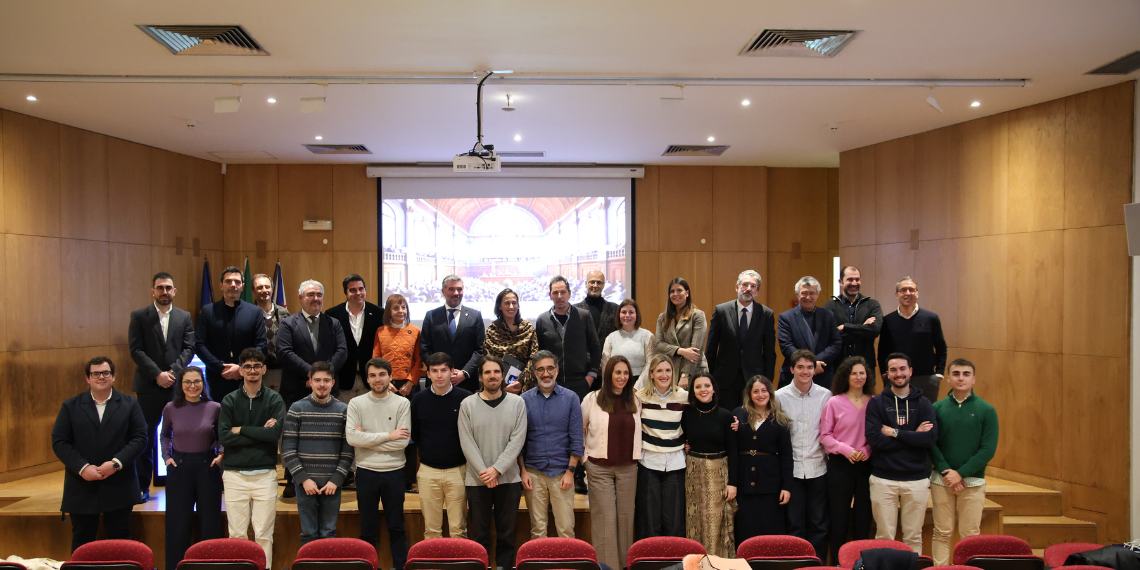
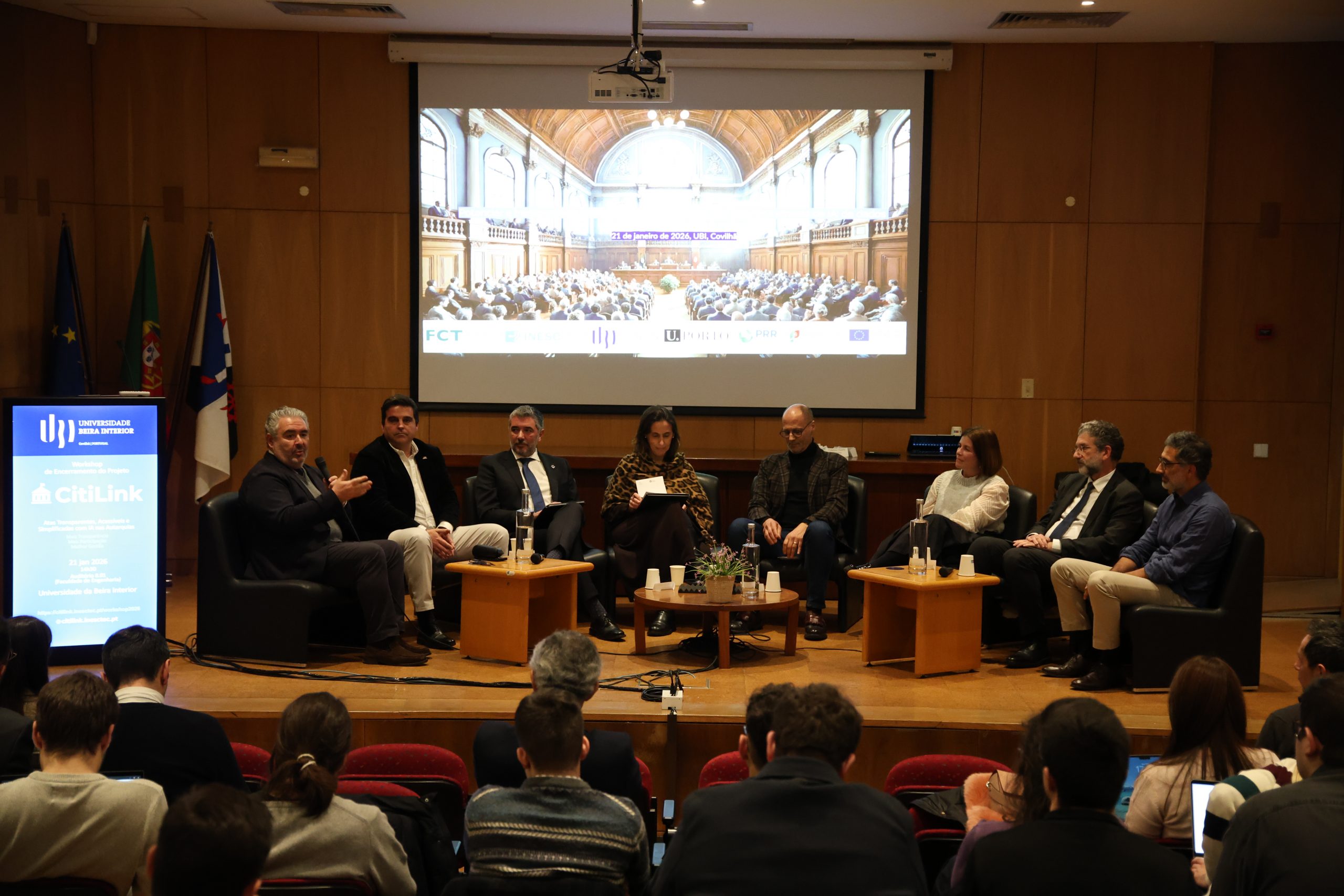
Closing event at the University of Beira Interior
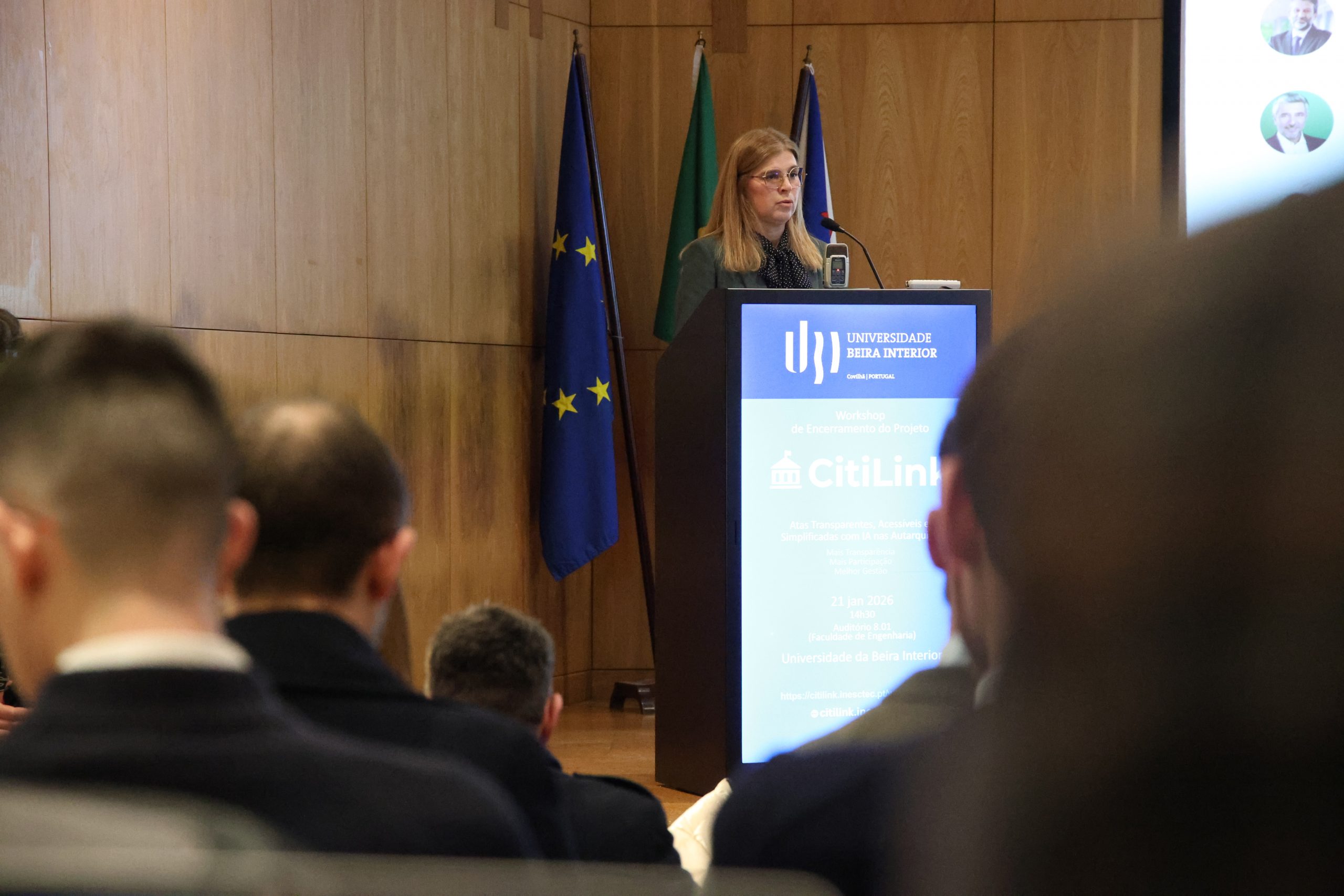
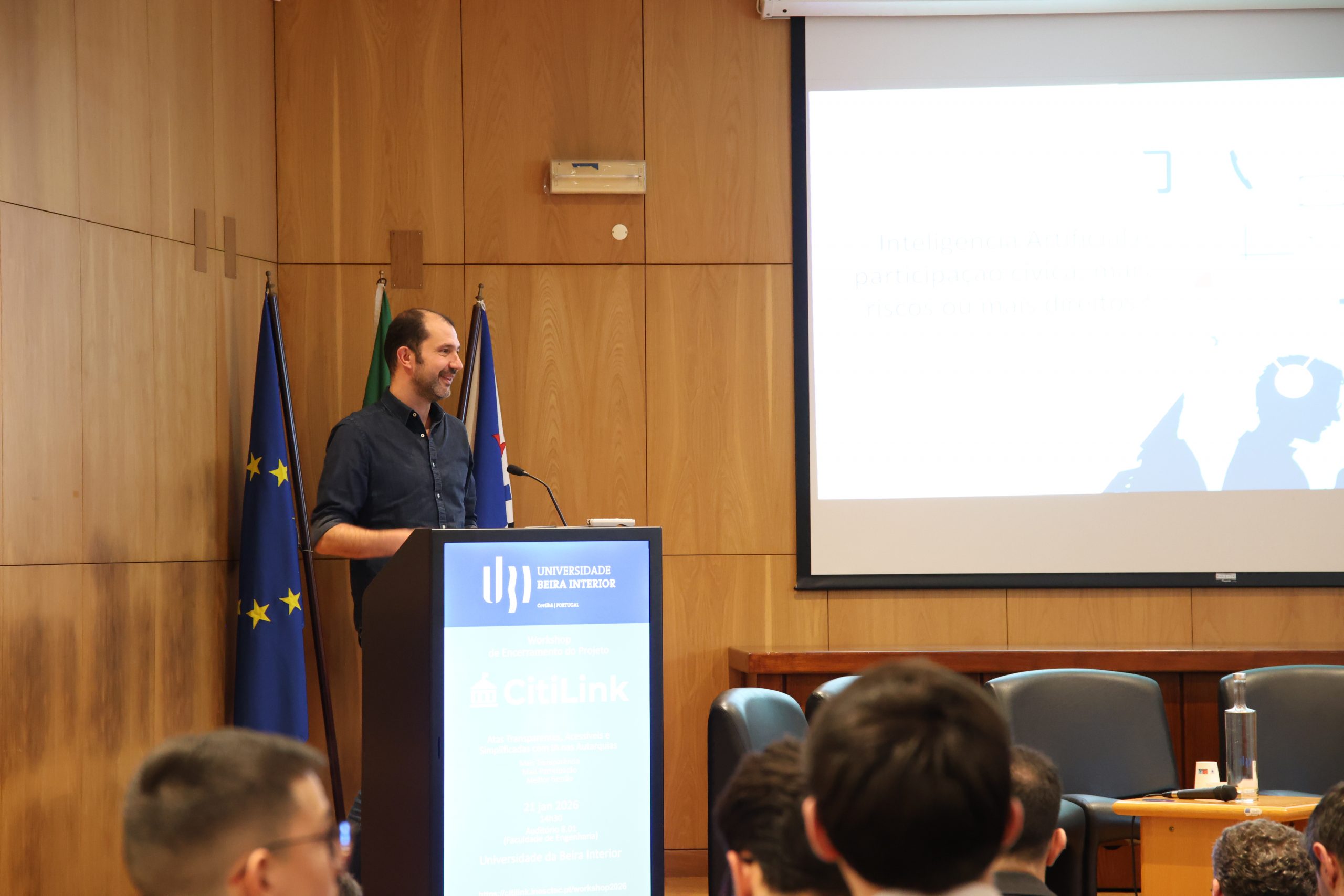
At the project’s closing workshop, held in Covilhã with partners and researchers, Ricardo Campos, researcher at INESC TEC and CitiLink coordinator, recalled the “fundamental values of 25 April that must be reinforced in the digital age”. The project stemmed from the need to bring science closer to public administration – and public administration closer to citizens – by applying scientific knowledge to real-world problems.
His conviction was clear: “It is essential to ensure that digital transformation does not deepen inequalities in the country. If AI remains confined to the most modernised services, major ministries and central public administration, we will miss a decisive opportunity to democratise access to solutions and benefits for the entire population. The real revolution will happen when municipalities, local services and less digitalised organisations are also able to fully benefit from AI.”
So, what are those benefits? Now that the prototype has been developed, transparency is not just about making information public, but above all about ensuring that it is understandable, accessible to ordinary citizens and capable of encouraging democratic participation. In practical terms, the project created a system capable of automatically processing municipal minutes in European Portuguese, ensuring that documents are structured, participants are easily identified, topics are segmented and classified, voting is detected and interpreted, automatic summaries are generated, sensitive data are anonymised, and information is organised by topic. However, as Ricardo Campos mentioned, “AI models are not perfect, and that is why human action is essential.” This is where a crucial element of responsibility and reliability comes in: “We do not hide the errors made by AI; in fact, we created mechanisms to correct them.” These mechanisms include the active involvement of municipal staff in validating and correcting results before publication, for example.
40 years of EU membership and a long-standing connection between INESC TEC and local authorities
In the year in which Portugal marks 40 years since joining the European Union, CitiLink became part of a long tradition of collaboration between INESC TEC and local authorities, dating back to the 1980s with the SIFO Project (Integrated Fibre Optic Systems). That pioneering initiative in communications networks was fundamental to the modernisation of local government and to the creation of what was then INESC Porto, now INESC TEC.
“As often happens in research, we converge on a simple and modest question, and from there complexity emerged,” said João Claro, Chairman of the Board of Directors of INESC TEC – stressing that CitiLink quickly went beyond a purely technological dimension. “It is easy to see that this project addresses issues that go far beyond technology and relate to how we organise public information and how we sustain fundamental democratic values at local level.” João Claro also emphasised: “Technology should serve to organise access to public information, speed up processes and, above all, make decisions more understandable – never to replace institutions, but to make them more understandable and more open to scrutiny.”

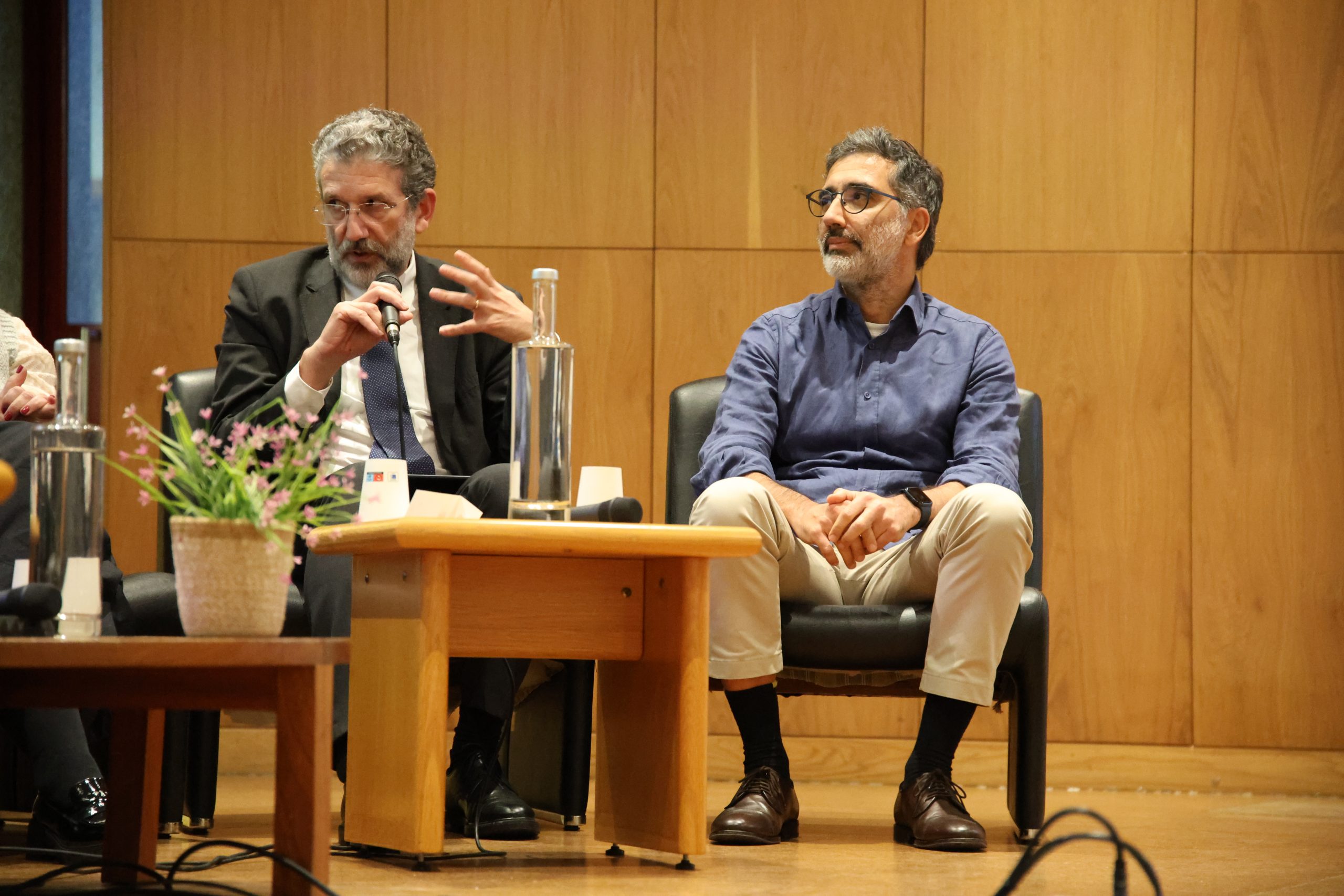
“Digital transition should strengthen institutional capacity, protect rights and serve long-term public objectives,” he added, stating that the project is also a concrete example of trustworthy AI, where technology supports decision-making without ever replacing human judgement or democratic accountability.
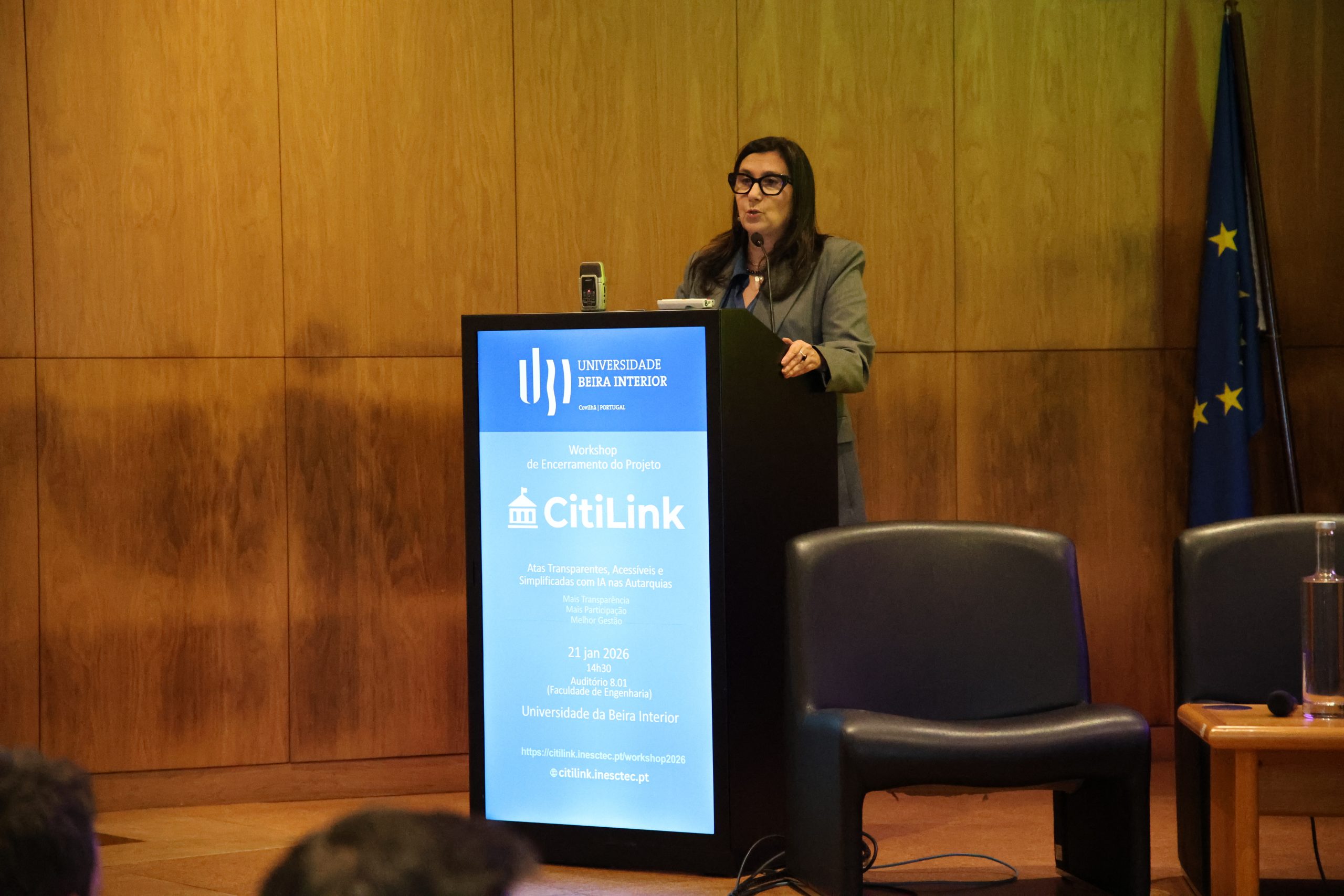
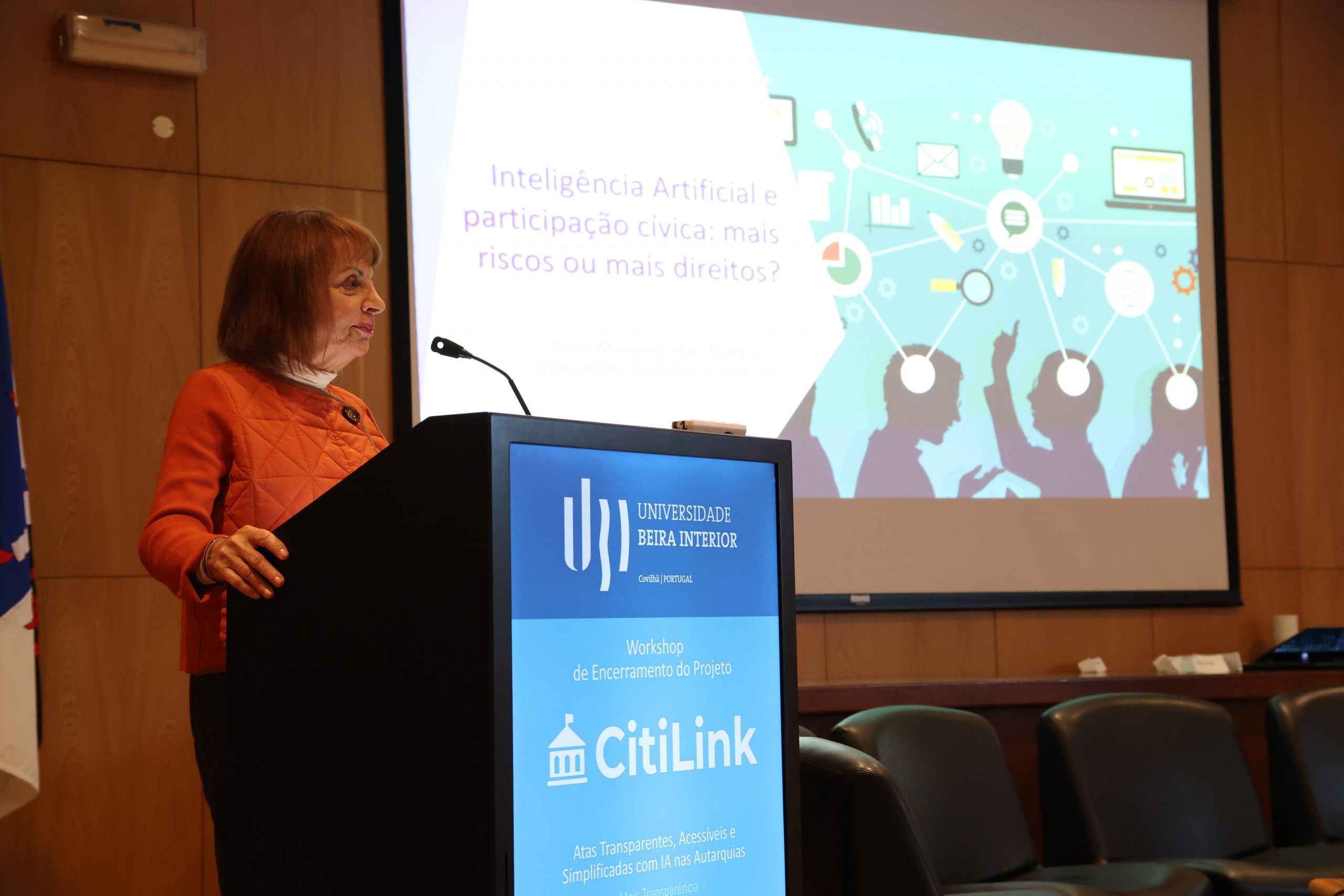
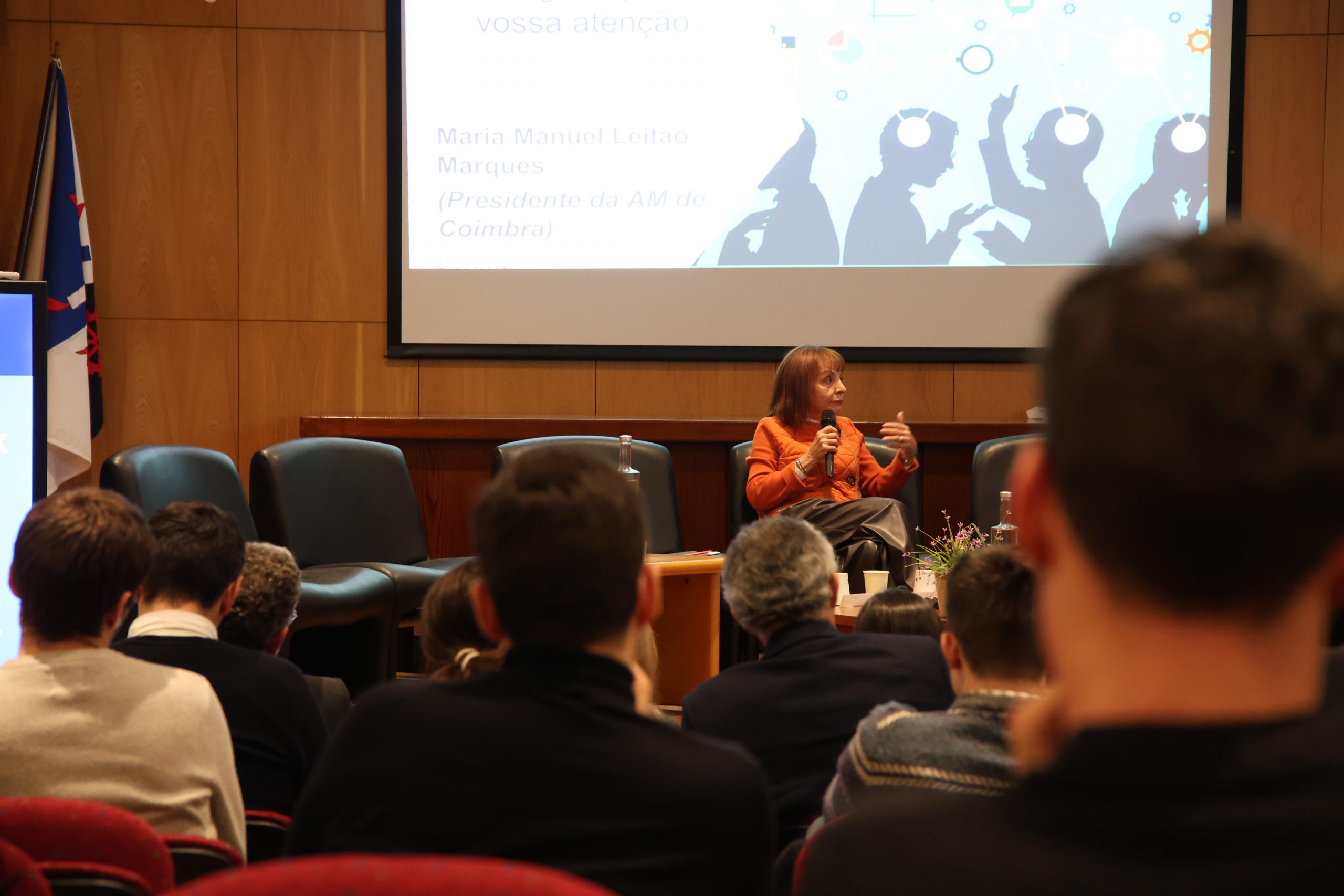
Maria Manuel Leitão Marques, Chair of the Municipal Assembly of Coimbra and former Minister for the Presidency and Administrative Modernisation, stated that the project addresses one of the most critical aspects of civic participation: access to information. “Digital platforms exist, but problems of low participation, centralisation, inequality and, above all, access to information persist,” she warned. “Even when people want to participate, the information is not accessible. If I don’t know what is happening, what was decided and by whom, my participation is compromised. There is a real transparency issue here.”
The project attracted widespread media attention and brought together the scientific community, industry and the public sector. In less than a year, it turned a concept that for many years remained only an ambition into reality: the effective application of science and AI at the service of democracy and public administration – all thanks to the municipalities of Alandroal, Campo Maior, Covilhã, Fundão, Guimarães and Porto, which made their municipal minutes available for the development of the prototype.
According to João Claro, CitiLink also stands out for the dimension: “It is a project that runs from scientific research to the creation of a functional demonstrator, involving several academa institutions and the municipalities themselves.” Despite the short execution period, the project translated into excellent scientific research with international recognition, and the dissemination of open-source software, allowing results to have a direct impact beyond academia.
This connection between science and territory was highlighted by Sílvia Socorro, Vice-Rector for Research, Innovation and Development at the University of Beira Interior, who praised “the particularly interesting way in which the project was designed with partners, especially local authorities facing diverse and demanding challenges”. She had no doubts that CitiLink achieved “national scale, real impact and demonstrated the institution’s commitment to the community, serving as an excellent example of high-quality, high-impact work”.
From the perspective of local government, Hélio Fazendeiro, Mayor of Covilhã, underlined the project’s democratic relevance. “It is increasingly important to guarantee transparency and access to information to safeguard a democracy that is currently under pressure,” he said. He was convinced that the project “helps public institutions handle minutes more effectively, but above all brings that information closer to citizens, making them better informed and more capable of engagement and democratic participation”.
As to Ana Paula Duarte, Rector of the University of Beira Interior, the strong involvement of municipalities in the project “shows that technological innovation, when designed with the territory and public administration in mind, can provide concrete tools for citizens”. She added that it “translates public investment in science and innovation into solutions with social impact, placing AI at the service of transparency, access to information, civic participation and democratic scrutiny”.
She also stated that “CitiLink is an excellent example of what we believe the role of the public university should be: producing scientifically robust knowledge that is socially relevant and oriented towards solving concrete problems within our society. It is a project that brings together excellence in research, cutting-edge technology and social impact in an area that is particularly sensitive and fundamental to the functioning of democracy at local level.”
The project was funded by the Portuguese Foundation for Science and Technology (FCT) under the Recovery and Resilience Plan (PRR), with the goal of applying advanced Cybersecurity, Artificial Intelligence and Data Science technologies to accelerate the modernisation of public administration. The project’s Workshop was covered by the Conta Lá Centro, the event’s official media partner, and also had the institutional support of the Commemorative Commission for the 50th Anniversary of April 25th, in a particularly symbolic year that also marks the 50th anniversary of the first local elections.
The researcher mentioned in this news piece is associated with UBI
 News, current topics, curiosities and so much more about INESC TEC and its community!
