


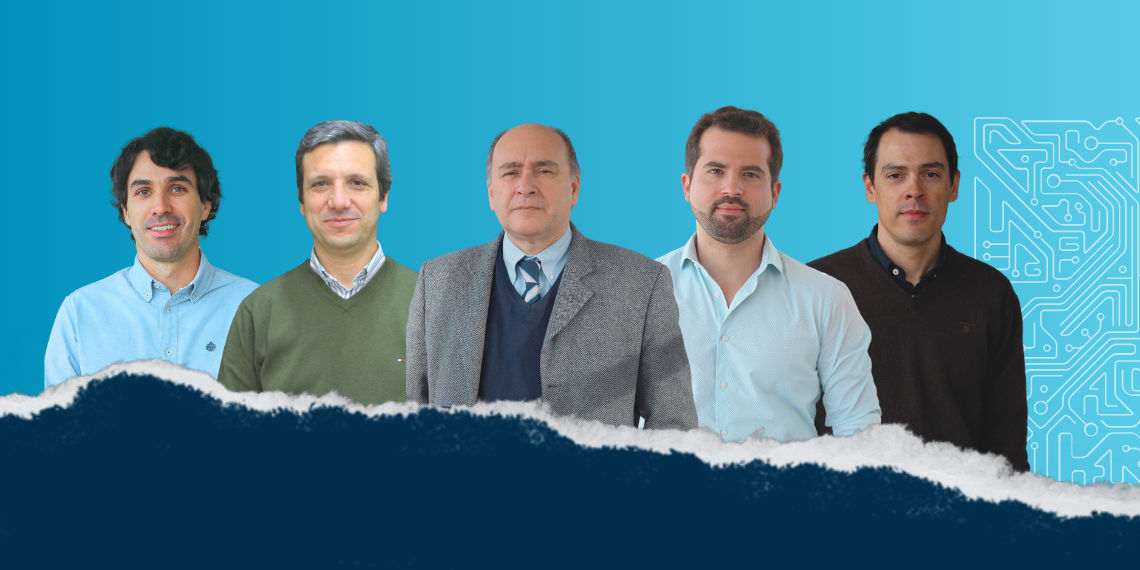
“Climate change is already a reality in Portugal,” said João Peças Lopes just a few days ago, during his final lecture as a professor at the Faculty of Engineering of the University of Porto (FEUP). The problem is that, once again, during a period of severe storms, we seem to be unprepared when it comes to energy and telecommunications infrastructures. This time it was storm Kristin; a few months ago, it was (once again) wildfires. All extreme events, of course, but it now seems safe to say they are no longer that uncommon.
Let us begin with a timeline of events. On 27 and 28 January, part of mainland Portugal was hit by storm Kristin, with the worst period occurring in the early hours of the 28 January. Historic wind gusts were recorded, with the Portuguese Institute for Sea and Atmosphere (IPMA) reporting 208 km/h in Soure and 178 km/h at Monte Real air base – before critical infrastructures began to fail.
As we’re writing this text, there are still no final estimates regarding fatalities or injuries caused by the storm. However, we know that power cuts affected more than half a million people, and material damages are estimated to exceed €4B. Communications also failed (mobile, internet and landline services), affecting an estimated 300,000 customers.
The districts of Leiria, Coimbra and Santarém were the hardest hit, with entire municipalities left completely isolated for several hours.
Once again: extreme events? Yes. Rare? Not that much. What lessons can we draw about the resilience of our critical electricity and telecommunications infrastructures? And, above all, how can we prevent thousands of people from being left without power and communications in the future? February has only just begun; Kristin has already passed; Portugal is now facing storm Leonardo, and some meteorological projections suggest possible changes in the polar jet stream pattern until mid-February – and the year has barely started.
Electricity failed first
Storm Kristin brought down 61 very high-voltage poles operated by REN, representing 7% of Portugal’s national electricity transmission network. More than 750 high- and medium-voltage poles operated by E-REDES were destroyed.
In total, more than 5,000 kilometres of power lines across the country are estimated to have been affected. Several substations were also damaged: the Zêzere substation, for example, was partially destroyed, while those in Batalha and Rio Maior suffered severe damage. This compromised central energy distribution “nodes” supplying entire municipalities.
Then came the fallen trees: thousands of trees collapsed onto low- and medium-voltage lines, particularly in rural areas, significantly hampering access for repair teams – many of whom encountered blocked roads. There was also a cascading effect: because the damage occurred at the transmission level, that is, very high voltage, restoring supply to households (low voltage) was impossible until the main transmission corridors were rebuilt.
The hardest-hit district was Leiria, which accounted for nearly half of all customers without electricity. Some remain without power.
Then, communications failed
“The successive storms that have hit Portugal in recent weeks, particularly in the central region, have once again highlighted the vulnerability of critical communications infrastructures to extreme weather events. Districts such as Leiria and Coimbra experienced significant failures in both mobile and land networks, due to strong winds, heavy rainfall and prolonged power cuts – widely reported by the media and by operators themselves. As happened during the April 2025 electricity blackout, many citizens only realised the true scale of the problem when they were no longer able to communicate, leaving them temporarily isolated,” explained Rui Campos, a researcher at INESC TEC.
Unlike what happened to electricity infrastructures, where collapses and destruction were recorded, there is no confirmation of a generalised failure of commercial communications towers during storm Kristin. In other words, the “failures observed in these networks did not result from widespread destruction of the most visible infrastructures, but rather from a combined effect of prolonged power outages and breaks in transport infrastructure, particularly fibre-optic links, as acknowledged by operators and the regulator ANACOM,” clarified Rui Campos, who is also a lecturer at FEUP.
“However, in the case of the State’s communications network, operated by SIRESP, it was confirmed that the storm physically tore down fixed antennas in several locations, locally compromising the system’s operation. This information was made public by SIRESP itself and reported by the media, showing that in certain specific infrastructures, damage was not limited to power failures or loss of connection to the network core, but also included direct physical damage to radio components,” he added.
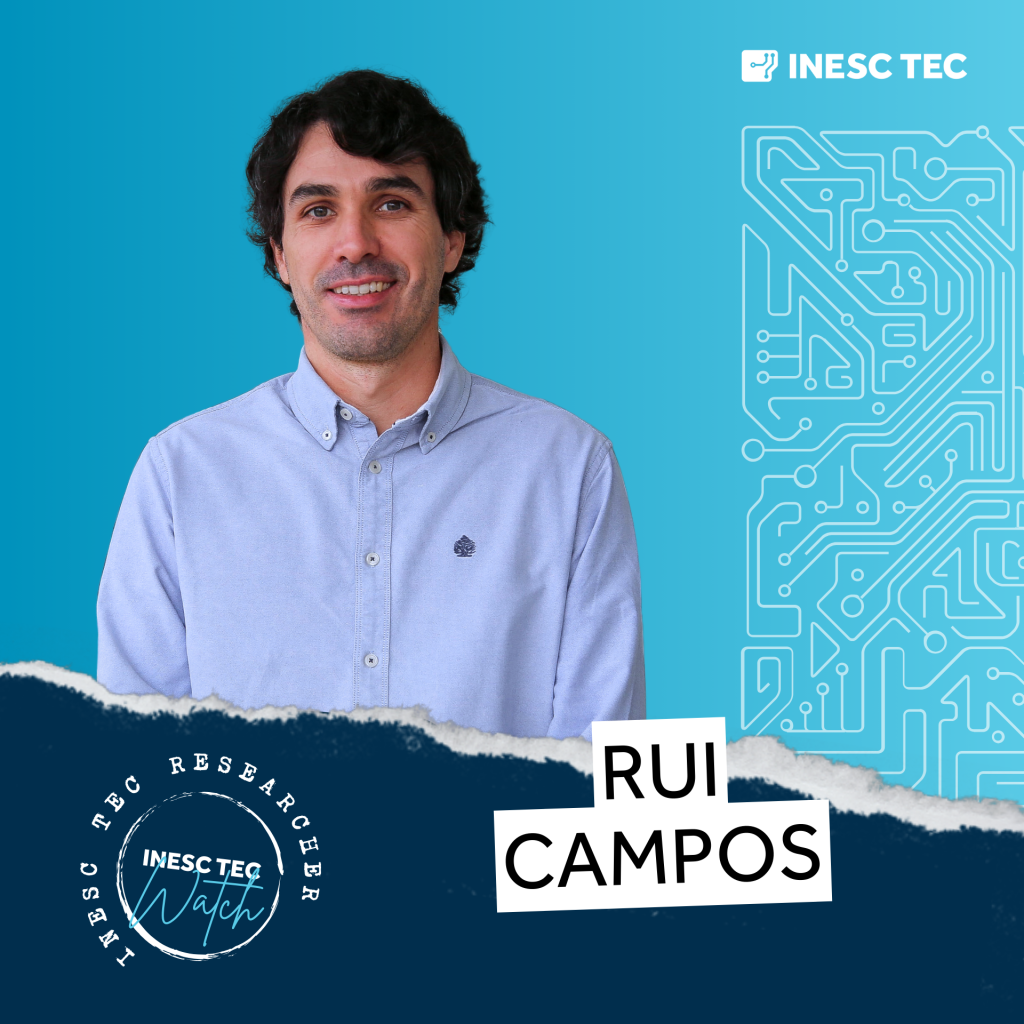
This situation was further aggravated by physical cuts to fibre-optic cables, mainly caused (just as in the power grid) by falling trees. This simultaneously affected land services and the connection between mobile base stations and the operator’s network core. “Even when the radio infrastructure remained operational, the loss of connection to the network core prevented normal service delivery – a pattern observed in several areas of central Portugal,” explained Rui Campos.
According to the same researcher, this behaviour is not unique to Portugal. “Recent events show that severe storms expose similar vulnerabilities in many countries, regardless of the technological maturity of their networks. The real difference lies in preparation and response.”
At this point, it is important to clarify what has happened in recent years in Portuguese telecommunications. There has been a transition from copper-based networks to fibre-optic networks. As a result, dependence on public electricity supply at all delivery points has become total. As INESC TEC researcher Filipe Ribeiro explained, “when public power grids are destroyed, the main problem for communications is precisely energy supply. Only once electricity is restored does the availability of fibre-optic infrastructure become the critical issue.”
What happened during this storm had, in fact, already occurred during the Iberian Peninsula blackout. The difference now is that this is a natural disaster, with lives at stake. Where should the focus be? According to the same researcher, in such situations, “priority should be given to wireless communications networks, because although their dependence on public electricity supply is like wired networks, they are far less dependent on physical installations and, consequently, on fixed cabling. In addition, they usually involve terminals with batteries, which makes them particularly useful in these moments.”
Shall we check a few concepts before moving on to the lessons learned and, above all, to future recommendations? Let us pause, then, to explain what critical infrastructures currently exist in Portugal, where electricity and telecommunications naturally play a role.
In 2024, this was precisely the theme of INESC TEC’s Autumn Forum, anticipating what was already perceived as inevitable. At the time, 160 critical infrastructures were identified in Portugal. From energy and telecommunications to transportation and water supply, there are multiple systems, assets and networks that are essential to the operation of society and economy.
Several entities took part in this debate, including ANACOM and E-REDES – both now directly involved in addressing the situation unfolding in early 2026. One of the key points discussed, in a panel moderated by Clara Gouveia, a member of INESC TEC’s Board of Directors, concerned asset ageing and the integration of renewable energy, alongside other aspects not directly related to the current events (e.g., geopolitical situations or cybersecurity). In the end, the need for a global and holistic mapping of interdependencies between sectors was highlighted, along with national-level coordination for crisis management, greater investment in training teams responsible for maintenance, prevention and safety, and increased public awareness of risk alerts. Adverse climate events were, of course, also discussed.
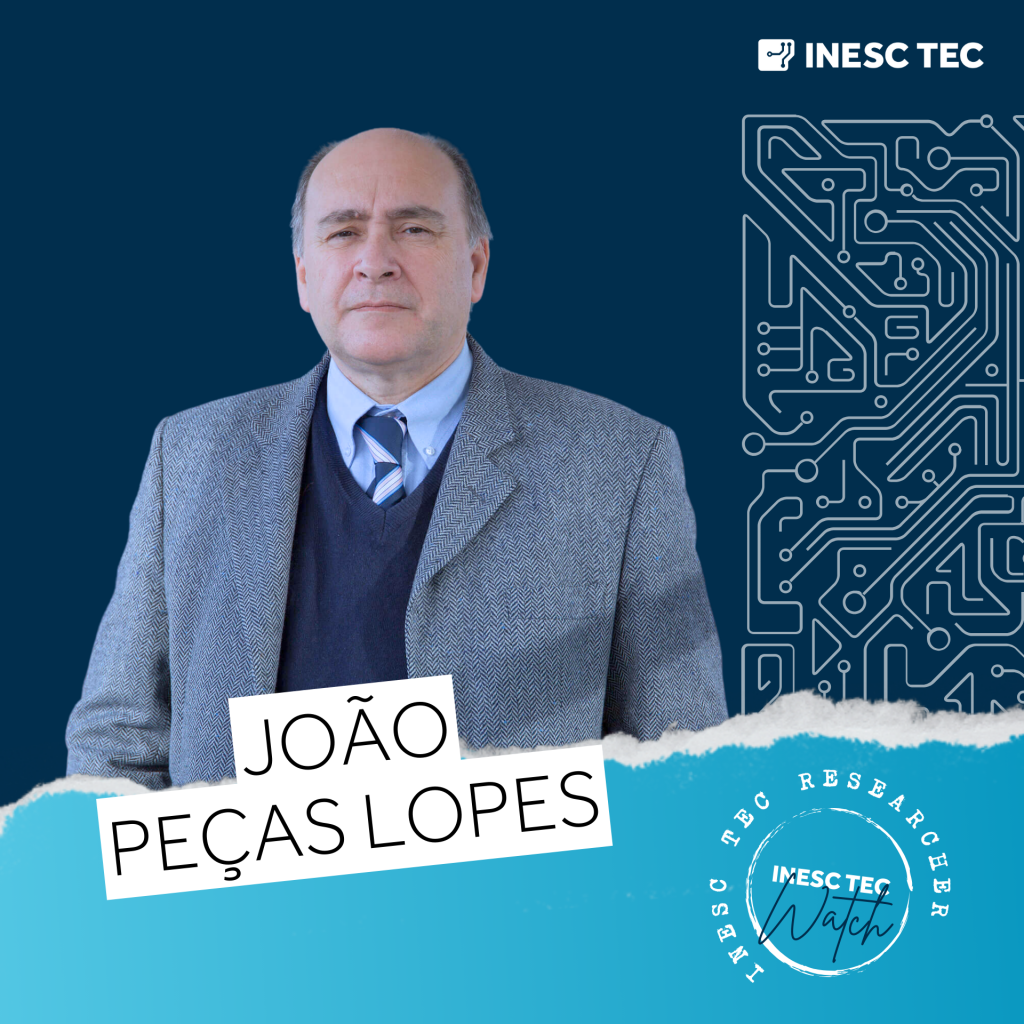
“It is becoming clear that extreme weather events – storms with very high winds, heatwaves that lead to wildfires – require reflection aimed at finding solutions that enable the adaptation of network infrastructures and operational processes,” explained João Peças Lopes, Director of INESC TEC.
So where might the solution lie? João Peças Lopes was unequivocal in his response: “Burying electricity infrastructures seems as one of the options. However, it must be borne in mind that this solution is considerably more expensive than overhead power lines, leading to a significant increase in the final price of electricity.”
Is the country prepared to pay even more for electricity?
The INESC TEC Director has done the maths: “In the case of high-voltage and medium-to-high-voltage lines, underground solutions are around five to ten times more expensive than overhead lines. This is because cables are far more costly due to the need for increased insulation, there is a much greater volume of civil engineering works (drains, tunnels, road crossings), additional investment is required in reactive power compensation equipment, and maintenance and repairs are far more complex and time-consuming. Not to mention the thermal issues associated with ensuring heat dissipation when the cable is in operation, which can, in some cases, limit how these lines are used.”
He then introduced a key question: “Are we prepared for this? To pay much more for electricity? I do not think so, especially because this could affect industrial competitiveness, particularly in sectors where electricity has a major impact on production costs.”
Are there intermediate solutions?
Yes. According to the expert, it is possible to promote strategies for burying medium- and high-voltage lines in areas with high industrial and urban density. It may also be possible to review the mechanical design criteria of overhead lines so that they can withstand higher wind loads.
As for low-voltage networks, João Peças Lopes mentioned that they “should preferably be underground, except in areas where consumption density is very low and the distances required to supply consumers are very large. This approach is already being followed, although it could be reinforced. The dynamic wind loads considered in the mechanical design of lines (including conductors, shield wires, insulators and support structures) can indeed be adapted, allowing for structures capable of withstanding greater mechanical stress. However, all of this must be carefully studied, as it always involves additional costs.”
It seems clear that adapting existing infrastructures to meet these challenges will always involve significant costs. However, according to the expert, it is possible to “define recommendations that address the new reality for the construction of new power grid infrastructures.”
“Regarding the architecture of electricity distribution networks – radial systems, which are simpler and common in rural or low-density areas, or meshed systems, more typical in large cities and industrial centres – this is closely linked to the density of consumption served by these networks,” explained the INESC TEC Director.
Currently, rural areas tend to use radial high- and medium-voltage distribution networks, while higher-consumption areas have a greater degree of meshing, although these networks are often operated as open rings. This allows service to be restored relatively quickly in high- and medium-voltage networks through reconfiguration. “There is no perceived need to change this paradigm; otherwise, electricity distribution costs would be much higher,” he stated.
How should service interruptions caused by extreme events be addressed?
“Distribution companies can implement emergency strategies to reinforce backup generation units and supply areas affected by disasters, connecting these units to the low-voltage main switchboards of transformer substations, or in some cases even supplying medium-voltage networks from a substation’s medium-voltage busbar, provided that consumption levels are not too high,” explained João Peças Lopes.
“Whatever reinforcement strategies are adopted, their investment and operating costs must be recognised by the regulator, to ensure that companies are adequately remunerated and remain willing to invest in and operate power grids”, he concluded.
And what about telecommunications?
“In this case, there have been significant system failures, also associated with extreme events. In 2025 alone, there were at least two occurrences: during the wildfires and, earlier, during the Iberian Peninsula electricity blackout. Now, in Leiria, once again, vulnerabilities in land, mobile, and emergency communications have become apparent. These failures directly influenced the public and emergency services, leaving them temporarily without vital coordination tools,” explained Manuel Ricardo, also Director of INESC TEC.
There is a clear connection between energy and telecommunications that deserves attention: communications depend on the availability of electricity. “Even when telecommunications networks remain technically operational, service can fail simply because equipment in homes or mobile towers loses power. This includes small home devices for fibre internet access, such as optical terminals and routers, but also equipment in operator infrastructure,” explained Luís Pessoa.
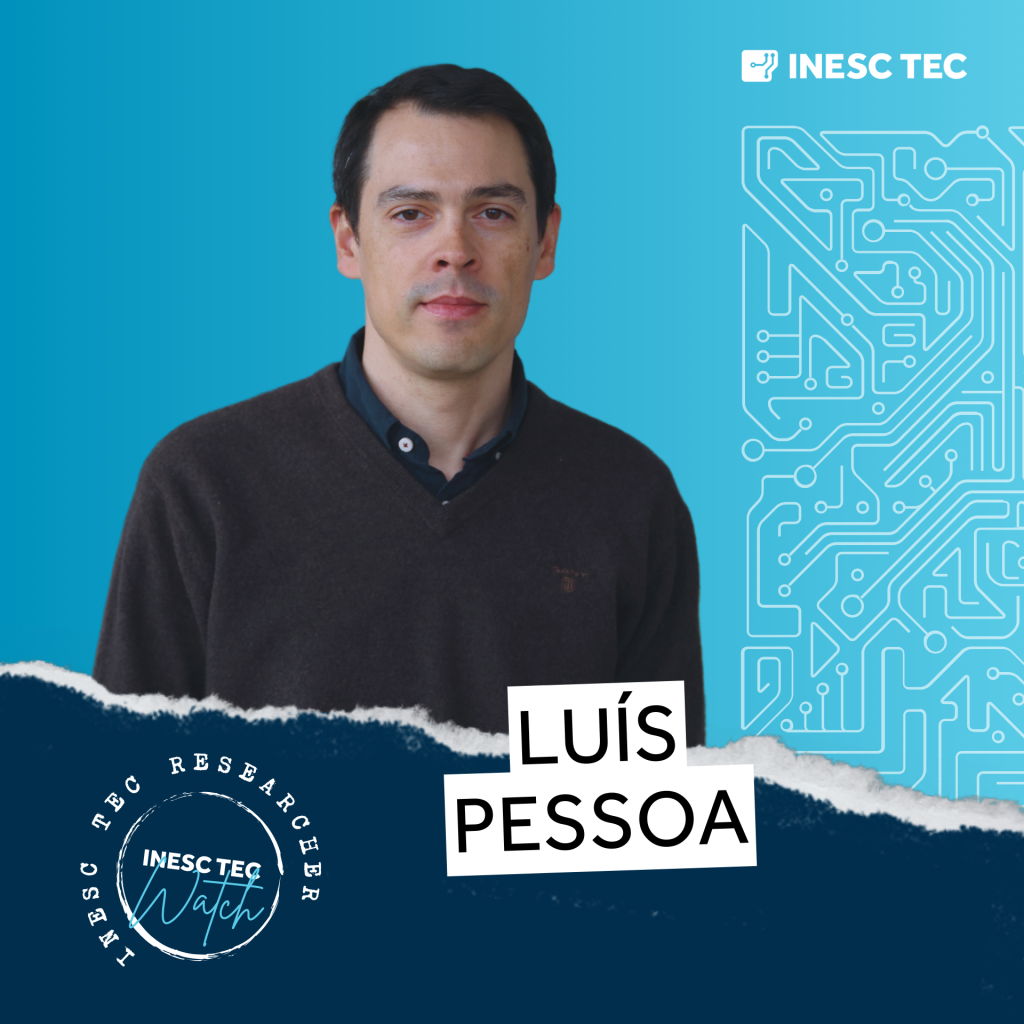
“One point worth highlighting is local energy microgeneration, such as solar panels. Despite growing adoption, most common systems are connected to the grid and stop working when the network fails, for safety reasons – particularly to protect utility technicians who may need to work on the power lines. In other words, even with sun and panels installed, many people discovered they remain without electricity during a blackout. For local generation to be part of the solution, equipment must be able to operate autonomously, even without the grid, which requires a different technical configuration and probably additional incentives,” clarified the INESC TEC researcher, who’s also a lecturer at FEUP.
Before going further, it is important to distinguish two key concepts: reliability and resilience.
Manuel Ricardo made said exercise, with both aspects considered essential for telecommunications. First, he stressed that “modern telecommunications systems are generally well protected against isolated failures,” partly because “current networks make extensive use of redundancies in their subsystems, as well as risk management mechanisms.” However, systems have still failed, and as the researcher explained, “the main cause is usually not isolated equipment failures, but rare and extreme events whose frequency and intensity are increasing. These events affect large geographical areas simultaneously and trigger multiple, correlated failures: prolonged power outages, destruction of antennas and mobile sites, fibre cuts and transport network failures, and unavailability of servers and data centres.”
Reliability vs Resilience:
Reliability: “The ability of a system to continue working in the presence of failures, usually achieved through redundancies. For example, if a component has a 90% chance of operating at any given time, duplicating it increases the probability of operation to 99%. However, increasing reliability comes at very high costs, which rise quickly as extremely high availability levels are sought,” explained the FEUP lecturer.
Resilience: “the ability of a system to maintain an acceptable level of service and to recover quickly after a disruption. A highly reliable system tends to be resilient, but it is possible to design less reliable systems that are resilient. In telecommunications, a network is resilient if, despite power outages or node or link failures, it continues to provide minimum connectivity and restores full service within a predictable timeframe,” explained Manuel Ricardo.
In the event of a major catastrophe, which communications services should be preserved as a priority? What minimum quality level should be ensured? Within what timeframe should they be restored? Should minimum services be guaranteed individually by each operator or coordinated among all providers?
“From a regulatory perspective, Portugal adopts a significant framework. ANACOM Regulation no. 303/2019 requires operators to have continuity plans, carry out audits, and run regular exercises. In the case of 5G, resilience is no longer just a technical option but an operational and regulatory requirement. More recently, the transposition of the European Directive on Critical Entities’ Resilience, through Decree-Law no. 22/2025, reinforced this legal framework, mandating continuity plans for essential services,” stated the researcher.
“Experiences from major global ICT operators, like Google, show a complementary approach: assume failures will occur, accept that very high reliability is too costly, and focus on reducing the user impact, speeding up recovery, and explicitly controlling risk,” he continued.
Let us return to the case of wireless networks, particularly public networks, which seem to be the best solution in disaster scenarios
We know that these networks are less dependent on electricity, but not entirely independent. “In cellular networks, base stations are usually supported by a fibre-optic communications network and the public power grid,” explained Filipe Ribeiro.
A common question from the public concerns the benefits of burying fibre-optic cables. “Burying fibre avoids exposure to hazards that can cause damage. In the context of storm Kristin, if the fibre to base stations had been buried, it would likely have endured. Burying it is highly recommended. Advantages include greater resistance to temperature changes and tension that could break cables. In a storm, the more exposed the fibre and its termination and junction boxes, the higher the risk of service disruption. If the fibre serves a mobile station, it should be buried at least up to the delivery point, because a cut anywhere along the link can cause total service failure for dependent users (e.g., 5G),” clarified Filipe Ribeiro.
However, as with the power grid, there is the issue of cost, which is difficult to quantify – although it is clear that the largest component relates to the construction of ducts and ongoing maintenance. In other words, where ducts already exist in cities, the cost of burying fibre is naturally lower. The researcher explained how this works: “In fibre-to-the-home (FTTH) services, distribution to end users is not one-to-one. When a set of fibres is cut, the number of affected customers increases the closer the cut is to the communications exchange. This means that fibre distribution to end users typically follows a tree structure. The recommendation is that all fibres supporting distribution points should be buried. The goal is to minimise the number of customers affected when an unburied fibre is broken. In practice, this is extremely costly, both at installation and for maintenance.” In the case of FTTH, the only way to improve stability is to bury more fibres and, possibly, create redundant connections for the same customers, which in practice can represent prohibitively high costs.
Short-term actions
According to Manuel Ricardo, Portugal now faces the challenge of implementing existing resilience mechanisms more effectively and in a coordinated way. Recovery times for minimum communications services are often below the expectations of affected populations. This is a complex problem, easier to describe than to solve, but urgency is growing in a context of recurring extreme events.
“Without full knowledge of all facts, and focusing on wireless communications, as in the blackout, the key is to continuously ensure electricity supply, via generators, the grid, or other solutions. In this case, operators can deploy auxiliary services if the supporting wired network is destroyed. For example, operators can activate wireless links using point-to-point radio beams between towers separated by several kilometres (line-of-sight permitting). These services would have lower capacity, but connectivity would be preserved,” explained Filipe Ribeiro. “I’d like to highlight that maintaining the mobile network is the priority, because, as storm Kristin showed, even if FTTH remained operational, many people had to leave their homes.”
Another promising technology in disaster situations is low-orbit satellite internet, such as Starlink, as explained by Luís Pessoa. “This technology represents a significant leap: it allows data connections with speeds and latencies comparable to wired networks, without relying on any local terrestrial infrastructure, requiring only an antenna and electricity. In remote areas, emergency vehicles, or temporary command centres, Starlink can provide high-quality communications even when mobile or fibre networks fail completely. It does not replace traditional networks but offers realistic, effective redundancy in situations that, until recently, would have meant isolation.”
How can we prepare infrastructures for the future?
The text is already long, but one thing is clear: climate change has arrived in Portugal, and the likelihood of these extreme events intensifying is high. We asked our researchers for ways to better prepare infrastructures so that, in the future, consequences of at least this scale can be avoided.
Here are some measures suggested by Filipe Ribeiro:
- Strategic deployment of power generators at base stations to ensure minimum service in terms of coverage, rather than network capacity. It is not necessary to install generators at every base station, but rather at a carefully selected subset that guarantees coverage across the territory. At other stations, larger-capacity battery banks can be installed, given the lack of local generation. When base stations from different operators are physically close, these generators could even be shared between operators, improving the overall network resilience.
- Installation of multipath (ring) fibre networks, where they do not exist. This is common practice in networks supporting critical communications, allowing an alternative route to maintain connectivity to a base station in the event of a fibre cut until the ring is restored.
- Creation or reinforcement of a wireless mesh network among cellular towers. The idea is that if the fibre network fails, a set of line-of-sight towers can communicate with each other to find a route to a tower with an active connection to the rest of the operator’s network, via fibre, satellite, or microwave links. Although technically, legally, and commercially complex, this approach can be pursued to maintain minimum service availability.
- Provision of mobile base station units in the event a tower is destroyed. These units can supply temporary local coverage and support the mesh network.
- National roaming protocols during disasters, so that all base stations in affected areas can accept customers from other operators. From a technical perspective, this would allow base stations in those zones to support all national operators’ clients during emergencies.
- Strategic city locations for power-equipped communication booths, enabling mobile charging, radio broadcasts, civil protection messages, and access to land-line telephones. Essentially, this restores the role that phone booths used to play. With the shift to fibre networks and the near elimination of booths, catastrophe scenarios paradoxically reduce available communications.
- Home fibre equipment backup: FTTH devices depend on electricity, so communications remain active during power outages only if alternative power sources exist. Customers could install a UPS (Uninterruptible Power Supply) to maintain their equipment. Operators could then enable these customer Wi-Fi points to provide limited access to others, with incentives for participation. This is especially relevant for maintaining mobile calls via Voice over Wi-Fi (VoWiFi).
Public policy recommendations
Regarding burying fibre, Filipe Ribeiro stated that “strong public incentives are needed, through construction policies or financial support for duct installation. This is not new, but it could be accelerated.” He also suggested “studying new economic models via public policy to promote greater infrastructure sharing between critical service operators (e.g., telecommunications, energy, etc.).”
Returning to resilience, Rui Campos pointed out that “burying communications resources, including fibre, can improve robustness against wind and falling trees, but it does not solve the resilience problem on its own.” Like power grids, burying communications infrastructures is more expensive, slower to implement, and still dependent on electricity to power active equipment.
International experience shows that “the greatest resilience gains come from an integrated approach, combining enhanced energy autonomy, genuine redundancy to the network core, operational planning, and rapid deployment and response solutions.”
Rui Campos said: “Compared with international examples, Portugal currently has a more general regulatory framework regarding communication network resilience during disasters. The country is covered by the European network and information security framework (currently being transposed into national law), including the recent NIS2 Directive, which reinforces obligations for risk management, continuity planning, and incident reporting for operators considered essential or important, including electronic communications operators. However, this framework establishes principles rather than minimum mandatory autonomy for base stations or uniform technical redundancy requirements. In practice, network resilience in Portugal today depends mainly on operators’ engineering and investment decisions, guided by general regulatory objectives, rather than an explicit national model for prolonged failures caused by extreme events. Critical sites with greater energy autonomy and intervention priority exist, but these classifications and protection levels do not yet follow a transparent, harmonised national model, as in other European countries.”
Luís Pessoa suggested a focus on transparency and public accountability: “It would be useful for operators to have a clear resilience rating, like energy labelling. This could include information on energy autonomy of infrastructure, alternative paths to keep the network connected, and average restoration times after failures. Such information would allow citizens and companies to make informed choices and signal the importance of robust communications in extreme scenarios.”
Key takeaways
It is important to mention that, in extreme scenarios, there are no fully resilient solutions, as Filipe Ribeiro explained. “Even satellite services, such as Starlink, have limitations. The goal is to work on solutions based on best engineering practices before disasters occur. Functional and non-functional requirements should be defined for multiple extreme scenarios, with storms being just one. Considering the country’s reality, a national programme should be designed to meet these requirements. This is a task that requires time, coordination, and substantial funding; yet, as these events show, communication networks are critical infrastructure and must be treated as such.”
Rui Campos emphasised: “In the context of climate change, where extreme events are becoming more frequent and severe, the question is no longer if these situations will occur, but when. Failures in central Portugal show that communications do not fail due to lack of technology, but when multiple critical elements collapse simultaneously.
“Recent events suggest that Portugal is at a point like other countries after comparable natural disasters: recognising that existing mechanisms are adequate for localised incidents, but insufficient for severe, lengthy weather events affecting energy, communications, and physical access simultaneously. International experience shows that regulatory evolution is needed precisely at these moments, defining priorities, minimum resilience levels, and stronger cooperation between operators, regulators, and civil protection authorities. Against this backdrop, recent events in central Portugal underline the importance of strengthening national network preparedness for extreme events, which will become increasingly frequent in the context of climate change.”
Engineering, but also empathy
As we write this long piece, acting as a science communication tool for both researchers and our broader audience, an INESC TEC team led by Luís Seca, the member of the Board, is loading over 900 roof tiles, tarps, food, and other supplies into a van to deliver to affected communities in Leiria. This was a collective effort by the community, as in past situations, to ensure aid reaches those most in need. At INESC TEC, we carry out cutting-edge engineering at national and international levels, guided by a set of values, including social responsibility.
 News, current topics, curiosities and so much more about INESC TEC and its community!
