


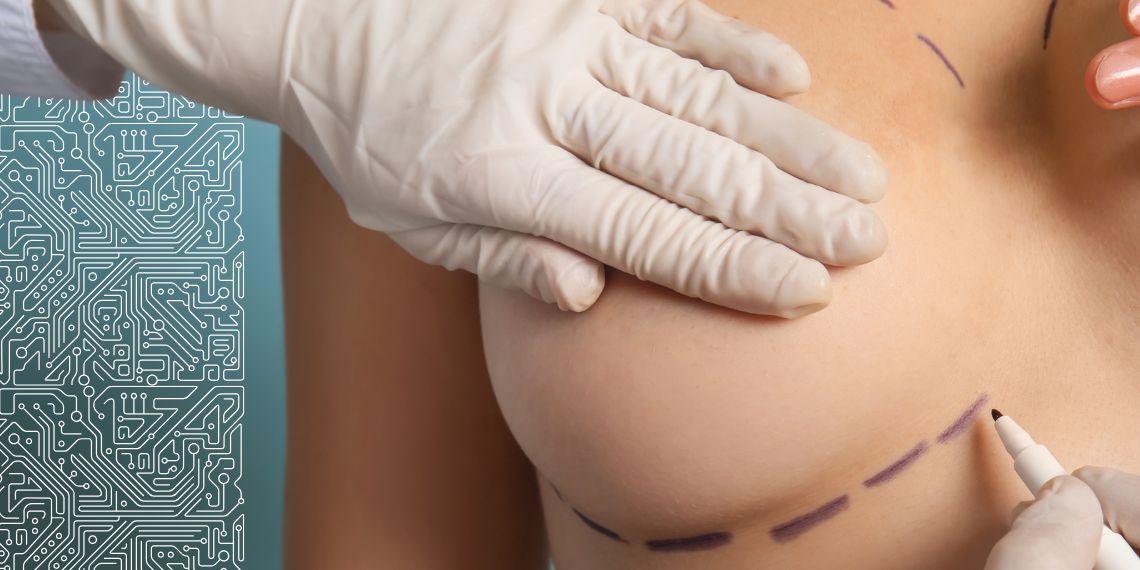
It is not the fairy tale; but the CINDERELLA project works a kind of magic when it comes to breast cancer treatment. Launched four years ago and now approaching the final stage, the project has already delivered a set of tools designed to help patients and clinical staff realistically anticipate the physical changes resulting from surgery following breast cancer treatment.
CINDERELLA brings together clinical and research centres from several countries, including INESC TEC, Fundação Champalimaud and Faculdade de Ciências da Universidade de Lisboa in Portugal, as well as institutions in Italy, Germany, Poland and Israel. The project uses Artificial Intelligence (AI) models to predict and assess the aesthetic outcomes of breast cancer treatment.
At INESC TEC, the team focused on developing different AI models capable of enabling a more realistic visualisation of patients’ torsos, based either on pre-surgical images or on examples of aesthetic outcomes from previous patients. Helena Montenegro, one of the INESC TEC researchers involved in the project, explained that the past four years have brought many challenges: “We are working with highly sensitive medical images, with significant anatomical variability and with surgical outcomes that depend on multiple clinical factors. This required the development of robust models. The impact of this work goes beyond technology; it affects patients’ self-esteem, quality of life and emotional recovery.”
One of the models developed uses advanced deep learning techniques, including generative adversarial networks and modern computer vision architectures, to create personalised and realistic simulations. The goal is to generate, from a patient’s pre-surgical torso image, a visual prediction of how the body may look after surgery.
Another sphere of research at INESC TEC focuses on the automatic identification of previous patients with similar body characteristics, whose post-surgical outcomes can serve as a reference. These models analyse multiple visual and structural features to find comparable clinical examples, enabling patients to view real results achieved in cases like their own.
To increase the realism of predictions, the team also developed 3D torso modelling methods, allowing for a more immersive and detailed visualisation of the expected changes. “3D reconstruction improves spatial perception and contributes to a more accurate understanding of possible physical transformations. These solutions are also based on automatic contour detection and segmentation models – which identify and outline relevant anatomical structures in clinical images. These segmentation models are essential to ensure precision and consistency in the subsequent stages of prediction and evaluation,” the researcher explaind.
Beyond visual prediction, the team also developed a language model for aesthetic assessment, designed to help systematise and interpret clinical descriptions and subjective aesthetic evaluation criteria. This contributes to a more structured and consistent assessment of outcomes.
To facilitate the sharing of results with healthcare professionals, the BreLoAI platform was created – a scalable application that supports the annotation, analysis and visualisation of clinical images, acting as a bridge between researchers and clinical staff.
“The CINDERELLA team has actively analysed the state of the art in prediction and aesthetic evaluation methods in surgery, not only in the context of breast cancer but also in other areas of reconstructive and plastic surgery. AI can play a central role in humanising medical decision-making, placing technology at the service of more informed, patient-centred choices,” Helena Montenegro concluded.
The results of this research have been presented at several international conferences and leading scientific events, including workshops at MICCAI (International Conference on Medical Image Computing and Computer Assisted Intervention) and ECCV (European Conference on Computer Vision), as well as at EMBC (International Conference of the IEEE Engineering in Medicine and Biology Society) and ISBI (IEEE International Symposium on Biomedical Imaging).
 News, current topics, curiosities and so much more about INESC TEC and its community!
