


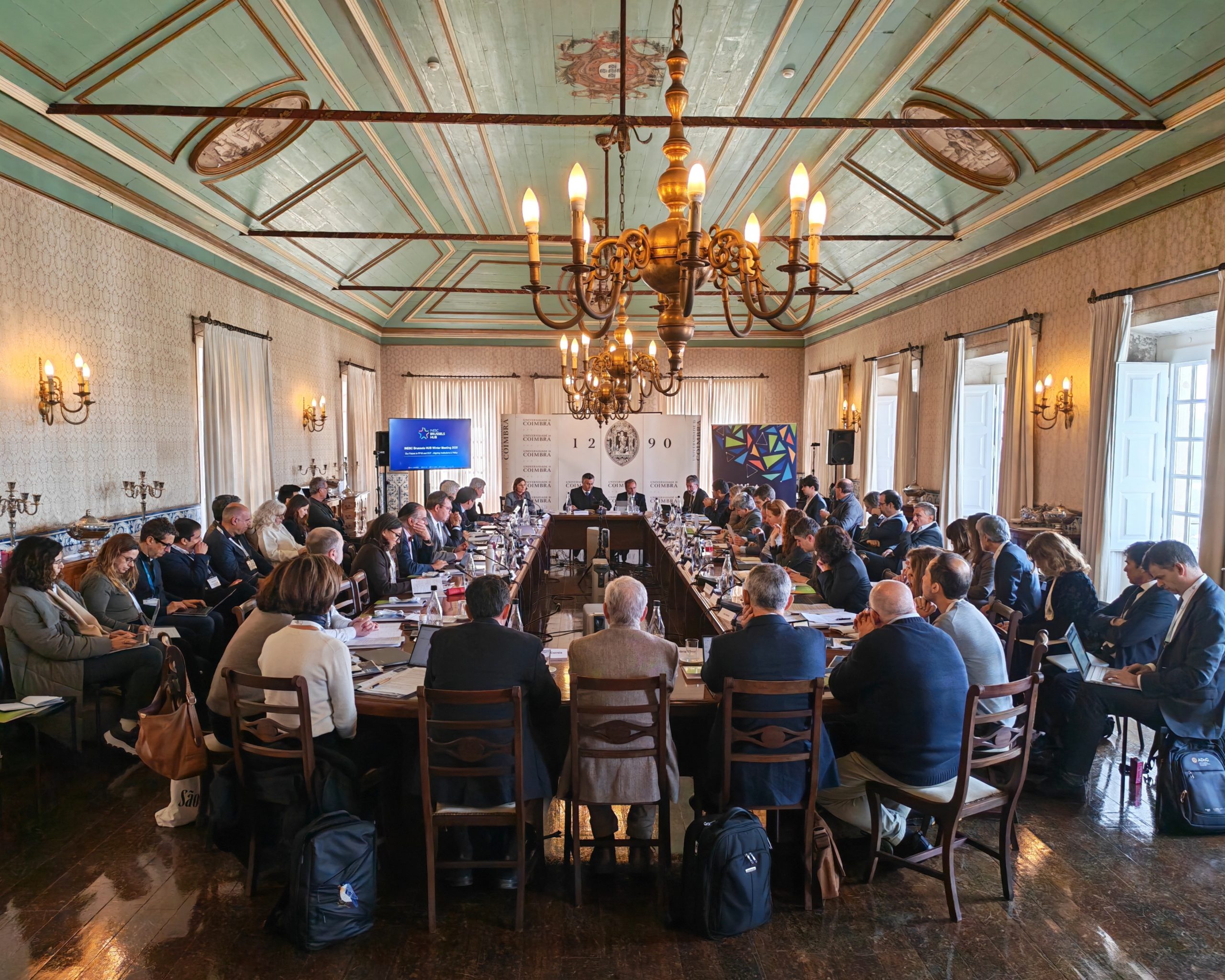
The INESC ecosystem – featuring INESC TEC, INESC Coimbra, INESC ID, INESC INOV, and INESC MN – has signed a Memorandum of Understanding with the Joint Research Centre (JRC), the European Commission’s research department, responsible for providing independent, knowledge-based science to support EU policy decisions with a positive impact on society. This signing marks a historic institutional collaboration between the Portuguese scientific system and the European Commission, placing Portugal in a strategic position regarding European science policy decisions.
The MoU was signed in Coimbra (February), during the 2026 edition of the INESC Brussels HUB Winter Meeting – an annual gathering that brings together European policy-makers, Portuguese authorities, academic leaders, and researchers.
This closer relationship opens new paths for cooperation and creates fresh opportunities in science, innovation, startups, infrastructure, and strategic policy for Europe – areas that are essential to European strategic autonomy and to supporting industrial and sustainability transitions.
Signed by Bernard Magenhann, Director-General of the JRC, alongside the leadership of the five INESC institutes – João Claro (INESC TEC), Inês Lynce (INESC-ID), Nelson Escravana (INESC INOV), Paulo Freitas (INESC MN), and Carlos Henggeler Antunes (INESC Coimbra) – the Memorandum promotes research directly oriented towards real-world impact on public policy, something increasingly valued within the European Union, particularly in areas like competitiveness, green transition, digitalisation, and security.
The Chairman and CEO of INESC TEC described the memorandum as “an important step in strengthening the link between scientific research and public policy in Europe”, and goes further: “Collaboration with the Joint Research Centre opens new opportunities for the INESC ecosystem to contribute, more closely than ever, to a solid scientific foundation supporting European policies in strategic areas for competitiveness, sustainability, and the digital transition.”
The Winter Meeting was, as usual, organised by the INESC Brussels Hub, which over two days facilitated strategic discussions and institutional liaison with an eye on the future – specifically, the future of FP10 (the 10th European Framework Programme for R&D) and the European Competitiveness Fund (ECF), positioning institutions and policies across Europe.
The first day explored themes including multilevel governance compliance (EU–national–regional–institutional), the emerging paradigm of FP10 and the European Competitiveness Fund, and the role of research and innovation in supporting sectoral transformation. The agenda also addressed Portugal’s economic strategy in the context of the ECF, concluding with a forward-looking session dedicated to long-term strategic thinking.
The second day turned to high-level governance for institutional readiness and practical strategic positioning for FP10 and the ECF, and included thematic sessions on key strategic areas for Europe: from clean transition and industrial decarbonisation to digital leadership, as well as security, defence and space, health, biotechnology, and bioeconomy. In these discussions, researchers and R&D managers explored how to position institutions and teams to make the most of the opportunities in the next European funding cycle and reinforce research’s contribution to the major economic, technological, and environmental transitions ahead.
The meeting reinforced the INESC ecosystem’s commitment to preparing for the next European R&D cycle, and to helping shape the future of FP10 and the ECF. Through strategic dialogue, institutional reflection, and new forms of collaboration – including the landmark Memorandum of Understanding with the JRC – this year’s edition reinforced the foundations for a more coherent, united, and influential INESC presence in the European research and innovation landscape.
Work towards FP10 now continues within the institutes, in policy circles, and across research communities, supported by renewed momentum and a growing sense of shared purpose for Europe’s next chapter.
 News, current topics, curiosities and so much more about INESC TEC and its community!
