


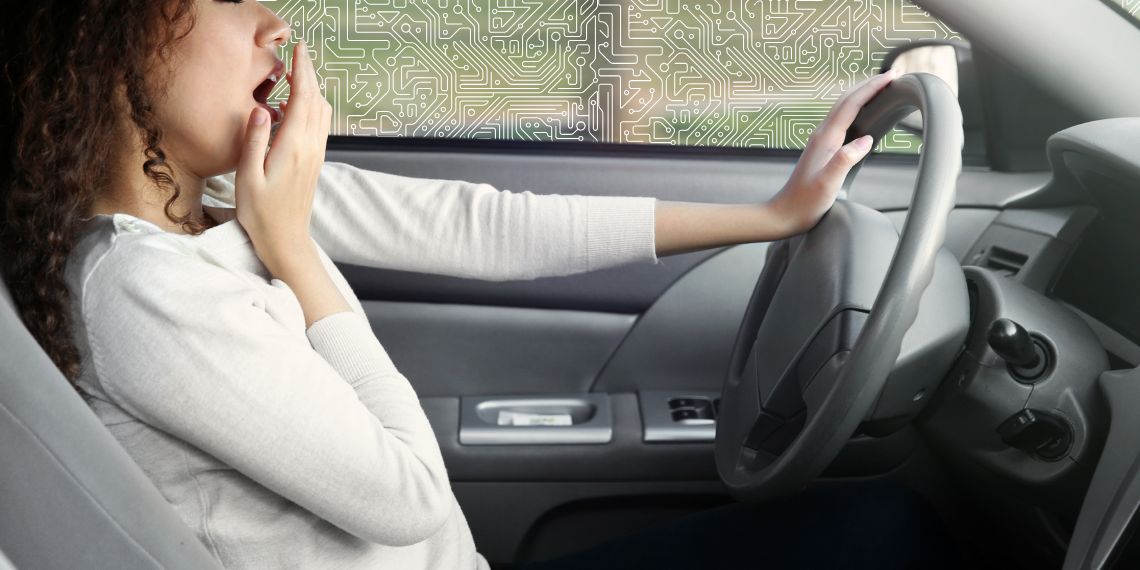
Drowsiness at the wheel is one of the leading causes of road accidents. But what if it were possible to detect early signs of fatigue before the risk of a crashing increases – giving drivers a timely warning? That is the basis of a study co-authored by Vera Miguéis, INESC TEC researcher – which received the Best CRUSOE Paper Award at an international conference.
The study Drowsy Driving Prediction Based on Biometric and Dynamic Driving Parameters was developed as part of the master’s thesis in Engineering and Data Science by student Eduardo Nunes, within the uRisk project (Assessment of Risk Behaviours at the Wheel Using a Driving Simulator). Coordinated by researcher Sérgio Pedro Duarte of the Centre for Territory, Transport and Environment Research, the project brought together several institutions. Vera Miguéis, who is also a lecturer at the Faculty of Engineering of the University of Porto, explained that the work “proposes an innovative approach to predicting early stages of drowsiness whilst driving”, combining biometric data from the driver with dynamic parameters of driving behaviour, e.g., speed, lane positioning, and pedal use. “This approach makes it possible to collect patterns that, by themselves, might go unnoticed,” she mentioned.
The result is a high-performance model that strikes a strong balance between detecting genuine risk situations and avoiding false alarms. In practical terms, this type of solution could be integrated into driver monitoring systems and advanced driver-assistance technologies, alerting drivers in time to take preventive action (such as pulling over for a break).
“Drivers, car manufacturers, mobility companies, and road safety authorities could all benefit from these tools to reduce fatigue-related accidents,” said Vera Miguéis.
The uRisk project seeks to deepen understanding of human error and risky driving behaviour by combining vehicle data with physiological indicators and other driver-related factors. Beyond drowsiness, the project also examines distractions at the wheel – both of which among the most significant risk behaviours contributing to human error, which in turn is a factor in 95% of road accidents.
This line of research meets the European efforts to improve road safety, namely the Vision Zero strategy, which aims to drastically reduce the number of deaths and serious injuries on the roads.
According to Miguéis, the award also acknowledges the collaborative work carried out across different research teams. “We are working towards the development of more reliable driver assistance systems, better adapted to human behaviour, paving the way for future collaborations with the automotive sector,” she added.
 News, current topics, curiosities and so much more about INESC TEC and its community!
