


There is INESC TEC expertise behind a technology capable of monitoring athletes’ movements and performance metrics in real time during sports training sessions and physical education classes. The solution was developed under the TEXP@CT mobilising agenda, which ended this month.
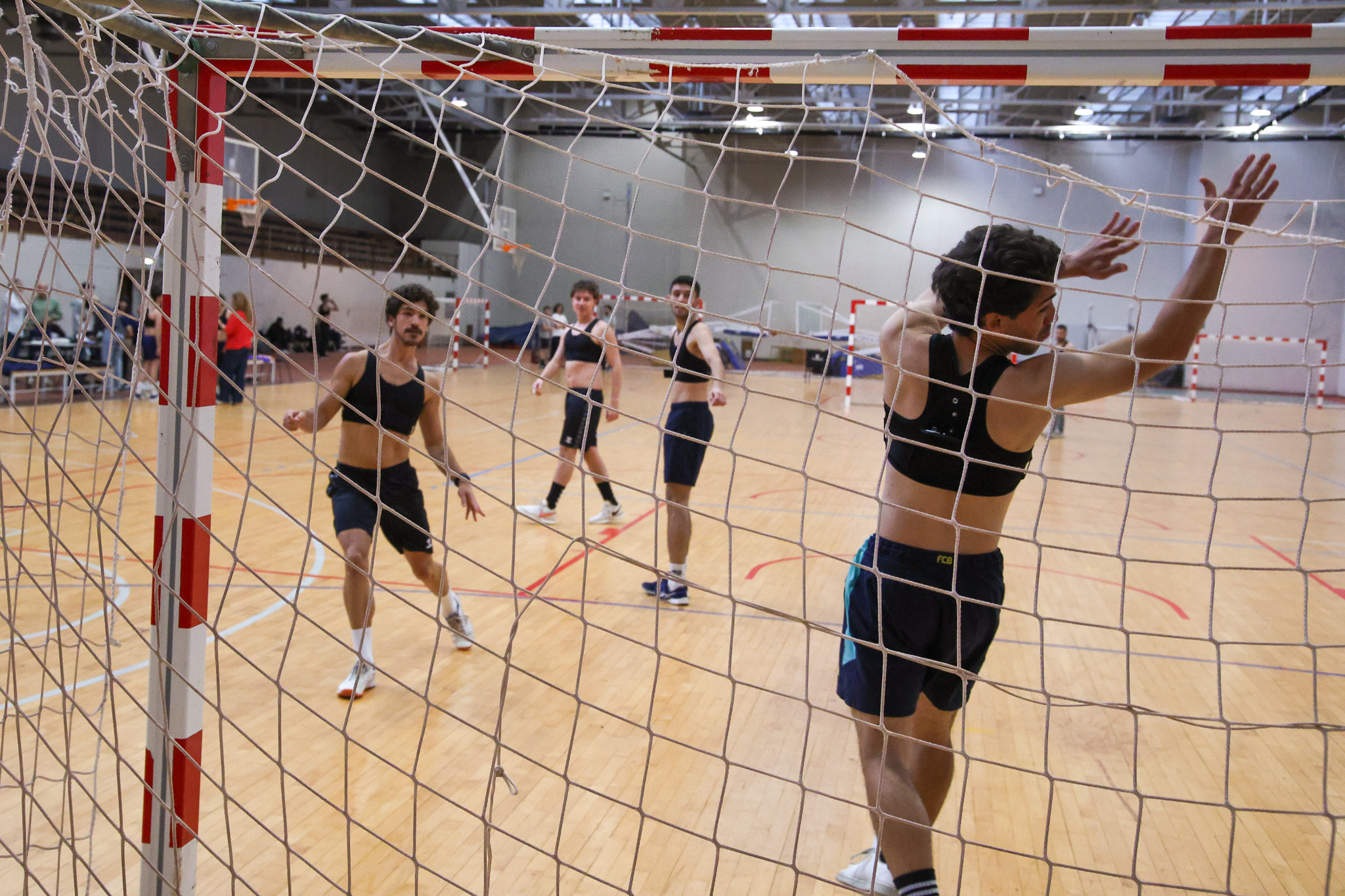
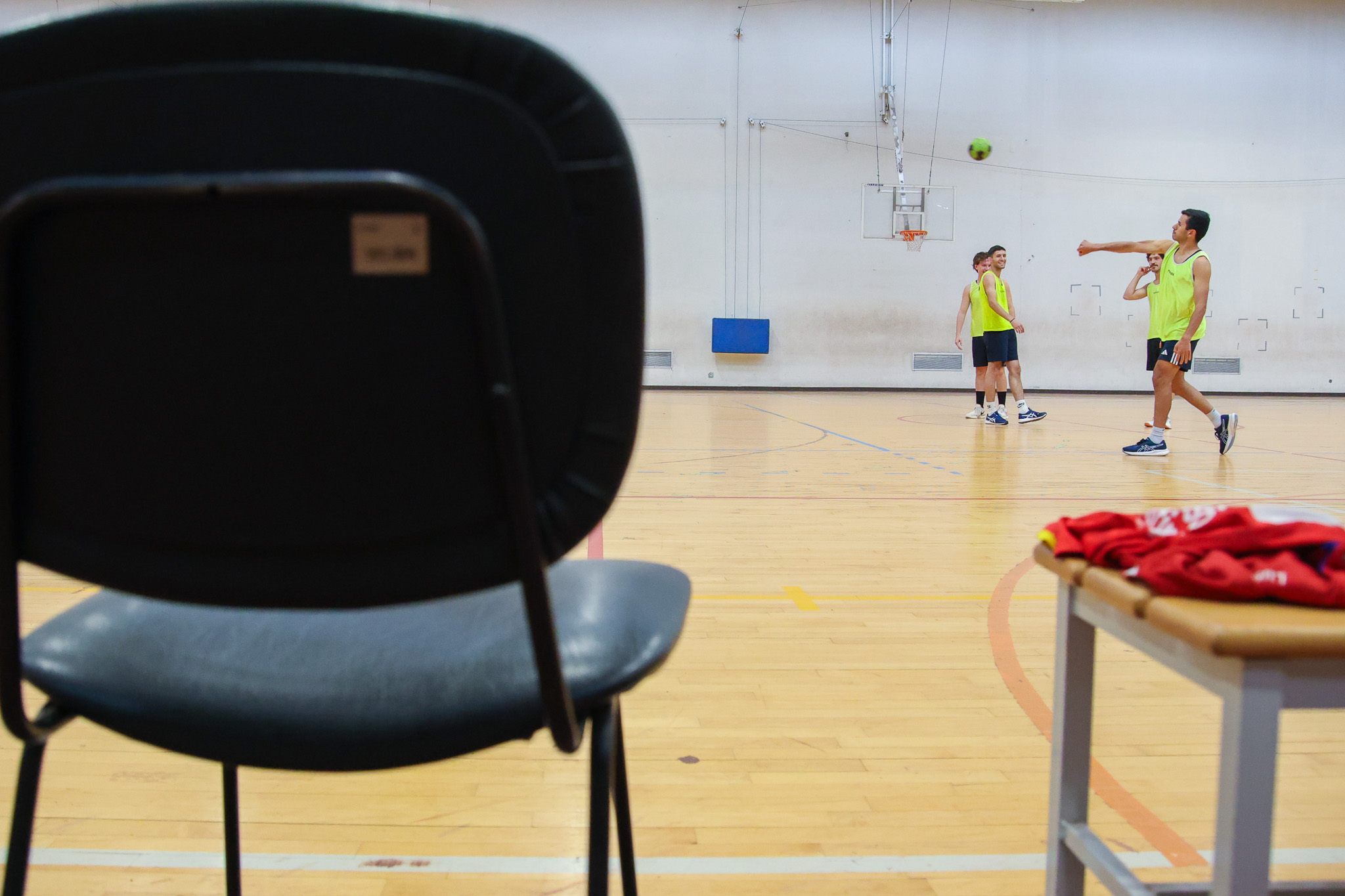
Rubber soles screech across the polished wooden court as players sprint from one end to the other: fast break, controlled build-up, the ball moving swiftly from hand to hand. Everything happens in an instant: a gap opens in the defence, a leap, an arm drawn back, and a shot towards goal. It could be just another handball training session – but it is not. Every athlete is wearing a black vest fitted with a small device, while researchers from INESC TEC watch a monitor from the sidelines, tracking a stream of performance data. What exactly are they doing?
To answer that, we need to set the scene. We are at the sports hall of the Faculty of Sport of the University of Porto (FADEUP). It is late April and only a few weeks remain before the conclusion of the TEXP@CT mobilising agenda. Over the past three years, researchers and companies have worked together to develop solutions that support the digital transformation of the textile industry and pave the way for a smarter and more sustainable future.
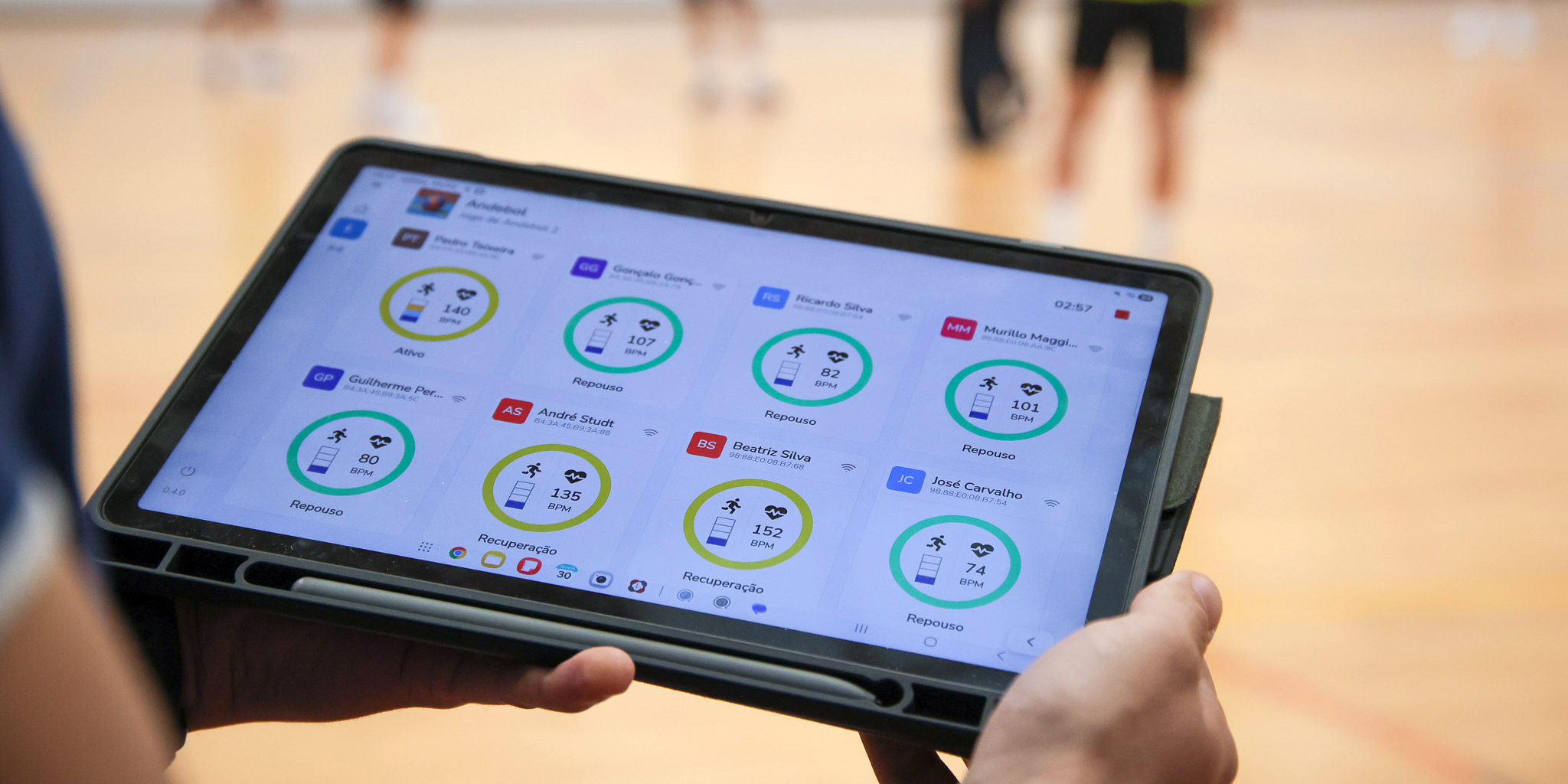
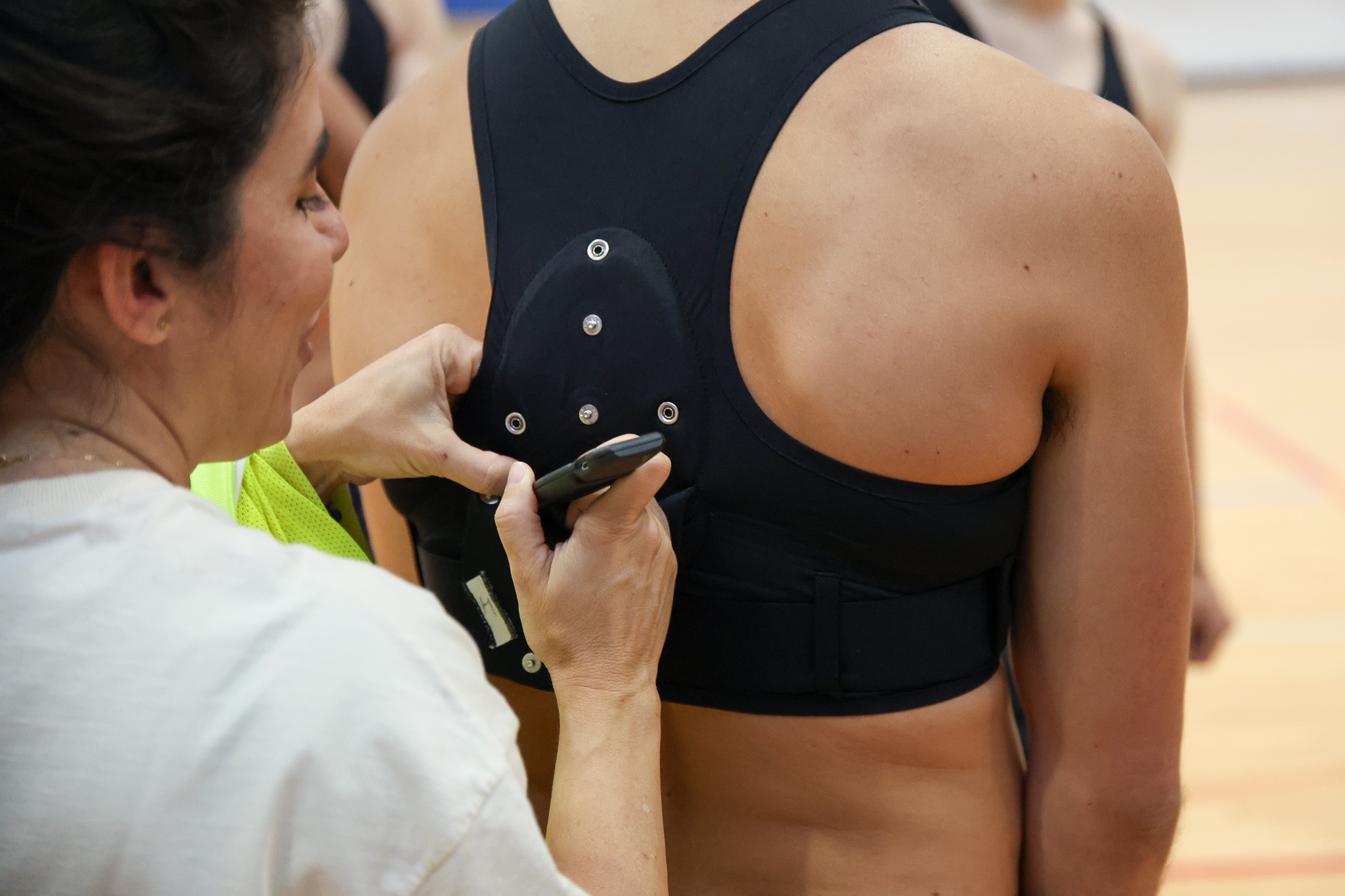
On the court, one of the project’s technological components is being demonstrated. With every sudden change of direction and burst of acceleration, attention shifts to the screens. What appears there is the visible part of a complete platform designed to support sports training and physical education activities. As the game unfolds, sensors embedded in the athletes’ garments continuously collect data.
The system works as follows: every player wears a smart vest equipped with multiple sensors. Hidden within the fabric is technology capable of capturing metrics like heart rate and movement intensity. The objective is to compile performance data that coaches and teachers can later analyse to monitor and assess athletes’ physical performance.
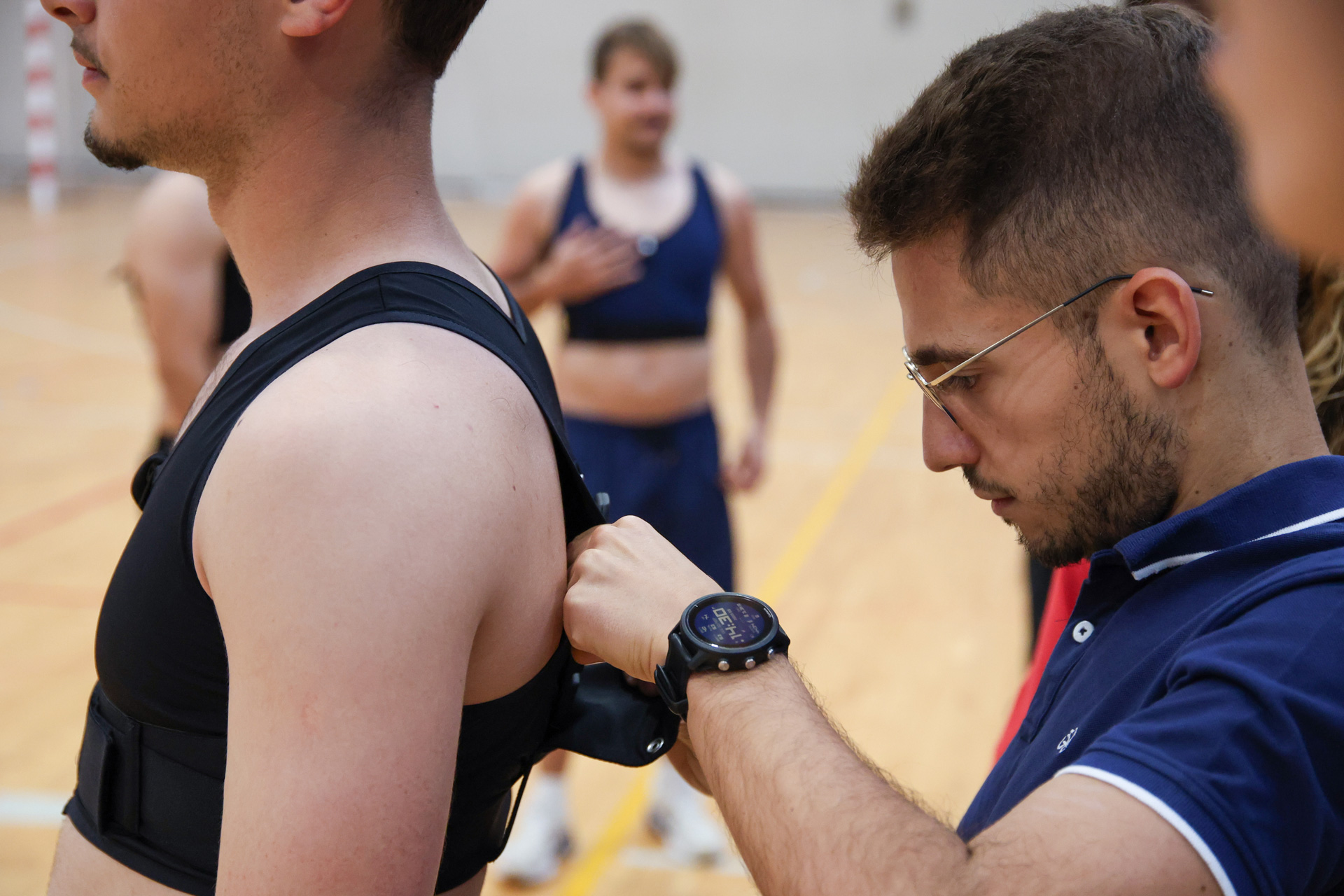
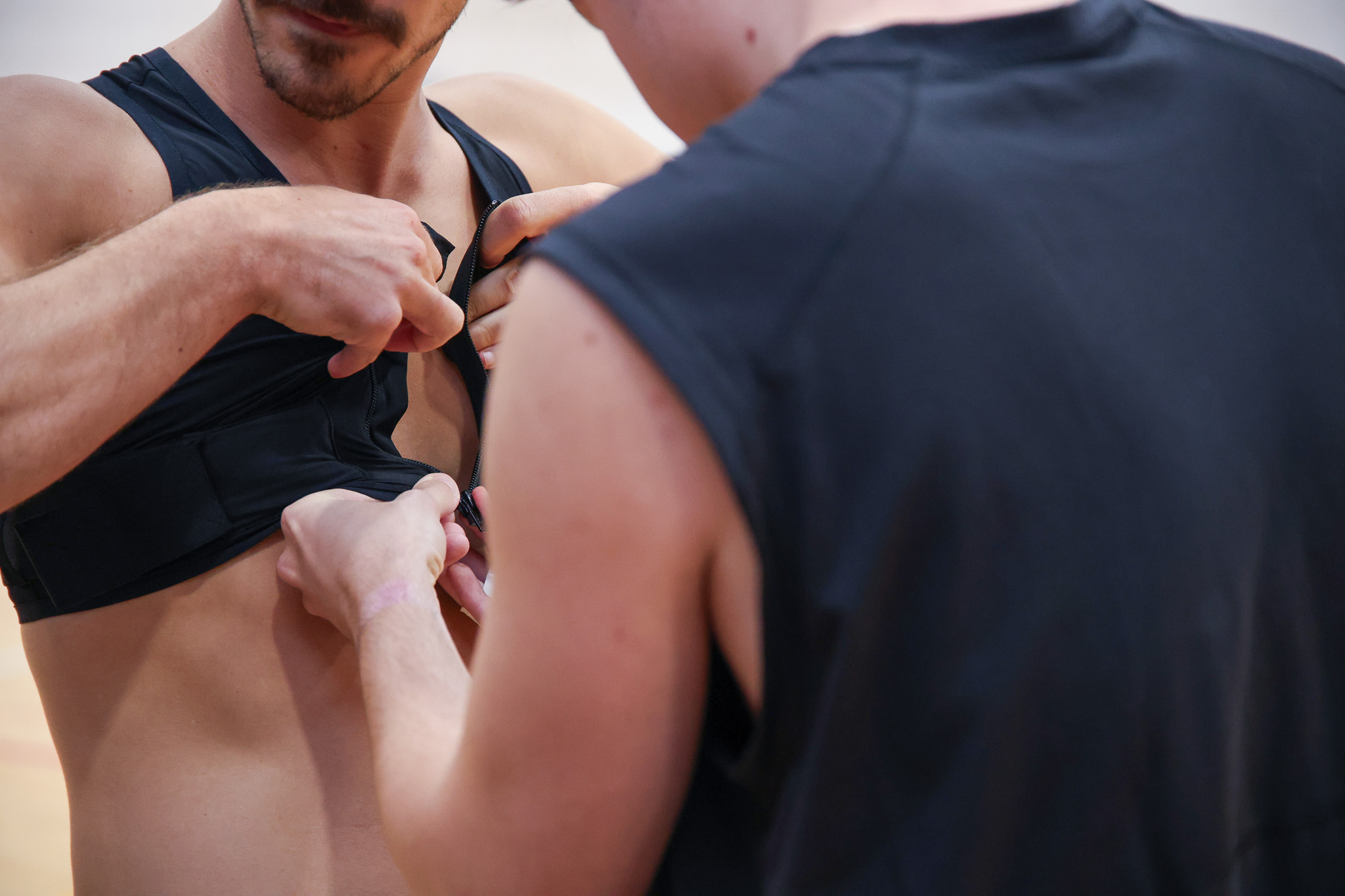
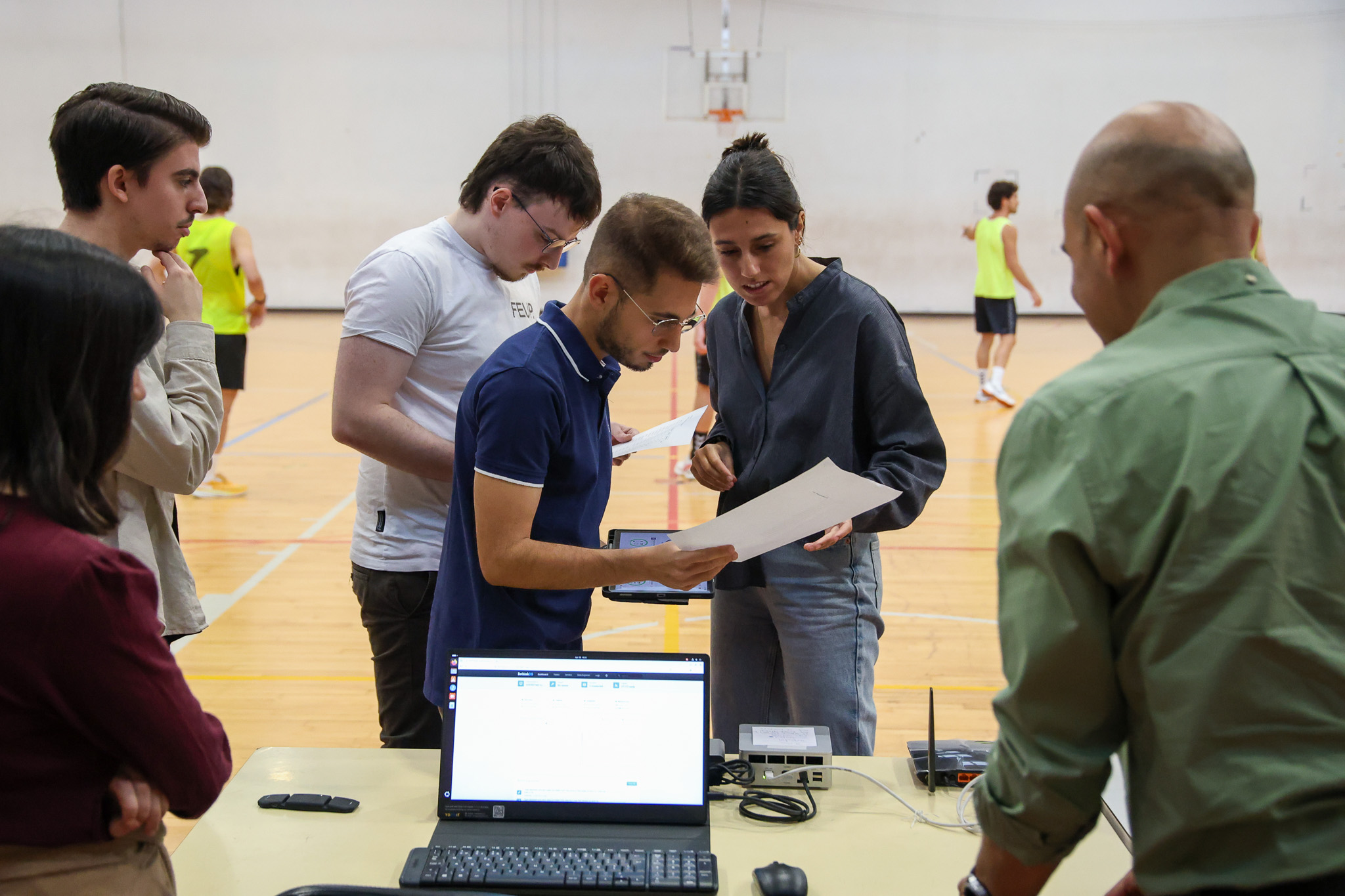
Every movement counts
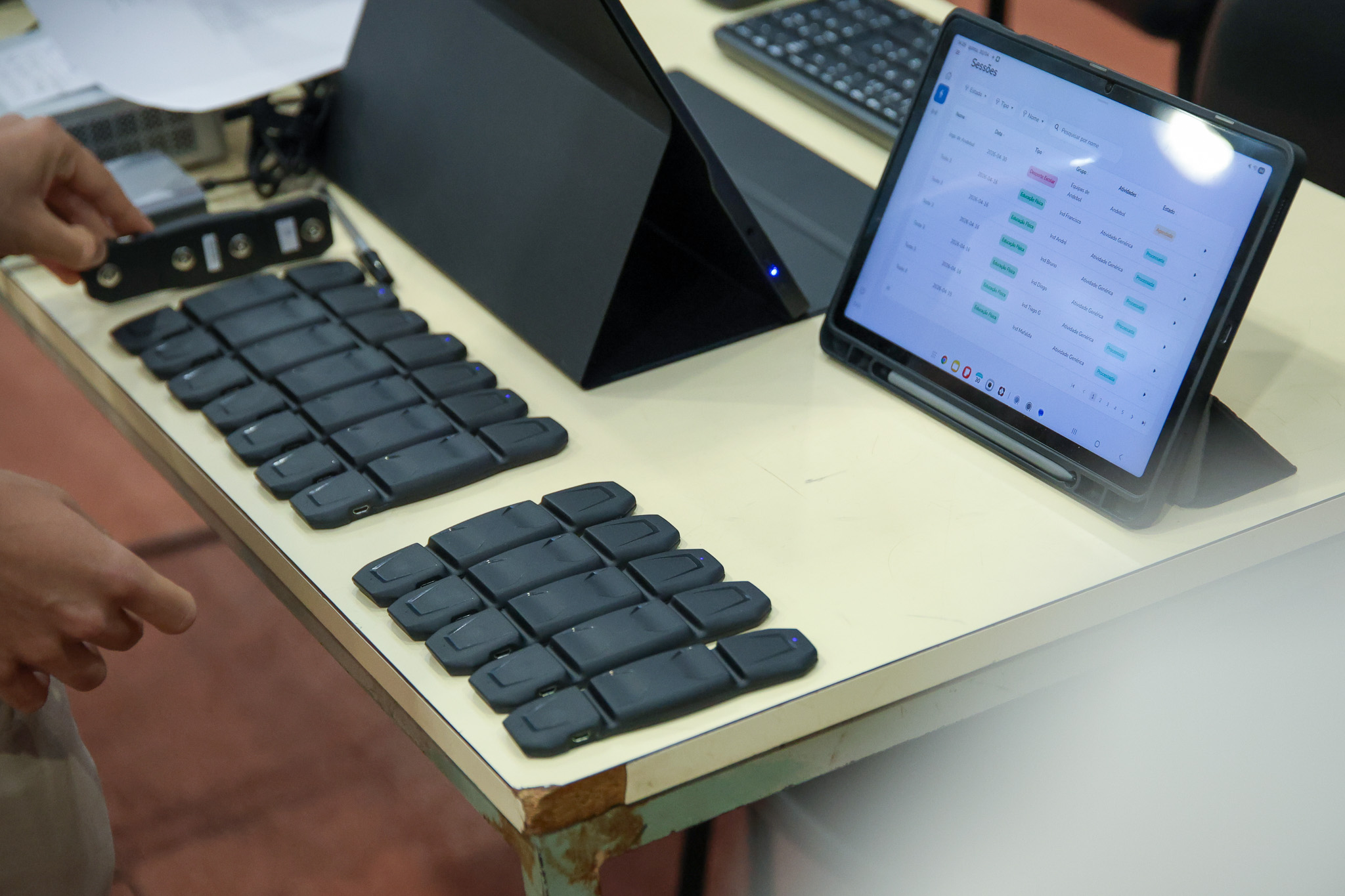
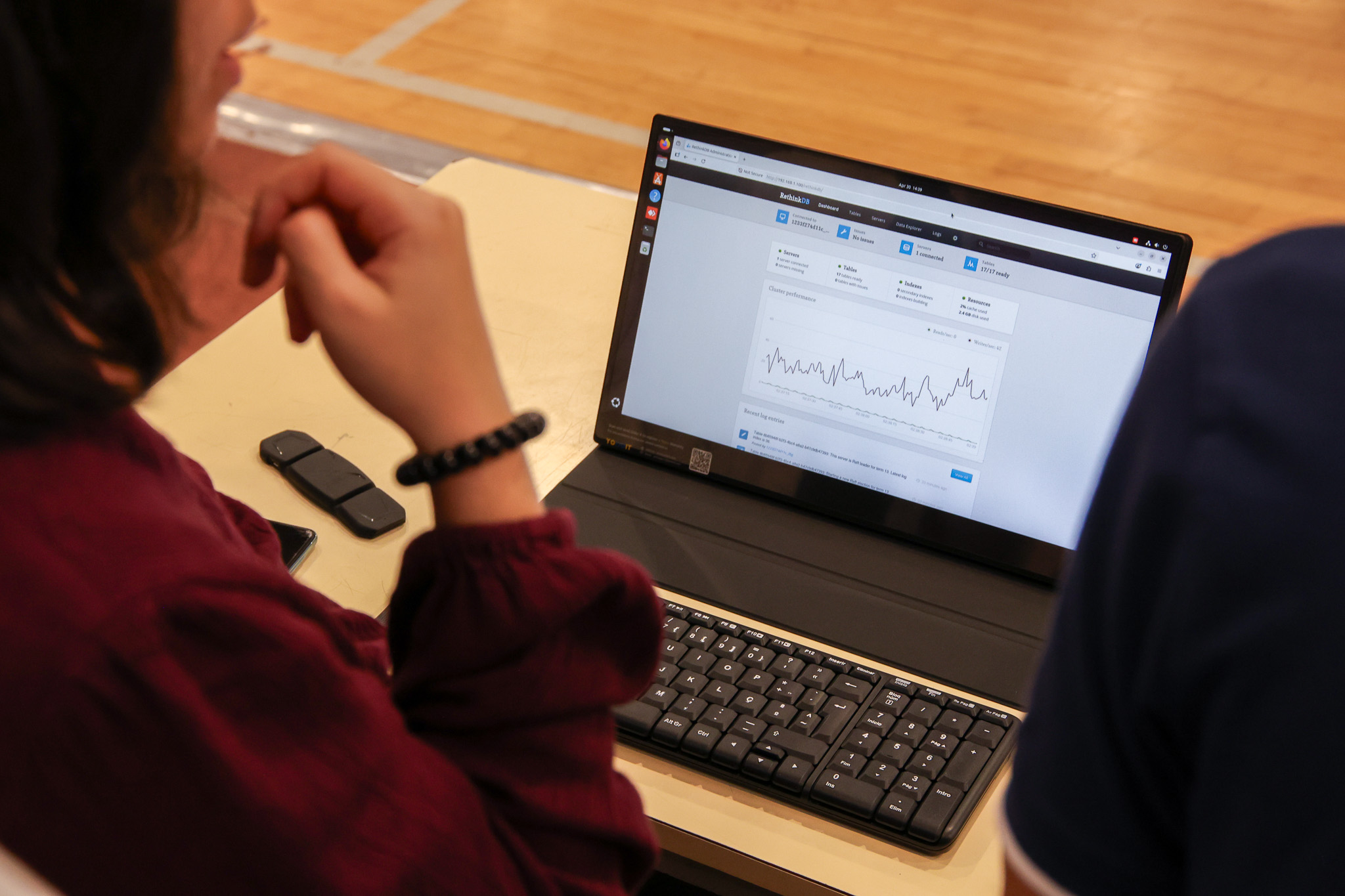
The Institute played a central role in the project. According to researcher Lino Oliveira, the INESC TEC was responsible for developing the platform’s technological backbone. “Beyond the device itself and the vest in which it is integrated, the solution requires a complete software infrastructure capable of collecting data in real time, storing it and supporting continuous monitoring during classes or training sessions,” he explained.
The information displayed on screen is designed to be intuitive and easy to interpret, using pie charts, bar graphs, icons and clear identification of each athlete on the court. Data analysis takes place in two stages. The first occurs in real time, while the activity is ongoing. At this stage, only the most relevant indicators (heart rate and movement intensity) are displayed. The information is simultaneously recorded and stored. The platform operates on a local network, with all data processed and stored on a local server rather than in public cloud services.
The technology developed by the consortium, however, extends well beyond real-time monitoring. The collected information remains valuable long after the final whistle. “There is a second software component that enables a much more detailed post-training analysis of the entire session,” noted Lino Oliveira.
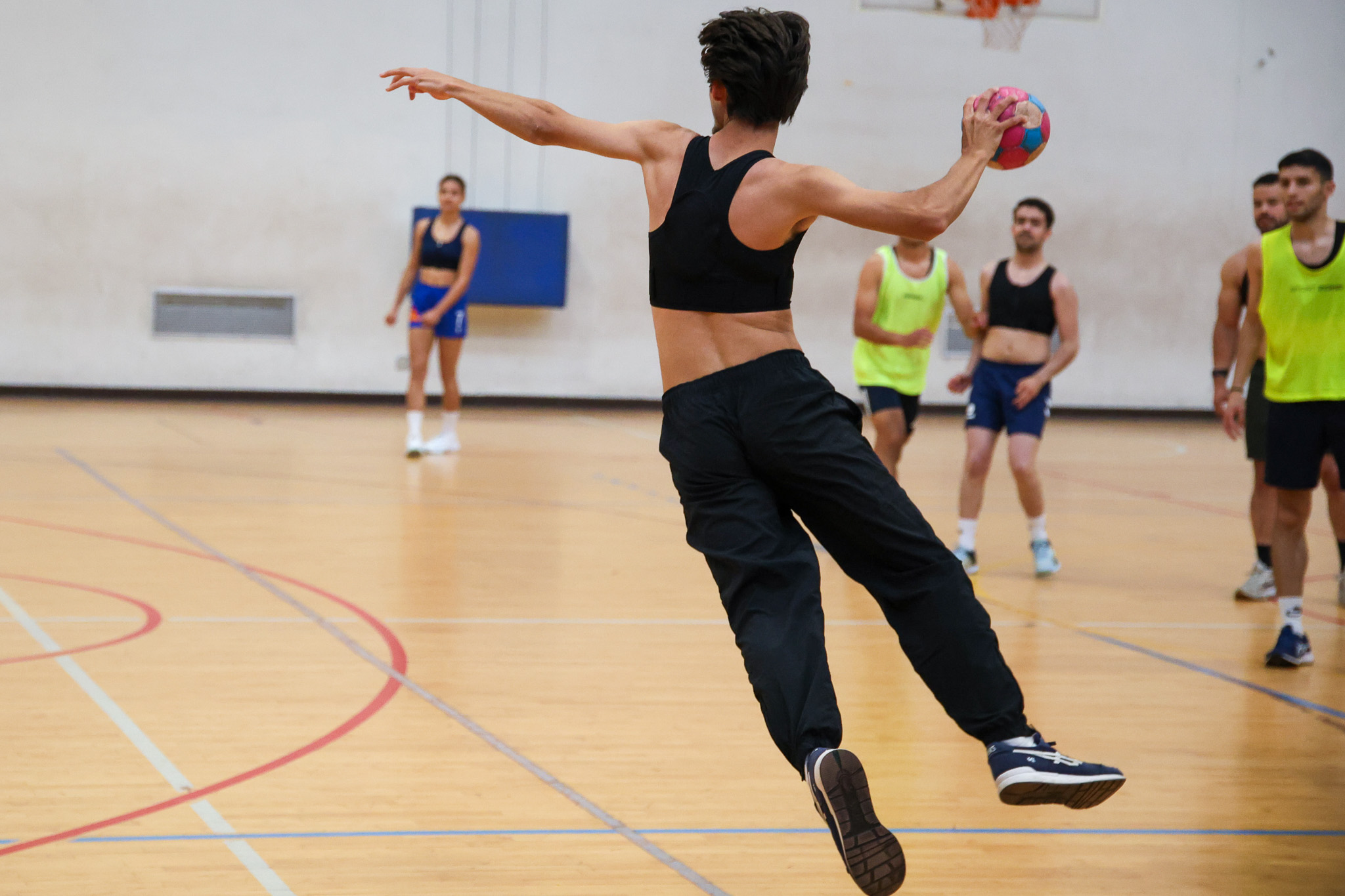
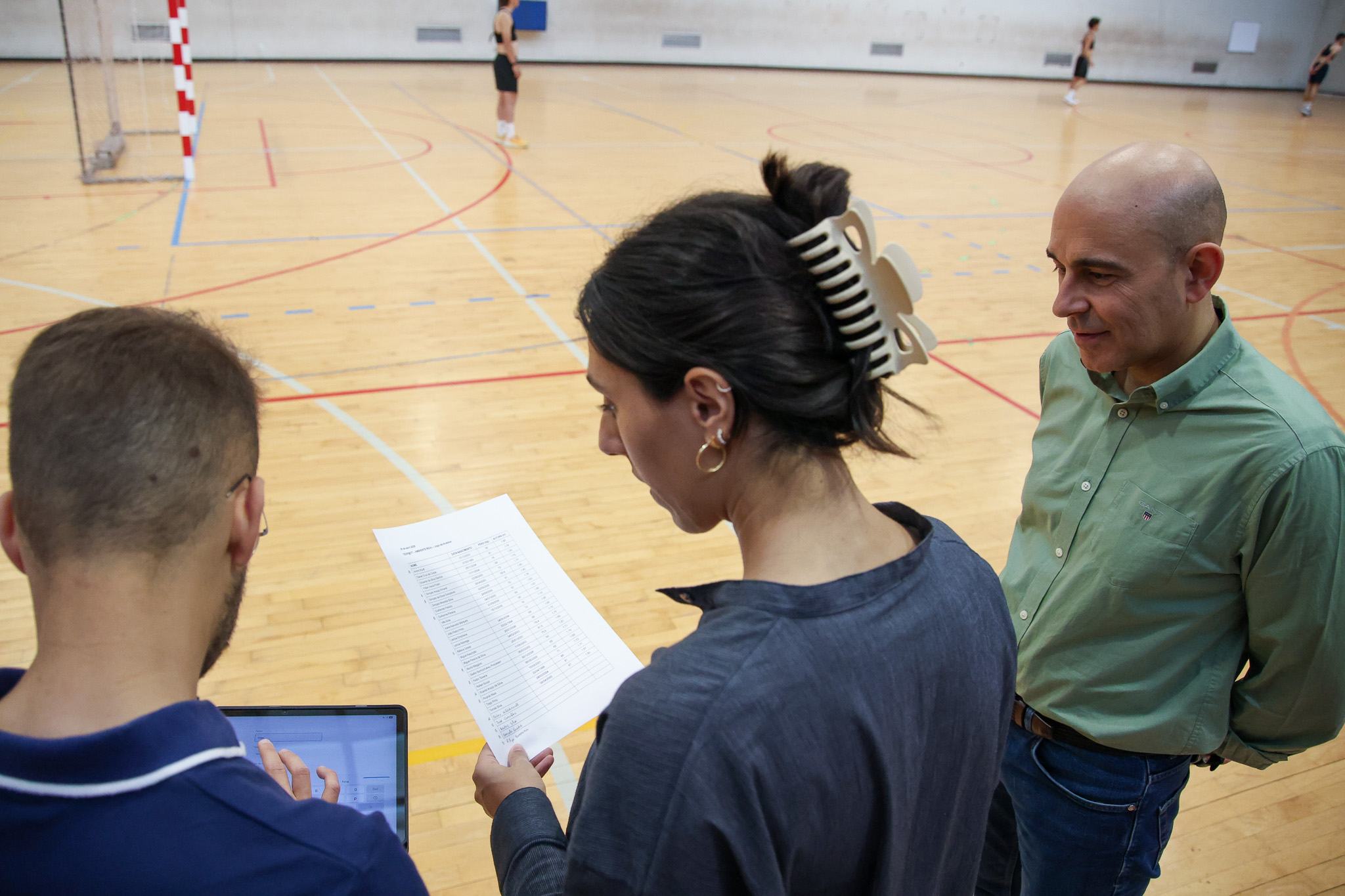
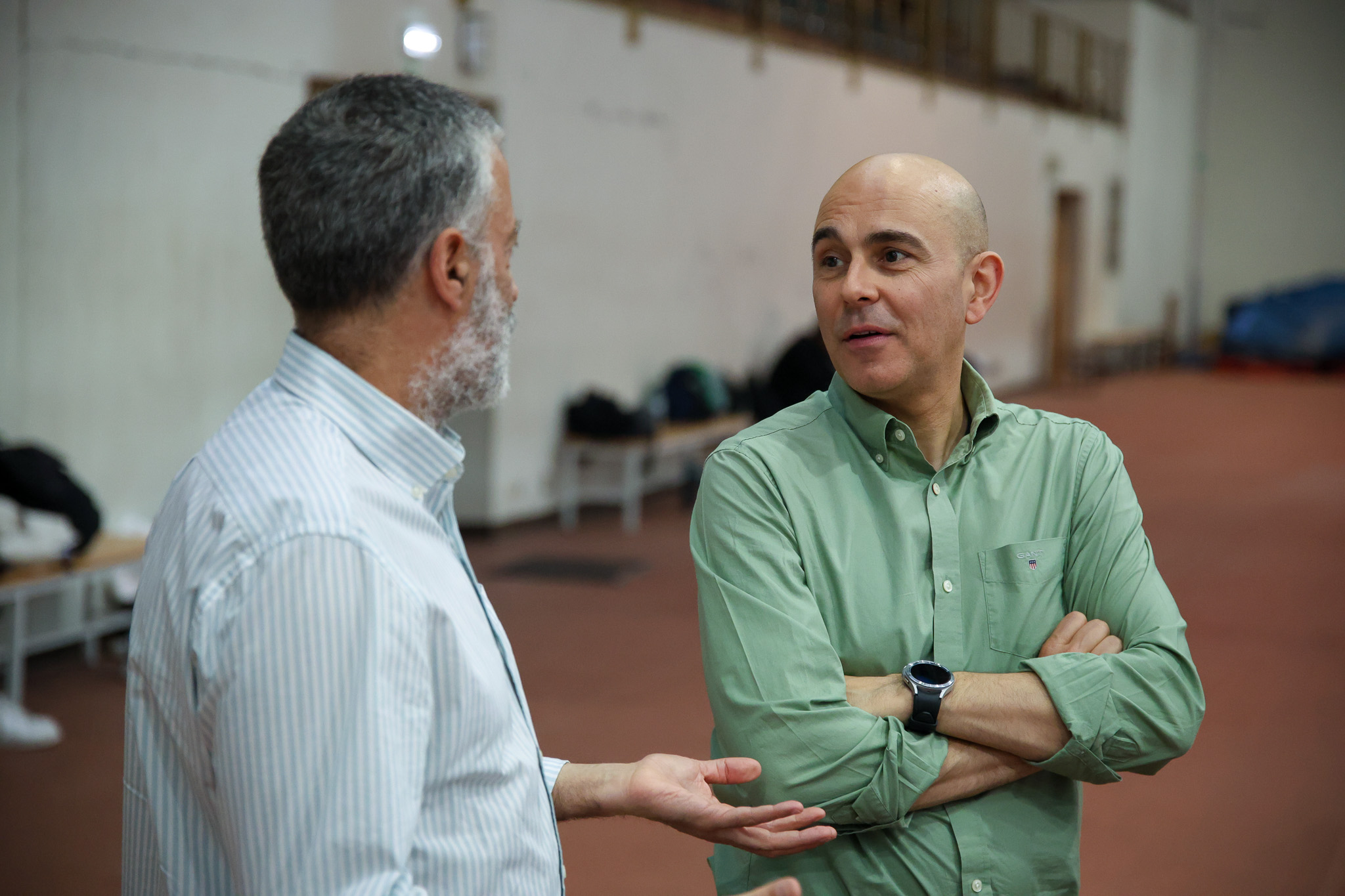
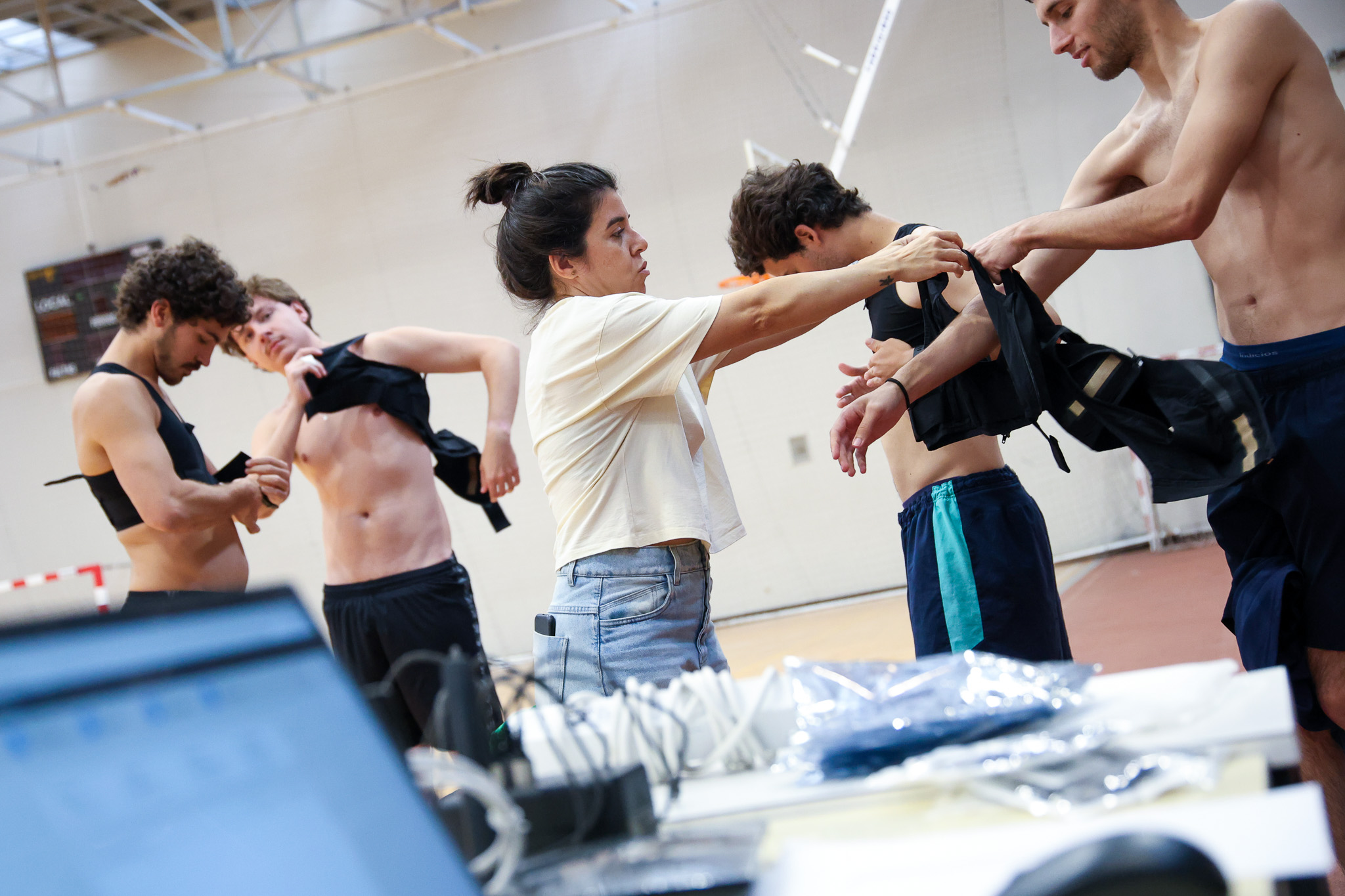
These data can play a significant role in the growing field of sports performance technologies. According to Miguel Velhote Correia, the algorithms developed within the project can also be used to analyse athletes’ positioning on the field. “By knowing the precise location of each athlete at every moment, it becomes possible to assess aspects such as attacking and defensive phases, including their duration and dynamics,” he explained.
“Additionally, by using Artificial Intelligence techniques, we can automatically recognise activities and determine whether an athlete is running, walking, jumping or shooting at goal.” By providing a comprehensive picture of athlete behaviour and performance, the platform can be applied across a wide range of disciplines – more than 10 sports (including individual activities).
The closing event of the TEXP@CT Mobilising Agenda took place at the Alfândega do Porto, bringing together representatives from industry, research organisations and technology partners. The event showcased the outcomes of the agenda’s seven work packages and 26 Products, Processes and Services (PPS).
According to the programme’s final report, the consortium succeeded in developing practical solutions capable of accelerating digitalisation, improving sustainability, increasing production efficiency and helping the industry respond more effectively to the demands of global consumers.
The consortium responsible for the work package dedicated to the development of smart garments for sports training included, alongside INESC TEC, CITEVE, LMA, LABIOMEP and PLUX. INESC TEC also contributed to two additional Products, Processes and Services developed under the TEXP@CT agenda.
 News, current topics, curiosities and so much more about INESC TEC and its community!
