


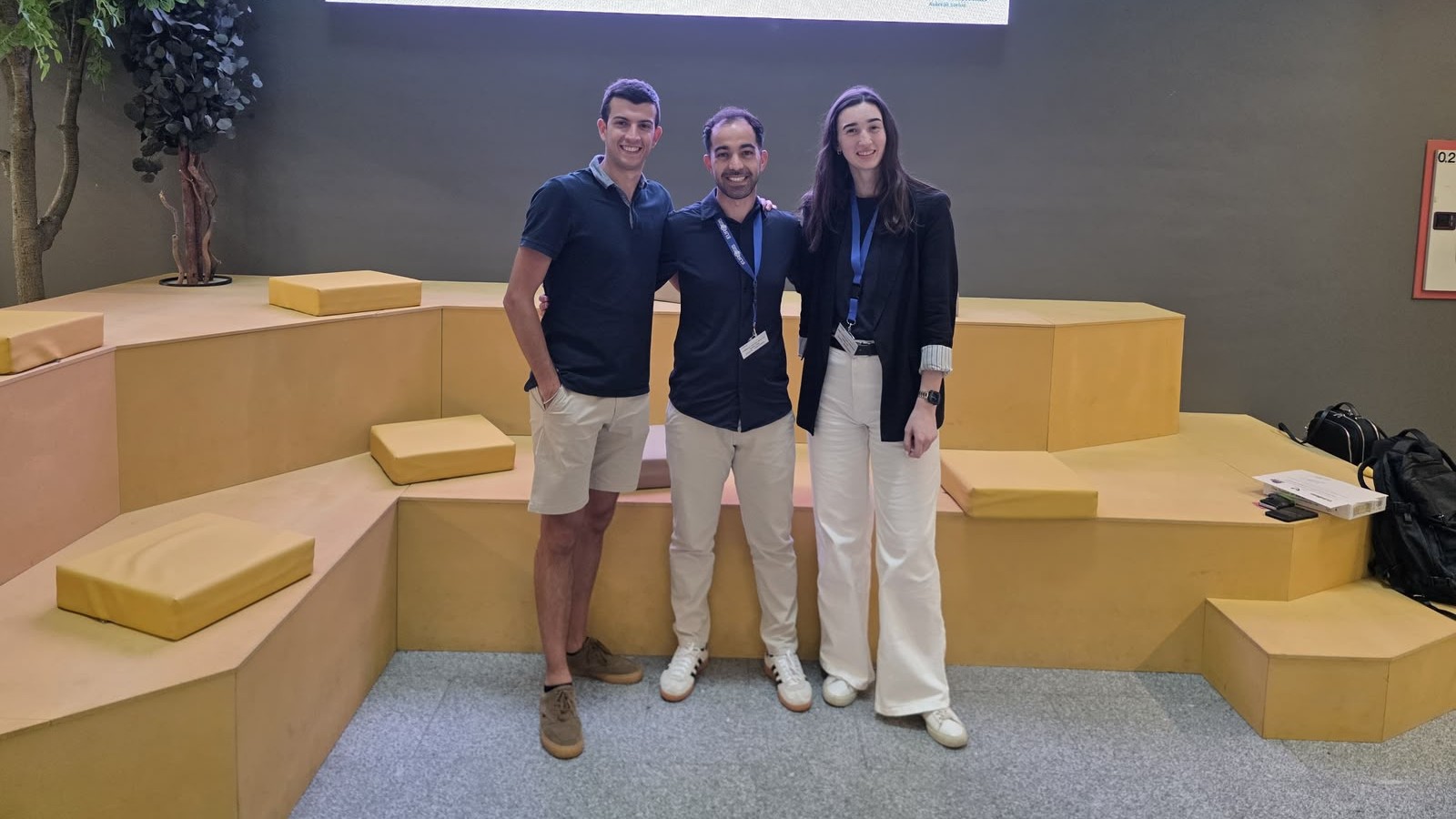
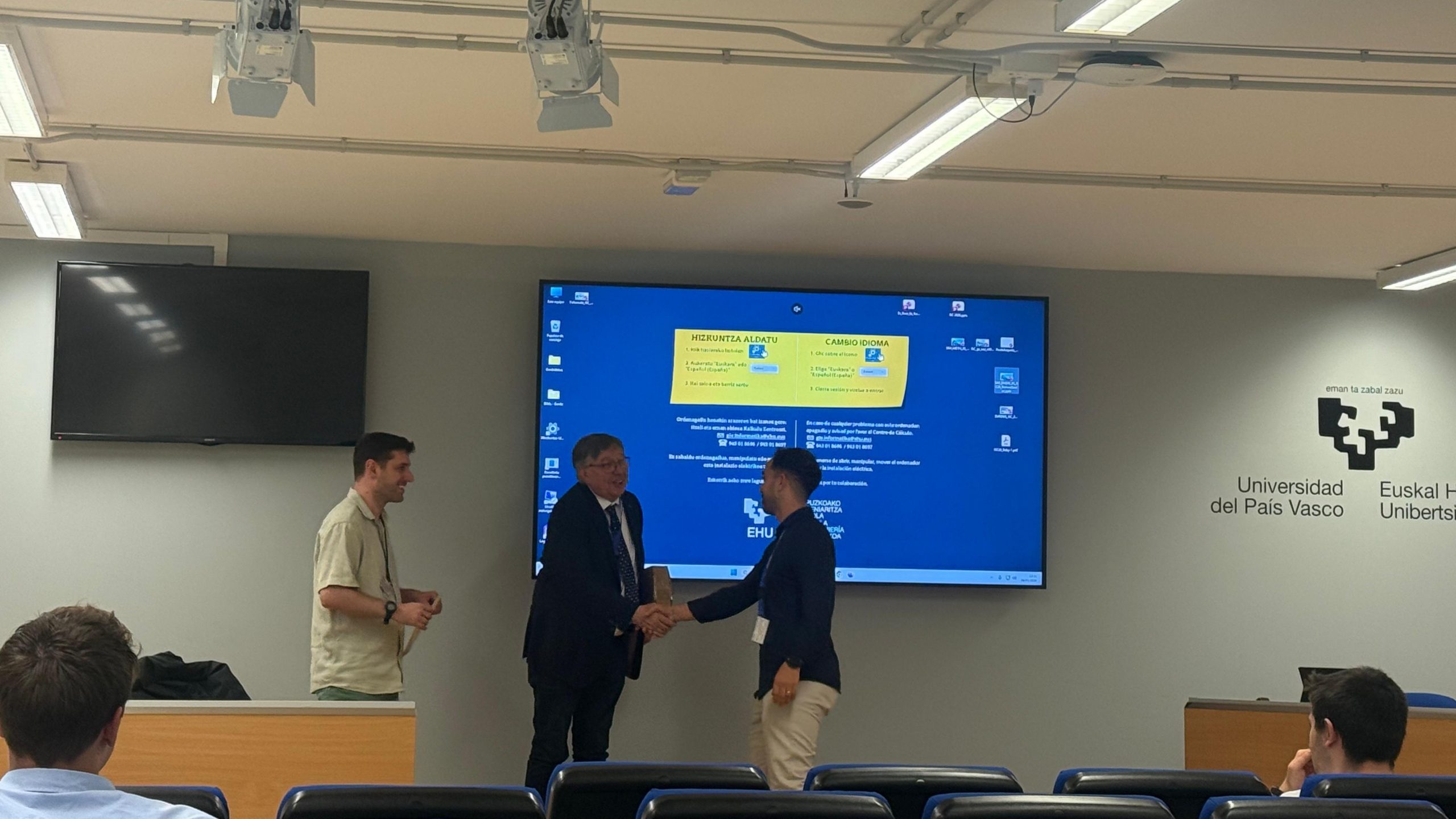
A study that led to the development of a model capable of realistically reproducing the flows of collection, transport, consolidation and routing of components along the value chain was recognised at the Industrial Simulation Conference (ISC’2026). The tool, developed by INESC TEC, makes it possible to virtually test different logistics network configurations, assess economic, environmental and operational impact, and quantitatively compare alternatives, supporting companies in their decision-making process.
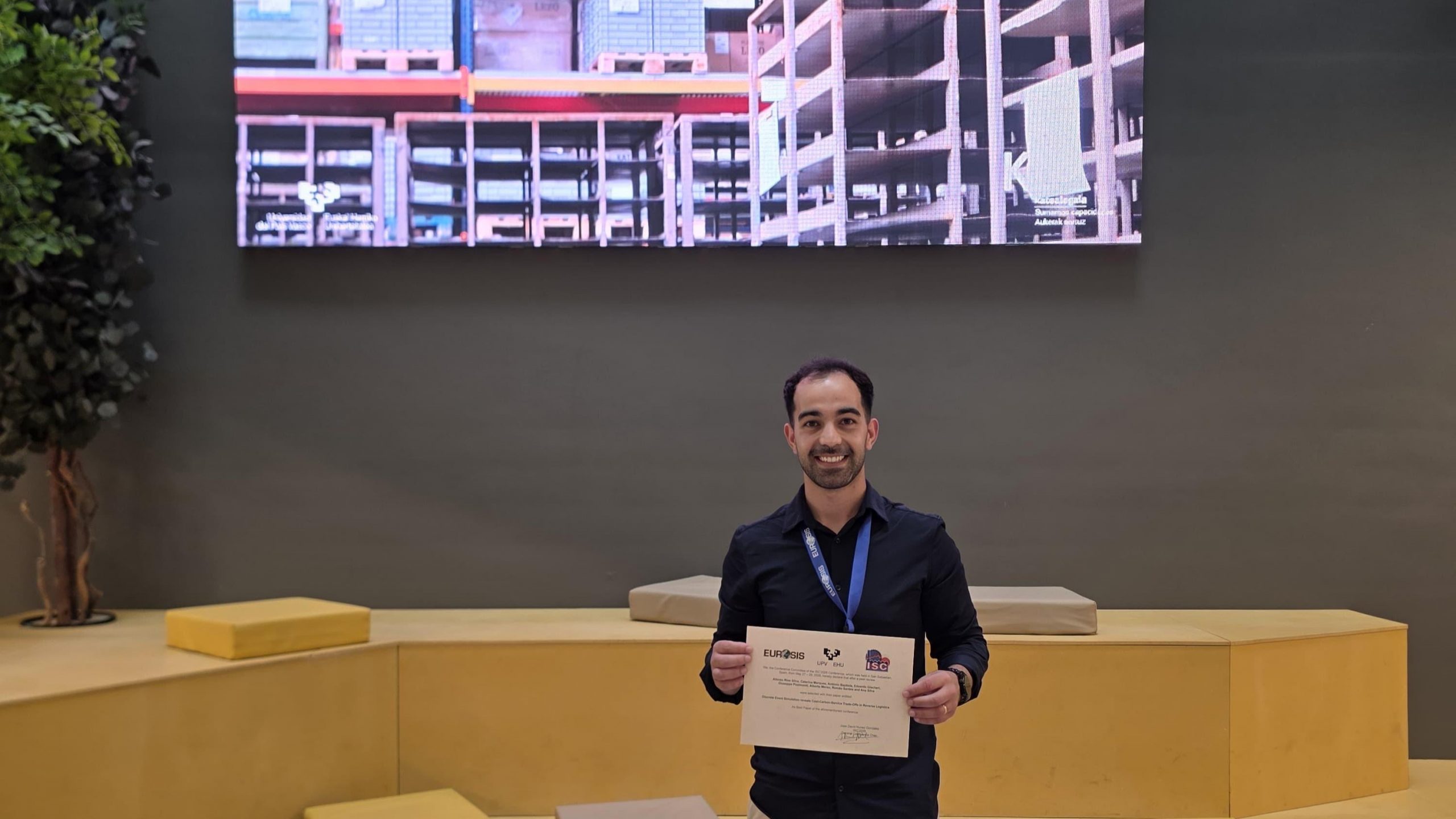
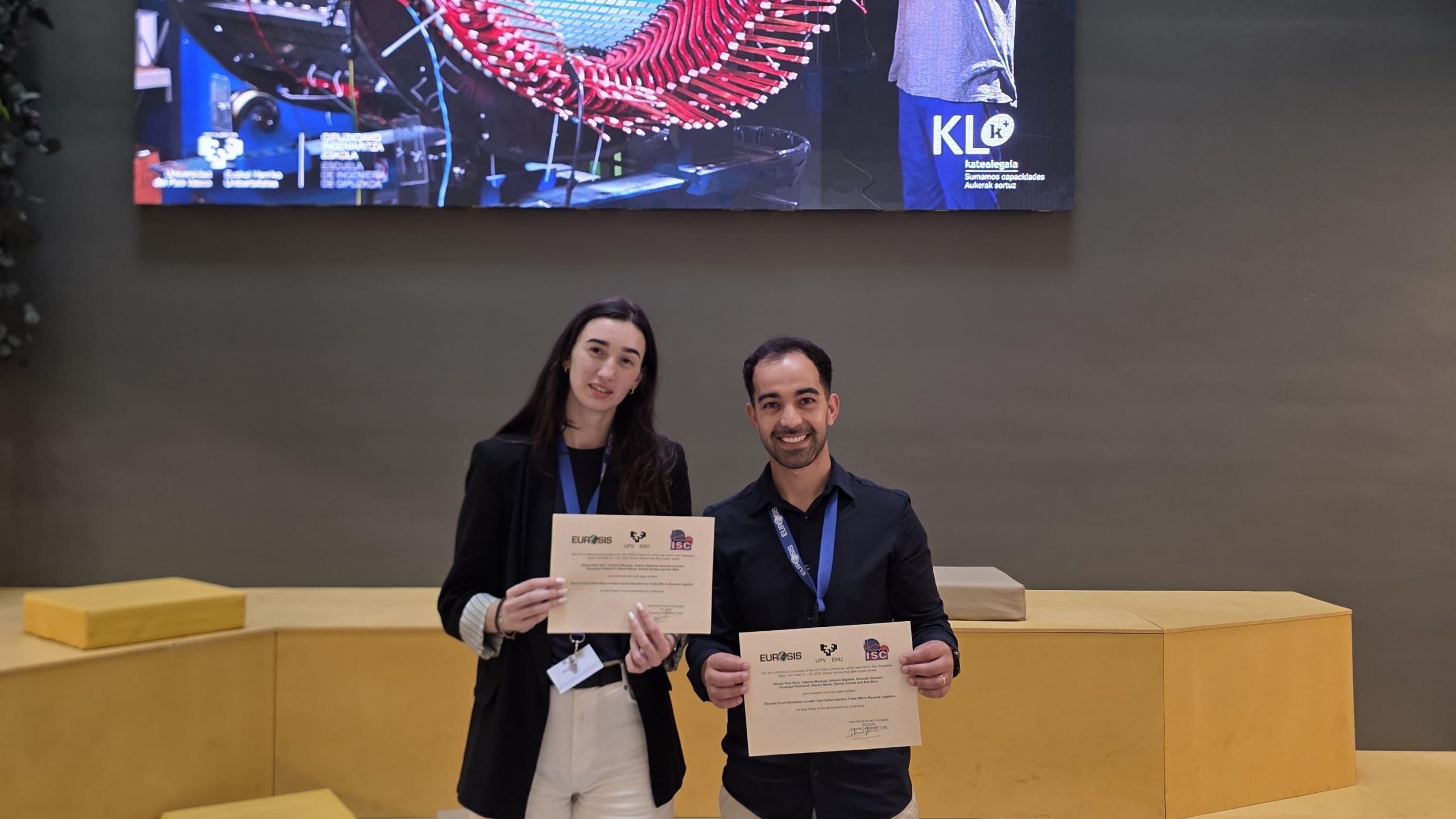
Reverse logistics, integrated into supply chain management, refers to the flow of goods or products in the opposite direction, i.e., from the end consumer back to retailers, distributors or manufacturers. INESC TEC’s research focused precisely on this process and was published in the paper Discrete Event Simulation Reveals Cost-Carbon-Service Trade-Offs in Reverse Logistics – which received the Best Paper Award at ISC’2026. More specifically, the researchers studied the design and management of reverse logistics networks for products subject to remanufacturing processes.
“A discrete event simulation model was developed, supported by a geographic representation of the logistics network, which makes it possible to realistically reproduce the flows of collection, transport, consolidation and routing of components along the value chain,” said Romão Santos.
According to the INESC TEC researcher, combining a geographic representation of the logistics network with a discrete event simulation model made it possible to simultaneously represent the real location of assets, road distances, the logistics network configuration and the operational dynamics of transport and consolidation processes. “This combination offers a more complete view of the impacts of logistics decisions and makes it possible to analyse not only the network structure, but also the dynamic behaviour of the system over time,” he mentioned.
Building on this, the researchers assessed different logistics network configuration strategies, comparing centralised and decentralised approaches, as well as different fleet sizes. Since the model incorporates variability in return flows, different condition states of returned components, as well as event-based consolidation and dispatch policies, it was possible to map out scenarios and, for each one, calculate economic, environmental and operational indicators, like transport costs, CO₂ emissions, distances travelled, fleet use and the system’s responsiveness – measured by the number of operations completed. As Romão Santos explained, this approach made it possible to quantify, in an integrated way, the trade-offs between economic performance, environmental impact and service quality.
“The results showed that increasing fleet size does not necessarily lead to linear gains in efficiency or sustainability. In both centralised and decentralised scenarios, more vehicles increase responsiveness, but can also generate less efficient effects, such as greater distance travelled per task, variations in cost per operation, and changes in CO₂ emissions,” the researcher stated, highlighting that this finding reinforces the importance of sizing the fleet together with the logistics network configuration, rather than assuming that more capacity automatically results in better performance.
In addition, the study also showed that the approach developed is flexible and can be adapted to different supply chains with reverse logistics and circular economy features, which facilitates the transfer of the methodology to other industrial sectors and reduces the effort required to represent new logistics networks and assess different operational scenarios. As such, it can support strategic supply chain design decisions before changes are implemented on the ground. “Companies and organisations can use this type of tool to support decisions related to facility location, logistics resource sizing, flow consolidation strategies, transport planning and the definition of recovery and remanufacturing policies,” Romão Santos pointed out.
By enabling the virtual testing of different logistics network configurations and the assessment of economic, environmental and operational impact, while quantitatively comparing alternatives, this tool is expected to further reduce decision-making risk and increase the capacity to develop more efficient, resilient and sustainable supply chains.
This work, co-authored by Romão Santos together with INESC TEC researchers Afonso Silva, Catarina Marques, Ana Silva and António Baptista, is part of the European RENEE project, which aims to develop advanced remanufacturing solutions combining robotics, AI, digital twins and advanced product and process development strategies – within the context of the circular economy – to increase product reuse and extend product life cycles.
Simulation, digital twins and digital interoperability as a response to industry challenges
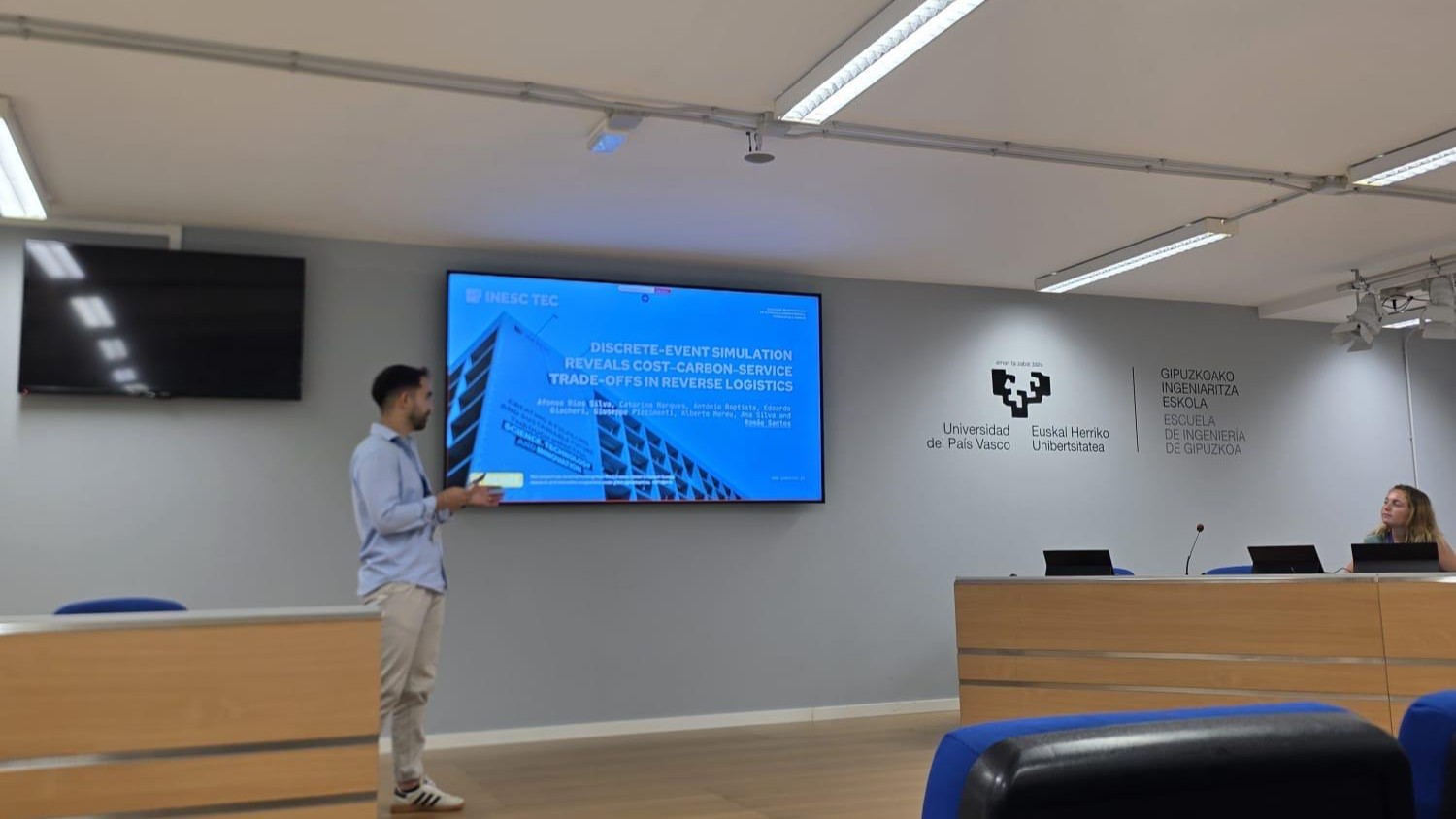
INESC TEC brought other ongoing work addressing industrial problems to ISC’2026. still within the scope of RENEE, Romão Santos presented the paper Asset Administration Shell as a Backbone for Interoperable and Scalable Discrete-Event Simulation. This work proposes an architecture based on the Asset Administration Shell (AAS), one of the reference technologies of Industry 4.0, to promote interoperability between industrial systems, digital twins and simulation tools. The goal is to automate information exchange with simulation environments, reduce integration effort, and facilitate the creation of more scalable, reusable and interoperable solutions along the value chain.
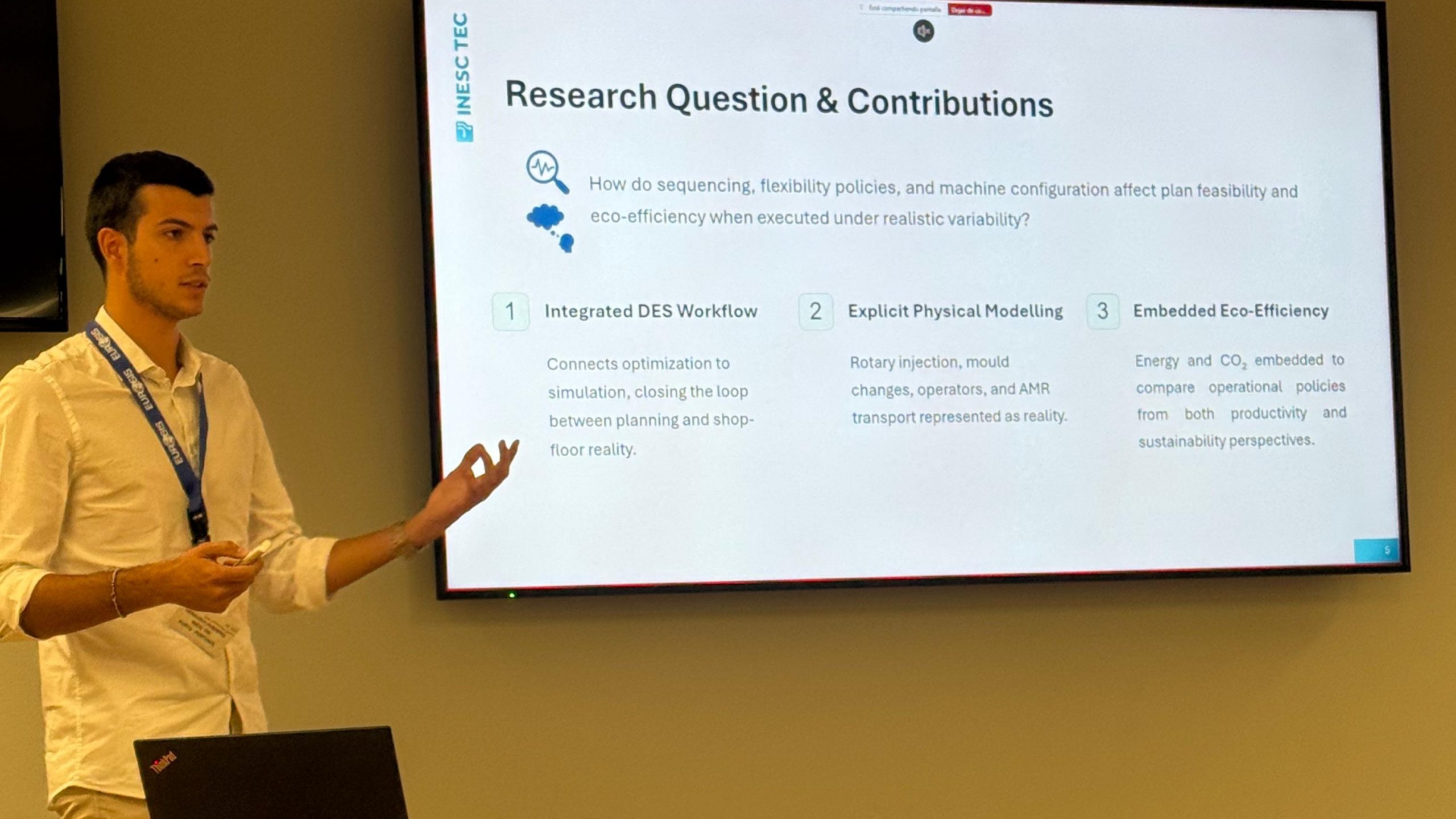
Henrique Piqueiro, also an INESC TEC researcher, presented a discrete event simulation-based methodology to support the validation of eco-efficient production plans in injection-moulded footwear manufacturing systems, developed within the BioShoes4All project. The solution allows production plans generated by planning tools to be virtually executed and considers real factors such as operational variability, equipment unavailability, mould availability, mould-change operations and the use of autonomous mobile robots. “Through this approach it is possible to assess productivity and sustainability indicators, including makespan, overall equipment effectiveness, waste, energy consumption and CO₂ emissions, thus contributing to more robust decision-making,” he explained.
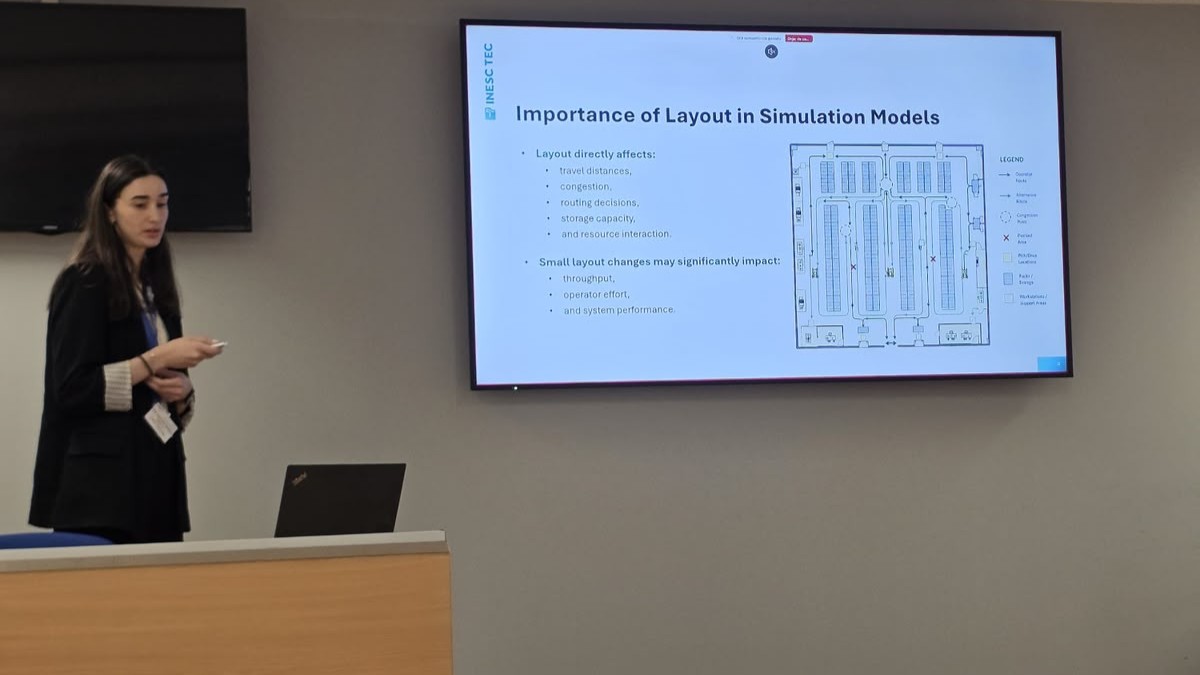
Ana Silva also presented the work developed within the framework of PRR PRODUTECH R3, focused on a CAD-to-Simulation methodology for the analysis and design of warehouse layouts, with an application example in Picking-by-Line operations. The INESC TEC researcher explained how this solution significantly reduces manual modelling effort, speeds up the creation of alternative scenarios and enables a more agile and consistent assessment of the impact of different layout configurations on indicators such as distances travelled, capacity, resource use and operational efficiency. “The methodology represents an important step towards democratising the use of simulation in the design and continuous improvement of logistics and intralogistics systems,” she stated.
ISC’2026 took place in San Sebastián, Spain, in late May.
 News, current topics, curiosities and so much more about INESC TEC and its community!
