


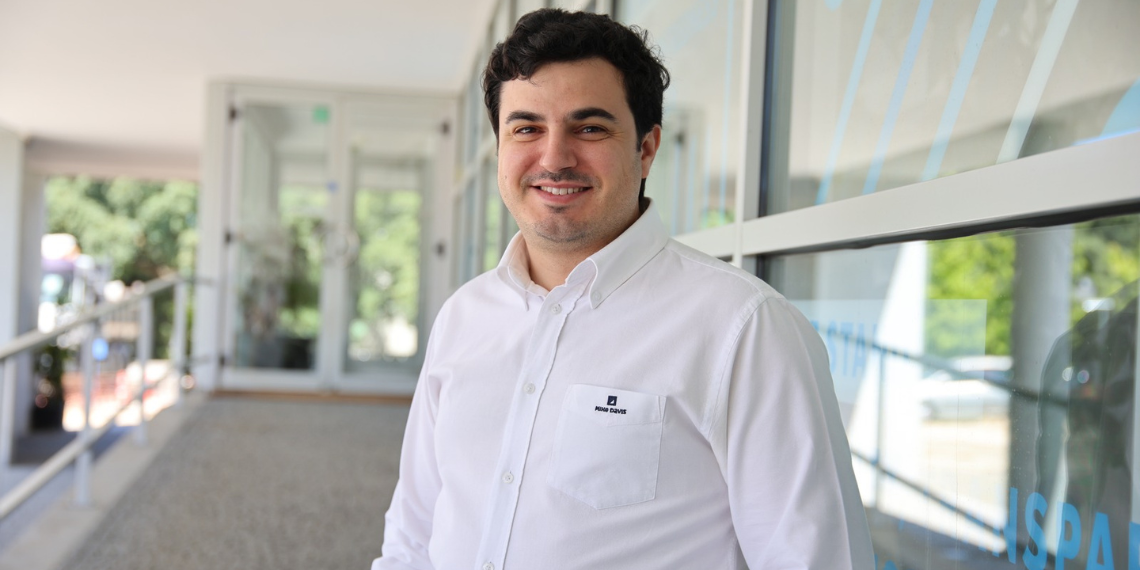
Filipe Borges Teixeira
“The CTM coordinators would like to nominate researcher Filipe Borges Teixeira. This nomination recognises Filipe’s outstanding work within the European CONVERGE project. His leadership in implementing the CONVERGE testbed in Porto has been instrumental – both in implementing all the components developed by CTM and in coordinating their integration with external partners. Bringing together computer vision and 6G communications technologies, the testbed has enabled experimentation with next-generation networks that exploit the synergies between these two domains, which have traditionally been addressed separately. The successful operation of every element of the testbed was critical to the project’s final demonstrations in Porto, Oulu and at the EuCNC & 6G Summit 2026. The excellence of Filipe’s work, recognised by the project coordination team, the centre’s coordinators and external partners, made a decisive contribution to achieving the project’s objectives. It also strengthened INESC TEC’s position as CONVERGE coordinator in the field of telecommunications and reinforced relationships with key international partners with whom we will continue to collaborate actively.”
This nomination stems from your work on the CONVERGE project; can you tell us about the implementation of the CONVERGE testbed?
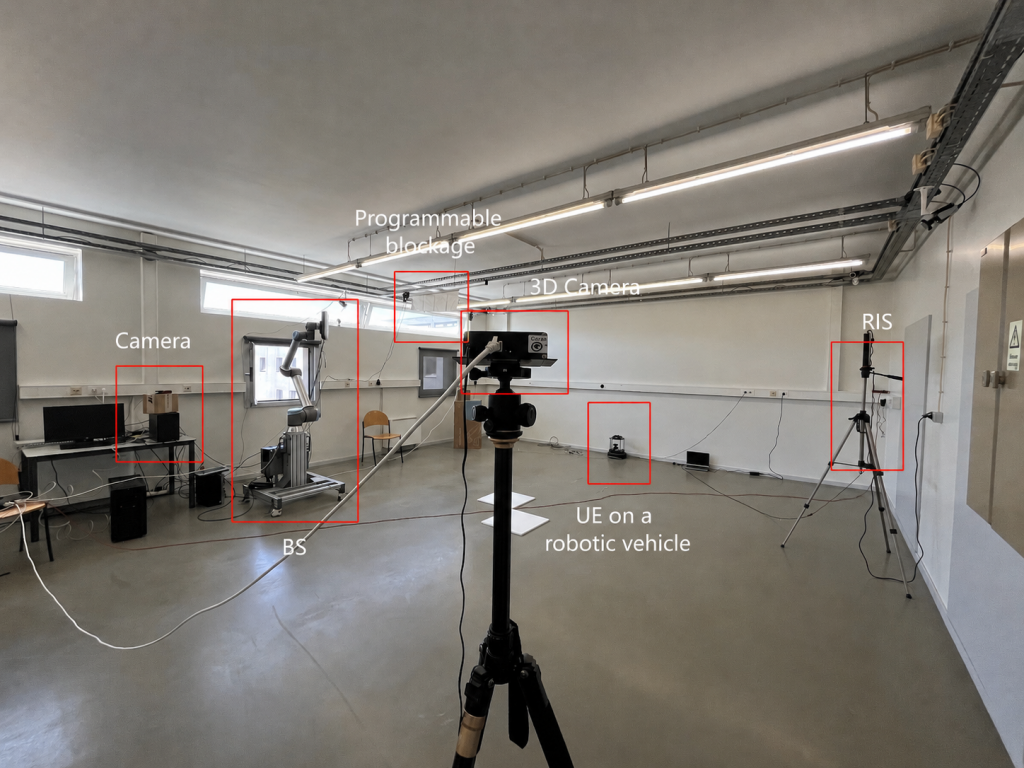
The CONVERGE research infrastructure in Porto is the result of extensive work on system architecture, the implementation of a kubernetes-based microservices platform, and the integration of a range of subsystems, including 28 GHz 5G mobile communications, computer vision, Artificial Intelligence, robotics, intelligent surfaces and digital twins.
Our goal was to build an experimental research infrastructure capable of studying 6G networks from an integrated perspective, using visual information to enhance communications while also enabling the network to support new vision-based applications, in line with the view-to-communicate and communicate-to-view paradigm.
My main contribution focused on designing the service architecture, including the control and data planes, coordinating the technical implementation of the platform, integrating the different components developed at CTM, and working closely with our external partners. I was also responsible for coordinating the establishment of the laboratory at FEUP where the testbed is hosted, ensuring that the physical and technological infrastructure met all the requirements for experimentation, integration and demonstration of the various CONVERGE components.
The testbed has enabled experimentation with next-generation networks that combine vision and communications. What will these results and demonstrations make possible?
These results pave the way for new approaches to designing and operating mobile networks, where network management no longer relies solely on traditional radio measurements but also incorporates visual information and other environmental data. This could, for example, enable networks to anticipate signal blockages, optimise antenna configurations and make better use of Reconfigurable Intelligent Surfaces (RIS), improving both coverage and quality of service. It also opens new possibilities for demanding applications across sectors including telecommunications, automotive, manufacturing, media and healthcare.
More than a one-off demonstration, the new multisensory laboratory established at FEUP provides a long-term experimental platform for validating algorithms, collecting data and developing 6G solutions under controlled conditions that closely resemble real-world environments.
Is the testbed available for use? If so, how can it be accessed?
Yes. The research infrastructure is currently available within the framework of the CONVERGE project and has been developed with future integration into the SLICES research infrastructure in mind. People can use it for research, technology demonstrations and experimental validation in collaboration with national and international partners. Access is coordinated by the INESC TEC team, considering the scientific objectives of each activity, the experimental requirements and the availability of the different infrastructure components.
Which aspects of your job do you enjoy the most?
Mainly the opportunity to transform innovative scientific ideas into real, demonstrable systems. At INESC TEC, we have the opportunity not only to carry out fundamental research but also to build laboratory infrastructures, prototypes and demonstrators, which significantly increases the scientific and technological impact of our work.
How do you comment on this nomination?
I am very proud and grateful to the CTM coordinators. This achievement wouldn’t have been possible without the contribution of a large multidisciplinary team, involving people from across CTM as well as national and international partners. Developing this research infrastructure and delivering the project’s demonstrations required a tremendous collective effort, particularly during the final stages of CONVERGE. I perceive this nomination not only as recognition of my own involvement, but also of the collaborative work that enabled us to achieve the project’s objectives and establish a laboratory that further strengthens INESC TEC’s position in 6G research.
 News, current topics, curiosities and so much more about INESC TEC and its community!
