


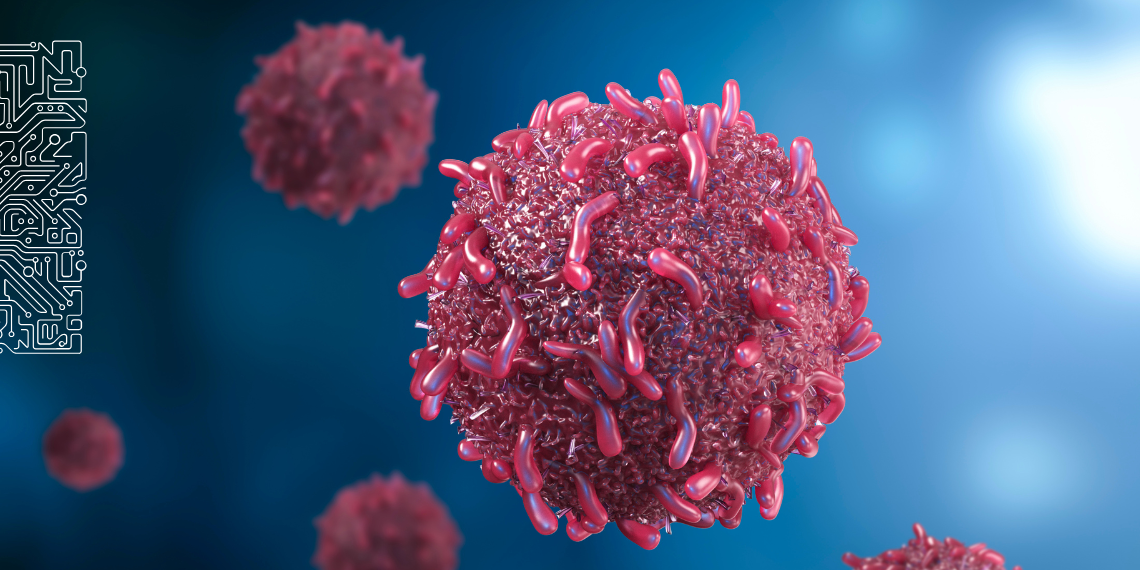
A new project, another chapter in the collaboration between INESC TEC and Taiwan’s NIAR, towards creating a platform capable of interpreting researchers’ requests and recommending the most suitable cancer research tools – more quickly, transparently, and reproducibly. These tools are known as PDX models, short for patient-derived xenografts – preserved tumour samples taken from cancer patients and used for research.
Over the years, the use of PDX model biobanks has become increasingly common, largely due to advances in collaborative catalogues that bring together molecular and experimental data. In this technique, a small fragment of a patient’s tumour is removed and implanted into an animal, preserving the tumour’s biological features so it can be studied. Experts already use Artificial Intelligence in this field, but mainly for isolated tasks such as predicting responses to drugs or modelling tumour progression.
Bringing these two areas of research together considering recent advances is the key innovation behind the project An Agentic AI System for Automatic Management and Specimen Recommendation in Patient-Derived Xenograft (PDX) Model Biobank, a collaboration between INESC TEC and NIAR. Building on significant progress in “information retrieval and re-ranking models, large language models, and agentic AI systems applied to biomedical search, clinical decision support, and oncology,” the project aims to develop a solution capable of “managing a PDX biobank and selecting complex specimens through a conversational interface.”
According to Nuno Guimarães, the INESC TEC researcher leading the project, the development and validation of the agentic AI platform for intelligent PDX biobank management and specimen selection are guided by four main objectives. The first is the “integration of clinical, molecular, pathological, and experimental data into a unified multimodal representation.” This is followed by the “development and evaluation of specialised models for specimen retrieval, ranking, and recommendation,” the “creation of a conversational interface capable of interpreting requests in natural language and orchestrating different AI tools,” and finally, “validation of the system in real-world scenarios.”
The complementary knowledge of the two institutions will be essential to the project’s success. INESC TEC brings “expertise in AI, language models, information retrieval, and autonomous agent-based systems,” while NIAR provides “biomedical expertise and data resources.”
“The project is expected to make PDX model selection faster, more accurate, and more data-driven,” said Nuno Guimarães. He also highlighted the potential to reduce the “manual work required to cross-reference clinical, molecular, and experimental information.” Although the clinical impact will be indirect, he stated that more appropriate model selection could “improve the quality and reproducibility of preclinical studies and support the identification of therapies with greater potential for specific groups of patients.”
The new solution could also “reduce the unnecessary use of animals” by prioritising “the most appropriate models” and by “creating a reusable technological foundation for other biobanks and research networks.” In doing so, Nuno Guimarães concluded, the project will contribute to “a more efficient translation of laboratory findings into future clinical studies.”
 News, current topics, curiosities and so much more about INESC TEC and its community!
