



Jorge Pereira confessed that his story at INESC TEC is “starting to blur into one”. Programmer, researcher, lecturer – over the past 35 years, he has become used to “unwrapping” whatever challenge lands on his desk. And for much of that time, those challenges have carried the EFACEC label, reflecting INESC TEC’s role in a strategic partnership that has lasted for decades.
When Jorge Pereira had had enough of “theoretical stuff”, he knocked on INESC’s door: in 1991, coming from a computer science degree in which computers were in short supply, he found Largo do Mompilher on a map and turned up to see what might happen. What happened was 35 years spent doing exactly what he had been looking for: getting his “hands dirty” and working on solutions that would never end up gathering dust on a shelf.
For Jorge, putting together a timeline of his years at INESC TEC is “hard to bring back to the surface” because “it’s all starting to merge together,” he said with his trademark smile. So, before everything becomes one long memory, here are the facts. He is currently a senior researcher in the Power & Energy domain, previously led the Distribution Management Systems area, and has been the constant liaison in the strategic partnership between INESC TEC and EFACEC (since 1996). He is also a lecturer in the Mathematics and Information Systems group at the Faculty of Economics and Management of the University of Porto.
Thirty-five years ago, with a degree in Applied Mathematics and Computer Science, he arrived in downtown Porto to write C code in a Unix environment. A master’s grant from JNICT (the former National Board for Scientific and Technological Research, which preceded the Foundation for Science and Technology) marked the beginning of his relationship with INESC. Programming from day one, he immediately started developing software that, remarkably, is still in use today.
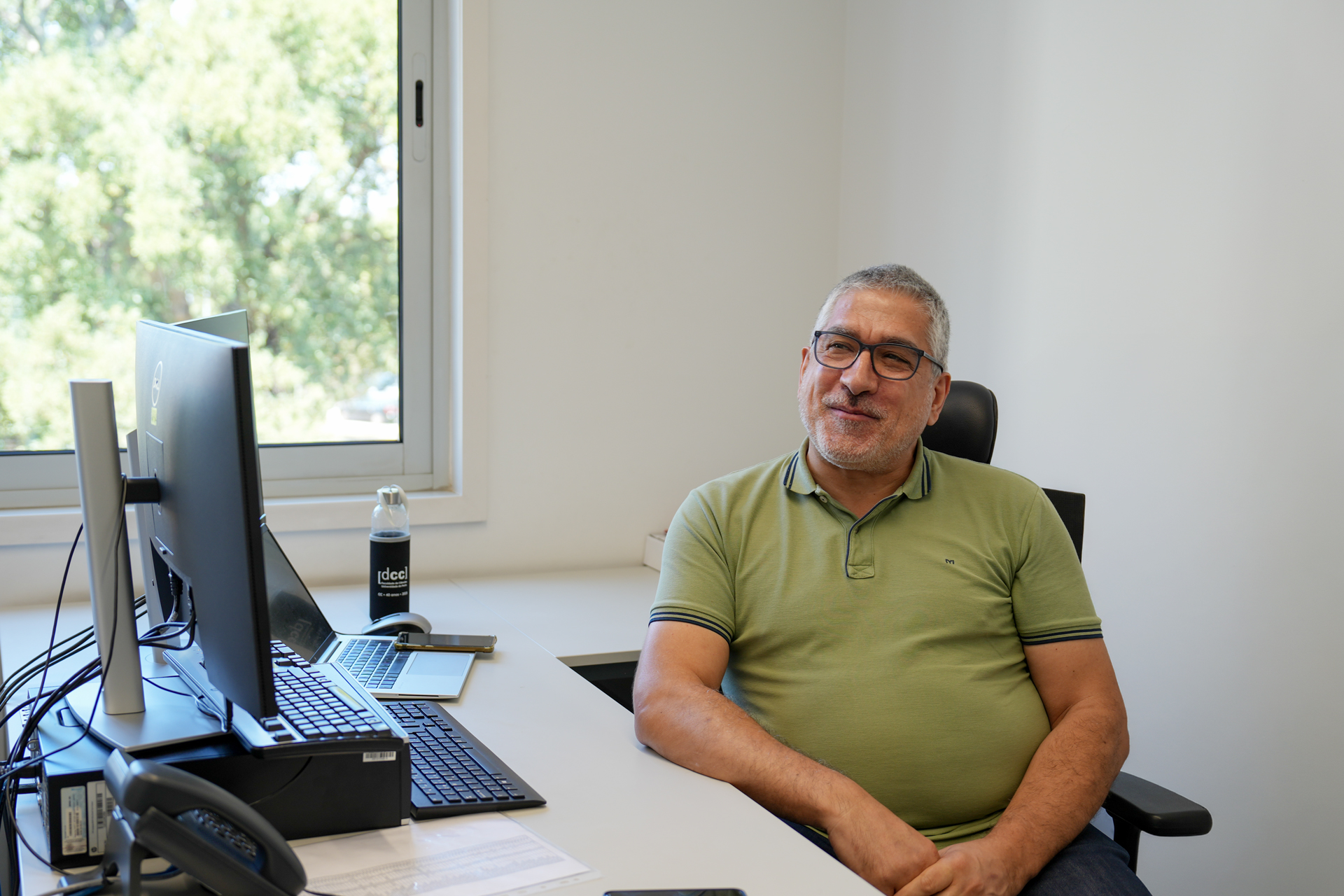
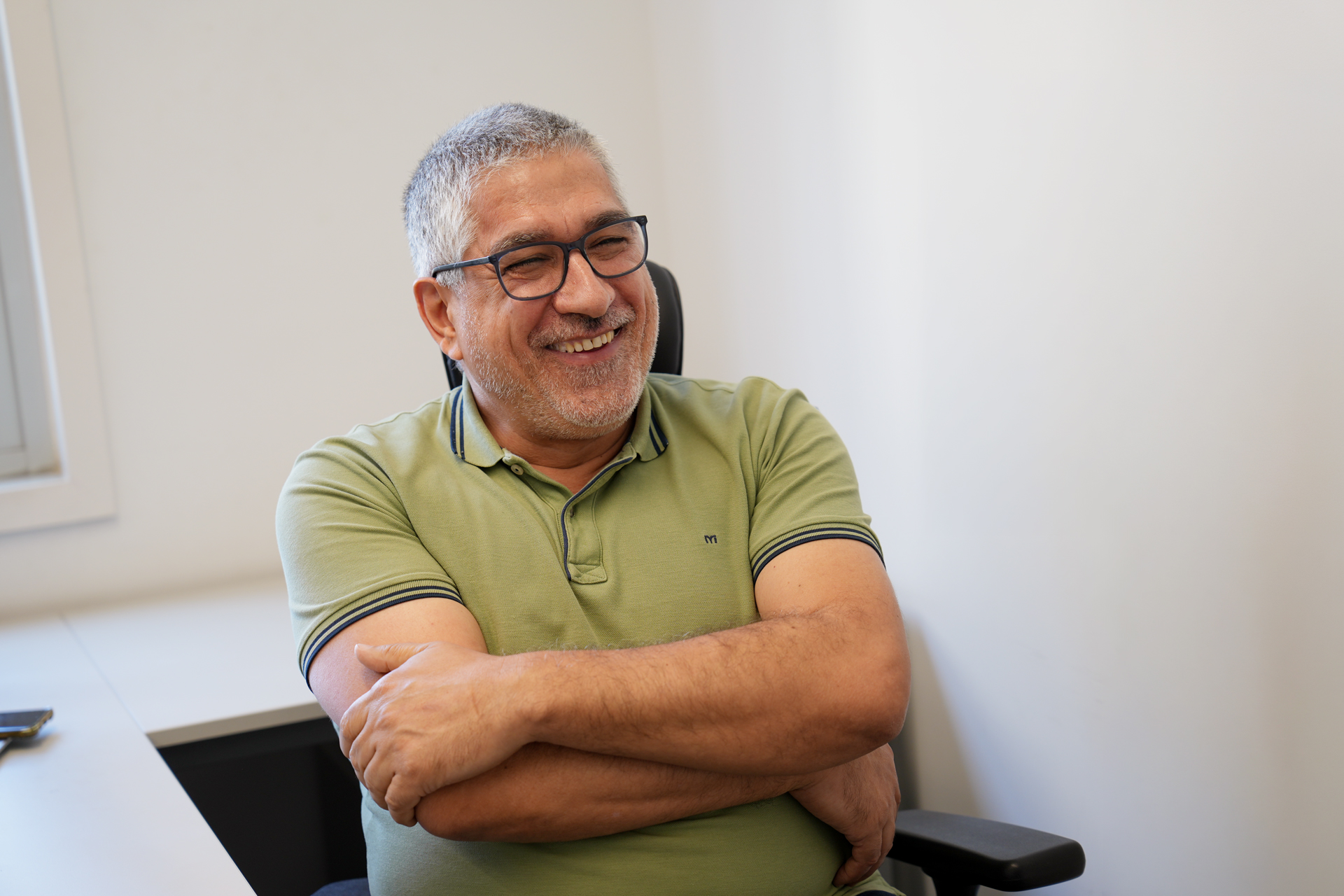
Unwrapping the challenge
Line by line of code, Jorge’s desk played a central role in shaping the institution’s research in energy systems. It was there, in the mid-1990s, that technology developed at INESC TEC began making the way around the world. The turning point came in 1996, when EFACEC entered the picture.
“When I joined INESC, I started programming, and Professor Vladimiro Miranda could already see that what I was working on might be used in a real project. There was an opportunity to transfer research into industry,” he recalled.
That was the beginning of what Jorge jokingly calls “the EFACEC tab”, something that soon became part of his everyday life. As Professor Manuel Matos, who coordinated research in the Power & Energy domain, once put it, Jorge became the person who “unwraps every problem that comes up in this area, where things really have to work”.
Those were years of intense work, laying the foundations for a collaboration that began with the development of modules for a Distribution Management System (DMS). “It was something completely new because there were systems for transmission networks, but for distribution networks there was virtually nothing,” the researcher recalled.
At the time, the concept of a DMS was genuinely innovative; distribution networks had traditionally been only lightly instrumented and were largely managed through operators’ experience and relatively simple heuristic procedures. Once the first modules were complete, the solution was deployed in real-world settings across the globe, including at CERN and in Tunisia, Algeria, Romania, Vietnam, Brazil, Mozambique and Greece.
“I’m a programmer – and I think I’m quite a good one,” he said, smiling, before explaining that he is the only remaining member of the original team. “There were always new modules to develop, and I was responsible for the people building them. When they left the team, I became responsible for maintaining and correcting whatever needed fixing – and that’s basically what I’ve always done.”
Never one to give up
That job description has suited him well. After joining INESC in 1991, his path has remained closely intertwined with the institution ever since. Before his career – and before Porto – there was Beira Alta. Originally from Vouzela, he left central Portugal at the age of 18 to study at the Faculty of Sciences of the University of Porto; every now and then, traces of his Beira accent still slip into a word or two.
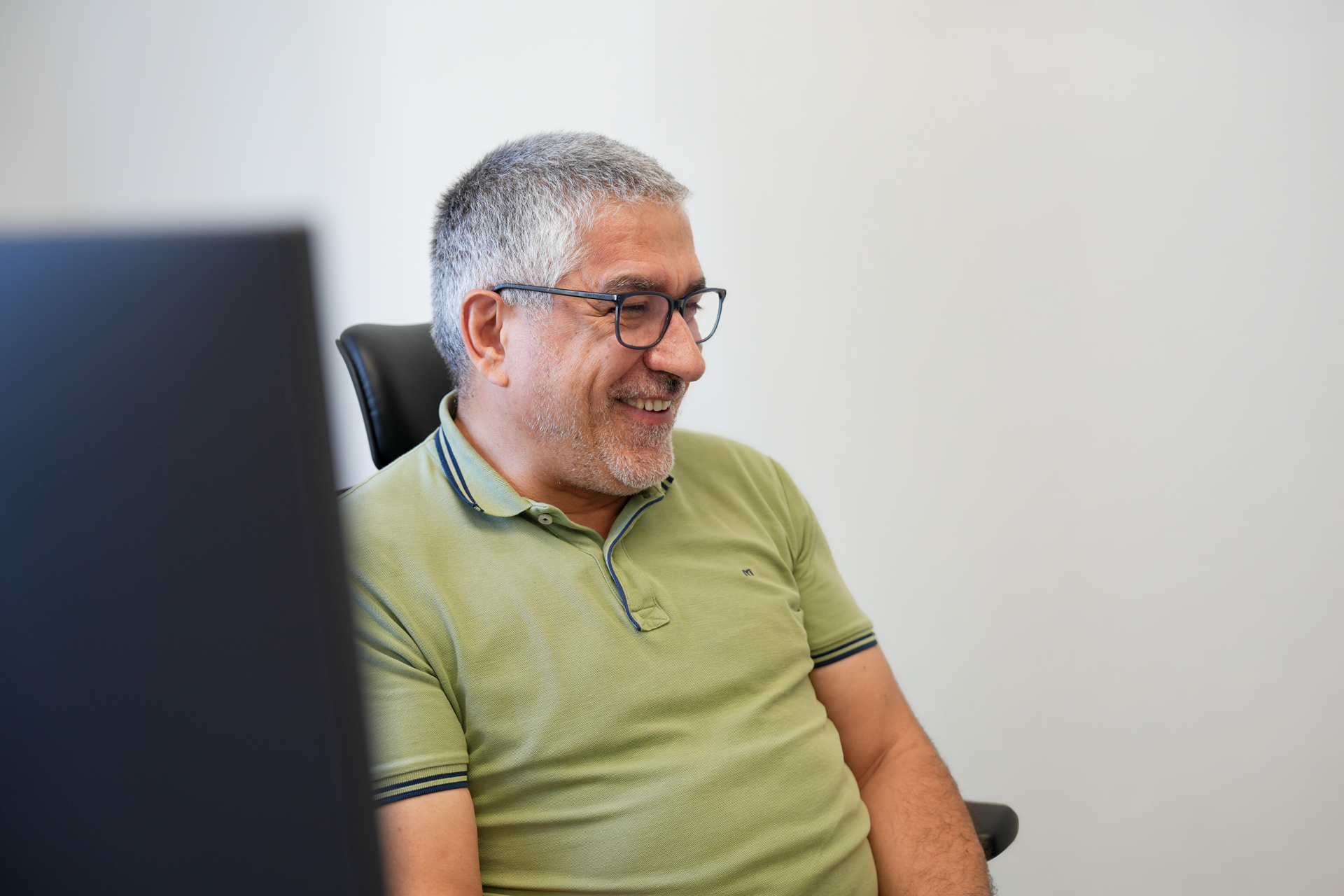
Always “well behaved”, he said he never caused “too much trouble”, but there is one thing he cannot stand: losing. “Not even for fun.” He rarely misses INESC TEC’s social events: always happy to take part, he looked back fondly on the football tournaments and the days when everyone worked side by side in the same buildings. If those days were repeated now, he joked, the Power & Energy researchers alone could field more than 10 football teams.
For Jorge, INESC TEC’s growth has been astonishing. “I never imagined INESC TEC could become this big. It would have been almost impossible to predict. We moved from small offices in downtown Porto to the Asprela campus, and from then on, it’s just kept growing.” Even with the institution’s remarkable expansion and increasing activity, the challenges arriving on Jorge Pereira’s desk still very often come with the EFACEC label.
“I often wonder what my career would have been like if I’d spent all these years moving from project to project. It would probably have been completely different. But at the same time, I feel that by staying with this project for so long, I ended up doing exactly what I hoped to do when I joined INESC. I built things that people can see and use – things that didn’t end up forgotten on a shelf.”
Talking about projects that didn’t stay on the shelf reminded Jorge of something else: “Before I forget,” he said, “there’s something I’d really like to mention” (he’s referring to SACA – the Article Archive and Control System). “It’s something people have forgotten about now, but it’s something we built.” The idea came from Professor Manuel Matos: a system for managing conference submissions, scientific papers and deadlines. The solution was eventually adopted across INESC.
In many ways, the philosophy behind SACA sums up Jorge’s career over the past three decades. “What matters is building a system that works; at the end of the day, it’s about providing a stable, reliable solution to what’s needed” – and, he added, building something that people actually use.
“If you try to build something that’s completely foolproof, you’ll never get there – and you’ll never move forward.” One challenge after the other, Jorge has quietly got the job done; and there are still plenty more waiting to be unwrapped, so that the things that really matter can keep working.
 News, current topics, curiosities and so much more about INESC TEC and its community!
