


INESC TEC leads ODE4EC-PIV, which aims to reduce reliance on costly tools from large foreign companies, making chip design more accessible, faster and more affordable for SMEs, universities and students through free, open-source tools.
Today, if a person – or even a company – wants to develop a small, efficient chip (the components found inside mobile phones, cars and household appliances, for example), they need access to software whose licence can cost many thousands of euros. These chips can be used in a wide range of applications, from agricultural sensors to portable medical devices. However, this is not within everyone’s reach, nor that of many companies, particularly SMEs. The European ODE4EC-PIV project stemmed from this challenge, led by the Institute for Systems and Computer Engineering, Technology and Science (INESC TEC); this initiative is part of the ODE4EC (Open Design Environment for European Chips) endeavour, which comprises three projects: one led by Portugal, another by Germany and another by Italy. A total of €50M is available to develop free and open-source tools, of which around €20M come from Horizon Europe and approximately €15M from the participating countries. The project complies with the European Chips Act, which seeks to strengthen semiconductor production and design in Europe.
But what does this mean?
The ODE4EC initiative aims to consolidate an ecosystem of open tools for chip design by integrating and developing new and existing tools, perceiving open tools not only as a way of reducing costs, but also as a strategic pillar for reinforcing European sovereignty in the semiconductor sector.
In this context, ODE4EC-AMS – which focuses primarily on analogue and mixed-signal systems design – is led by Germany; ODE4EC-DIG, focused on digital design, is led by Italy; and ODE4EC-PIV, which addresses productivity, interoperability and verification, is led by Portugal, specifically by INESC TEC, and brings together 24 partners from nine European countries, including companies, universities and research organisations. Nowadays, chip design relies heavily on expensive software controlled by a small number of companies. Luís Miguel Pinho, an INESC TEC researcher and lecturer at ISEP, explained that “most of the existing software is non-European, and these are the first steps towards leveraging a European open-source initiative to develop chips”.
ODE4EC-PIV aims to improve productivity in chip development, interoperability with verification tools, and the use of Artificial Intelligence to automate the development process. Luís Miguel Pinho said that the goal is to provide companies with advanced tools that will enable them to develop their solutions, strengthening their competitiveness.
The project is not, however, just about providing a tool for experts; it could also have a positive impact on education, entrepreneurship and, ultimately, the economy.
“A company looking to enter the market with a new solution can gain easier access to tools that allow the development of prototypes more quickly and cheaply. At the same time, it becomes easier for educational institutions and students to access professional tools without licensing costs, making it possible to train more and better professionals in a much wider range of fields,” explained the researcher.
The initiative does not see open tools as a replacement for proprietary tools, which will remain essential for more specialised technologies and advanced semiconductor manufacturing. However, open tools will make it easier for people and companies to access chip development, while also strengthening Europe’s capacity for innovation in the field.
The project’s benefits will have a direct impact on people and society by ensuring that Europe becomes less dependent on chip design software controlled by foreign companies; providing greater opportunities for SMEs and start-ups that are normally unable to afford expensive software licences; helping to train talent, as the project includes open educational materials; and, last but not least, by being open source, allowing anyone to use, improve and adapt the tools.
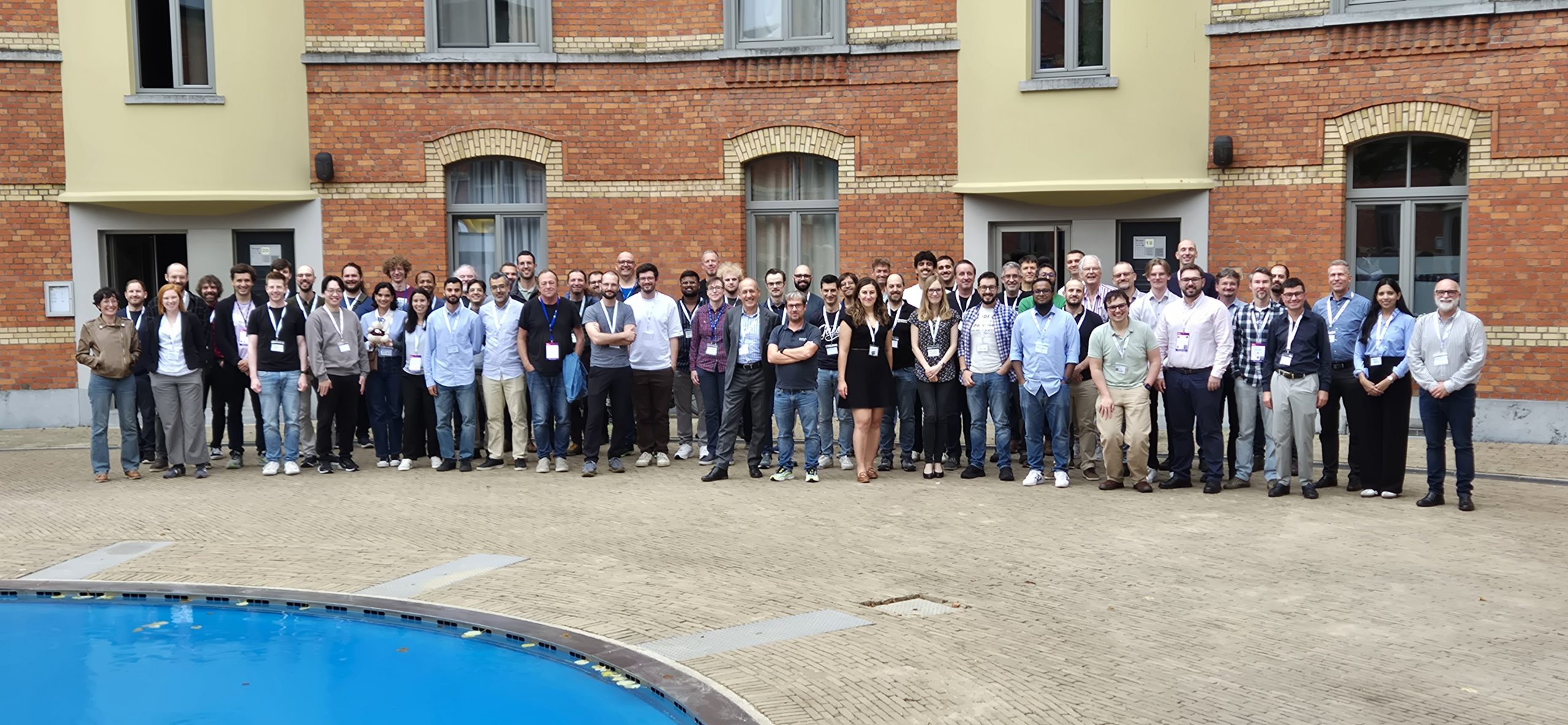
Led by INESC TEC, ODE4EC-PIV also includes Portuguese participation from the company IObundle and INESC ID. Recently, more than 60 professionals and researchers from the three projects met in Ghent, Belgium, for two days to plan joint activities – both within each project and across the projects. The successful meeting made it possible to define the development roadmap for the next three years, as well as the plan for the first technical deliverables, scheduled for November. The INESC TEC team involved in the project includes researchers affiliated with INESC TEC, ISEP, FEUP and UM.
 News, current topics, curiosities and so much more about INESC TEC and its community!
