


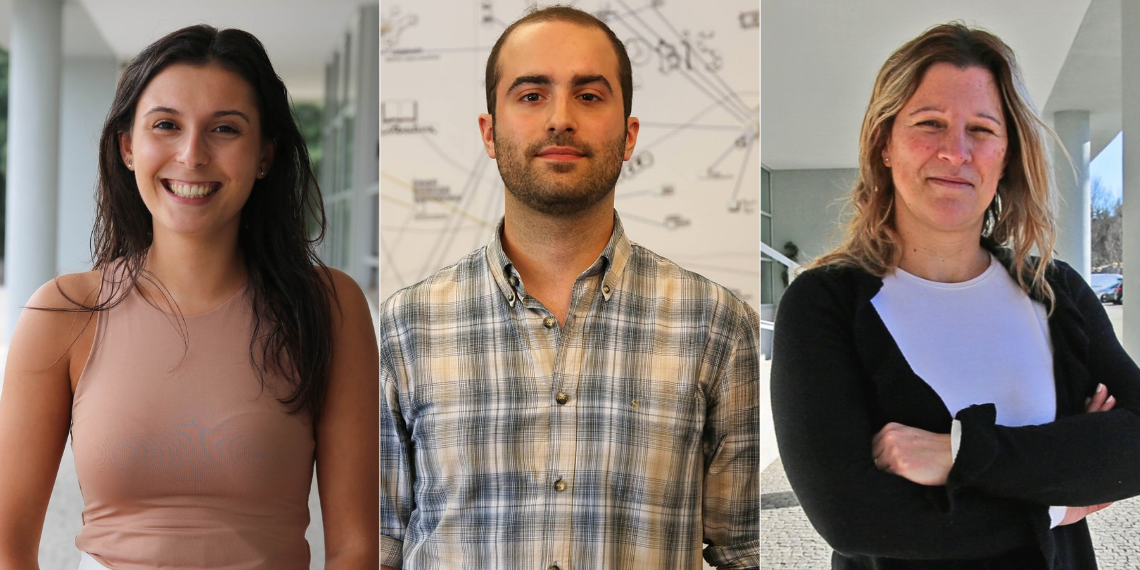
Catarina Oliveira
“Catarina played a key role in the operational management of INESC TEC’s Centre for Power and Energy Systems, making a significant contribution to the thorough planning of activities and preparation for future challenges. Her work was essential to ensuring the successful completion of multiple funded projects. This ability helped create better conditions for the Centre’s researchers to focus on their main mission: developing research, innovation and knowledge with impact. The size and complexity of the Centre require a constant ability to manage multiple tasks, priorities, risks and urgent situations simultaneously. This was a particularly demanding period, marked by numerous challenges, which Catarina always addressed with great professionalism, precision, organisational skills and a strong sense of responsibility. More than simply managing processes, she was able to anticipate problems, find solutions and coordinate people and activities, ensuring that work progressed in a coordinated and efficient manner.”
– CPES coordinators
What makes the operational management of a Centre such as this one particularly challenging?
What makes this work particularly challenging is, above all, the people. I believe that operational management is not simply about processes and deadlines; above all, it is about understanding different ways of working, priorities and expectations. Working with such diverse people and teams every day allows me to anticipate challenges, find solutions and support researchers more effectively.
At the same time, I believe it is essential to have a good understanding of how the institution operates, to understand how the different processes are interconnected and to identify who needs to be involved in each situation. This knowledge is essential for resolving issues quickly and ensuring timely responses to the needs that emerge on a day-to-day basis. In such a dynamic environment, understanding internal workflows and knowing how to involve the right people can often make the difference when it comes to finding effective solutions and keeping work moving forward.
Over the period mentioned, was there any particularly demanding challenge or situation that stayed with you? And how did you manage to find the most appropriate solution?
One of said challenges was the final stage of the ATE project; as it involved a very significant number of partners and people with responsibilities at different levels, coordination was particularly demanding. It was essential to ensure that the information was consistent across the different reports, documents and requests for evidence. At the same time, new requests were constantly coming in, and we had to ensure that the internal services had the information they needed in good time to meet their own deadlines.
It was a particularly demanding period, but also a very rewarding one, because it showed me the importance of keeping people united, building bridges between teams and ensuring that information reached the right people at the right time.
Your work often takes place ‘behind the scenes’, creating the conditions for researchers to focus on their activities; how do you feel about contributing to INESC TEC’s mission?
It is rewarding to know that my work helps create the conditions researchers need to focus on what they do best: generating knowledge, innovation and impact. However, I do not feel that my work takes place entirely behind the scenes, because I work closely with researchers and can see the impact this support has on their day-to-day activities. Very often, it involves taking some of the burden of the bureaucracy and demands inherent in project management off their shoulders, allowing them to devote more time to what really motivates them.
In fact, one of the biggest changes I experienced when I joined the Centro for Power and Energy Systems was getting to know the highly dynamic world of the Centres. That was when I began to understand, in very concrete terms, how management work can have a positive influence on researchers’ activities. Knowing that I contribute to giving them more time and freedom to innovate, develop new solutions and create knowledge is undoubtedly one of my greatest sources of satisfaction.
Which aspects of you job do you enjoy the most?
No two days are the same: one moment I am following up on an application, the next I am finding solutions to an unexpected request. The diversity of projects, funding sources, rules and stakeholders means that I am constantly learning and adapting. On top of that, I can work with researchers and colleagues from different fields every day, each with their own perspectives, experiences and ways of working – and this diversity is exactly what I enjoy the most.
How do you comment on this nomination?
I am extremely pleased with this nomination – and, I must admit, somewhat surprised. Although it is an individual acknowledgement, I perceive it as the reflection of work carried out every day with many people. I am fortunate to have Ricardo and the Secretariat team supporting me; they are always there when challenges, urgent situations and day-to-day solutions arise. I know that, without them, I would not be able to perform this role in the same way, so this recognition also belongs to them.
It has been almost two years since I took on these responsibilities, and looking back on this journey gives me a tremendous sense of fulfilment. It has been a period of great learning, growth and adaptation, but also of building relationships of trust with researchers.
Above all, I see this nomination as a reason to continue doing my best and contributing to the success of the people and the Centre that I now also feel are mine.
José Ricardo Andrade
“During this period, Ricardo played a decisive role in the development of the Predico platform, ensuring, with a high degree of technical precision, the transition to Belgium’s National Control Centre (Elia) and contributing to the integration of new international users. His work was essential to strengthening the platform’s robustness, reliability and adoption in a demanding operational context, supporting the use of advanced forecasting tools in critical electricity-sector infrastructure. His contribution also stands out for his ability to transform high-quality scientific research into solutions with a real impact on industry. Ricardo has played a key role in transferring algorithms and methodologies developed through research to an operational platform used by network operators, while also contributing to the creation of new business opportunities in predictive analytics and strengthening INESC TEC’s international profile.”
– CPES coordinators
As someone involved in the development of the PREDICO platform, what is the best way to explain the innovation behind it and the challenge it was designed to address?
Currently, those who need energy forecasts (for example, system operators and market participants) spend months testing providers, choose one and sign a contract. It is normally a lengthy process, with significant costs – and at the end of it, the buyer becomes dependent on a single forecasting provider.
However, no forecasting provider is the best under all conditions. We demonstrated this precisely in an operational environment, through an 18-month proof of concept involving more than 30 renewable energy forecasting providers (wind and solar) for a European system operator. The reality is that some models perform better under unstable wind conditions, others under stable conditions, while others detect signals that the remaining models fail to identify.
PREDICO starts with a simple question: what if, instead of making a one-off selection, there were continuous competition between forecasting providers, with each one being rewarded for the quality of forecasts and said forecasts being combined into a single, more robust forecast delivered to the end customer?
Over the past two years, we have answered that question through a proof of concept followed by the industrialisation of the solution with a European system operator. This led to a reduction in forecasting error of around 7% to 10% compared with the provider that the operator had selected through traditional means.
What challenges occurred throughout this process? How could this experience influence your career as a researcher?
There were several hurdles; from a research perspective, we developed and tested several methodologies for combining forecasts from different providers. The main problem is that the best-performing providers change almost weekly, which rules out fixed weights and requires adaptive combination methods capable of continuously responding to each participant’s recent performance.
As for operationalisation, building a full-stack platform – used daily by more than 30 users, including companies and individuals, who submit hundreds of thousands of forecast records every day for various use cases – creates reliability and security requirements that would not normally exist in a research prototype. Fortunately, over two years we experienced only one service outage, resulting from the Iberian Peninsula blackout. At the client’s request, the platform was audited by two external cybersecurity companies, with no critical vulnerabilities reported, which is further evidence of the quality of the work carried out.
Part of what I value as a researcher is precisely this transition from research to a system in production. Not all research reaches this stage, but when the right opportunity appears, it is possible to demonstrate, using real data and real users, the quality and impact of the research we conduct at INESC TEC.
With so many aspects at stake – the transfer of algorithms, business opportunities and INESC TEC’s international profile – how did you balance all these responsibilities in your work on Predico?
Every day is a challenge, and the answer is having a good team. The PREDICO core team is now made up of a CPES group focused on developing the platform and forecasting algorithms. Fortunately, we have the daily support of other Centres and services, such as TTO, DPO, SAS and AJ, which help us address the project’s other dimensions.
What other areas would you like to explore?
There is a change taking place in the way software systems are developed, and AI agent-assisted engineering is something that interests me and that, step by step, we are incorporating into our Centre’s development cycle. It will undoubtedly be an area of focus for the future.
Which aspects of your job do you enjoy the most?
As I mentioned, I enjoy witnessing something that starts as an idea, a research hypothesis, make its way through the entire process until it becomes a system that someone uses every day to make decisions. Direct contact with real-world industry problems is demanding: it forces us to be thorough and to explain our work simply to those who will use it, which is also an interesting process.
How do you comment on this nomination?
It is always a source of pride to know my work is recognised. In the case of PREDICO, the acknowledgement should go to the entire team involved in building the platform and keeping it running every day.
Mafalda Bastos
“We would like to nominate Mafalda Bastos in recognition of the truly exceptional performance she has demonstrated in recent months, particularly in coordinating and submitting the payment requests for the 22 PRR Mobilising Agendas at the end of July/August. This process required continuous coordination with multiple teams and stakeholders, the management of extremely demanding deadlines and a response to a workload far above normal level. To ensure that the commitments undertaken were met, Mafalda demonstrated extraordinary dedication, professionalism and a strong sense of responsibility, including several weeks of work beyond normal working hours. At the same time, Mafalda played a decisive role in closing the ATTRACT project, coordinating interactions with the various partners and ensuring timely responses to successive requests from ANI, often with very short deadlines. Her organisational skills, resilience, thoroughness, sense of responsibility and commitment to results were fundamental to the success of these complex processes, which have had a significant impact on the institution. The exemplary way in which she managed these responsibilities, ensuring the quality of the work carried out and compliance with all deadlines, is a clear example of professional excellence and a highly valuable contribution to the organisation.”
– CG coordinators
In the case of the 22 Mobilising Agendas, what was the biggest challenge in coordinating a process of this scale with such demanding deadlines?
The biggest challenge in coordinating this process, which was unprecedented in scale at INESC TEC, was bringing together a multitude of stakeholders around all the procedures required to submit the payment requests for 22 Mobilising Agendas, with a total allocation of almost €44 million, while simultaneously meeting extremely tight deadlines.
This challenge required us to rethink tasks, optimise routines and adapt procedures. At the same time, having direct responsibility for the financial management of the ATE Mobilising Agenda required a tremendous capacity for organisation, dedication and a great deal of additional work.
The PRR (Recovery and Resilience Plan) was undoubtedly a true test of resilience!
The conclusion of the ATTRACT project also brought challenges; could you explain what they were?
The end of the ATTRACT project presented unique challenges, made more demanding by the high level of financial complexity, involving both national and European funding, and by INESC TEC’s leadership of the consortium.
This required continuous and close monitoring of the approximately 20 partners involved. The most critical moment came when ANI set extremely short response deadlines. Managing all these requests in a context already marked by the heavy workload associated with the Mobilising Agendas made this process particularly demanding.
The experience I had accumulated, combined with my communication skills, enabled me to gather and consolidate the information quickly and effectively, strictly meeting all deadlines and ensuring the required quality.
During a period marked by very demanding deadlines and an exceptional workload, what helped you maintain your focus, precision and ability to comply?
My focus remained unwavering because I was fully aware of the commitment I had made to the Service Managers and INESC TEC’s Management Board.
Thoroughness has been a constant throughout my professional career, as a result of the experience I gained over a decade at a funding body, CCDR-N, where I acquired essential skills to meet the financial requirements of projects and ensure compliance in future audits.
Finally, my ability to respond effectively was supported by my personal organisation, structured planning and analytical ability to set priorities quickly and effectively, complemented by close and regular follow-up with the team and management.
Two very different processes have been mentioned, both requiring a strong sense of organisation; what do you feel these experiences have brought you in positive terms, and how have they contributed to your professional development?
The demanding nature of these two processes consolidated the work I have been developing throughout my career at INESC TEC, which began in 2016. The diversity of projects I have worked on has enabled me to acquire a broad knowledge of the different funding programmes and instruments supporting research, development and innovation, both nationally (FCT, COMPETE 2020, NORTE 2020, Technology and Innovation Centres – CTI, PRR, COMPETE 2030 and NORTE 2030) and at European level (EIT Manufacturing, EIT Raw Materials, Horizon 2020, Horizon Europe and Erasmus+).
These two challenges strengthened my ability to adapt, the solidity of my professional experience and the technical skills I have developed, all of which are essential to act concerning different funding instruments.
As I took on additional responsibilities in the service’s intermediate coordination, particularly for projects with national funding, these experiences contributed significantly to my professional growth and to strengthening my institutional maturity.
At the same time, they allowed me to develop and consolidate leadership skills, which are essential for coordinating teams and processes in highly demanding environments.
Which aspects of your job do you enjoy the most?
What I enjoy most is the absence of routine, the constant intellectual challenge of overcoming obstacles and the opportunity to interact with different stakeholders. It is mentally stimulating work that requires me to continuously study funding procedures and rules, as well as quickly adapt to new platforms, always with responsibility for meeting deadlines.
I am motivated by taking on these challenges and contributing to the successful financial implementation of projects, knowing that these results have a direct impact on INESC TEC’s funding and sustainability, within a dynamic ecosystem that requires precision and encourages continuous development.
How do you comment on this nomination?
I am very grateful, with a deep sense of responsibility. This acknowledgement reflects the effort, dedication and thoroughness that I have sought to bring to the management, strategy and monitoring of projects.
I would like to thank my colleagues in Management Control who were involved in these projects for their collaboration in implementing the established guidelines.
A very special and heartfelt thank you to the Service Managers. Their ongoing support, trust and constant recognition of my work were instrumental in overcoming these challenges and achieving these results. Thank you very much!
I accept this nomination with gratitude, humility and a renewed commitment to continuing to support INESC TEC’s standards of excellence in our work with external organisations.
 News, current topics, curiosities and so much more about INESC TEC and its community!
