



How is China preparing to overcome what many see as the greatest obstacle to becoming the world’s largest economy – the decline of the working-age population? The answer is simple: robotics, and more specifically humanoid robots. A Financial Times article entitled Robot nation: China’s bid to beat its demographic decline provides some clues about the measures already underway to counter the shrinking workforce. Spoiler alert: the strategy goes far beyond simply raising the limit on the number of children families can have. But what about the rest of the world, which also faces demographic challenges? Europe, for example, has one of the world’s oldest populations. In this edition of INESC TECWatch, we explore not only the so-called “sleeping giant” – a name Napoleon Bonaparte famously gave to China – but also the Old Continent, as we examine the brave new world of robotics.
A brief look back
At the beginning of the 1980s, the Chinese Communist Party introduced the now-famous one-child policy. At the time, the goal was to curb China’s rapid population growth. Decades later, however, the consequences have become impossible to ignore. In 2016, China loosened the policy to allow two children per family, before raising the limit again to three children in 2021. The reason was clear: a rapidly ageing population (one of the fastest ageing in the world) and, inevitably, a shrinking working-age population.
China’s working-age population – people aged between 15 and 64 – peaked at around one billion during the last decade. According to the United Nations, however, that figure could fall to just 300 million by 2100. Many perceive this demographic shift as China’s greatest economic challenge, with the potential to prevent the country from becoming the world’s largest economy.
Beijing’s response
Beijing sees embodied AI as one way to overcome this demographic trap. By 2024, China had already installed more industrial robots than the rest of the world combined. It has also become the world’s largest producer of humanoid robots. According to Morgan Stanley estimates, China accounted for 90% of the 13,000 to 16,000 humanoid robots shipped worldwide last year, with domestic sales expected to reach around 50,000 units by 2026.
The Chinese government has also established a state-backed fund designed to develop new productive forces over the next 20 years. Unsurprisingly, robotics sits at the heart of that strategy. China aims to deploy at least 10,000 AI-powered robots in commercial environments every year.
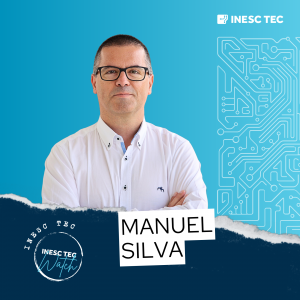 However, Manuel Silva, INESC TEC researcher leading the Institute’s Industrial Robotics area, highlighted several important points. First, China’s rapid growth in robot installations is not a recent phenomenon. The International Federation of Robotics (IFR) has documented this trend consistently in successive reports (https://ifr.org/wr-industrial-robots/). Secondly, “industrial robot installations are closely linked to a country’s industrial base. Since China is ‘the world’s factory’, the scale alone will ensure that it continues to dominate the annual volume of industrial robot installations. However, if we look at the number of robots per 10,000 workers – the metric commonly referred to as robot density – Singapore and the Republic of Korea lead the rankings. China comes third but remains well behind them and only slightly ahead of Germany and Japan,” explained Manuel Silva. He also mentioned the latest IFR updates – which, based on revised Chinese labour data, now place China 22nd worldwide, with 166 robots per 10,000 workers.
Marcelo Petry, another INESC TEC researcher specialising in industrial robotics, reinforced this aspect. “We should not interpret this trend simply as ‘China installed more robots’. It reflects a broader industrial strategy; China is automating the manufacturing base while simultaneously strengthening indoors robotics industry. In 2024, for the first time, Chinese manufacturers sold more robots in their domestic market than foreign suppliers, achieving a 57% market share. This means China is no longer just consuming automation; it is building the entire automation value chain.” Petry also refers to IFR data, particularly this article: https://ifr.org/ifr-press-releases/news/global-robot-demand-in-factories-doubles-over-10-years.
Are humanoids ready to replace us? Or do they represent robotics’ next frontier?
The Financial Times describes humanoid robots as the “frontier of robotics” and highlights several successful Chinese companies already deploying them. One example is Sany, a truck manufacturer that has already automated much of the production and is now attempting to automate final assembly using humanoid robots. Another example is Huazhu, a major hotel operator that uses robots for tasks such as luggage handling, deliveries and cleaning, significantly reducing staff-to-room ratios compared with industry averages. JD.com is another striking example: the CEO has publicly stated that robots will eventually replace the company’s 700,000 delivery workers. The company has already signed agreements with 120 schools to retrain employees. In the ceramics industry, Dongpeng Holdings has reduced the workforce by 40% while increasing production by 32% since 2021 through automation.
So, are humanoid robots ready to replace humans? The debate remains far from settled. These examples clearly show that some companies are increasing automation while reducing their workforce. However, many experts argue that this approach cannot apply to every type of task.
The Financial Times quotes experts from companies including AI2 Robotics and Li Gong Industry, who agree that humanoids still struggle with tasks that are either “too easy” – such as repetitive industrial work – or “too difficult”, including unstructured environments like people’s homes.
Another major challenge is the shortage of the tens of millions of training hours needed for humanoids to achieve a genuine leap in performance. Even so, new business models are already emerging around software and skill licensing. One example involves paying a subscription fee to “rent” the expertise of a professional chef through a humanoid robot.
According to INESC TEC researchers, there is still a significant division between industrial robots and humanoid robots.
“There are currently no widespread industrial applications for humanoid robots. We are getting very close, but the reality on shop floors is still very different from the promotional videos on YouTube. The main advantage of humanoids is that they extend the concept of the mobile manipulator – a system capable of performing manipulation tasks in different locations because it operates on a mobile base – to irregular terrain or environments designed for humans, such as buildings with stairs, where traditional wheeled systems cannot operate effectively. Because humanoids share a similar shape and, to some extent, similar dimensions with humans, they are also better suited to directly replacing people in workplaces once they become sufficiently autonomous,” explained Manuel Silva, who is also a lecturer at the School of Engineering of Porto (ISEP).
Where does INESC TEC position itself on humanoids?
“INESC TEC aims to position itself as a developer of applications that enable humanoid robots to perform industrial and service tasks. We cannot compete in hardware manufacturing, but our expertise in localisation and navigation algorithms for mobile robots, computer vision, sensing technologies, manipulation systems and related fields places us in an excellent position to develop innovative applications. These robots are sold without many of these capabilities, so we can provide the intelligence that enables them to perform real industrial tasks. I believe the first industrial applications of humanoid robots in Portuguese companies will bear INESC TEC’s signature,” said Manuel Silva.
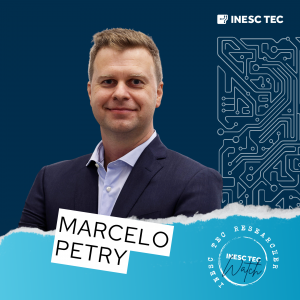 Marcelo Petry shared that vision: “INESC TEC is not, and should not be, trying to compete with major international manufacturers in humanoid hardware production. That race requires enormous capital investment, sophisticated supply chains, actuators, batteries, electronics, mechanical manufacturing and industrial scale. Where INESC TEC can genuinely lead is in transforming a generic humanoid platform into a useful system through perception, navigation, manipulation, safety, human-robot interaction, learning from demonstration, industrial integration and real-world validation. This harmonises with INESC TEC’s current strategy; the Institute already follows a practical approach ‘from design to deployment’, working on mobile robot navigation and localisation, 2D and 3D industrial vision, advanced detection, industrial and collaborative robotics, and human-robot interfaces. We develop cognitive, collaborative, safe and intelligent robotic solutions for industrial applications, including computer vision, collaborative robotics and advanced human-machine interfaces. Basically, we will be consumers of the hardware but producers of the applied intelligence, integration methodologies and the first realistic industrial applications. That is an extremely valuable position. Humanoids are sold as platforms, but real economic value only emerges when someone enables them to perform concrete, safe and repeatable tasks on a real factory floor – that is precisely where INESC TEC can make a distinctive contribution.”
“Humans get tired, but AI doesn’t”
The Financial Times quotes a Chinese entrepreneur who uses this argument to justify automation. Manuel Silva explained: “Traditionally, robots have been adopted in what are known as the four Ds: dirty, dull, dangerous and dumb environments. I believe humanoids will follow the same path, initially replacing human labour in workplaces that meet at least one of these criteria. However, as their capabilities evolve, companies will increasingly deploy them in other sectors, partly because of growing difficulties in recruiting qualified workers and partly because of labour costs. Embodied AI or physical AI systems can operate 24 hours a day, 365 days a year, apart from maintenance downtime. Companies naturally seek to maximise that advantage. For now, these robotic systems remain slower than humans in most tasks, so high use rates are one way to justify the investment.”
 Luís Freitas Rocha, who co-leads INESC TEC’s Industrial Robotics area alongside Manuel Silva, added another perspective: “However, the ability to work without rest should not become the main reason for automation. Humans possess unique and highly valuable capabilities, including complex problem-solving, adaptability to unexpected situations, contextual understanding, and exceptional physical and cognitive dexterity. In many situations, these abilities still outperform existing automation systems. Automation should complement human work rather than simply replace it. The real competitive advantage lies in combining the strengths of both.”
Where do Europe and Portugal stand?
“Europe is still in the race, but it is running a different race. It cannot compete with China in terms of scale, but it remains exceptionally strong in advanced automation, systems integration, quality, safety, collaborative robotics and high-value industrial applications. The EU’s robot density exceeds the global average, while countries such as Germany, Sweden, Denmark, Slovenia, Italy, France and Spain remain among the world’s most automated economies. Europe’s challenge is not a lack of expertise; it is the speed of adoption, particularly among SMEs,” explained Marcelo Petry, citing another IFR article that supports this assessment (https://ifr.org/ifr-press-releases/news/robot-density-surges-in-europe-asia-and-americas).
And what about Portugal? According to Manuel Silva, reliable data on industrial robot installations in Portugal remains scarce. Even so, Portugal clearly follows behind these international benchmarks, largely because many sectors still depend on relatively low-cost labour and because of the structure of Portuguese industry. Marcelo Petry provided a similar assessment: “We are not outside the race, but we are not running at the same pace; Portugal has scientific expertise, technology centres, systems integrators and several interesting industrial success stories. What we lack is large-scale adoption. Portuguese industry still consists mainly of SMEs, many operating with narrow profit margins, variable production and limited investment capacity. That makes robot adoption more challenging. However, automation is not simply about replacing people; it is about improving productivity, quality, traceability and competitiveness within international value chains.”
When asked who should lead this transition in Portugal – government, companies, RTOs such as INESC TEC, or universities – the researchers acknowledged that no simple answer exists.
Manuel Silva mentioned that “I do not believe this transition can succeed without close collaboration between all stakeholders. RTOs will, as they usually do, introduce these technologies and demonstrate their potential applications. But that alone is not enough. Companies must adopt and scale the developments that begin in RTOs. Businesses also need to act because international competition will force them to adapt. Those that fail to do so risk falling behind. Finally, the State must also play a role because this transition will bring major societal changes, from the way we work to broader issues such as the long-term sustainability of the social security system (another point discussed in the Financial Times article).”
Marcelo Petry shared a similar perspective: “I believe that every actor in the ecosystem has a specific role. Government should create the right conditions through funding, tax incentives, demonstration programmes, regulation, education and public policies that prevent automation from widening social inequalities. Companies must embrace the risks associated with adoption and recognise that robotisation is not simply about buying machines; it requires redesigning processes. Universities should educate future talent and generate new knowledge. RTOs like INESC TEC should bridge the gap between science and industry by demonstrating technologies, testing solutions, adapting them to industrial needs, reducing technological risk and transferring innovation to the market. This is especially important in Portugal because many companies lack the scale to manage this transition alone. They need access to pilot projects, demonstrations, use cases, technical support and credible business cases. That is where RTOs can become decisive: they transform emerging technologies into practical industrial solutions. At European level, the Industry 5.0 vision reflects exactly this philosophy. It is no longer enough simply to automate to produce more. Industry must also become human-centric, sustainable and resilient. The European AI Factories strategy follows the same logic by creating ecosystems that connect computing infrastructure, data, talent, universities, SMEs, industry and investment.”
The social and political risks
The accelerating rate of technological development no longer belongs to science fiction. It excites many people, but it also raises profound social and political questions. In the 1980s, China viewed the one-child policy as the only viable solution to rapid population growth. Today, the country increasingly presents robotics and AI as the answer to demographic decline. But what about the risk of large-scale unemployment, particularly among university graduates? Should policymakers pay greater attention to this group, given the Chinese government’s concerns about social stability?
For Portugal, INESC TEC researchers have already outlined several ideas for managing this transition. In China, some academics advocate tax reforms ranging from lower personal income tax rates to higher taxes on companies, including possible taxes on robots. They also call for greater investment in workforce reskilling. The Chinese government has already requested, through an official policy document, the creation of an “early warning system” to monitor AI-related employment risks. This year alone, nine Chinese universities have launched new undergraduate degrees in Artificial Intelligence. Not everyone welcomes these changes, however. Taxi drivers in Shenzhen have already protested the expansion of autonomous taxis.
Despite these social risks, few observers expect Beijing to slow the technological push; the competition with the United States for technological leadership remains a strategic priority. To sustain said strategy, China will likely continue relying on an extensive state surveillance apparatus to manage social tensions. That topic could easily fill another edition of INESC TECWatch. But now our focus remains firmly on research and innovation, leaving those broader political questions to researchers and institutions specialising in those fields.
 News, current topics, curiosities and so much more about INESC TEC and its community!
