


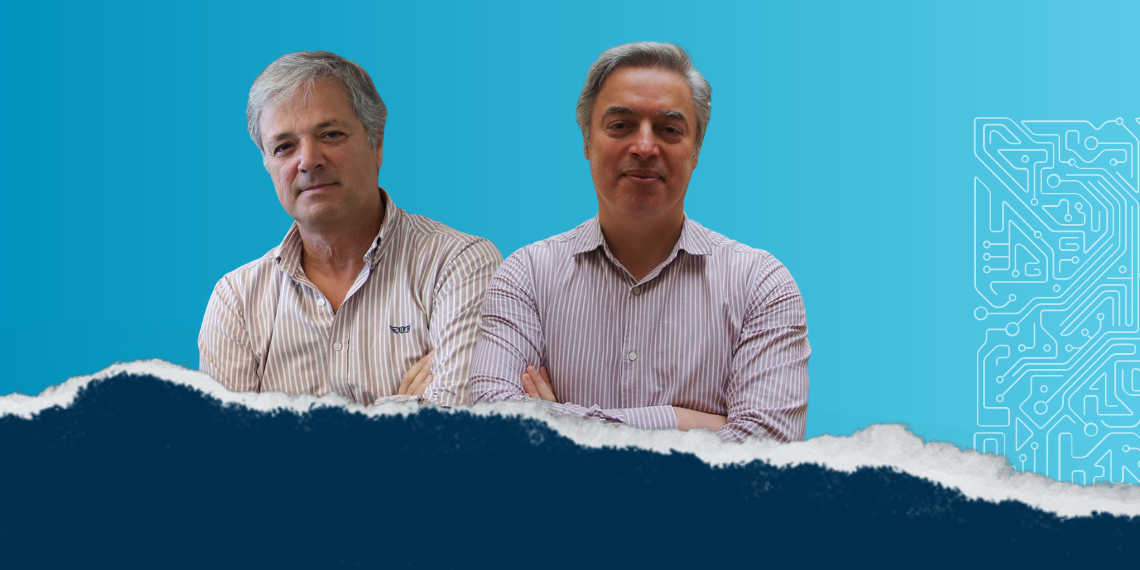
The 2026 Nobel Prize in Medicine has been awarded to Karl Deisseroth, Peter Hegemann and Georg Nagel for optogenetics: a technique that makes it possible to switch specific neurons on and off with light, in milliseconds. The laureates are two Germans, from Humboldt University of Berlin and the University of Würzburg respectively – Peter Hegemann and Georg Nagel – and an American from Stanford University – Karl Deisseroth. Hegemann is a professor of neuroscience, Nagel is a professor of molecular plant physiology and Deisseroth is a professor of bioengineering and psychiatry.
Optogenetics, honoured this year, is already an essential tool for studying the brain and paves the way for new ways of treating diseases such as Parkinson’s, an area in which INESC TEC has long-standing research collaborations with national and international institutions. But bioengineering is not the only field in which INESC TEC has an excellent scientific track record: the same is true of photonics in general, and optical fibres in particular.
‘The discovery that won this year’s Nobel Prize in Medicine, optogenetics, was the result of a succession of steps and contributions from several groups of scientists. Today, great discoveries rarely come from a single scientist working in isolation in their laboratory. They result from successive iterations on the work of others, which in some cases lead to extraordinary breakthroughs that would not be possible without our standing, as the saying goes in science, “on the shoulders of giants”,’ explains João Paulo Cunha, a researcher at INESC TEC, where he coordinates the bioengineering area.
In the 20th century, researchers already knew which areas of the brain affected which functions, but the methods available could not prove cause-and-effect relationships. The Nobel committee compared the picture of the brain to a rough sketch of a map, full of question marks. But shall we go through the chronology of events?
It all began with an alga
The curiosity began in the 1990s, and the discoveries came in the early 2000s. First, Hegemann wanted to understand why the alga Chlamydomonas swam towards the light. Then Nagel joined him, and together they discovered a protein on the surface of cells: channelrhodopsin. The two realised that, with blue light, a channel opens, positive ions flow in and an electric current is generated. The most surprising part? They discovered that, in any cell where the protein was placed, the membrane became sensitive to light.
‘In the 1990s, at the Max Planck Institute of Biochemistry, on the outskirts of Munich, Peter Hegemann’s curiosity led him to try to understand why the alga Chlamydomonas, a microscopic, single-celled green micro-alga, actively swims towards sunlight in order to carry out photosynthesis (a process known as phototaxis). At the turn of the century, his collaboration with Georg Nagel, who was studying ion channels at the Max Planck Institute of Biophysics in Frankfurt, led to the identification of channelrhodopsins: proteins that act as ion channels in the membrane and open when illuminated with light of a given wavelength (blue, in the case of channelrhodopsin-2). The opening lets positive ions through, mainly protons and sodium, and generates an electric current that alters the movement of the alga’s flagella, its “strokes”, steering it towards the light,’ says João Paulo Cunha.
‘Even then, it was clear to these scientists that we were looking at enormous future potential,’ continues the INESC TEC researcher, who is also a lecturer at the Faculty of Engineering of the University of Porto.
From the alga to the neuron
This is where Karl Deisseroth comes in. He took the idea to the brain, introducing the protein’s gene into neurons so that they would fire when illuminated. He published the work in 2005 and, two years later, tested the principle in mice. In 2026, other proteins already respond to other colours – some silencing neurons, others reacting to red light.
‘That potential was then explored in the laboratory of the third laureate, Karl Deisseroth, at Stanford University, transferring it to nerve cells. A neuron fires when ion channels open and let positive ions in, which depolarises the membrane and gives rise to an action potential, transmitted through synapses to many other neurons, forming neuronal circuits. The idea was to introduce the channelrhodopsin gene into neurons so that they would fire when illuminated. The founding paper dates from 2005, in Nature Neuroscience, and showed that channelrhodopsin-2, inserted into mammalian neurons in culture, made it possible to control action potentials with millisecond precision. Two years later, the same laboratory and other collaborators demonstrated the principle in living mice. It became possible to activate or silence neurons in specific circuits in a behaving animal, and to test disease models and therapies,’ explains João Paulo Cunha.
And what about the other colours we mentioned above? ‘Channelrhodopsin activates neurons with blue light, but there are other opsins with complementary properties. Some inhibit neuronal activity, such as halorhodopsin (yellow light), and others respond to red light, which penetrates tissue better. There are also variants that are faster, more sensitive or selective for other ions. Together, they make it possible to control several types of neurons with different colours of light,’ explains the researcher.
From the neuron to medicine
In a clinical setting, the method is being used in attempts to restore sight in people with visual impairments. However, there are a number of other possible applications. Today, to treat patients with Parkinson’s disease, epilepsy or other conditions that do not respond to medication, electrodes implanted in the brain and connected to a battery are used. This is known as deep brain stimulation. But the electric current does not discriminate: it affects all the neurons around the electrode, which is about a millimetre across, whereas a neuron measures tens of micrometres.
And why is this discovery so important?
‘Until now, to modulate neuronal activity we have used electric current through electrodes implanted in specific areas of the brain that we know to be therapeutic targets, connected to an implanted battery, as in a cardiac pacemaker. The most studied example, and the one on which we work in partnership with the University Hospital of Munich and São João Hospital, is deep brain stimulation (DBS). We use it in patients with Parkinson’s disease, epilepsy and other neurological and psychiatric conditions that do not respond to conventional medication. Our contribution has been to help position the electrodes better on their targets, which in Parkinson’s disease is the subthalamic nucleus (STN), a tiny structure in the centre of the brain (about 0.2 cm3), and to optimise the stimulation parameters, such as the amplitude and frequency of the electric current,’ explains João Paulo Cunha.
But, as mentioned above, this approach has limitations. ‘Electrical stimulation is not selective, because it affects all the neurons (and fibres) in the vicinity of the electrode. The electrodes are about a millimetre in diameter, whereas a neuron measures tens of micrometres. And electronic circuits and cables are needed to carry the current to the target,’ says the researcher.
This is where optogenetics comes in, as it allows light to be used instead of current. Only the modified neurons respond, and optical fibres can be as thin as a hair.
‘Optogenetics opens the door to using light instead of current. Animal studies show that this could allow smaller devices, with optical fibres as thin as a human hair. More importantly, it makes it possible to choose which neurons respond, because only the genetically modified ones become sensitive to light, leaving the rest intact. Neuromodulation thus becomes much finer and more specific, and may reveal therapeutic targets that we cannot identify today because they are too small or too specific for current techniques,’ says the INESC TEC researcher.
But how do you get light into the brain?
Optogenetics only works if the light reaches exactly the right place, and this is where photonics comes in. Two technologies developed for other purposes were essential, and both were recognised with the Nobel Prize in Physics: in 2009, Charles Kao, for his work on the transmission of light in high-purity optical fibres, and in 2014, Akasaki, Amano and Nakamura, for efficient blue LEDs.
‘Optogenetics is an excellent example of how great scientific advances often result from the convergence of knowledge and technologies developed in different fields,’ explains Pedro Jorge, an INESC TEC researcher in the field of photonics.
Optical fibres now do much more than carry light. They can be produced with micrometre- or nanometre-scale regions, with microchannels for fluids or with structures that interact directly with the surrounding environment. ‘A fibre can thus cease to be merely a light guide and become a miniaturised sensing and actuation platform,’ adds Pedro Jorge, who is also a professor at the Faculty of Sciences of the University of Porto.
As well as delivering the light that stimulates, fibres can collect information about tissues through phenomena such as fluorescence and optical scattering. By combining this with spectral analysis and artificial intelligence, systems are already being developed that stimulate, monitor the response and adjust the intervention in real time. ‘We are moving from systems that use light essentially to observe or to stimulate, to platforms that can combine the two functions in an integrated way,’ concludes the INESC TEC researcher.
And what about use in humans?
João Paulo Cunha cautions that it is best to be realistic. ‘Use in humans requires gene therapy, to make neurons sensitive to light, and is still at the research stage, with the first clinical applications outside the brain, notably in the retina. Electrical DBS remains the clinical standard. In the meantime, optogenetics is already an essential research tool for understanding how DBS works, and that helps to improve it, something we have been studying,’ he concludes.
Disclaimer: this article was translated by Claude.
 News, current topics, curiosities and so much more about INESC TEC and its community!
