


Paramyloidosis (also known as Familial Amyloid Polyneuropathy or “Doença dos Pezinhos” in Portugal) is a rare and progressive genetic disorder characterised by the production of amyloid fibres by the liver, which are deposited in tissues and nerves, gradually destroying them; it was discovered in 1952 by the Portuguese physician Corino de Andrade. In the year marking the 20th anniversary of the doctor’s passing, the Associação Portuguesa de Paramiloidose (APP) observed the date with the conference “Paramiloidose: uma viagem ao passado, presente e futuro” – where Artificial Intelligence (AI) played a vital role, with Alípio Jorge representing INESC TEC.
Although rare, this condition has a particularly high prevalence in Portugal, especially in the northern region of the country. As it is considered a public health issue, health authorities have carried out continuous work in raising awareness of the disease and promoting screening, to ensure equitable access to the available therapies and medicines.
But what role can AI play? Alípio Jorge, an INESC TEC researcher who coordinates the Artificial Intelligence area at the Institute, was one of the speakers at the conference and explained that AI – provided it has access to concrete data – can contribute to many aspects of tackling the disease.
“At INESC TEC, we work on predicting the onset of Paramyloidosis symptoms. Together with INESC TEC researchers João Moreira and Maria Pedroto, I was involved in a project with the Corino de Andrade unit, led by physician Teresa Coelho from Hospital de Santo António (which also involved several master’s students). The project focused on predicting the age at which symptoms appear. With this work, we were able to significantly improve prediction accuracy. It led to several publications, including one in the journal Amyloidosis and another in Frontiers in Neurology, as well as participation in AI conferences,” explained the INESC TEC researcher.
AI can support multiple domains in addressing paramyloidosis, ranging from symptom prediction to diagnosis, as well as the discovery of new treatments and even the development of new medicines.
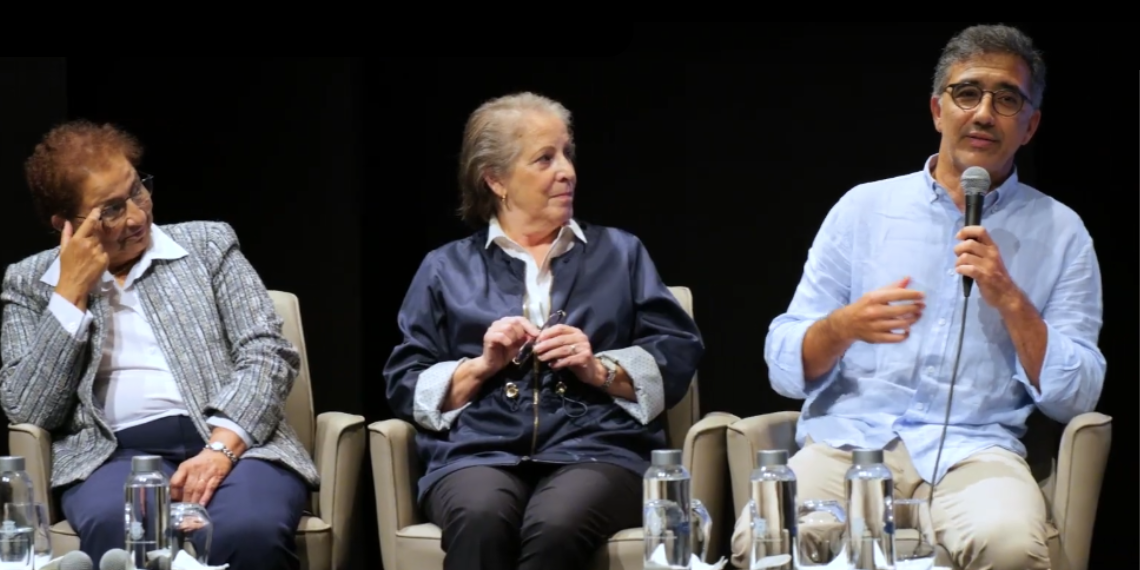
Alípio Jorge took part in the event as a panellist in the round table dedicated to the future of paramyloidosis. In addition to the INESC TEC researcher, the session also featured the following speakers: Elisa Leão Teles – representative of the Plano de Ação para as Doenças Raras within the scope of Estratégia à Pessoa 2025-2030; Miguel Silva – member of the Board of the Direção da Associação Portuguesa de Paramiloidose; and Teresa Carvalho – President of the Sociedade Portuguesa de Estudos de Doenças Neuromusculares and Head of the Corino de Andrade unit.
However, INESC TEC’s research track record in paramyloidosis is not limited to the field of AI. As early as 2020, researchers from the Institute working in biomedical engineering published the paper “Clinical 3-D Gait Assessment of Patients With Polyneuropathy Associated With Hereditary Transthyretin Amyloidosis” in Frontiers in Neurology – one of the leading journals in the field. The goal of the study was to enable improvements in diagnosis, disease monitoring and therapeutic adaptation.
The conference “Paramiloidose: uma viagem ao passado, presente e futuro” took place on 23 October, at an event organised by the APP in partnership with AstraZeneca – more information is available here.
The researcheres mentioned in this news piece are associated with INESC TEC, FCUP and FEUP.
 News, current topics, curiosities and so much more about INESC TEC and its community!
