


It is possible to eat more healthily while significantly reducing the environmental impact of our diet. That is the main conclusion of a study led by researchers from INESC TEC, the GreenUPorto – the Sustainable Agrifood Production Research Centre of the University of Porto – and the Laboratory for Process Engineering, Environment, Biotechnology and Energy (LEPABE / ALiCE). The study analysed the dietary patterns of the Portuguese population and showed that the most sustainable diets generated up to 33% fewer carbon emissions, used 36% less water and required around 50% less land than the least sustainable diets, while also achieving 87% higher nutritional quality.
The study Environmental and Nutritional Sustainability of Diets: Exploring Food Consumption Patterns Between Different Sustainability Groups addresses one of today’s major public policy challenges by emphasising the importance of nutritional quality and impact on real-world eating patterns. Based on data from a representative sample of 2,610 Portuguese adults, the research assessed carbon footprint, water footprint and land use, alongside a nutritional quality index (NRD 9.3). The study considered 1,492 food items, nutritionally characterised, towards estimating environmental impacts using the most detailed data available in existing databases.
“By integrating environmental metrics and a nutritional quality index into a single analysis, the study makes it possible to identify separate consumption profiles and highlight both synergies and trade-offs between nutritional quality and environmental pressure,” explained Vera Miguéis, researcher at INESC TEC.
Four sustainability profiles were identified, ranging from dietary patterns with strong performance in both environmental and nutritional dimensions to those with poorer results, as well as intermediate profiles.
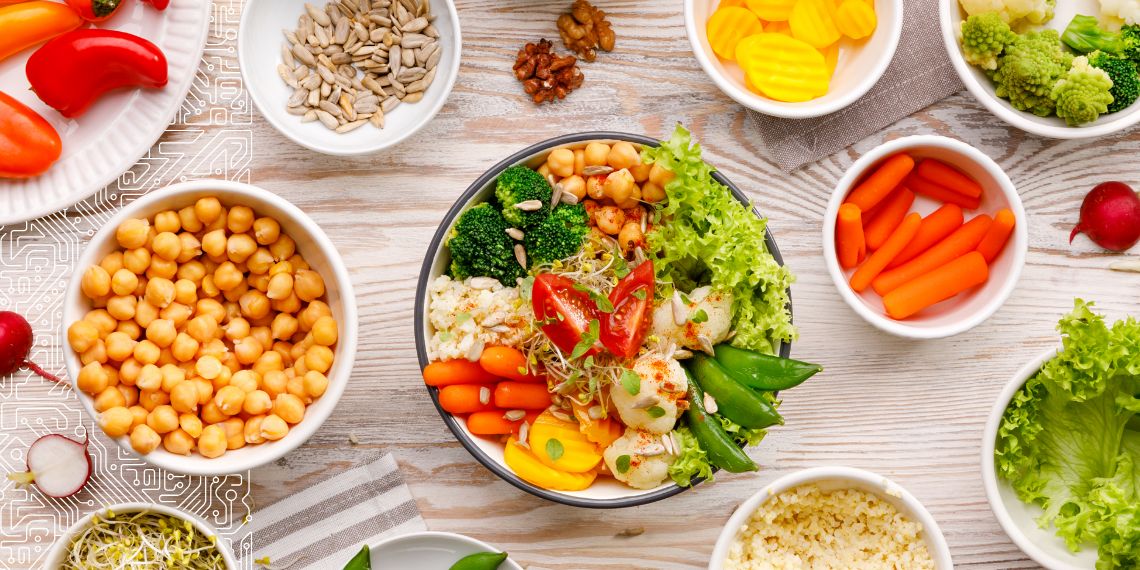
The most sustainable profile – combining the best environmental and nutritional performance – is characterised by higher consumption of plant-based foods, fruit and vegetables, and lower consumption of red meat, sweets and alcoholic beverages. Compared to the least sustainable profile, this group recorded 33% lower carbon emissions, 36% lower water use and around 50% lower land use, alongside 87% higher nutritional quality, according to the researcher, who also lectures at the Faculty of Engineering of the University of Porto.
At the opposite end are diets rich in red and processed meat, sweets and alcohol, which combine higher environmental impact with poorer nutritional profiles. The study also identified intermediate profiles: nutritionally balanced but environmentally demanding diets (associated with higher consumption of animal-based foods, particularly red meat), and diets with lower environmental impact but poorer nutritional value (characterised by lower intake of fruit and vegetables and higher consumption of sugary foods and alcoholic beverages).
“Not all low-impact diets are nutritionally better, and not all nutritionally better diets are sustainable. The challenge lies in balancing both dimensions,” said Vera Miguéis.
So how do the Portuguese eat? The results show that observed dietary patterns reflect different combinations of nutritional quality and environmental impact, indicating room for improvement in both areas. The most sustainable profile meets the principles of the Planetary Health Diet, namely greater consumption of plant-based foods and lower intake of red meat, although further improvements are still possible.
For the researchers, these findings can help guide food policies tailored to different population profiles, complying with the principles of the aforementioned Planetary Health Diet, designed to promote human health while protecting the planet.
 News, current topics, curiosities and so much more about INESC TEC and its community!
