


At an institution as large and diverse as INESC TEC, a considerable volume of information is distributed across numerous pages, documents, platforms and services. Although this information is generally available, finding it quickly and easily can be a significant challenge.
It was against this backdrop, and as part of a broader reflection on the role Generative Artificial Intelligence (GenAI) could play at INESC TEC, that we decided to explore the possibility of using this technology to facilitate access to institutional information and knowledge.
From responsible use to the application of Artificial Intelligence
In 2025, within the scope of the Digital Transformation Working Group, Artificial Intelligence was identified as one of the priority areas for action. Given the increasing use of GenAI tools in research and professional activities, it became important to reflect not only on the opportunities offered by these technologies, but also on the conditions needed to ensure their responsible use.
One of the first steps was to define guidelines for the use of GenAI in research, with the goal of promoting responsible, ethical and transparent use. This initiative was complemented by efforts to build the community’s skills through the “Using AI as Your Research Assistant” workshop series. At the same time, we sought to explore the potential of these technologies to address the institution’s own needs, which led to the creation of Teca: INESC TEC Institutional Assistant.
How Teca works
Teca is an institutional assistant that allows users to ask questions in natural language and receive answers based on information from INESC TEC itself. The design is based on approaches aimed at ensuring accuracy, up-to-date information and trust.
Teca uses a Retrieval-Augmented Generation (RAG) architecture: rather than relying solely on what the language model has learned, it can search for relevant information when a question is asked and use it to formulate the answer. This means that Teca was not trained on INESC TEC’s data, and correcting or updating a document has an immediate effect on subsequent answers. To this end, it reads all the information available locally within the institution and uses an internally developed system to select the content most relevant to each question.
The central challenge was not making Teca answer but ensuring that it knows when it should not. For this reason, it was designed to reply exclusively based on information available within INESC TEC. In addition, it uses a local language model, keeping both the data and processing within the institution’s infrastructure.
Each answer indicates the documents on which it is based, allowing users to verify the source of the information. The tool is also bilingual, communicating in Portuguese and English, and supports voice interaction, allowing users to ask questions by speaking directly to the assistant.
A gradual implementation
From the outset, a gradual implementation approach was adopted, initially covering three areas: Human Resources, Projects and Funding Opportunities. This approach made it possible to test the tool in real-life contexts, identify limitations and introduce improvements progressively.
Development took place along two complementary lines: the technological component, and the identification, collection and structuring of information, in coordination with the teams responsible for the different areas of content. The first version underwent a testing and evaluation phase involving said teams and different users, who assessed the accuracy and relevance of the answers, usability, efficiency, security and satisfaction. This process highlighted a fundamental aspect: developing an AI-based institutional assistant is not only a technological challenge, but also a knowledge management trial, as the quality of the answers depends on the quality of the information underpinning them.
Following several stages of development, testing and refinement, Teca was presented to the INESC TEC community at the Strategic Meeting held in September 2026.
A tool in constant evolution
Making Teca available to the community does not mark the completion of the development process, but rather the beginning of a new stage. Every change to the tool is validated through automated tests using real questions, while community participation is essential to this process: through the Report feature available within the tool, users can flag incorrect, incomplete or outdated answers. These contributions are analysed and used to continuously improve Teca.
The tool currently covers Human Resources, Projects and Funding Opportunities, with plans to progressively expand the scope to other areas of the institution.
In addition to answering questions, Teca can already (in coordination with the PMO) turn a proposal document into a corresponding project plan, including tasks, deliverables and milestones, duly dated and structured according to the format used for registration in IRIS. At a later stage, Teca is expected to support an increasing number of other institutional processes.
The experience developed so far demonstrates that applying Artificial Intelligence to institutional knowledge management goes beyond the purely technological dimension. It depends on structured and up-to-date information, coordination between different areas, and the involvement of the people who generate, manage and use that knowledge. The challenge now is to continue developing the tool, integrate new areas of expertise and learn from using it.
Meet Teca – INESC TEC Institutional Assistant
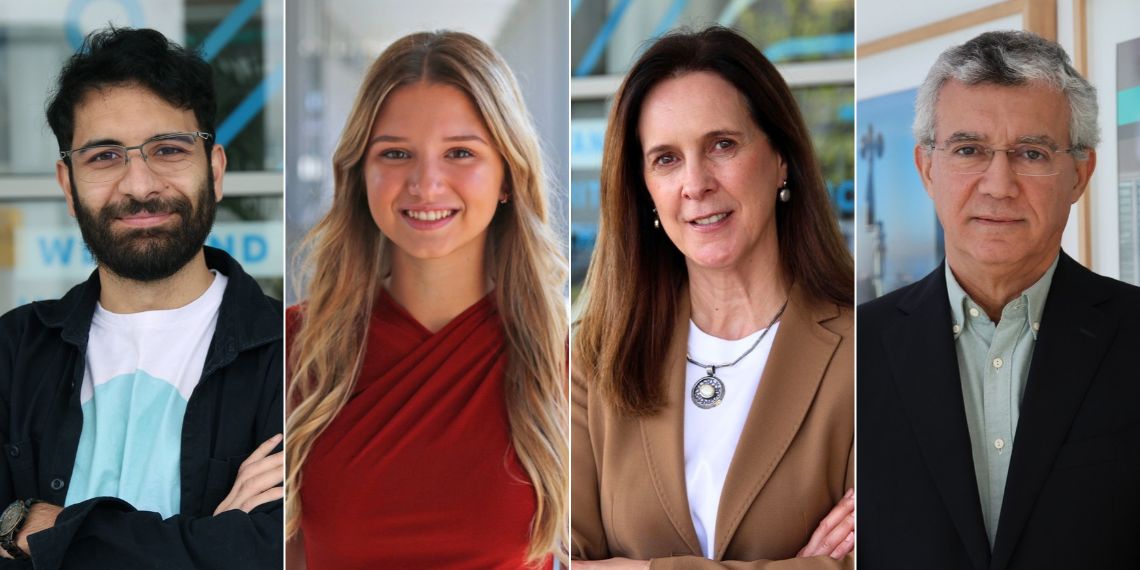
By the Digital Transformation Group: Yassine Baghoussi, Inês Sousa, Lia Patrício and Gabriel David
 News, current topics, curiosities and so much more about INESC TEC and its community!
