


2Ai is the Applied Artificial Intelligence Laboratory of the Polytechnic Institute of Cávado and Ave (IPCA), dedicated to research in computer vision and machine learning.
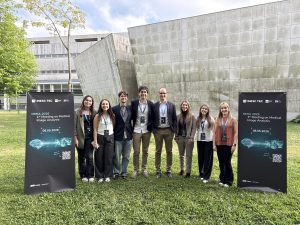
This month, we spoke with Sandro Queirós, researcher at 2Ai-IPCA and co-organiser of the MMIA – Meeting on Medical Image Analysis, a new event dedicated to medical image analysis organised by INESC TEC and IPCA. The first edition took place at INESC TEC, in Porto, on 8 May.
How did the scientific collaboration with INESC TEC begin, and what motivated it?
The collaboration with INESC TEC stems from the long-standing scientific relationship I have with João Pedrosa, currently an Assistant Researcher at INESC TEC. I have known João for around 11 years, since we’re both PhD students at KU Leuven, Belgium, working within the Cardiovascular Imaging and Dynamics Lab under the supervision of Professor Jan D’hooge. During that period, we collaborated on topics related to echocardiography and co-authored several scientific publications.
After completing our PhDs, we followed different paths, with João returning to INESC TEC and FEUP and myself to the University of Minho. Nevertheless, we remained in contact over the years, mainly through participation in academic examination panels. A closer collaboration developed naturally, driven by the complementarity of our expertise and scientific interests in the field of cardiothoracic image analysis. More recently, I joined 2Ai at IPCA, while naturally sustaining this collaboration.
What type of joint work have you been developing, particularly in terms of research projects?
Our collaboration began within the AutoFoCUS project, funded by the Portuguese Foundation for Science and Technology (FCT) and led by me. The project focuses on developing Artificial Intelligence techniques for the automatic analysis of point-of-care cardiothoracic ultrasound imaging. Given INESC TEC’s expertise, and João’s experience in thoracic imaging and image-based retrieval systems, I invited him to collaborate on the project and co-supervise a master’s dissertation in this area, developed in partnership with FEUP.
Since then, this collaboration has expanded to include the co-supervision of a PhD project focused on the automatic detection of extracardiac findings in cardiac magnetic resonance imaging, which is currently underway.
What motivated the co-organisation of MMIA? What did this event bring to the community?
Both João and I had the impression that many Portuguese researchers working in medical image analysis were more likely to meet at international conferences than within Portugal itself. Although there are important events covering areas like AI, bioengineering and medical imaging, we felt there was a lack of a dedicated space specifically for this community.
MMIA emerged from the desire to create a cross-cutting forum, open to different methodologies, imaging modalities and clinical specialities, but centred on a common interest: medical image analysis. From the outset, we wanted the event to have an international dimension, particularly connected to the Iberian community – which translated into the participation of researchers from several countries in this first edition.
What do you value most about this collaborative dynamic, and what has resulted from it?
I believe one of the most interesting aspects of this collaboration is the balance between our shared scientific foundations and the different postdoctoral experiences we have had, which have given us complementary perspectives on research and development. This complementarity has been highly valuable in the projects we have worked on together.
At the same time, this collaboration has helped bring together the teams at INESC TEC and 2Ai/IPCA around common scientific interests, particularly in medical image analysis and artificial intelligence applied to healthcare.
So far, in addition to MMIA 2026, this collaboration led to the co-supervision of students, scientific contributions presented at conferences, and the development of new joint research lines.
How do you imagine this collaboration evolving?
I believe this collaboration will continue to grow very naturally. Right now, we’re focusing on continuing the work associated with the ongoing PhD project and have recently submitted an application for national funding to expand this research line.
We also seek to continue developing new projects, involving more students, and establishing MMIA as a key meeting point for the medical image analysis community. The next edition will take place in May 2027 at IPCA in Barcelos, and we aim to further increase both participation and the international reach of the event.
 News, current topics, curiosities and so much more about INESC TEC and its community!
