


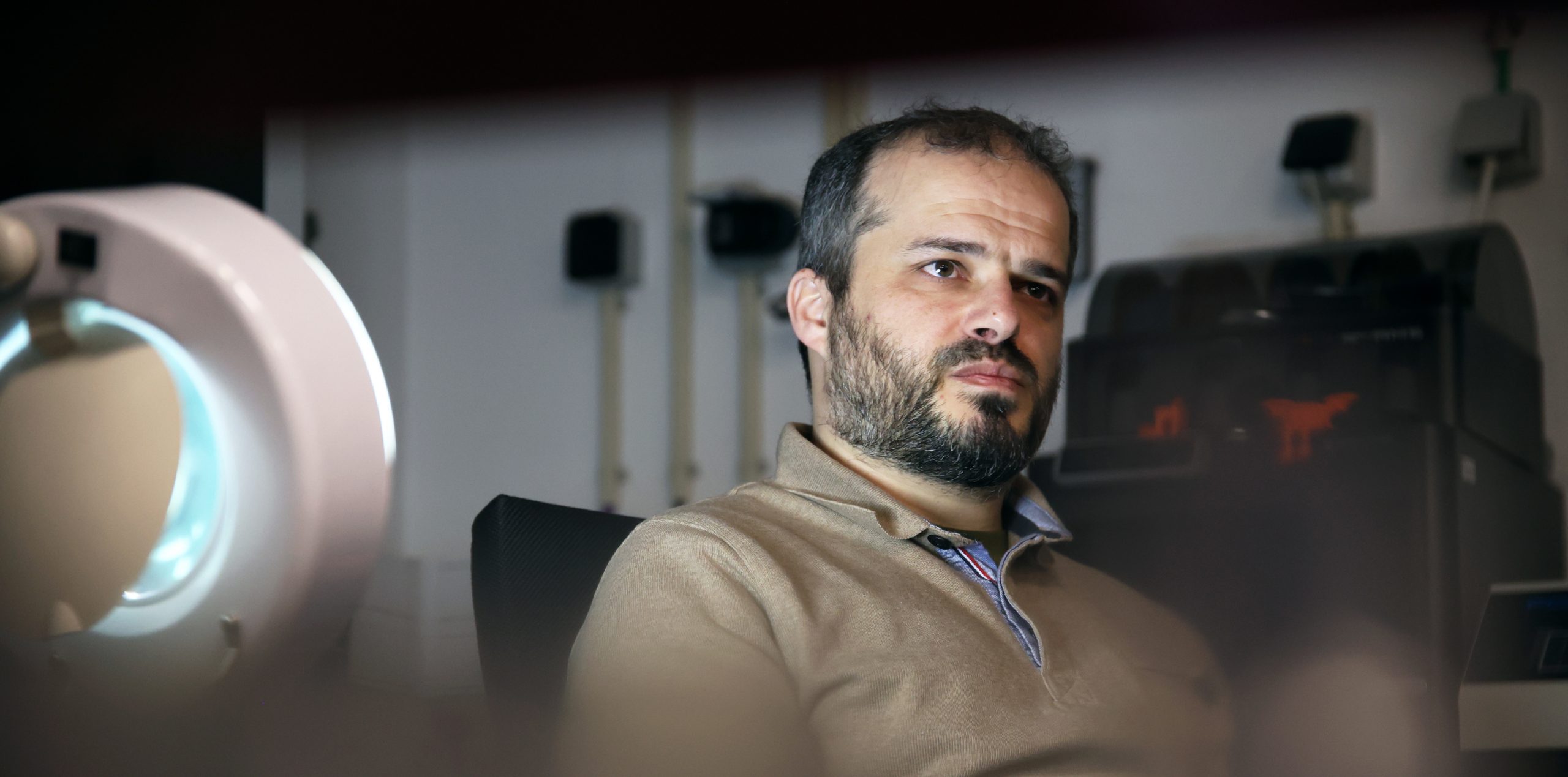
He might have become a sociologist or a geopolitics expert, but Justino has always been someone with “both feet on the ground”. Opportunities pass us by “when we forget to look”, and 15 years ago he did not let INESC TEC slip through his fingers. The future, set thoroughly, is fulfilled here every day, where he is responsible for a laboratory that is constantly running at full speed.
There could hardly be a better place for Justino Rodrigues. From the glass-walled office where he works, he sees a steady run of researchers and engineers every day, thinking through and testing answers to concrete problems. For someone who perceives pragmatism as an ally for a straight-line path, this is a familiar, reassuring territory. More than 15 years at INESC TEC have meant many days witnessing that in science “discovering what works as what doesn’t” is equally important. He happened to realise early on what might work for himself – and this is the story of how pragmatism opens doors.
Measured and cheerful, he began sketching out his future on a vocational training course in electrotechnics while still at high school. The idea of spending five years walking through the wide halls and corridors of a campus was neither guaranteed nor a passport to anything. In Penafiel, where he grew up, engineering and energy were the obvious choice for someone with their “feet on the ground”. “I wasn’t certain I’d be able to continue studying. Having that course was a kind of two-in-one.”
In engineering, as in everything else, “things are what they are”. Justino could have become a sociologist or a political expert – all “appealing” areas – but without the certainty that engineering seemed to offer. He secured a place at the Faculty of Engineering of the University of Porto; there, he heard about “an institute at the back” of the campus: INESC TEC.
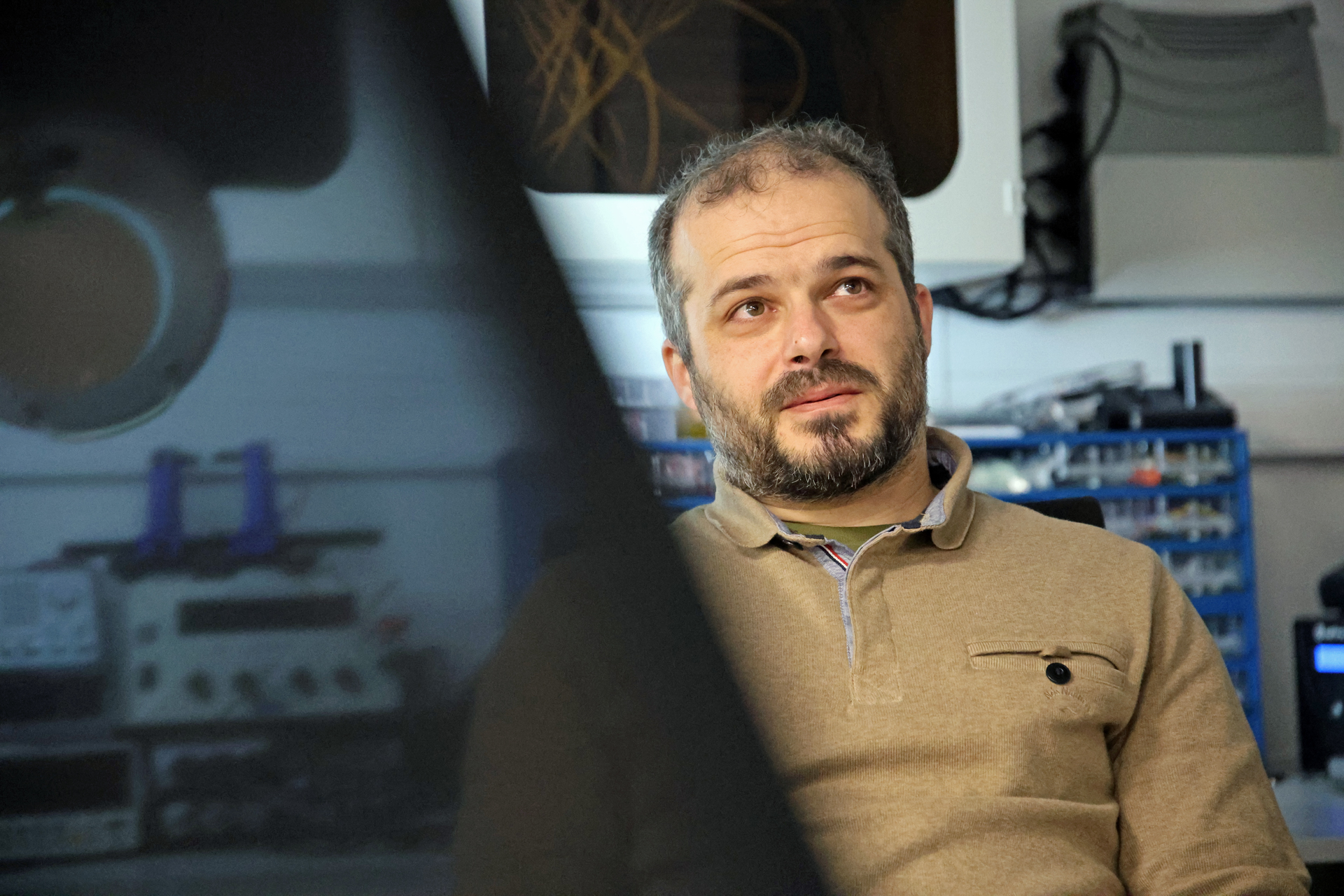
Don’t forget to look beyond the obvious
When he arrived, at the invitation of Professor Rui Esteves Araújo, the days passed as quickly as the turning of pages in scientific paper in an open-space office. At the time, there was no dedicated space for researchers, engineers and students to test and validate innovative solutions for decarbonising the economy.
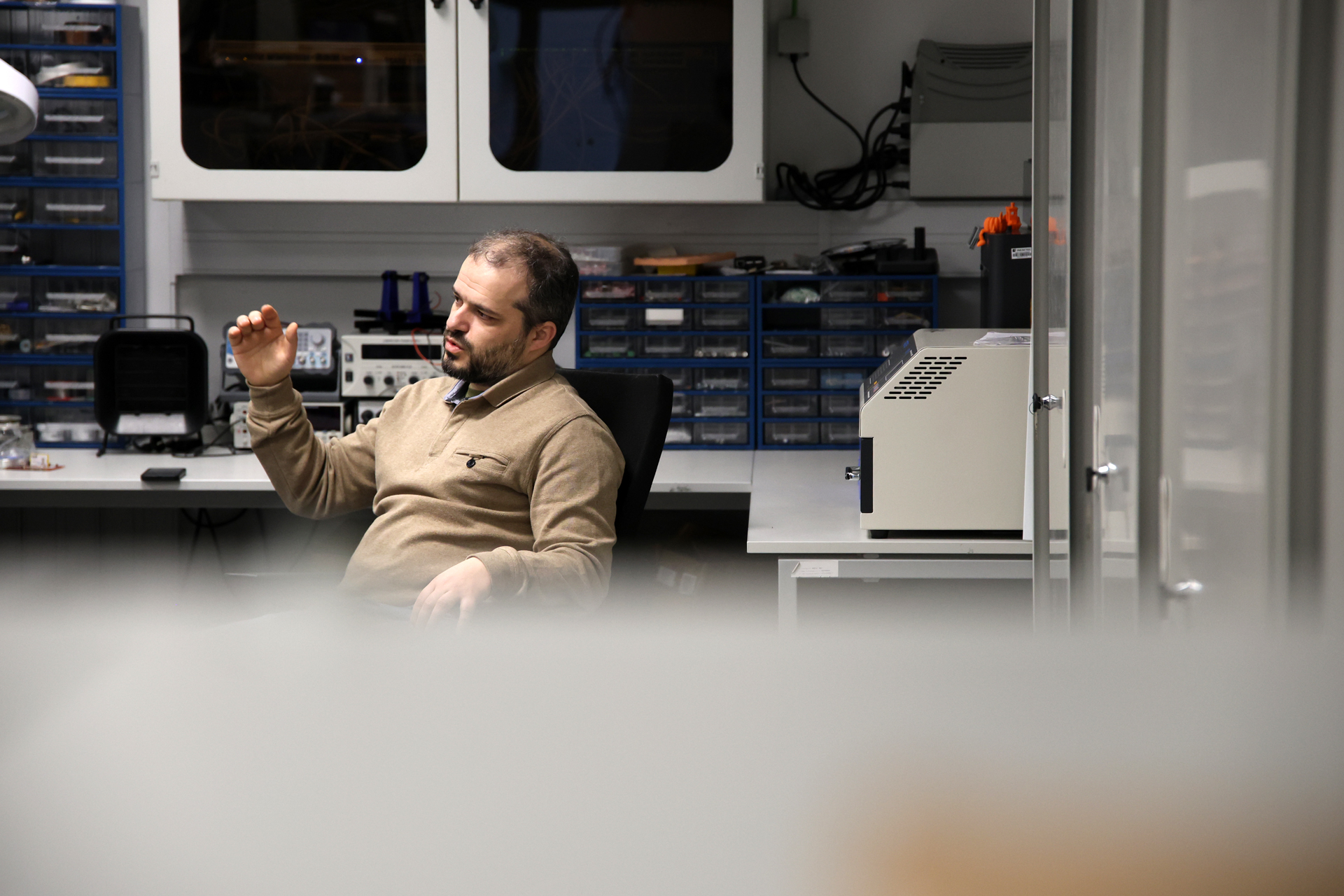
Now, Justino is responsible for that very space: every day he works overlooking what was once INESC TEC’s Smart Grids and Electric Vehicles Laboratory – now known as the x-energy lab, an arena for innovation where ideas are transformed into “concrete solutions, with a real impact on people’s lives”. According to him, a living proof that engineering reaches the highest level of pragmatism: the field that allowed him to avoid uncertainty.
“One of the main duties of an engineer is to take the laws of physics and know how to build solutions based on them. We’re not exactly physicists; we draw on the solutions physicists discover. An engineer must be pragmatic, because that’s what defines them: taking something and putting it to use. It’s about having your feet firmly on the ground.”
And that is why he did not become a sociologist or a political expert. Instead, the social sciences, economics and geopolitics have found a place on the shelves at home, for his daily reading. Now, totally comfortable around the laboratory he knows better than most, he has some carefully stored plans and his willingness to follow whatever the future might bring. “The other areas that interested me were very diverse. The topics appealed to me, but in the end, I felt they weren’t expanding fields – as engineering was at the time – and that they didn’t quite fit my profile.”
“And I don’t regret it,” he said. “I’ve never made long-term plans. Everyone has dreams, but I think it’s important not to lock yourself into one dream, because then you forget to look beyond the obvious. And the truth is, sometimes the opportunity is right beside you”.
“The ordinary lot”
That is how the “house at the back of the campus” came about. There, he received the news that he had won the REN 2023 award, in the category of best PhD thesis, for successfully testing the incorporation of new functionalities for smart transformers applied to electricity microgrids and multi-microgrids. And then came the question: isn’t an engineer also a creative? Justino replied: “I know I’m not the most creative person. At heart, being an engineer is about building solutions that work, that solve people’s everyday problems. You can be creative in how you develop solutions, but the laws of physics are always there, limiting what you can do. And if you invent too much, you end up with a solution that’s complex, expensive, or simply won’t work or be adopted.”
INESC TEC challenges many of these assumptions every day: “It’s a fact – there’s always something new here.” And practical sense still requires ingenuity: “We’re constantly moving from project to project, from challenge to challenge. In a company, the scenario might not be so diverse. Here, when the project changes, the challenge changes, so we must start planning new ideas.”
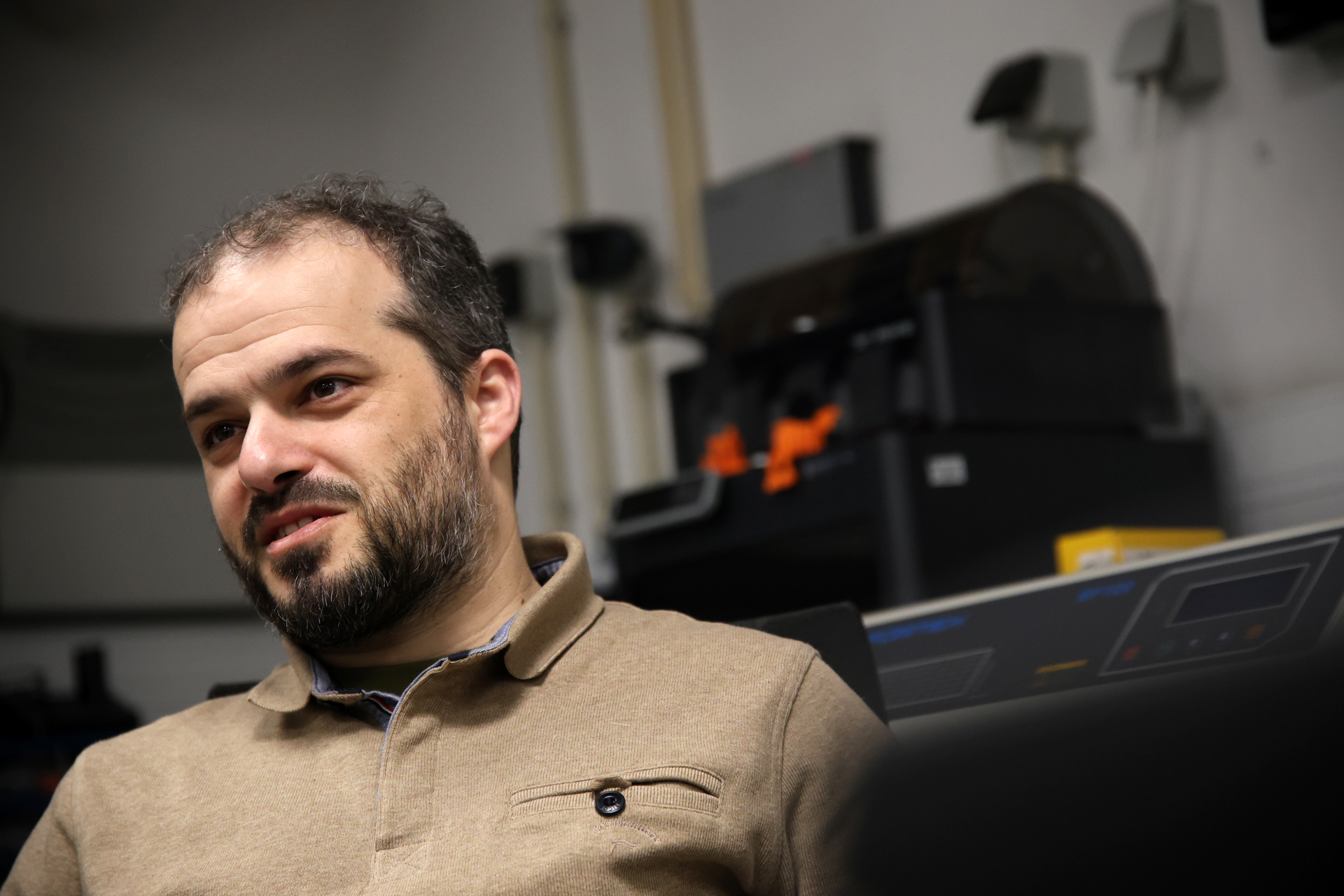
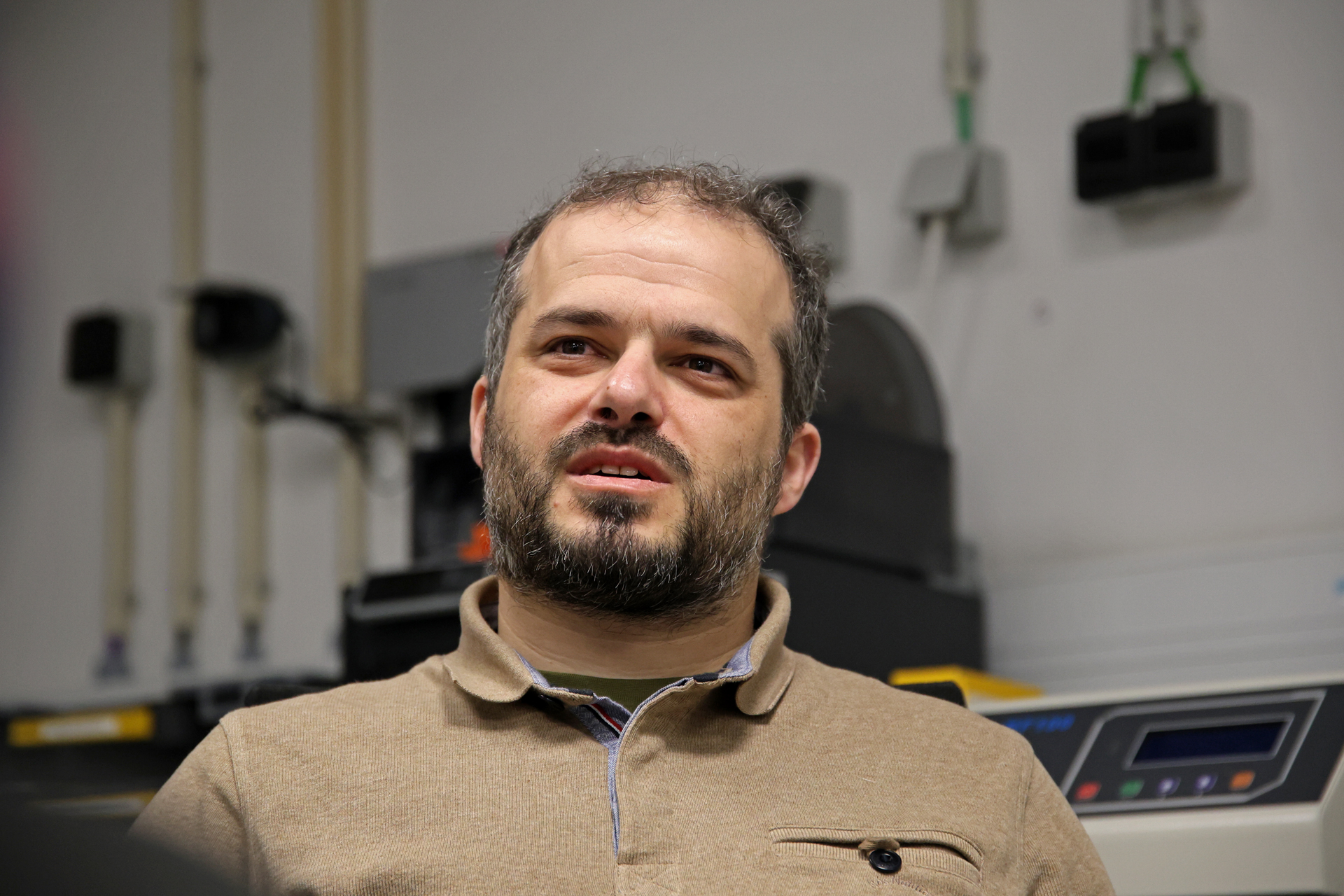
An exercise that works best when done together. Science, he said, does not “flourish” in echo chambers, on islands, set apart. As the energy domain grew, the “ordinary lot” (as he calls them) who once fitted into a single room – “there were so few of us that we all went to lunch together” – multiplied tenfold.
“There isn’t that same direct connection anymore. But it’s understandable. With more than 200 people, it’s humanly impossible to preserve the same closeness.” So, every now and then, they dust off the beer tap (hidden somewhere in the laboratory) and lend a hand. “People used to come in very closed off, stay in their private little corner, and then go home. We can be robots if we want. But I don’t think life is just that. People need to feel good here.”
“Observe and move on” after a shake-up
Justino feels at home here. He has never been a fan of long-term plans; in the meantime, 15 years have gone by. Along the way, he felt the need for a change of scenery. “Sometimes we’re so immersed in our own lives that we don’t know what’s missing and what isn’t, and you need to step outside the environment you know in order to understand.”
“I heard about a project in the West Bank called HOPE, which brings together volunteers from all over the world to share knowledge with Palestinians. At the time of one of the intifadas, they called people in to teach. The intifada ended, everything shut down, and it turned into something like an after-school club. And they were calling for people to teach whatever they knew.”
He spent time in Nablus, 50 kilometres north of Jerusalem –- “shake-up” whose aftershocks have never quite left him. “Sometimes we need to detach ourselves from everything we take for granted. And when you’re in your own environment, it’s not easy. Things are always right beside you, always demanding attention.” He identified with the desire for a better life and the appetite to learn that he witnessed in the classrooms of the Palestinian city.
Three months later, he returned to Porto, where he lives. The city is now the starting point for many journeys around “this small Portugal”. The journey that once seemed the hardest had already been made more than two decades earlier: leaving Penafiel for Porto, for the Faculty of Engineering of the University of Porto and for INESC TEC. Now, he simply “observes and moves on” – because “things happen, don’t they?”. “You have to know how to spot opportunities and avoid shutting yourself off and fixating on a dream that’s too big; you take a line and follow it.” That path has brought him to the glass-walled office where we can find him every day. It is a place that makes sense: it may not be the destination, but for now it seems a rather fine stopping point along the way.
 News, current topics, curiosities and so much more about INESC TEC and its community!
