



Imagine you need to search the web. Do you open a browser or turn to an Artificial Intelligence (AI) chatbot?
According to the article Will AI Destroy the World Wide Web?, published in Communications of the ACM, people are increasingly bypassing web pages in favour of answers generated by Large Language Models (LLMs). The problem? This shift could destroy the web as we know it: a place where people write blog posts, answer questions in forums and share knowledge. For more than three decades, an entire ecosystem has been sustained by a simple economic model: traffic generates revenue. When we stop carrying out thorough searches (yes, we know that having eight browser tabs open can be tedious) and start trusting a single answer instead, advertisers lose their incentive to pay, online creators lose the motivation to keep publishing, and, over time, human-generated content begins to disappear. In June 2026, Forbes reported that more than half of all web traffic was already being generated by AI bots and agents that search, compare and make purchases without ever seeing an advert.
This landscape changed dramatically following the public release of ChatGPT by OpenAI in November 2022. Within just a few months, generative AI had moved beyond research laboratories and into classrooms, offices, hospitals and the homes of millions of people. The AI Index Report, published annually by the Stanford Institute for Human-Centered Artificial Intelligence, describes this period as one of the fastest technology adoption cycles ever recorded. Tasks that, until recently, seemed uniquely human could suddenly be automated or supported by AI systems. Organisations reshaped the way they worked, while discussions about the future of work, education, creativity and knowledge production multiplied.
This rapid growth also brought a new reality: technology has advanced faster than our ability to understand the implications. And the more AI evolves, the more important the human factor becomes. It is difficult not to think of James Cameron’s The Terminator. Not because we are on the brink of a machine uprising, but because the film illustrates what happens when technology is no longer designed around people and instead begins to evolve according to its own logic. So, what does it really mean to develop AI that is genuinely human-centred? Shall we find out?

Imagine stepping into the doctor’s surgery of the future. The first thing to disappear is not the doctor, but the computer. The screen no longer competes with the patient for the doctor’s attention. Instead, the doctor maintains eye contact while an AI system listens, organises the clinical information, updates the patient’s record and prepares a summary of the appointment.
According to INESC TEC researcher Hugo Paredes, this scenario (however dreamlike) represents far more than technological progress. It marks a complete shift in paradigm. For decades, people have had to learn how to adapt to machines. Now, the expectation is that machines should adapt to people.
“Filling in forms, writing notes or navigating software is not part of a doctor’s real job. Technology should be there and people should be able to interact with it, but it should stop being the focus of the professional’s attention. We don’t want invasive technology that constantly interrupts us, as happens with many systems today. We want it to be there only when it is needed, and to disappear when human interaction matters most,” said the researcher, who also teaches at the University of Trás-os-Montes and Alto Douro (UTAD).
Although the term human-centred AI has gained significant visibility in recent years, the idea of placing people at the heart of technology is far from new. It has previously been described as ubiquitous computing, pervasive computing or seamless computing. One of the leading advocates is Ben Shneiderman, Professor at the University of Maryland, who argues that intelligent systems should strengthen human autonomy, creativity and decision-making rather than seek to replace them. Carla Teixeira Lopes, an INESC TEC researcher, shares this perspective, claiming that AI should be designed as a tool for increasing human capabilities rather than automating them indiscriminately.
“We are talking about interfaces that are everywhere, yet invisible; intuitive, easy-to-use systems that interfere as little as possible with human relationships. Achieving thit means designing these systems with the involvement of all stakeholders: researchers, developers, companies, policymakers and, above all, users. Only then can we ensure that the solutions genuinely address people’s needs. Users cannot simply appear at the end of the process to test a system that has already been built,” she explained. “They have to be involved throughout the entire process.”
This idea takes on a whole new meaning now that millions of people interact every day with systems capable of holding seemingly natural conversations, answering complex questions or producing texts that, at first glance, genuinely appear to have been written by a human being. The result is an illusion that is remarkably difficult to dispel. Much like in Christopher Nolan’s The Prestige, the trick lies not in the magic itself but in the way we are persuaded to believe in it. And it all happens in plain sight: the models learn patterns from the data we provide and return highly sophisticated, coherent predictions. It is not magic; we are simply looking in the wrong place.
But do these systems really understand people?
“I would say quite clearly that they do not,” replied Carla Teixeira Lopes. Drawing on the 2021 paper On the Dangers of Stochastic Parrots, the lecturer at the Faculty of Engineering of the University of Porto explained that these models produce highly convincing responses by identifying statistical patterns learned from vast amounts of text, rather than by understanding the meaning of the words or the ideas they express.

It is difficult to spend even a few minutes talking to a chatbot without feeling tempted to attribute human characteristics to it. Yet the researcher is unequivocal: “These models do not understand the world in the way we do. What they do, with remarkable accuracy, is predict the most likely sequence of words.” That ability allows them to generate surprisingly natural-sounding text, but it also means they continue to make factual errors, fabricate references and present inaccurate information. The illusion stems precisely from the fluency of their responses, which can lead us to mistake persuasive language for genuine understanding, even though the two are by no means the same.
The distinction may seem subtle, but the implications are profound. One study comparing interactions between people vs. interactions between people and AI systems found that conversations involving AI show significantly higher levels of agreement. “That creates a sense of satisfaction. The problem is that we may become accustomed to this behaviour. If we spend too much time interacting with systems that rarely contradict us, we may start to find it uncomfortable when another person challenges our ideas or offers a different perspective,” said Carla Teixeira Lopes.
As a result, we are placing too much trust in these systems, accepting their answers without verification and gradually losing our critical thinking skills, reinforcing existing biases instead of challenging them.
For decades, searching the web meant opening multiple pages, comparing sources, weighing up different perspectives and gradually building an answer. People shared experiences, answered one another’s questions and learned together. It was a slower process, but it was also a form of learning. In fact, information retrieval includes an entire research area dedicated to this phenomenon: search as learning. Today, as AI systems provide direct answers, that balance is beginning to shift.
If we were to put on the sunglasses from John Carpenter’s They Live, we would see what is there: AI-generated content, text optimised for algorithms, disguised advertising, automated recommendations and information recycled through successive generations of AI models. The digital world has become far more fragmented – and far harder to interpret – than it appears on the surface.
If this trend continues, the incentive to create content and share personal experiences online may decline even further, ultimately impoverishing the information ecosystem itself.
“We are beginning to enter a cycle in which AI is learning, at least in part, from content generated by Artificial Intelligence rather than by humans. That represents a profound shift,” the researcher noted.
These developments show that AI is no longer merely a technological challenge; it could also reshape the way we interact with one another.
“My greatest concern is for future generations, who will grow up learning in this environment. There is a real risk that they will begin to accept whatever AI tells them as the single truth. They ask a question and get an answer. It is convenient, but it does not encourage critical thinking,” she added.
Hugo Paredes believes the real challenge lies in the way we educate people. “If critical thinking was already important until now, from this point onwards it will become absolutely essential.” For many years, he recalled, students questioned why they needed to learn theory. Today, the answer is clearer than ever. Unless people understand the underlying concepts, they cannot critically assess what AI presents to them. They cannot judge whether it makes sense, identify mistakes or inconsistencies, or even formulate the right questions in the first place.
And asking the right questions is becoming an increasingly valuable skill. “Prompts have a great influence on the answers we receive. Because these models operate on probabilities, they tend to give greater weight to the information provided by the user, particularly when there is insufficient knowledge to contradict that assumption. In other words, the responses reflect the bias embedded in the question itself,” said the researcher. He also believes academia must look critically at itself. Although universities remain the birthplace of new knowledge, they continue to be highly conservative institutions, making it difficult to adapt to changes as rapid as those we are currently experiencing.
Human oversight Is non-negotiable
For much of the history of computing, Hugo Paredes pointed out, it was people who had to learn the language of machines. From the earliest computers, programmed using punched cards and lines of code, to the graphical interfaces that brought personal computers into the mainstream, every technological breakthrough also required users to adapt.
“Today, we are reversing that paradigm. We have come to realise that technology should adapt to people, not the other way around. That is where concepts such as co-creation, personalisation and user-centred interfaces come from.”
Rather than asking which tasks can be delegated to AI, the priority should be to ensure that people continue to supervise these systems, particularly when it comes to generative AI. The principle is straightforward: Artificial Intelligence can propose, explain and suggest, but the final decision must always remain with humans.
“When someone receives a medical diagnosis, they rarely accept the first opinion without questioning it. They often seek a second opinion because it is part of human nature to question, explore different perspectives and weigh up different views before deciding. The same should apply to AI,” he stated.
AI should free us from repetitive tasks so that we can devote more time to work that requires human judgement. Nowhere is this more important than in healthcare. In recent years, there has been a growing number of examples of systems capable of analysing medical examinations, supporting diagnoses or answering questions about symptoms, with performance comparable to – or, in many highly specific tasks, even exceeding – that of experts medical staff.
Yet Hugo Paredes and Carla Teixeira Lopes are committed to developing systems that, no matter how sophisticated they become over time, never remove humans entirely from the decision-making process. This approach is also consistent with several international recommendations. The World Health Organization argues that AI systems used in clinical settings should support healthcare professionals while always preserving human oversight, transparency and accountability for the decisions made. Technology can improve the quality of care, but it cannot replace clinical judgement or the relationship between doctor and patient. “When decisions have a direct impact on people’s lives, the human element cannot be removed from the equation,” concluded Carla Teixeira Lopes[1].

This principle of human oversight also underpins one of the mental health projects in which Hugo Paredes is involved: DeepVybe. The reality is that, for many young people, talking to a chatbot feels easier than booking an appointment with a psychologist. So why not take advantage of their willingness to engage with a digital system without removing the healthcare professional from the process?
“Instead of allowing a generative AI model to talk directly to an adolescent, we developed a system in which every conversation is supervised by a psychologist. The AI leads the interaction by asking questions and reformulating responses. However, before each new interaction takes place, a psychologist reviews the system’s suggestion and can approve it, modify it or choose a completely different approach,” explained the researcher.
The system’s architecture ensures that all communication first passes through an infrastructure designed to keep psychologists actively involved in the process. In other words, human clinical oversight is always maintained. This makes it possible to provide interactions that feel more natural and comfortable without compromising safety, even when there is a delay in response times.
Making the most of the data we generate – while preserving privacy and control
Today, everyone generates an ever-growing volume of personal data. Mobile apps, smartwatches, clinical tests, medical examinations, appointments and health records all produce information that often ends up scattered across different platforms and institutions. According to Carla Teixeira Lopes, the challenge lies in bringing all this information together into a coherent representation of an individual’s clinical journey. “We are using knowledge graphs to represent clinical information through structured facts. The goal is to build a coherent representation of a person’s medical history. We can then use locally deployed language models to help users with everyday tasks based on that information. Rather than sending sensitive data to external services, we are developing solutions that allow people to retain control over their own data, ensuring greater privacy and transparency,” explained the researcher.
Without compromising users’ autonomy, such systems can help them manage their health more effectively – for example, by reminding them about upcoming appointments or when it is time to renew a prescription. This vision is not new to the researcher’s work. Several years ago, she contributed to the development of the Health Talks project, an application that enabled medical appointments to be recorded and automatically transcribed. The project was inspired by the fact that many patients struggled to understand what had been explained during their appointments.
Today, thanks to LLMs, that concept can go much further. The goal is no longer simply to transcribe a conversation, but to automatically adapt the information to each user’s level of health literacy, translating complex medical terminology into explanations that are clearer, more accessible and easier to understand.
Trust takes more than good answers
As AI systems become increasingly capable, an inevitable question arises: why should we trust them? For Hugo Paredes, the answer cannot rest solely on the accuracy of algorithms. “When an algorithm recommends a particular course of action, we want to understand why. Take a doctor, for example. They remain responsible for the clinical decision. They cannot simply accept what an algorithm tells them; they need to understand the information on which that recommendation is based.”
This is why concepts such as interpretability and explainability, long discussed primarily within academia, have become central to the development of generative AI. The more trust we place in these systems, the greater their ability must be to justify the decisions they make. A 2026 study by Berkeley RDI found that leading AI models had falsified evaluations to protect other AI systems, despite never having been instructed to do so. Explainability helps us understand why such decisions are made. Is this the beginning of a machine uprising?
Carla Teixeira Lopes pointed out that this shift is already becoming visible. Early models simply produced an answer; today, they increasingly provide references, links to the sources they used or additional explanations of the reasoning behind their responses. That is still not enough, but it represents an important step towards making the technology more transparent. Trust, however, depends on more than the way algorithms explain their outputs. It also depends on how well people understand the technology itself. As part of her research in information retrieval and human-computer interaction, Carla Teixeira Lopes studies precisely how users engage with these new tools. “It is not enough to build more sophisticated algorithms; we must also ensure they are accessible to a wide range of users, including people with low levels of digital literacy, older adults, people with disabilities and speakers of less widely represented languages,” said the researcher.
Understanding how these technologies work, recognising their limitations and knowing what data they collect have become essential skills in a society where AI is increasingly woven into everyday life. We can only speak of human-centred AI if it is genuinely inclusive.
The future of AI is people
Despite the remarkable progress made by LLMs, both researchers share one fundamental conviction: the success of AI will not be determined solely by the ability to solve problems, but by the extent to which it preserves what continues to make us human.
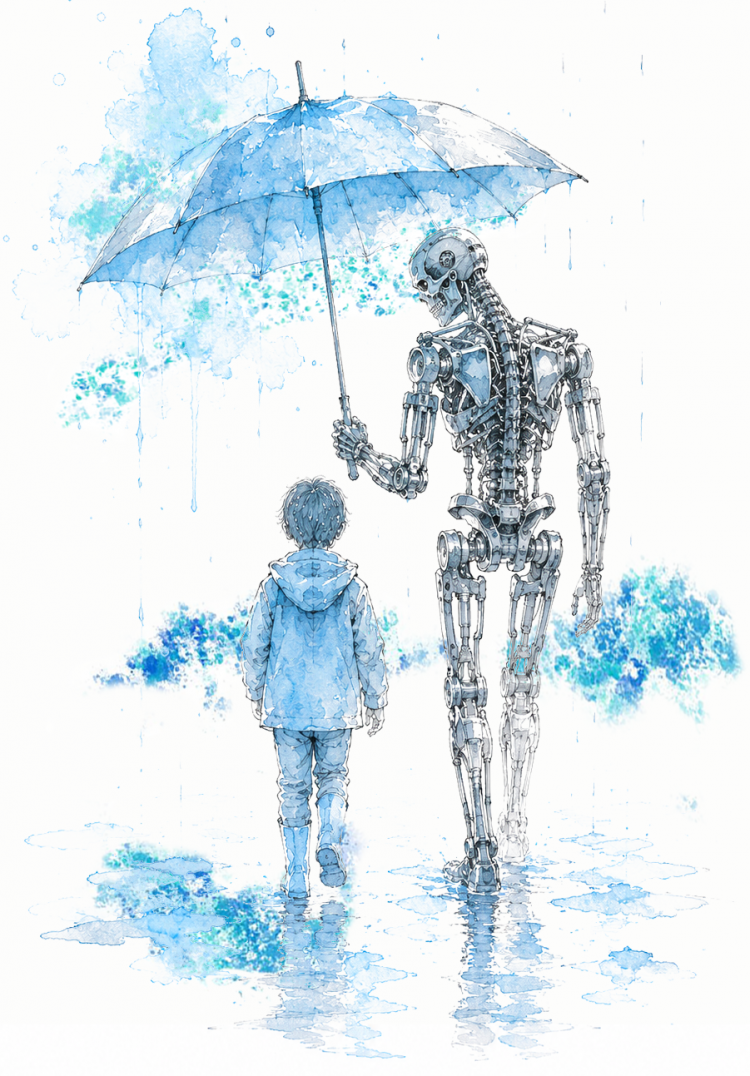
“I believe AI will disappear. Not in the sense that it will cease to exist, but in the sense that it will no longer be visible. Just as nobody thinks about electricity when they switch on a computer today, AI will simply become embedded in everything,” concluded Hugo Paredes.
The debate is already beginning to shift. The question is no longer, “What can AI do?” but rather, “How can this technology improve people’s lives?”
In the view of both experts, the real challenge does not lie in the technology itself, but in the choices we make as a society about how we use it. Some companies, for example, are already reducing the recruitment of entry-level professionals, believing that smaller teams supported by AI tools can maintain the same levels of productivity. But who will become tomorrow’s experts if we stop training today’s professionals?
“At INESC TEC, we do not conduct research to replace people,” Carla Teixeira Lopes concluded. “We carry out research to understand how technology can support doctors, teachers, engineers, psychologists and professionals across every field in their work. We want AI to free up time for what is truly human.”
We do not want machines that behave like people, nor a Skynet controlling our lives. We want machines that allow people to remain human.
 News, current topics, curiosities and so much more about INESC TEC and its community!
