


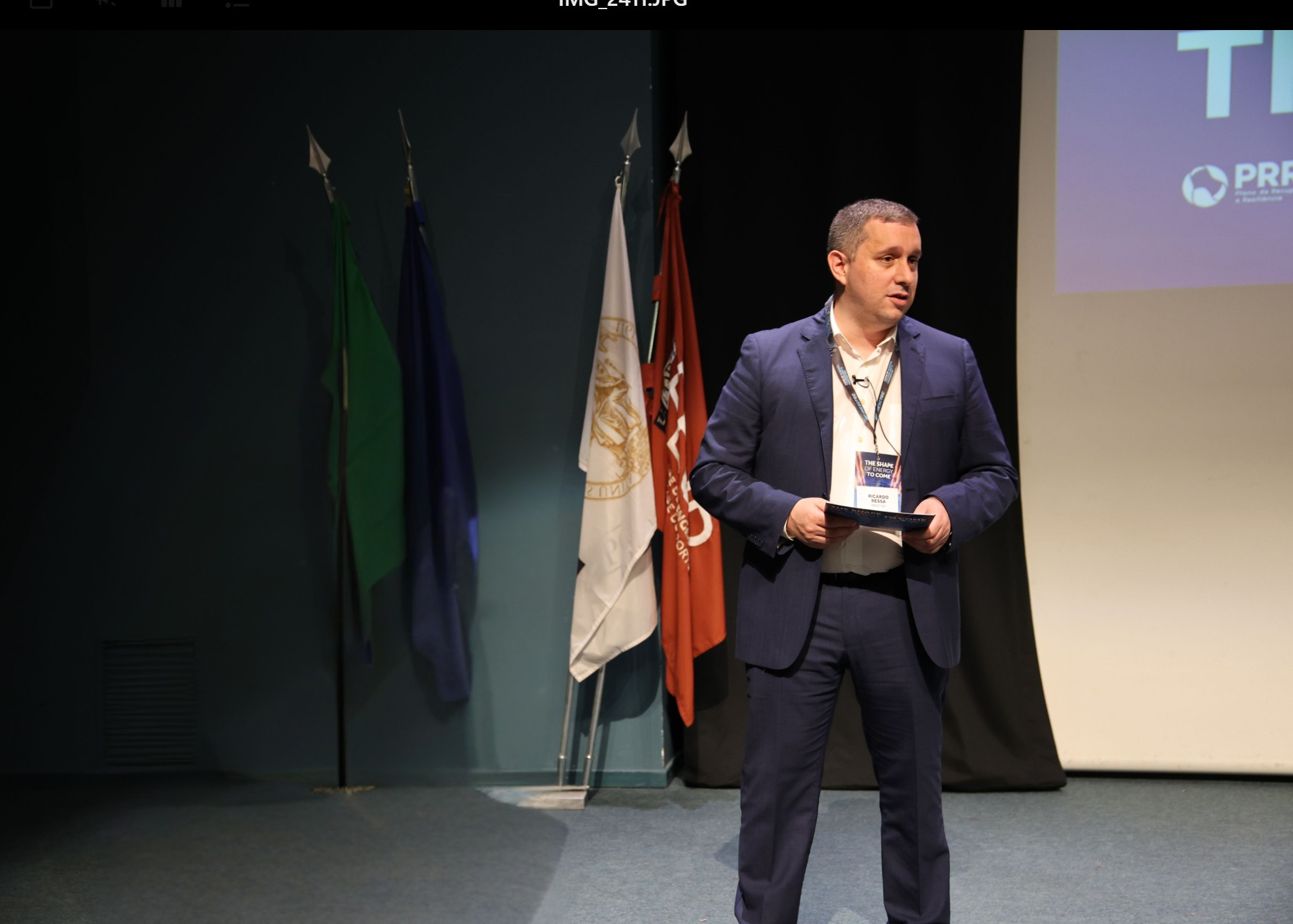
The goal? To advance the development of a European foundation model of Artificial Intelligence (AI) for energy grids – a strategic project for the future of the European Union’s (EU) energy system. The means? The “Workshop on the European AI Foundation Model for Energy Grids”, organised by the European Commission, Fraunhofer FIT, INESC TEC and NTUA (namely DG ENER) on 8 December, in Brussels. The actors? First and foremost, INESC TEC, which played an active and key role at the event, with researcher Ricardo Bessa representing the Institute, but also electricity distribution and transmission system operators (DSOs and TSOs), other research institutions, European AI Factories, sector associations and representatives of the European Commission.
The workshop and the European context
The Brussels event is part of a series of workshops promoted under the Testing and Experimentation Facilities (TEF) initiative – with INESC TEC participating in at least four facilities, two of them in the Power & Energy and AI domains – and the Strategic Roadmap for digitalisation and AI in the energy sector. The goal of this workshop was to discuss the potential of foundation models applied to electricity grids, the regulatory, data-access and computational challenges involved, and the interoperability and secure information-sharing needs between operators and institutions working in AI.
These discussions led INESC TEC, RWTH Aachen and NTUA to join forces to present a structured plan called Plan4EUAI, proposing a concrete roadmap for the development of a European foundation model capable of supporting applications such as forecasting, optimisation and digital twins of electricity grids.
Plan4EUAI, co-authored by researcher Ricardo Bessa, outlines eight activities which the authors consider essential to building a future European foundation model for electricity grids. These activities are: definition of priority use cases, identification of algorithms and datasets, large-scale synthetic data generation, initial training cycles, creation of data-sharing infrastructures, model validation, a second training cycle with real data, and real-world evaluation with European operators.
“Implementing this plan will enable Europe to accelerate AI development for a sector that is both specific and strategic to the continent’s competitiveness. It builds on investments in testing and computing infrastructures at European level and will also mobilise the sector towards the development of new technology,” said Ricardo Bessa.
This plan served as the basis for the workshop discussions and for bringing together operators, researchers and European entities on the necessary next steps and commitments.
INESC TEC’s role in the workshop
Following the opening remarks by the European Commission, the Plan4EUAI was presented and discussed in a session aimed at establishing a technical and institutional baseline for the roadmap before participants moved into working groups. Speakers in this initial session included, in addition to Ricardo Bessa from INESC TEC, representatives from Fraunhofer FIT, RWTH Aachen, NTUA, JRC, ENTSO-E and EU-DSO.
Later, in his presentation “Technical opportunities & challenges in data sharing”, Ricardo Bessa addressed several issues, namely emerging opportunities to accelerate innovation through foundation models trained with data from multiple grid operators, as well as the technical challenges of data sharing – including anonymisation requirements, representativeness, quality and temporal consistency. He also spoke about the importance of defining secure sharing models that comply with European standards and protect sensitive information about electricity infrastructures, and about the urgency of creating trust and governance mechanisms enabling data exchange between operators, AI Factories and research institutions such as INESC TEC.
In addition to being a keynote speaker in the opening session, Ricardo Bessa also moderated two workshop sessions: “Defining the ‘Quick-Win’ Use Cases” and “Short-Term Vision for the Framework for AI Foundation Models”, together with Antonello Monti and Elissaios Sarmas.
These sessions sought to address a range of questions, including: Which governance model will enable secure data sharing between operators and AI developers? Which legal barriers must be overcome? What type of organisational structure could host a future European infrastructure for data and model sharing? How can interoperability and trust be ensured within such a diverse European ecosystem?
The workshop closed with conclusions from the European Commission and a commitment to move forward with practical next steps, including mobilising interested operators, defining use cases and creating an organised European structure for the joint development of the foundation model.
INESC TEC’s role in the European context
Ricardo Bessa’s participation in drafting the Plan4EUAI document and his prominent role in the workshop promoted by the European Commission reinforce INESC TEC’s position as a central partner in the development of European AI solutions for the Power & Energy domain. It also highlights the Institute’s scientific expertise – and that of the researchers – in areas like data sharing, forecasting and advanced modelling, while positioning INESC TEC as a key player in shaping the future European ecosystem of AI applied to the electricity system.
 News, current topics, curiosities and so much more about INESC TEC and its community!
