


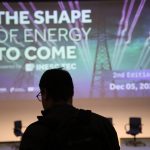
The energy sector is undergoing the greatest transformation of recent decades, and INESC TEC seeks to lead the discussion. The second edition of The Shape of Energy to Come brought together around 300 researchers, companies and decision-makers to debate the issues that will define the future: smarter and more resilient grids, the e-mobility revolution, industrial decarbonisation, the growing role of Artificial Intelligence, and the need for partnerships capable of accelerating real innovation.
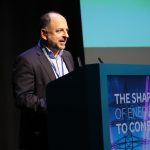
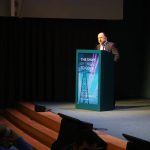
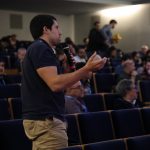
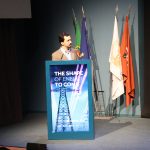
The auditorium of the Faculty of Engineering of the University of Porto was the meeting point for an afternoon that showcased not only where the energy system is heading, but also who is building it. Gil Sampaio, INESC TEC researcher and driving force behind the second edition of the event, mentioned just that. “We managed to combine academia, industrial and regulatory outlooks in a single space, bringing together partner companies, researchers and international experts. This close collaboration between science, industry and society is essential, because the energy of tomorrow depends on the decisions and partnerships we make today,” he said.
The future is built through projects
“There is no solid energy transition without strong collaboration; said collaboration must connect research with industry, technological progress with public policies, and above all ambition with responsibility.” This was how João Claro, Chairman of the Board of Directors of INESC TEC, opened the event, stressing that the future of energy is not built on abstract speculation, but on real projects. During his address, he revisited INESC TEC’s contribution across three major phases – the integration of renewable energy, digitalisation and smart grids, and the democratisation of energy – and highlighted the growing role of Artificial Intelligence, both as a tool to make energy systems more efficient and predictable, and as a new source of electricity demand that requires intelligent planning.
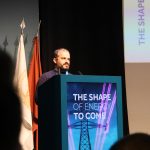
Ricardo Bessa, INESC TEC researcher and coordinator of the Power & Energy Systems domain, introduced the keynote speaker, while also explaining how the Institute can be at the centre of the transformation of energy systems, drawing on concrete examples of work and projects developed in this field.
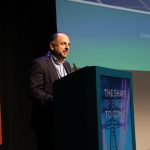
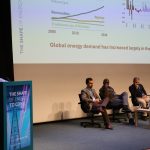
The keynote address by Georges Kariniotakis, Full Professor at Mines Paris – PSL, focused on the rapid evolution of electrical systems, the large-scale deployment of renewable energy and the growing role of Artificial Intelligence in grid planning, operation and resilience improvement. He explained that although renewable generation forecasting is already a mature area and has been widely used by operators since the 1990s, there is still significant room for improvement, given the technical and financial impact that large forecasting errors still have. “We are moving towards increasingly complex energy systems, and without advanced forecasting and AI it will not be possible to ensure safe, efficient and economically sustainable operation,” he stated.
Kariniotakis also reinforced the value of long-term collaboration between research centres – like the one he has maintained with INESC TEC for more than three decades – as an essential driver of applied innovation.
The real impact of collaboration between companies and research
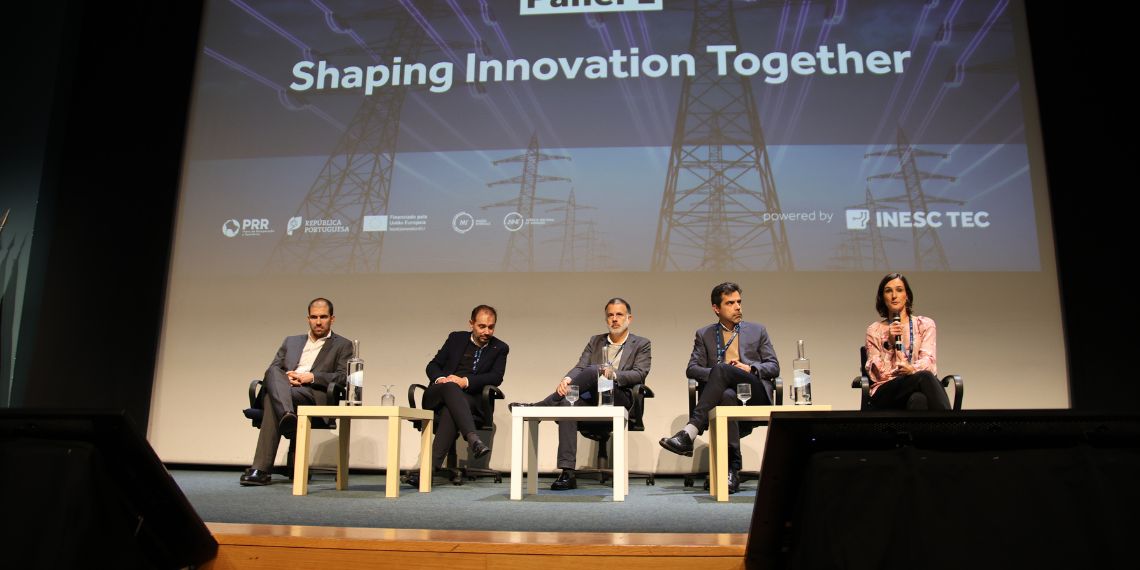
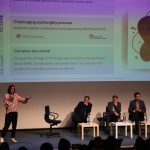
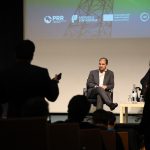
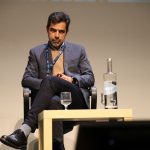
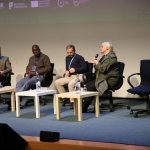
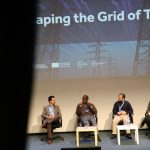
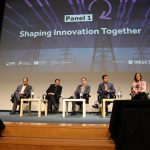
The Shaping Innovation Together panel gave a voice to several INESC TEC partner companies, which shared experiences of technological co-creation in areas such as consumption and generation forecasting, renewable integration, e-mobility, smart grids, energy efficiency, industrial engineering and advanced energy management.
Ricardo Ferreira, representing the Cooperativa Eléctrica do Vale do Este (CEVE), began by recalling that technological collaboration on efficiency and energy management solutions delivered significant results in reducing consumption in tertiary buildings and expanding monitoring systems (more than 10,000 installations).
Representing EFACEC, Miguel Gomes highlighted the ongoing partnership with INESC TEC (since the 1990s), focusing on the optimisation of transmission and distribution networks, the development of SCADA modules, and other technologies currently used in Europe, Latin America and North Africa.
The complexity and challenges associated with hybrid clusters combining renewable generation were the central topic of the presentation by Hugo Carvalho from Finerge.
Rita Rebelo, from E-REDES, explained how it has been possible to evolve the distribution network investment plan with the support of tools developed by INESC TEC that allow the estimation of economic benefits, reduction of losses, improvement of service quality and justification of investments in a rapidly transforming system.
Elergone highlighted the crucial role of forecasting, with Amândio Ferreira underlining the importance of collaboration in the creation of more accurate models.
In the end, the message was clear: co-creation between companies and research centres is essential for more robust decision-making and for accelerating innovation processes.



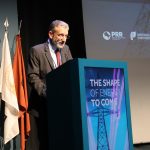
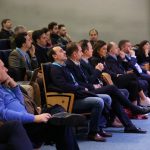
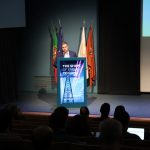






Technology made in INESC TEC
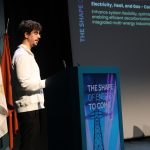
The second part of the event was dedicated to presentations by INESC TEC researchers, showcasing emerging technologies developed at the Institute – some of which already have direct application in the sector.
António Coelho emphasised the importance of multi-energy systems in ensuring flexibility and presented an industrial tool with integrated forecasting and optimisation capabilities.
Researcher Mikka Kisuule presented a foundational model for power grid analysis that enables faster power flow simulations, reliability assessment and the generation of thousands of scenarios in a computationally efficient manner.
The future is not about installing more cables, but about implementing smarter charging strategies. This was the premise of Salvador Carvalhosa’s presentation, which argued that it is possible to adapt older buildings to e-mobility without major construction work, by using management algorithms that balance user needs and comfort with the limitations of the building’s electrical installation.
Justino Rodrigues discussed how current AC grids face challenges due to the increasing integration of renewables, electric vehicles and storage, and how hybrid AC/DC grids can triple capacity, reduce losses and eliminate structural constraints.
Zenaida Mourão’s presentation showed that industrial decarbonisation is not only necessary to meet national and European climate targets, but also the right option for companies’ futures. Using the Portuguese agro-food sector as a case study, the roadmap presented identifies technologies and milestones up to 2050, highlights the enormous cost of inaction, and stresses that the next phase involves adapting sectoral strategies to the local reality of each factory. In short, decarbonising means improving processes, increasing efficiency and ensuring competitiveness.
Legacy and outlook
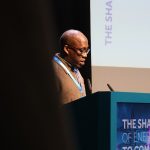
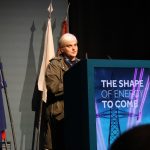
João Peças Lopes’ closing address served as a practical embodiment of the ideas presented by Georges Kariniotakis: “the energy transition is no longer a future promise; it is an operational reality that requires advanced tools, clear rules and an electricity system prepared to operate with large volumes of renewable energy”.
The Director of INESC TEC outlined the recent evolution of energy systems, focusing on the Portuguese case, and showing how the energy transition has shifted from a future vision to an operational reality. João Peças Lopes also explained that renewable power plants are no longer passive elements, but now provide essential grid services, such as voltage control and system services, within an increasingly stringent regulatory framework. “Today, renewable power plants are not just about producing energy; they are an active part of grid control, contributing to the stability and security of the electricity system.”
The address also reflected on the importance of learning from recent events – such as the 28 April blackout on the Iberian Peninsula – and of continuing to strengthen the resilience of the electricity system, leveraging available flexibility on both the generation and consumption sides.
The reaserchers mentioned in this news piece are associated with INESC TEC and FEUP.
 News, current topics, curiosities and so much more about INESC TEC and its community!
