


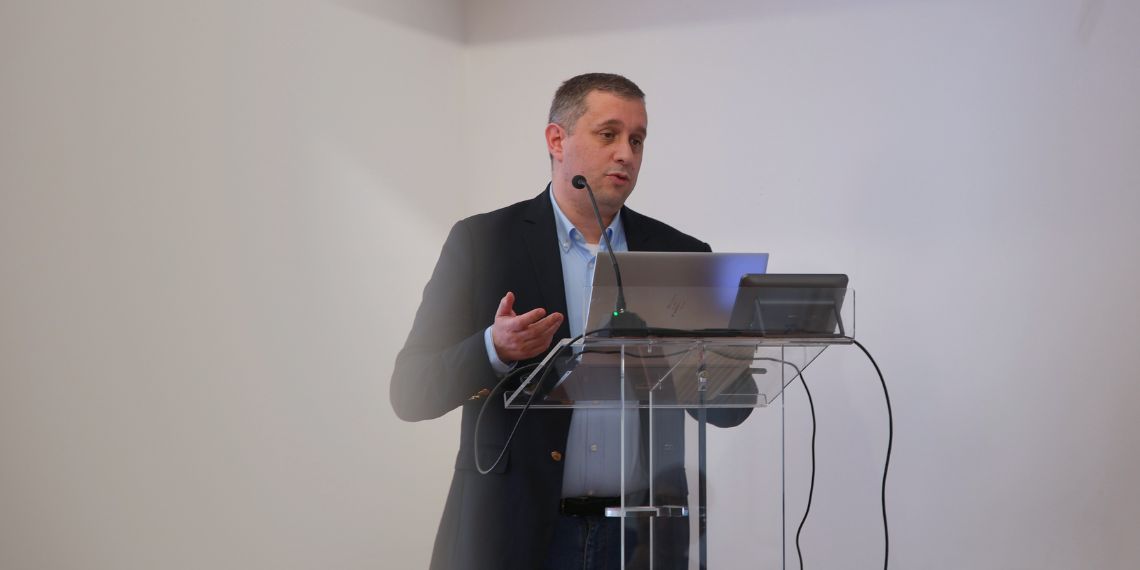
Who is shaping the path towards the safe use of Artificial Intelligence (AI) in electricity networks? What technical and regulatory challenges do we need to overcome? And what conditions are required to turn potential into real impact in the energy sector? These and other questions were discussed at a meeting organised by the UK’s Department for Energy Security and Net Zero – the government body responsible for energy policy and the climate transition. Ricardo Bessa, researcher and coordinator of the Power & Energy Systems area at INESC TEC contributed with his knowledge and expertise.
As power grids become more complex and increasingly dependent on renewable sources, the need for intelligent solutions to ensure their stability and efficiency continues to grow. AI is emerging as a promising tool capable of transforming how energy is produced, managed and distributed. However, AI application raises challenges in terms of reliability, security and integration, requiring demanding testing and validation before large-scale adoption.
To explore this question, a group of international experts from academia and industry gathered in London. Ricardo Bessa joined the discussion, taking part in a roundtable aimed at helping to shape policies and strategies for adopting these technologies in the energy sector: “The experience of research and development institutions is critical to defining a robust and competitive strategy in this field. Beyond identifying priority technologies, it is essential to structure effective industrialisation models that ensure their maturity, scalability and integration into the energy system, converting innovation into tangible impact.”
The initiative is part of the Independent Review of AI Implementation in Electricity Networks, announced by the UK government through the Department for Energy Security and Net Zero at the end of 2025. Key topics under discussion included data availability and quality, the need for appropriate simulation and testing environments, and the assurance, certification and governance mechanisms required to ensure the reliability of AI-based solutions.
“One of the topics that stood out was the development and operation of infrastructures dedicated to testing and experimenting with AI solutions, with the aim of accelerating their development while ensuring their certification for safe industrial adoption,” mentioned Ricardo Bessa.
INESC TEC’s participation in this forum reflects the international recognition of the institution’s work and our researchers in this domain, particularly in developing AI-based methodologies for forecasting, operation and planning of electricity networks.
“For several decades, INESC TEC has been exploring the application of computational intelligence to energy systems. This knowledge, combined with experience in industrialising these solutions, places us in a strong position to support companies and governments in defining development strategies in an area where Europe can still assert competitiveness – particularly in sector-specific applications of this technology, and its use as a lever for the energy transition at a European scale,” the researcher claimed.
The contributions gathered during this session will feed into the ongoing independent review in the United Kingdom, which aims to establish guidelines to ensure that the application of AI in electricity networks is robust, transparent and trustworthy.
 News, current topics, curiosities and so much more about INESC TEC and its community!
