


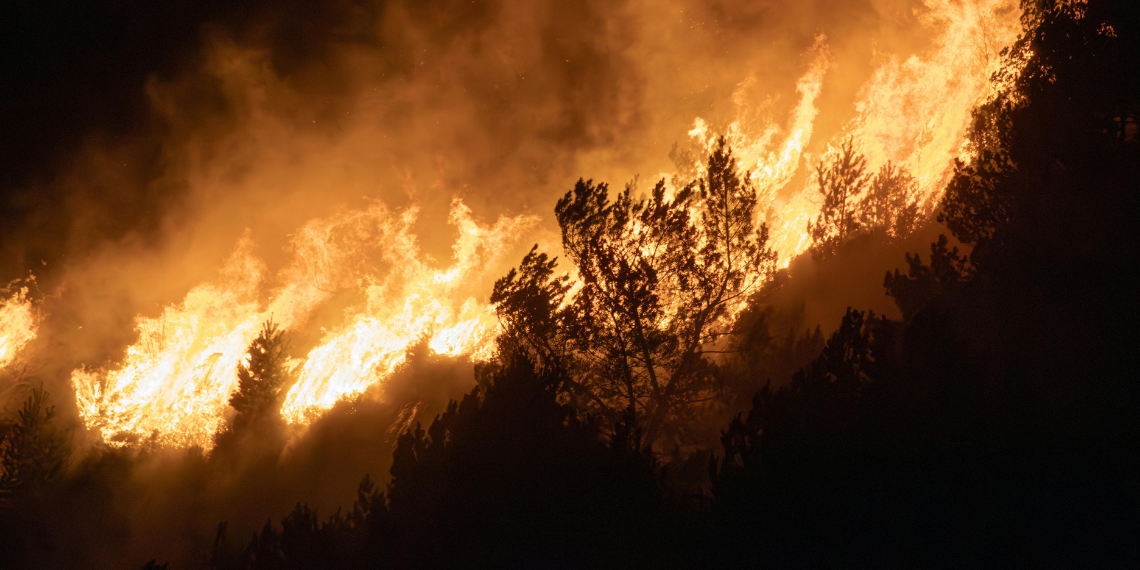
Leveraging robotic solutions, data collection and processing, Artificial Intelligence and communications to address scientific and technological challenges – and, through these tools, making society more resilient; this is how one can describe the European project Overwatch, with INESC TEC as a partner. Over three years, the project contributed to the development of solutions designed for deployment in disaster scenarios characterised by extreme environments, e.g., wildfires or floods.
As main outcomes of the project, which brought together institutions from five different countries (Portugal, Poland, Germany, Italy and Denmark), the technological tools developed stand out, designed for use by emergency response teams – whether to help “map” situations or provide precise and reliable information. For the considered use cases, the project developed teams for “integrating decision support, in which it is possible to visualise, in an integrated way, all information collected about the incident, including satellite data, images, data acquired by drones, ortho-maps, communications and augmented reality systems,” explained Hugo Silva, researcher at INESC TEC.
These mechanisms were later integrated into the platform – which shares the name with the project – and are already available for testing by response teams to such situations, during a free trial period. It is “something that can be improved with feedback and input from these teams,” added the Robotics researcher, who also mentioned the possibility of the tool being adopted by said teams in real-world contexts.
As a partner in the project, INESC TEC was involved Robotics and Telecommunications researchers, highlighting two operational aspects. The first focused on the development of a satellite communications fallback system using a tethered drone. The system, Hugo Silva explained, aims to “provide communications to response teams on the ground during a disaster who, for some reason, lose their usual communication means, or are operating in a location where cellular coverage is not adequate.”
This problem has recently occurred in Portugal, associated with extreme weather events, with loss of communications representing a serious issue both for rescue teams and their response capability, as well as for affected populations. In this sense, the system developed by INESC TEC is particularly relevant, given the ability to mitigate possible outages.
Another point worth highlighting was the development of a new custom drone equipped with an RGB+IR camera, aimed at “detecting ignition points in real time and also producing ortho-maps to support firefighting teams in their operations, both during the response phase and in the mitigation and recovery phase through mapping of burned areas.”
Hugo Silva emphasised the relevance of the technologies developed, with strong potential for near-term application. “The overall balance is positive, both in terms of the results achieved and the collaborative spirit demonstrated by the national and international partner teams in the project,” the researcher stated.
Within INESC TEC, it is also highlighted the “strengthening of synergies between different research areas – Robotics and Telecommunications – in the development of technological and scientific solutions with concrete visibility and applicability in society,” in a context of climate change in which “Portugal is vulnerable and exposed to such events, with the potential for high material losses and even loss of human life,” the researcher concluded.
 News, current topics, curiosities and so much more about INESC TEC and its community!
