



It is called VineShield-DT and uses technologies such as Digital Twins, artificial intelligence (AI), IoT (Internet of Things) sensors, and smart traps to predict pest spread in vineyards. The project is being developed by INESC TEC, as part of a consortium that also includes INIAV and CVRVV, and was recently presented at Portugal Smart Cities, one of the country’s leading events dedicated to innovation and smart territories.
The spread of pests threatens agricultural and wine-producing productivity, as well as the sustainability of the sector. Traditional control methods still rely heavily on adhesive traps that require manual inspection—a time-consuming, poorly scalable process that hinders rapid responses to new outbreaks. VineShield-DT aims to change this paradigm by using digital technologies to monitor and model pest dispersal, optimise control strategies, and reduce pesticide use.
“By integrating smart traps and sensors, the system makes it possible to predict outbreaks and protect vineyards from diseases such as Flavescence Dorée, promoting a more digital, sustainable, and resilient form of agriculture,” says Filipe Neves dos Santos, a researcher at INESC TEC.
The solution proposed by INESC TEC combines different technologies to create a dynamic digital representation of the vineyard and pest behaviour. That is precisely where Digital Twins come in: virtual replicas of real systems that allow behaviours to be simulated, monitored, and anticipated in real time. In the case of VineShield-DT, the Digital Twin integrates meteorological data, satellite imagery, and sensor and network of MOXOH smart traps data, enabling real-time monitoring of the insect’s presence and dispersal. Using predictive models and AI, VineShield-DT can simulate the pest’s spread across space and time, enabling the anticipation of outbreaks and supporting faster, more precise decisions in the field.
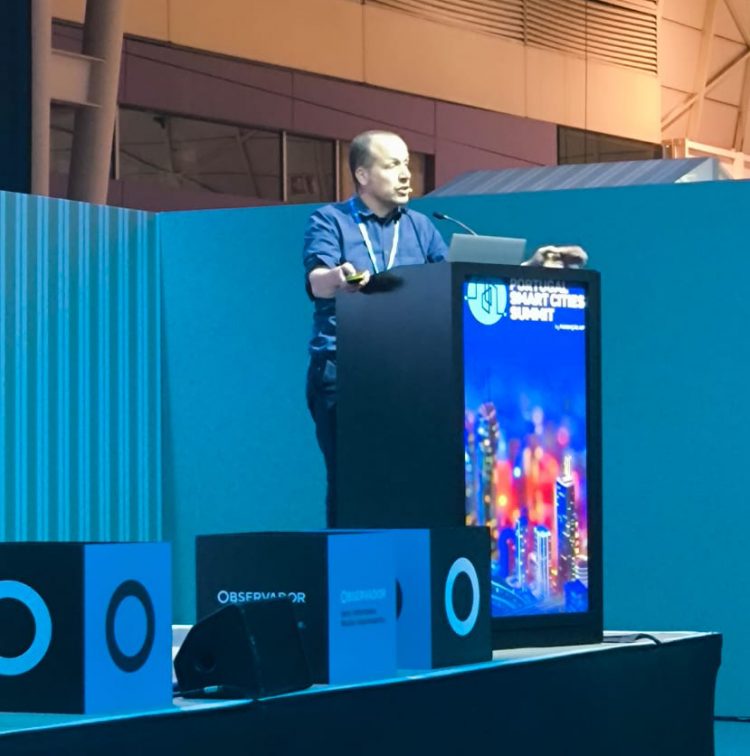 It was precisely this approach that Filipe Neves dos Santos — who is also a lecturer at the Faculty of Engineering of the University of Porto (FEUP) — presented at the session “Digital Twins at the Service of Territories: Presentation and First Results”, held as part of the National Strategy for Smart Territories at the Portugal Smart Cities event. “This project is an example of science with impact: we are developing a digital model of vineyard pests, supported by a large-scale pilot with one thousand smart traps deployed in the field, which could in future be scaled to other crops and regions. The model will be accessible online, reinforcing the value of research and development made in INESC TEC,” highlights the project lead.
Among the technologies involved are predictive ecological models, neural networks, temporal data analysis, computer vision, and interoperable platforms that integrate diverse sources of agricultural information.
Beyond the technological component, VineShield-DT is being designed as an open-source, interoperable, and scalable platform, adaptable to other crops, pests, and regions. The system aims to contribute to the digital transformation of agriculture, aligning itself with European strategies such as the European Green Deal and the Farm to Fork and “One Health” initiatives.
Disclaimer: This text was translated from Portuguese into English using an artificial intelligence tool.
 News, current topics, curiosities and so much more about INESC TEC and its community!
