


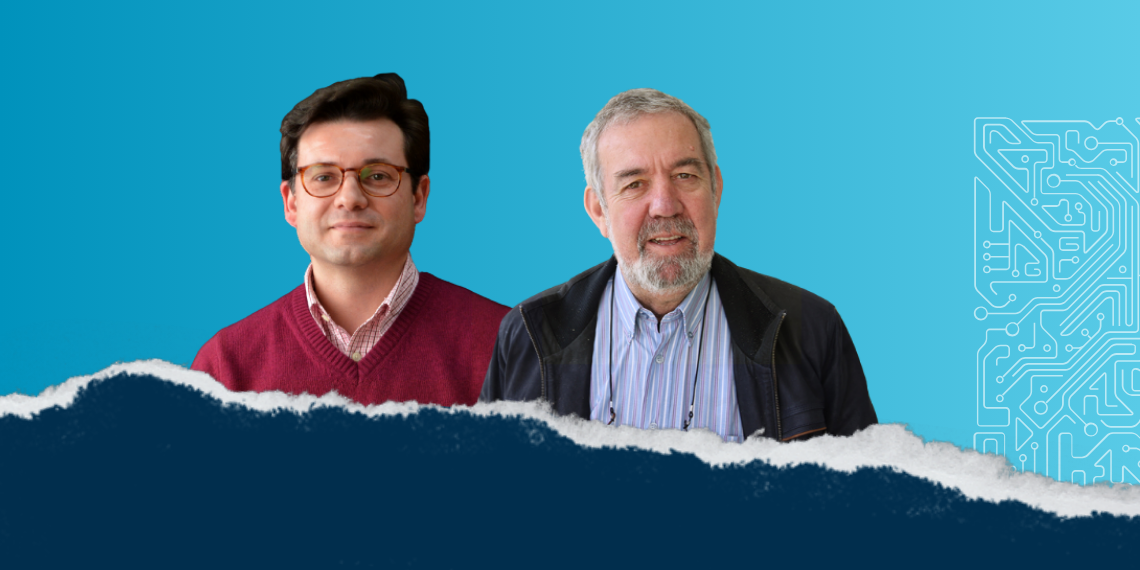
21 May 2026. OpenAI – the company behind ChatGPT – announced to the world that it has solved an 80-year-old mathematical problem using a general-purpose AI model. The so-called “planar unit distance problem” was first proposed by the Hungarian mathematician Paul Erdős in 1946. But does the announcement really mean what the headline suggests? Has AI genuinely managed to solve a problem that scientists had been unable to solve for eight decades?
Let us take this step by step. First, what exactly is the problem? The British newspaper The Guardian explained it in relatively simple terms. Erdős asked the following question: if we place several points on a sheet of paper, how many pairs of points can be the same distance apart? He conjectured that this number would grow only slightly faster than the number of points themselves.
Scientific American offered an even more concrete explanation, asking readers to draw nine points on a sheet of paper. The challenge? To create as many pairs of points as possible separated by exactly one centimetre. You could place all the points in a straight line and obtain eight such pairs or arrange them in a three-by-three grid and count 12 pairs. Have you started sketching on paper yet? Now comes the real question: for any number of points – even trillions – what is the maximum number of pairs that can be achieved?
Cannot find the answer? Neither could Erdős in 1946, nor the many mathematicians who followed over the next 80 years.In fact, what Erdős proposed was a guesswork about the best possible strategy, which he believed involved a grid-like arrangement, but with much smaller spacing between points so that pairs could be established across multiple locations within the grid. What the Hungarian mathematician demonstrated was that, by using sophisticated mathematics to choose the spacing very carefully, it was possible to do slightly – and this word matters – better than a simple square grid. Erdős went further, claiming that no one could do better.
The truth is that, for 80 years, no one did. But it is equally true that no one managed to prove Erdős was correct either. And this is precisely where OpenAI’s “major breakthrough” enters the story.
So, what exactly did OpenAI’s model “discover”? If we check the news coverage carefully (particularly articles that relied on experts’ consultation), it becomes clear that the model did not actually provide a complete solution to the problem. Instead, it concluded the opposite of Erdős’s conjecture, using different branches of mathematics to discover a family of configurations that exceeds the limit proposed by the Hungarian mathematician.
Even so, rebutting something that no one had managed to challenge in 80 years already seems highly significant. But there is an important difference between solving an 80-year-old mathematical problem and refuting a theory that no one had managed to refute for 80 years. (Perhaps AI is still not about to win a Nobel Prize.)
I may have revealed too early that OpenAI’s headline was not entirely what it appeared to be. It is certainly a strong and highly clickable title. And while the company repeatedly emphasised throughout statement that mathematicians had, for decades, believed the best possible solutions resembled square grids – which is true – the reality is that the problem itself remains unsolved. What has been overturned is a belief. And it is precisely here that this discussion continues, with the help of INESC TEC researchers specialising in both mathematics and Artificial Intelligence.
The scientific community reacts
“My first reaction to the headline was a certain sense of fatigue,” said Álvaro Figueira, researcher at INESC TEC. “‘Artificial Intelligence solves 80-year-old problem’ is the kind of headline I have seen many times before, and one that almost never survives closer scrutiny. But this time the result is more serious. Not because it is extraordinary, but because, for the first time, there is a group of mathematicians – Gowers, Alon, Bloom, Litt and Sawin – who analysed and verified the results. They even signed a document stating that the proof holds. And in a field where credibility is built over an entire lifetime and lost in a single announcement, that matters far more than any company press release,” continued the researcher, who also lectures at the Faculty of Sciences of the University of Porto.
Figueira mentioned this paper published by several mathematicians analysing OpenAI’s proposal.
Scientific American also reported reactions from scientists consulted by OpenAI. Timothy Gowers, mathematician at the University of Cambridge, said that “no previous AI-generated proof had come close” to meeting such high standards. Daniel Litt, mathematician at the University of Toronto and specifically invited by OpenAI to review the proof, described it as “the only genuinely interesting result autonomously produced by AI so far”. Another mathematician, Sellke, explained that the AI model’s approach was fundamentally different from the traditional square-grid construction.
João Gama, also a researcher at INESC TEC, argued that “the significance of OpenAI’s result lies not in proving that AI ‘understands’ mathematics in the same way humans do, but in showing that it can participate usefully in the mathematical process. It can explore spaces that are simply too vast, persist along directions humans might abandon, and reveal patterns that are difficult to anticipate. But transforming these clues into knowledge still requires human interpretation, validation and responsibility. This is not magic or replacement; it is science changing tools – and scientists learning how to work with them.”
What did the model do?
It assembled a more elaborate grid composed of high-dimensional points with special mathematical symmetries that make it possible to separate even more pairs by the same distance. A grid which, according to the American mathematician Mehtaab Sawhney, is far too complex to draw on paper.
However, despite refuting Erdős, OpenAI did not prove that the suggested approach was the best possible. In fact, another mathematician – Will Sawin from Princeton University – has already managed to improve on the grid generated by the AI model.
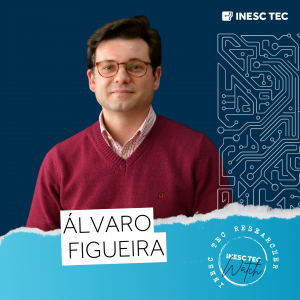 “The model did not solve Erdős’s problem. What it did was refute a conjecture, which is substantially different,” explained Álvaro Figueira. “It showed that the upper bound Erdős conjectured was incorrect. But it did not identify the correct bound. So, the problem remains open. That is a very substantial difference. We should also note that the ‘tools’ it used were not invented by the AI itself: these were ideas already circulating in the mathematical literature. Even OpenAI’s own lead researcher admitted that the model did not invent anything fundamentally new – it merely ‘performed like an exceptional mathematician’.”
What stopped humans from refuting the theory for 80 years?
One word repeatedly emerges from scientists’ explanations: patience. “What impressed me most about this proof was the patience involved,” said Álvaro Figueira. “What apparently held humans back for 80 years was not a lack of talent, but a lack of willingness to follow an extremely tedious and seemingly unpromising path – especially because people largely assumed Erdős was correct. The machine, however, has neither ego nor boredom – it simply kept working.”
Mathematicians such as Daniel Litt, Will Sawin and W. T. Gowers also highlighted this point. For decades, most efforts focused on proving Erdős’s conjecture rather than attempting to refute it.
Figueira stated: “There is an uncomfortable lesson here: perhaps part of our knowledge is constrained less by the limits of intelligence and more by our own impatience.”
Should we discuss AI’s behaviour concerning human researchers?
Before turning to the experts, it’s worth highlighting something important throughout this science communication piece: sources are identified, quotations attributed and references acknowledged. This is, after all, one of the first things taught at university when writing even a simple news article.
But what about AI? Does it properly credit the work of real scientists whose ideas it draws upon?
“What bothers me – speaking as someone who publishes scientific papers and always quotes and credits previous work – is that the model presented ideas as if they were its own without referencing very similar, existing work,” explained Álvaro Figueira.
But if a human researcher did this, would it not be considered misconduct?
The INESC TEC researcher agrees. “As Melanie Matchett Wood, mathematician at Harvard University, observed, if a human did the same thing, we would call it misconduct – to put it politely. We cannot normalise in a machine what we penalise in researchers. And it is worth remembering that OpenAI has already stumbled here before: in October 2025, the company announced that it had solved several Erdős problems which, in fact, had already been solved in the literature. The model had merely located existing solutions. The mistake was not recycling ideas; it was confusing ‘I do not know a solution’ with ‘there is no solution’.”
Excitement or strategy?
Did OpenAI simply become overexcited when disseminating this announcement, or is this also part of a market strategy? “In these cases, enthusiasm is rarely innocent, especially when a company is preparing to go public,” said Álvaro Figueira. “I think this is a genuine milestone, but a modest one disguised as a revolution. The most useful aspect of these systems, for now, is not inventing things no one has ever seen before. It is their ability to work tirelessly through areas that humans tend to neglect for cost-benefit reasons. That is less glamorous than the headline suggests. But honestly, perhaps it is more useful precisely because of that”, the researcher concluded.
Could this change mathematics – and science itself? Could AI eventually replace mathematicians, or will it instead increase collaboration?
João Gama believes the latter is far more likely. “There is another, less visible dimension to this story,” he said. “These events may change the very practice of mathematics and, more broadly, science itself. Even if AI did not ‘solve’ the problem, the fact that it helped uncover an unexpected path forces the scientific community to rethink the role of these tools. Perhaps the future is not about replacing mathematicians, but about creating a new form of collaboration: systems capable of exploring thousands of hypotheses, combinations and dead ends; humans capable of recognising meaning, validating results, formulating new questions and transforming these scattered paths into knowledge.”
According to João Gama, this collaboration should be understood not as replacement, but as “an amplification of human capabilities”.
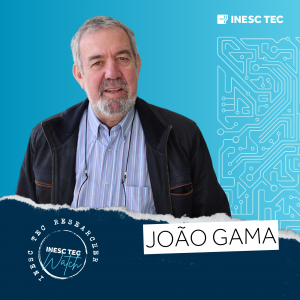 “AI does not eliminate mathematical intuition,” he argued, “but it can expand the field in which that intuition operates. It can test more cases, search for patterns across spaces too vast for humans, persist along directions that might otherwise seem unpromising, and return clues that still require human interpretation. In this scenario, the mathematicians do not disappear: their role changes. They begin working with a tool that expands exploratory reach, much as the telescope expanded astronomy or the microscope transformed biology.”
Importantly, this idea did not emerge today, nor because of OpenAI’s announcement. João Gama recalled that more than a decade ago Ross King was already exploring these possibilities through his “robot scientists”, called Adam and Eve – systems combining Artificial Intelligence and laboratory robotics to formulate hypotheses, design experiments, execute them and interpret the results.
He also pointed out another recent example: the 2024 Nobel Prizes in Physics and Chemistry, which demonstrated how AI has already become central to contemporary science, both in the development of artificial neural networks and in predicting and designing protein structures.
“In all these cases,” João Gama concluded, “AI appears less as a replacement for scientists and more as an infrastructure for discovery.”
 News, current topics, curiosities and so much more about INESC TEC and its community!
