


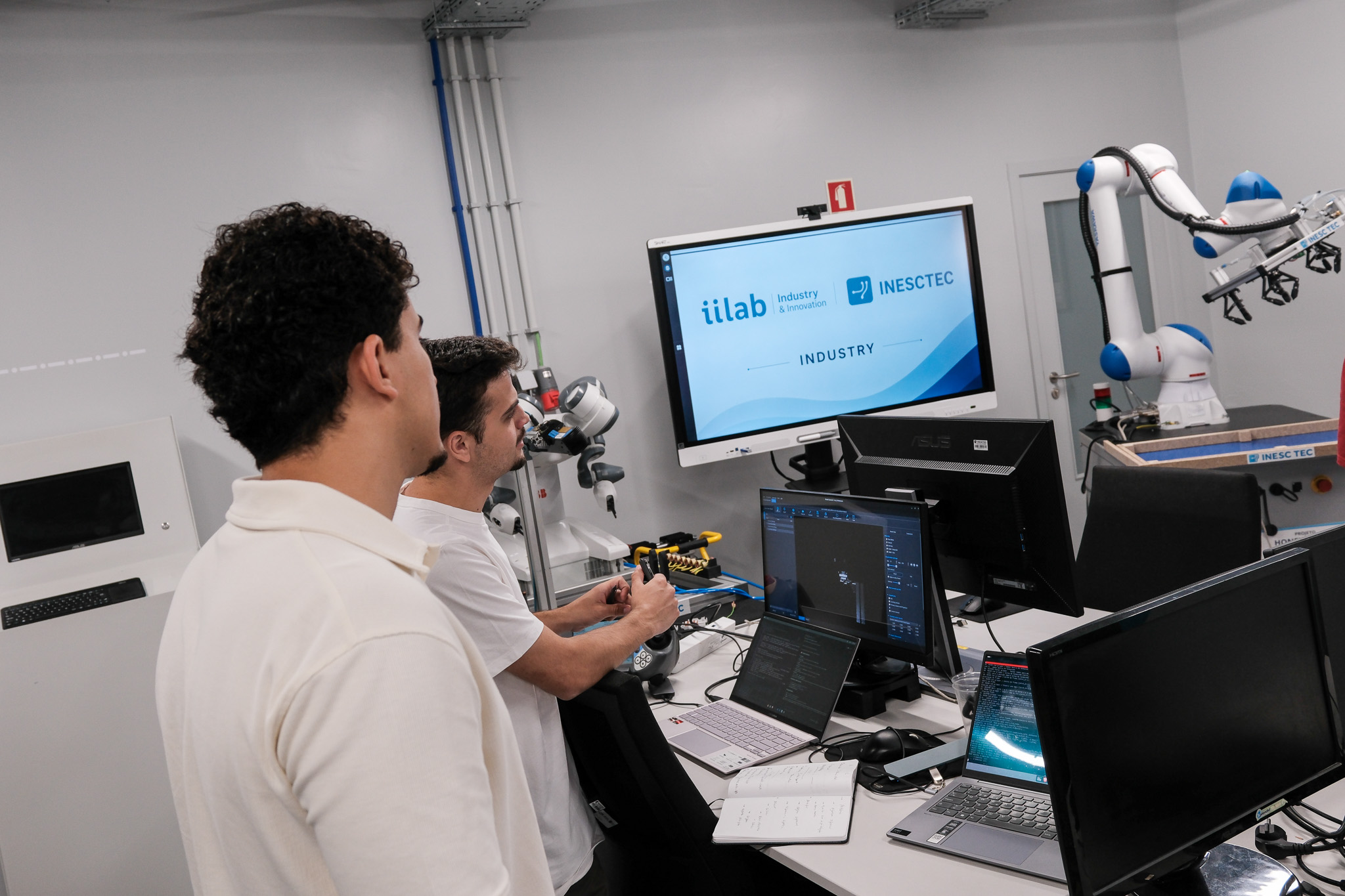
For master’s students, the first real contact with the realities of industry takes place at INESC TEC. Two young researchers completed their master’s theses by tackling real-world challenges set by the Institute’s industrial partners.
A robotic gripper for handling fragile materials and a modular robotic cell capable of automating the manufacture of electrical devices are two solutions developed at INESC TEC by master’s students that have progressed beyond the laboratory to create tangible impact in industrial environments.
The robotic technologies are the result of the work developed two students from the Faculty of Engineering of the University of Porto (FEUP). Rui Martins and Guilherme Osório developed their solutions at INESC TEC’s Industry and Innovation Laboratory (iiLab), a space dedicated to technology development and demonstration, experimentation and prototyping.
Both prototypes emerged from collaborations between INESC TEC and two of the Institute’s industrial partners, which presented genuine manufacturing challenges for Rui Martins and Guilherme Osório to address through innovative, out-of-the-box solutions.
With the furniture industry in mind, the modular robotic gripper prototyped by Guilherme Osório aims to automate the insertion of paper honeycomb cores into board-on-frame panels. This process is still carried out manually because of the challenges involved in automating it: the honeycomb structure bends easily; the dimensions do not always match, as the honeycomb is larger than the frame; and the two components do not share the same geometry. During insertion into the frame, whose base has already been coated with adhesive, the honeycomb must neither touch the side surfaces nor be dragged across the glued base, otherwise defects may be introduced into the finished product.
Tools, knowledge and hands-on experience
At INESC TEC, the FEUP student developed a solution based on pneumatic modules equipped with conical fingers. These fingers enter the cells of the honeycomb structure – a lightweight core material widely used inside furniture panels – compress it in a controlled manner, and transport it without causing damage.
“I tried to develop a gripper that mimics the human hand and applies the amount of compression needed to place the honeycomb inside the frame. What often happens in the factory is that people, because they are naturally less deterministic than a robot, end up placing their fingers inside the openings and dragging the material or compressing it too hard, which can shift, mark or crease the paper,” explained Guilherme Osório, whose findings were presented in the dissertation Modular Pneumatic Gripper for Multi-Variant Honeycomb Insertion in Furniture Manufacturing.
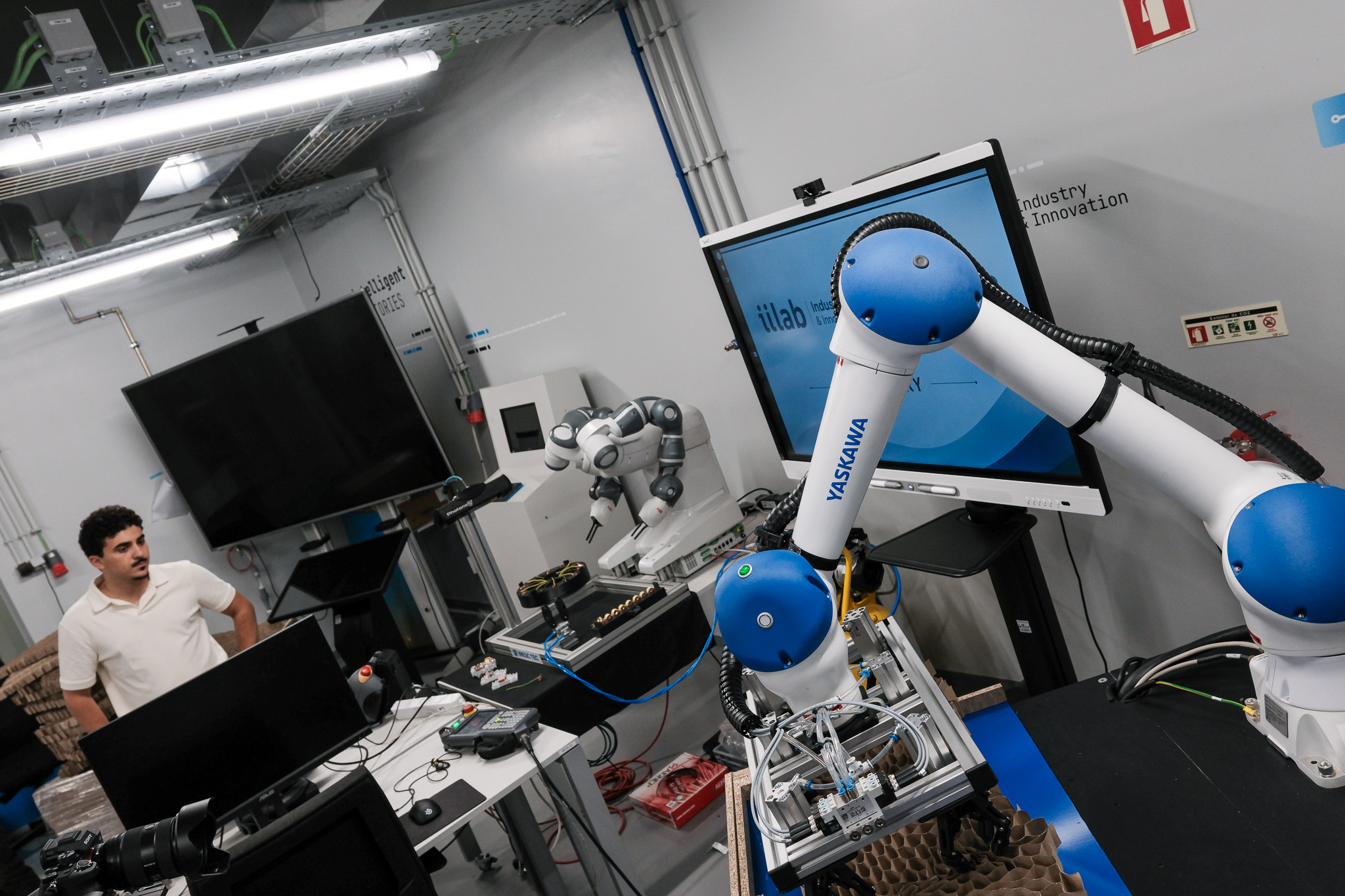
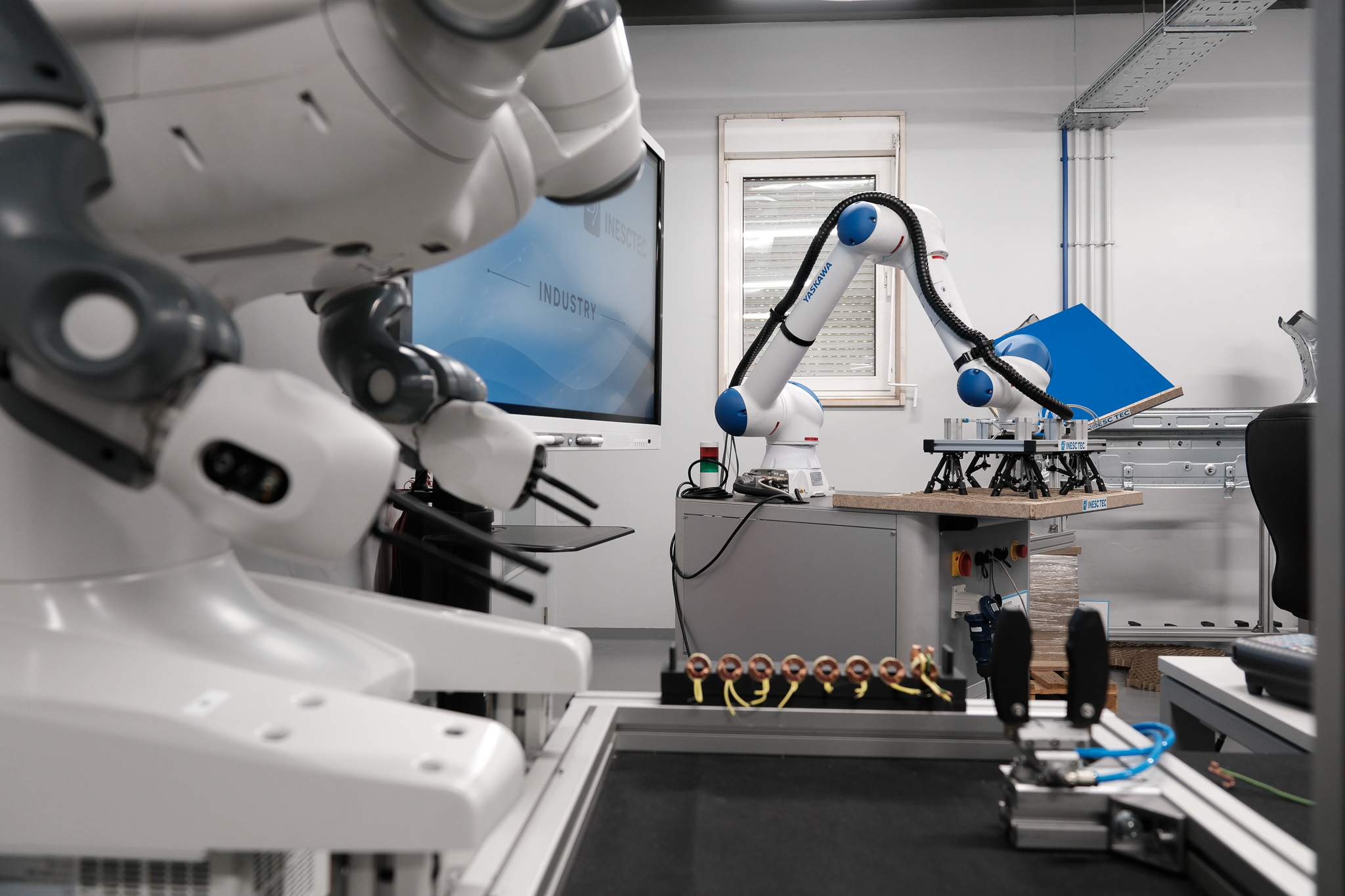
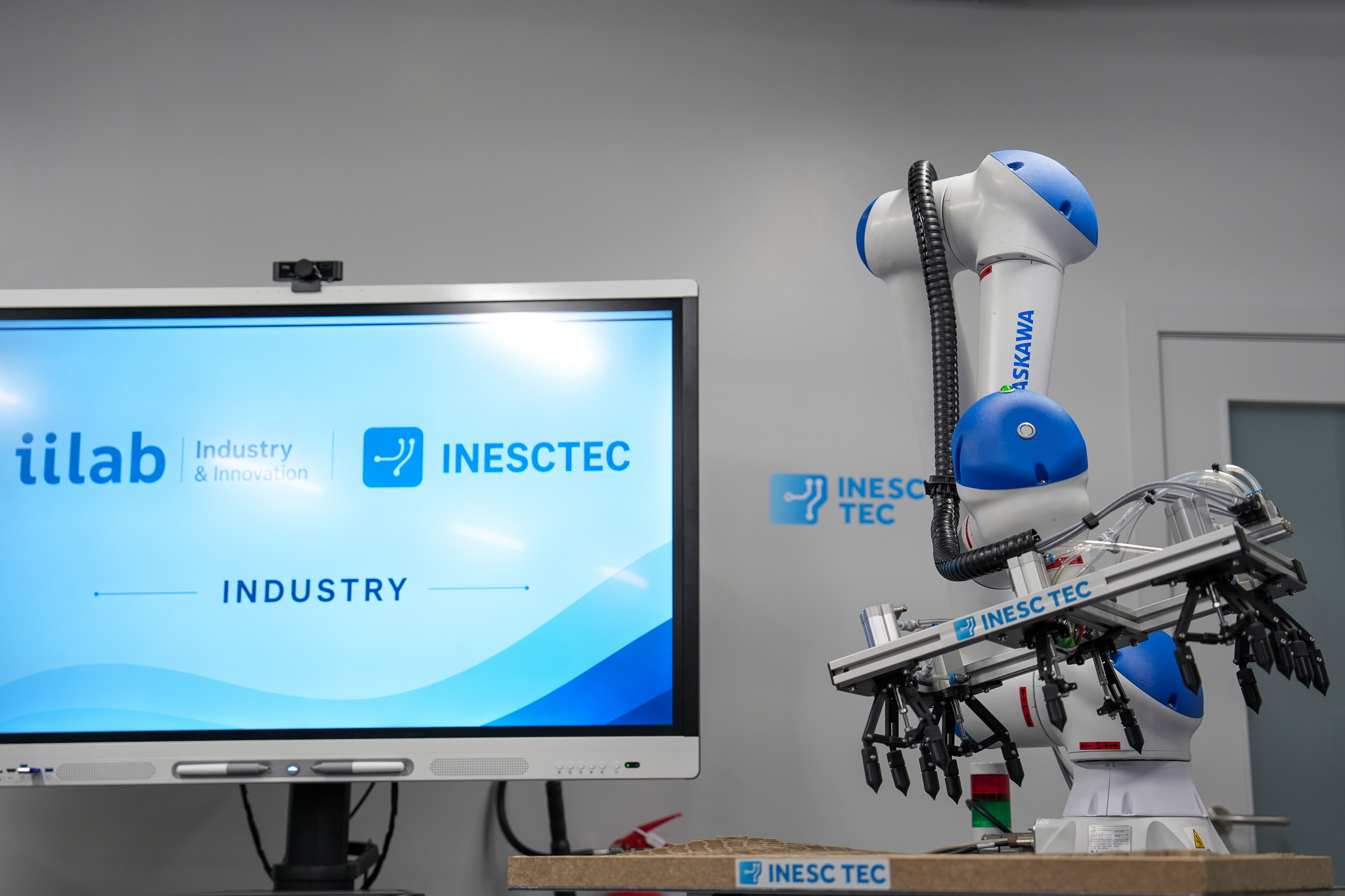
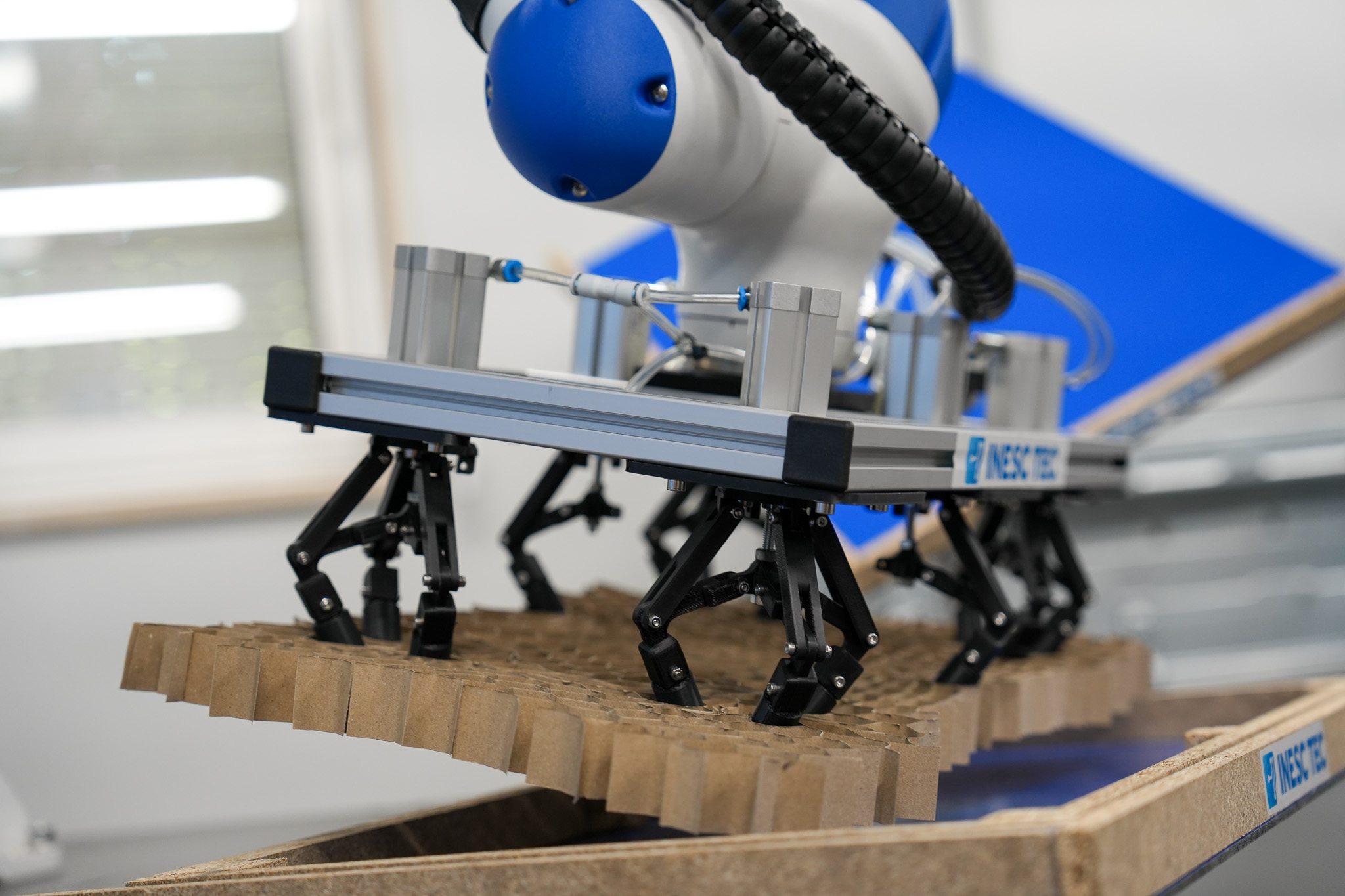
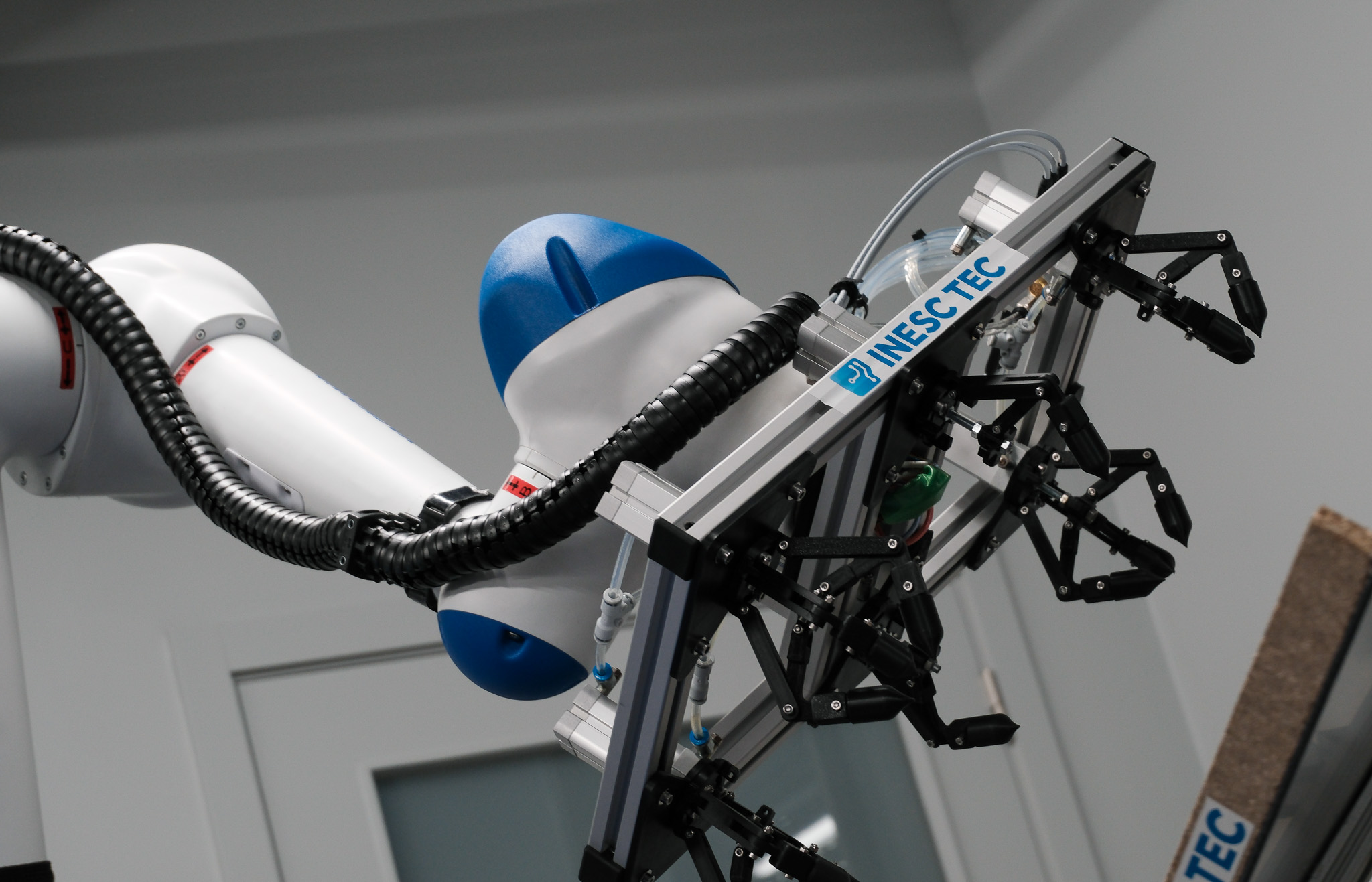
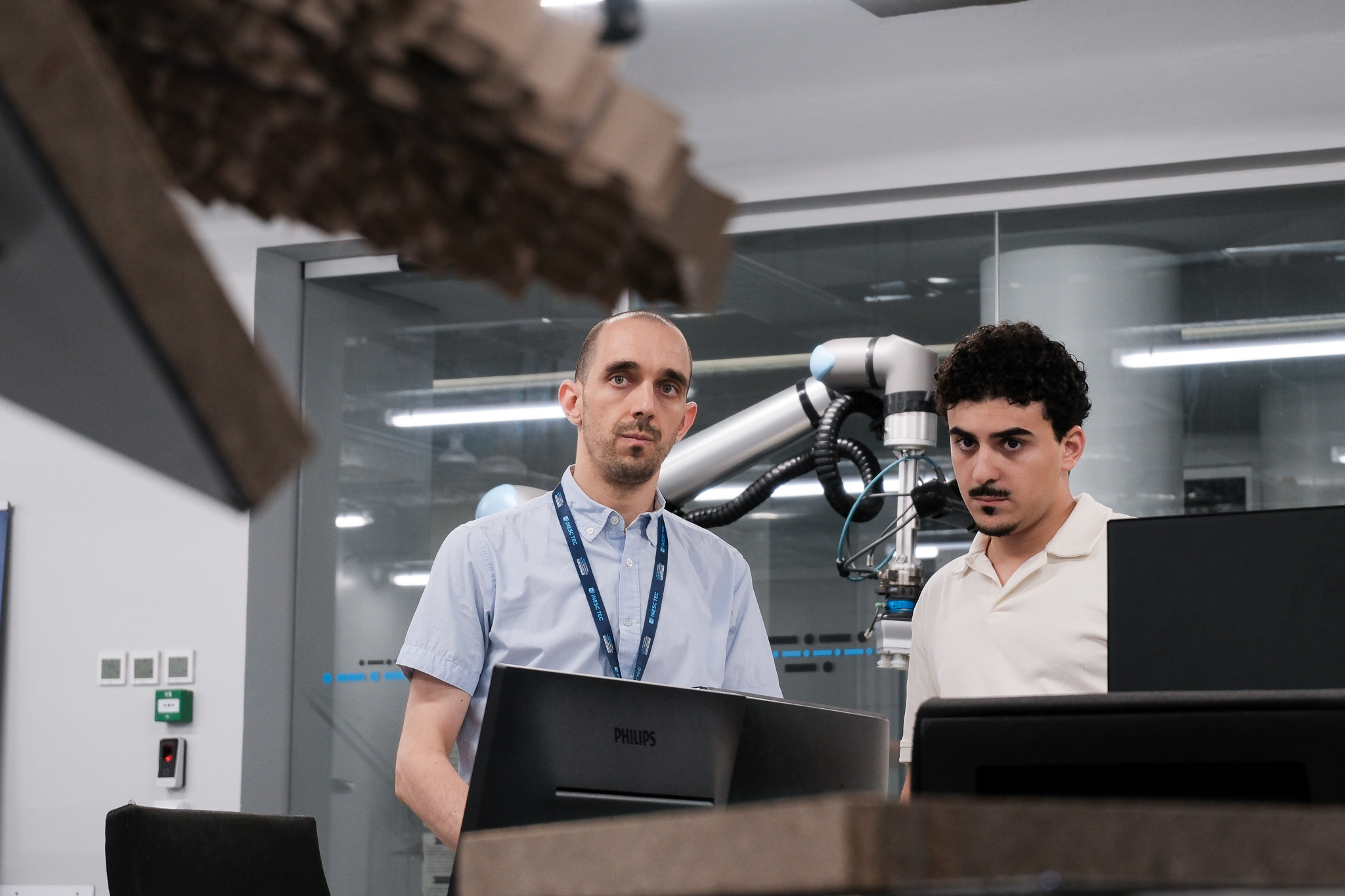
In preliminary testing, the new robotic finger design achieved a 96% success rate when inserting individual honeycomb cells, demonstrating the feasibility of the concept. His time at INESC TEC also provided valuable exposure to genuine industrial challenges. “During the course, we studied the theoretical aspects and worked on specific problems, but not on real industrial situations. Here, I had the opportunity to bring together all the tools and knowledge I had acquired and put them into practice.”
Rui Martins’ story follows a similar path, although in a different industrial context. His solution is designed for the manufacture of electrical equipment and consists of a dual-arm robotic cell that uses 3D vision to automatically align a flexible electrical wire and insert it into the small opening of a toroidal core used in the production of Residual Current Devices (RCDs).
As with Guilherme’s paper honeycomb project, Rui Martins faced the challenge of handling a flexible material. Electrical wire naturally bends, oscillates and changes shape during movement. Traditionally, inserting it into the opening requires successive alignment corrections, increasing cycle times.
“After visiting the factory and identifying the processes with the greatest potential for automation, we selected a device that is essentially a toroidal core into which at least two wires are inserted and wound around the ring. The biggest challenge is that these are flexible objects, meaning every iteration is different,” the young researcher explained.
The solution, detailed in the work Closed-Form One-Shot Visual Alignment for Deformable Wire Insertion in RCD Assembly, uses a 3D scanning system to simultaneously locate both the wire and the opening in the toroidal core, automatically calculate the required trajectory correction and perform a single adjustment before insertion. By eliminating the need for multiple alignment attempts, the approach maximises the likelihood of a successful insertion.
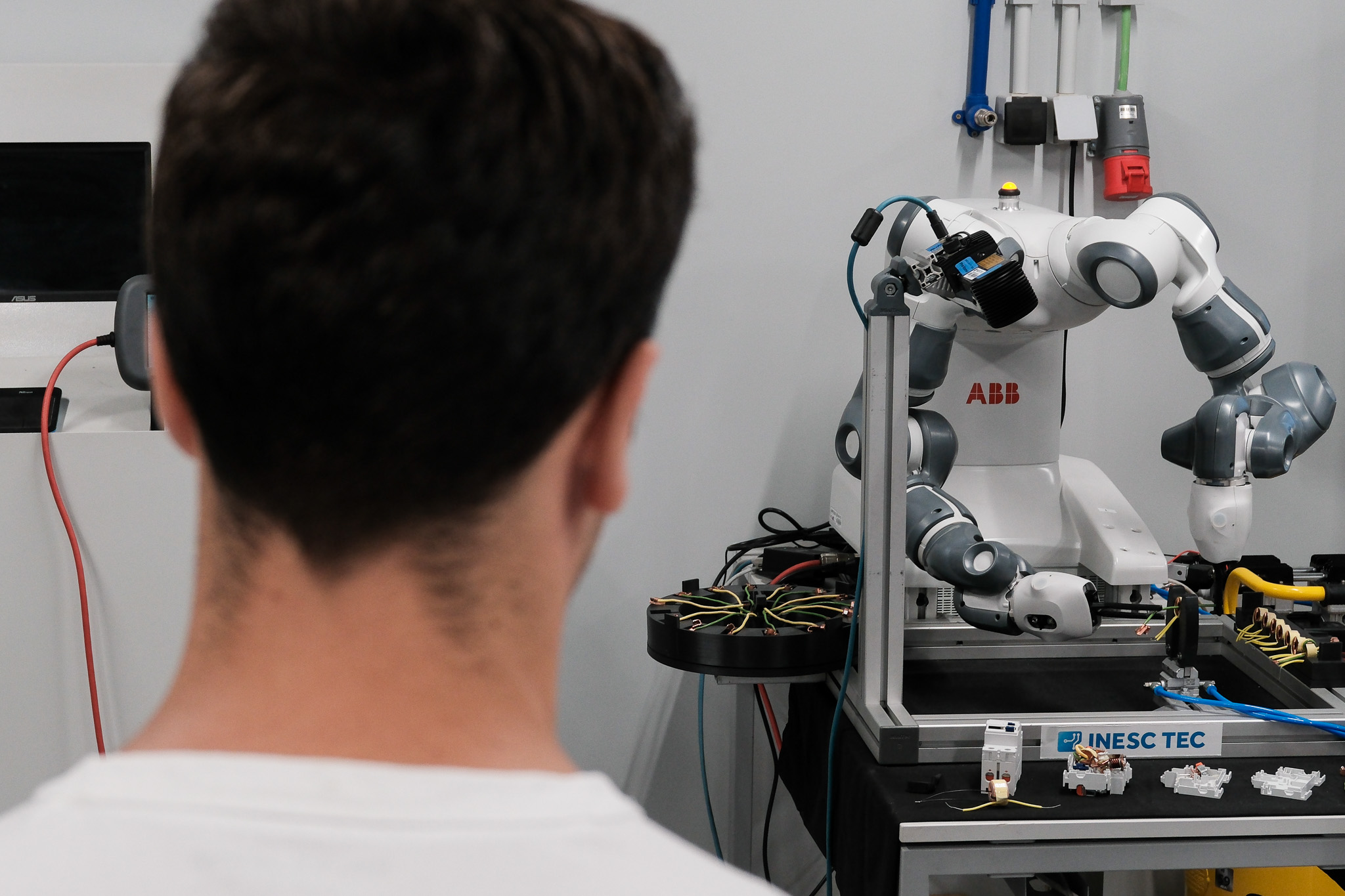
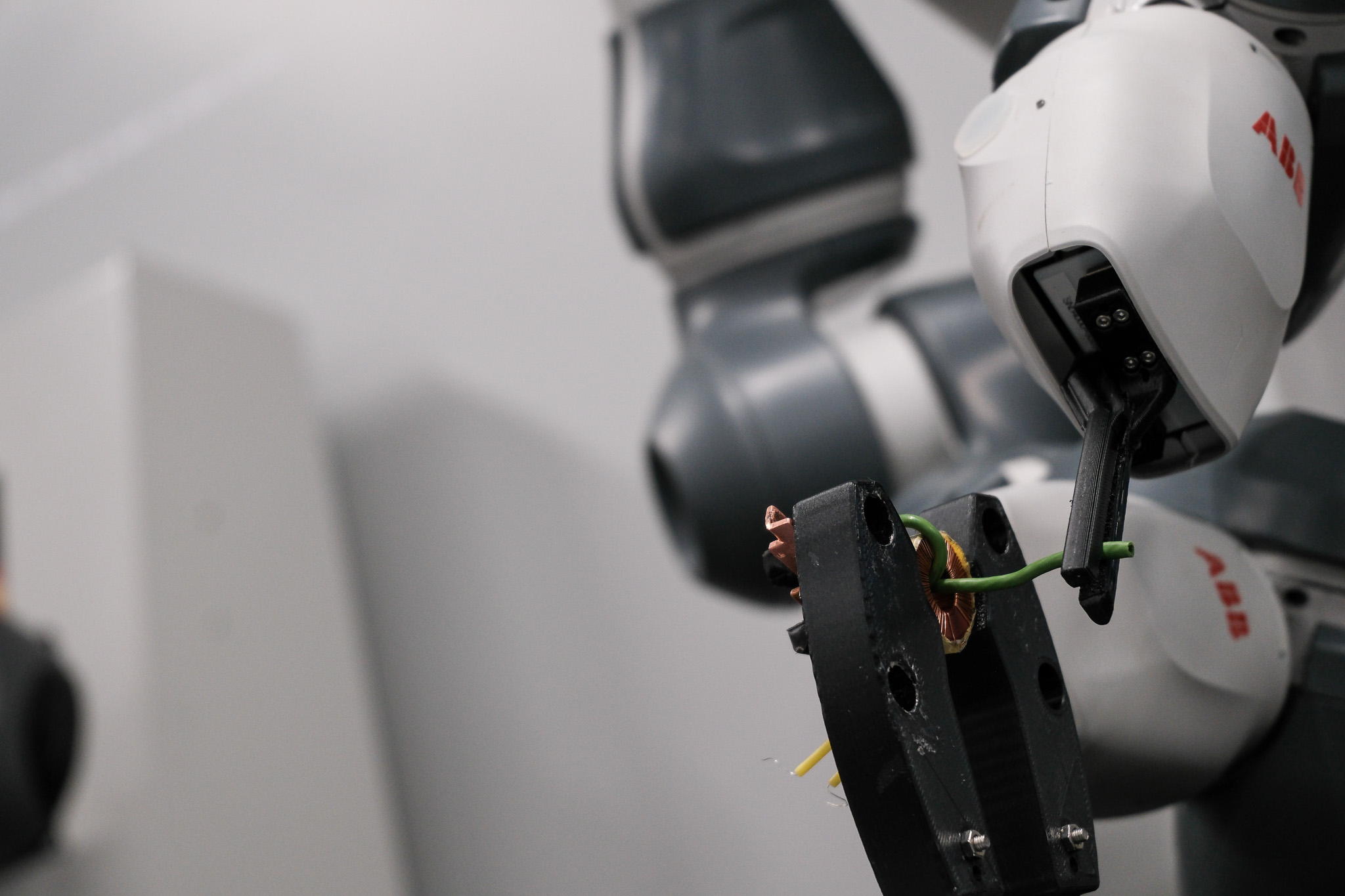
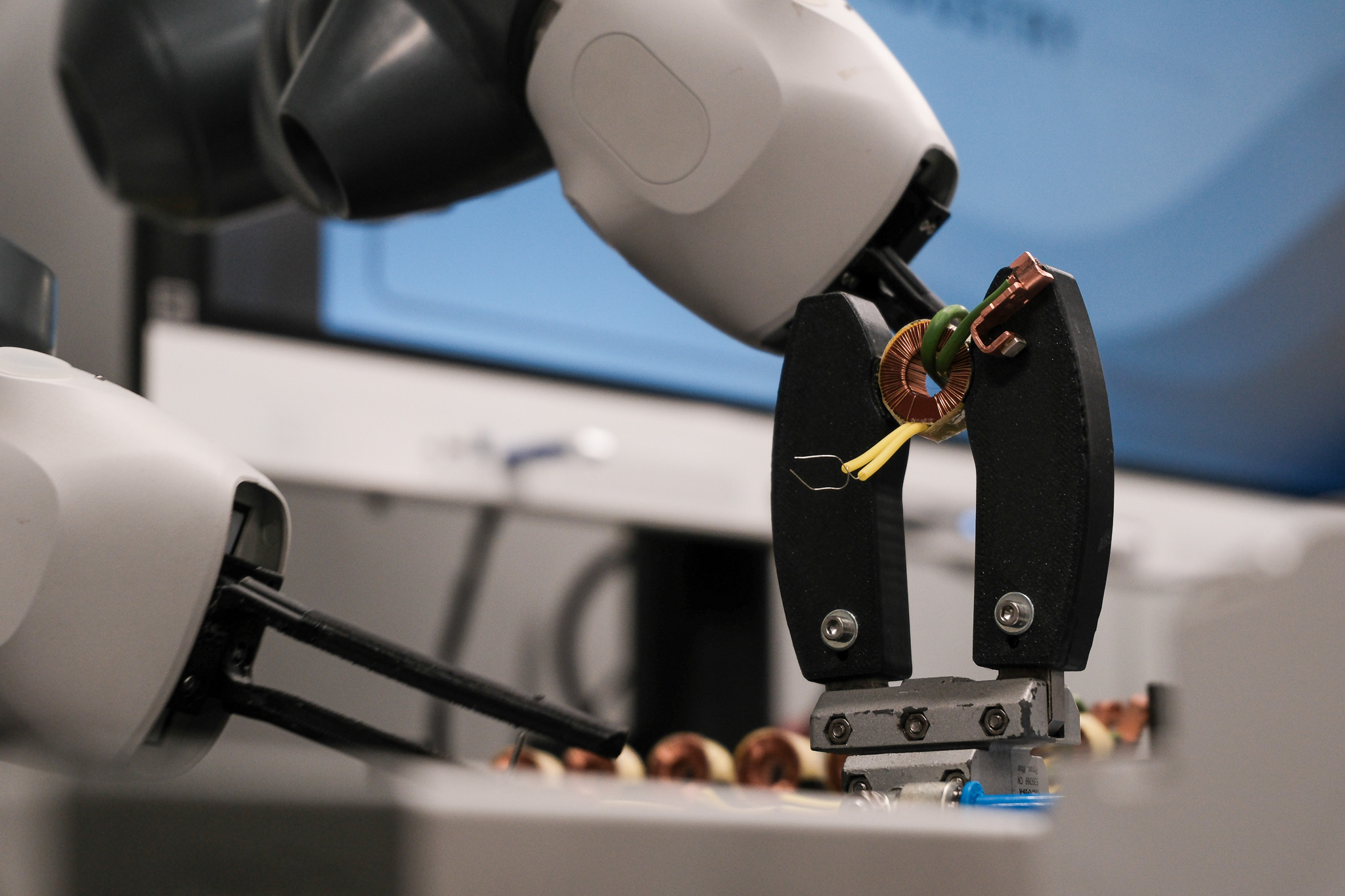
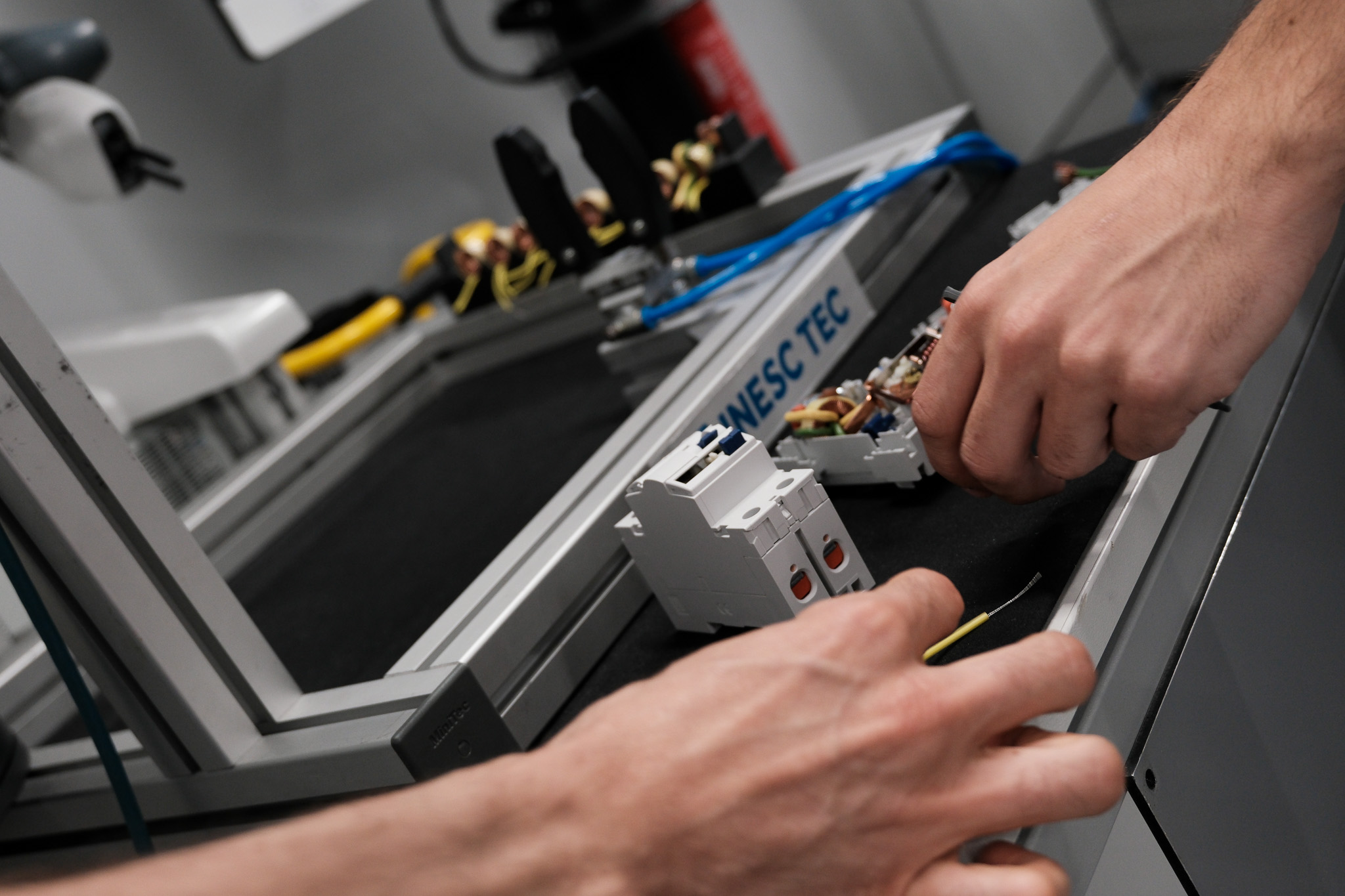
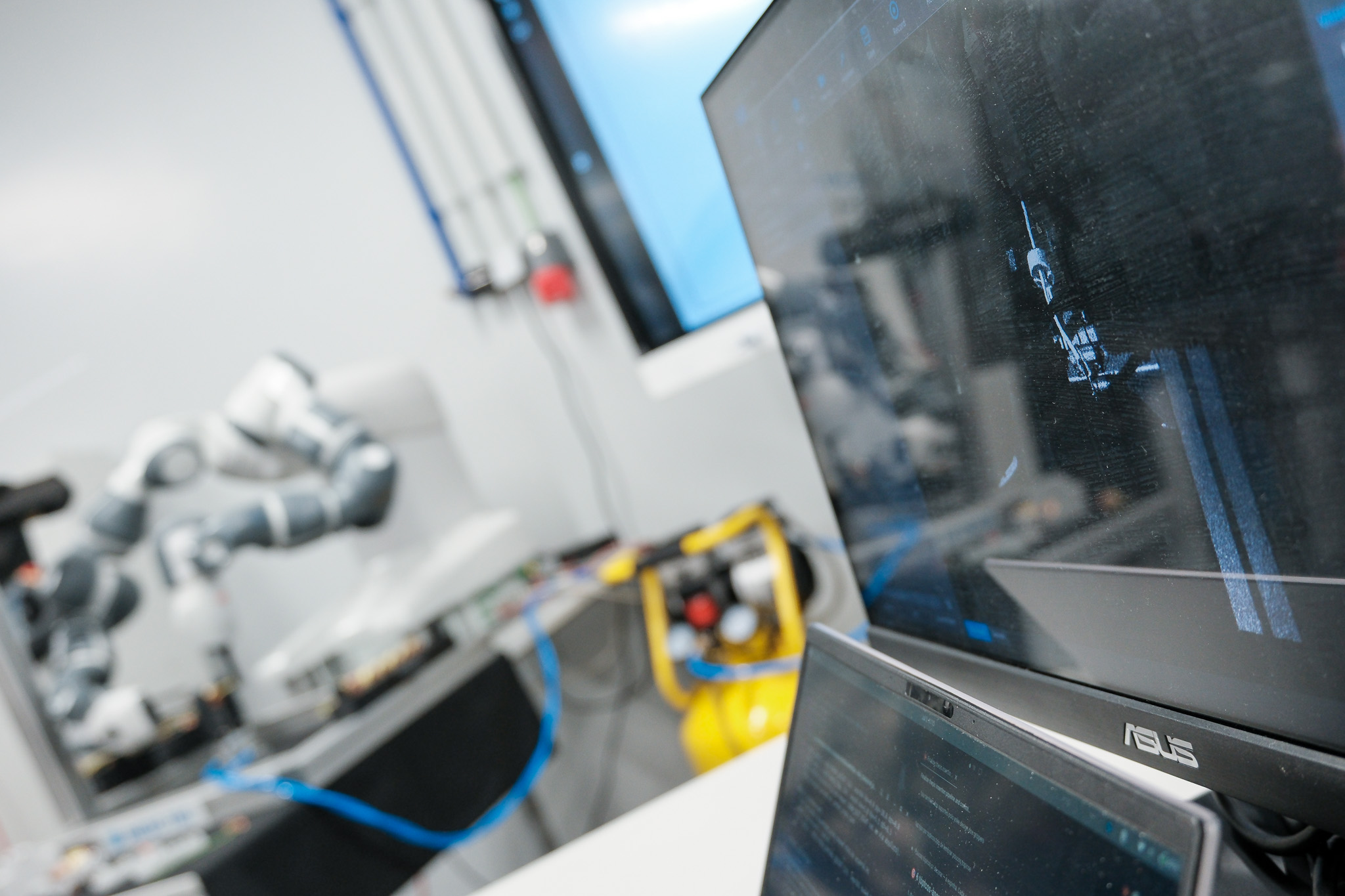
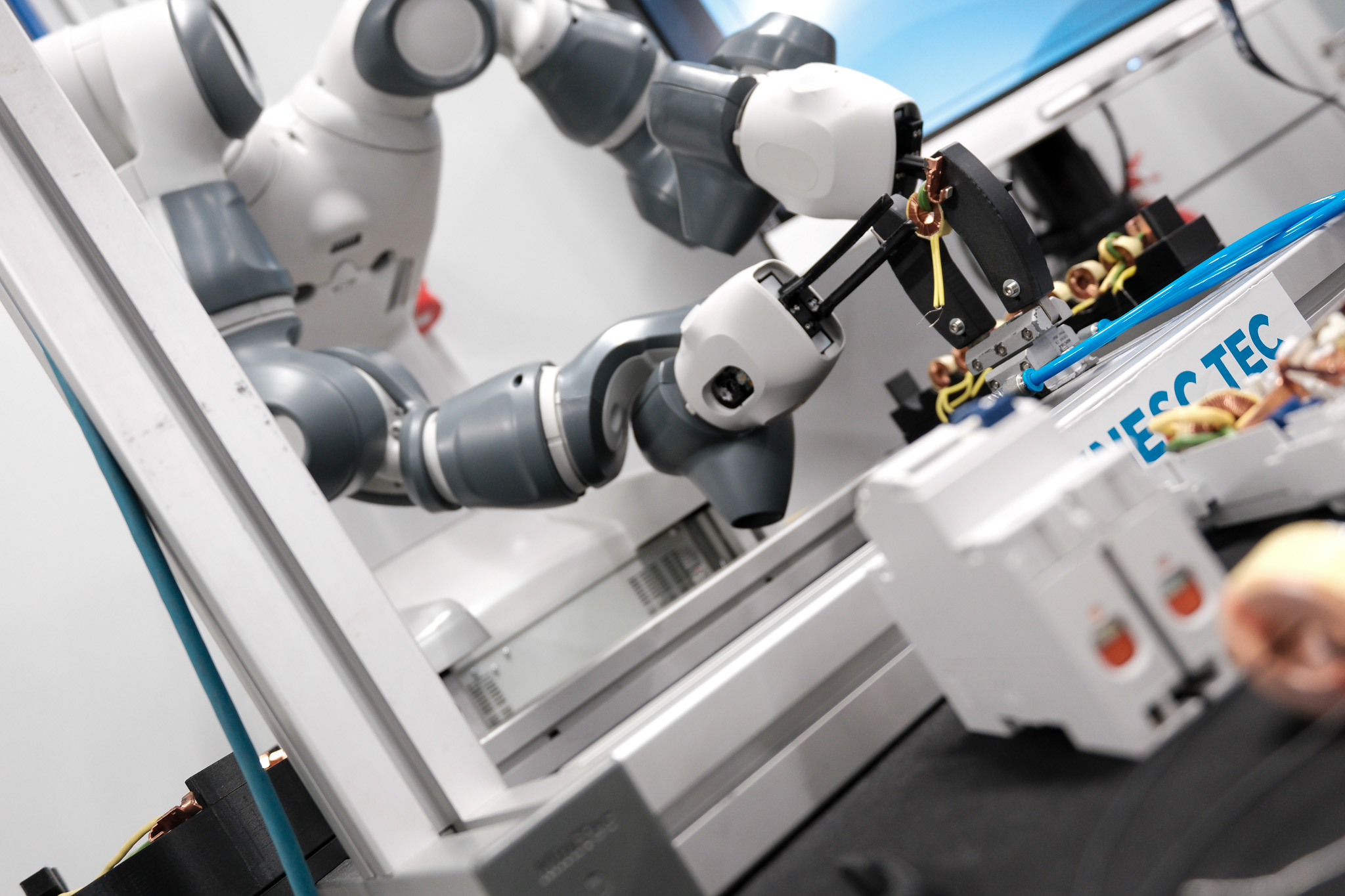
The prototype reflects the experience Rui Martins found at INESC TEC: research carried out in close connection with real industrial practice. “As part of my thesis, I was looking for something more hands-on. Because I was interested in industry, I chose INESC TEC as it offers a good balance between research and industrial collaboration. That was exactly what I was looking for: exposure to real industrial environments while maintaining a strong scientific component.”
 News, current topics, curiosities and so much more about INESC TEC and its community!
