


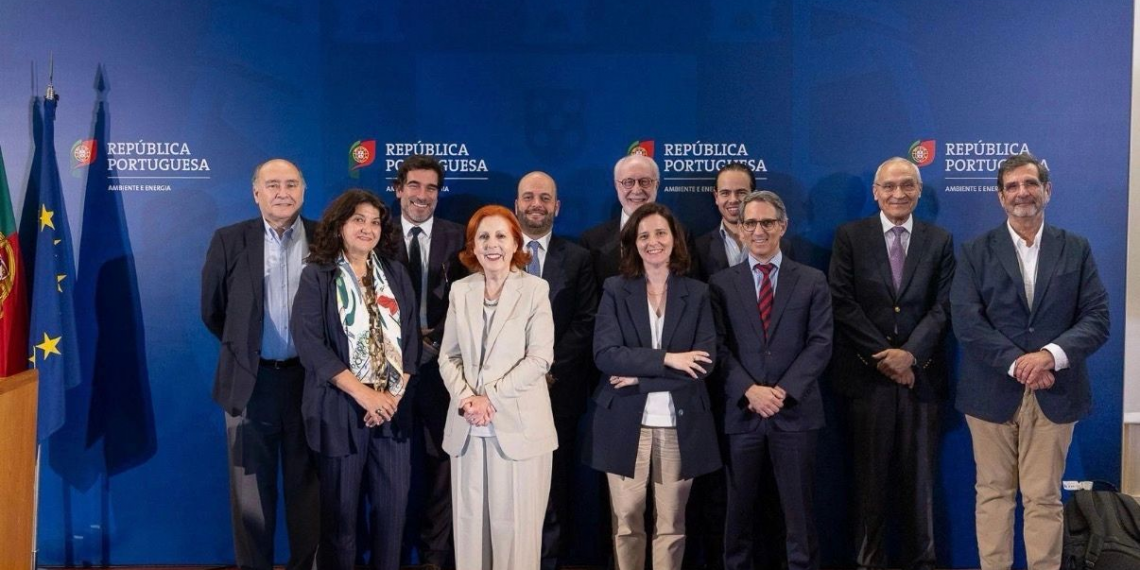
The National Energy Storage Strategy (ENAE), which sets Portugal’s targets for electricity storage through batteries and pumped hydropower up to 2040, was open for public consultation from 29 August to 30 September. The proposed Action Plan sets targets of 6.9 GW of storage capacity by 2030 and 9.76 GW by 2040, combining pumped hydropower and battery systems. The definition of the national strategy was supported by technical studies developed by INESC TEC, INESC-ID and IN+, which analysed the contribution of storage to renewable energy integration, the functioning of the electricity market and security of supply over the 2026–2040 period.
The project, carried out for the Directorate-General for Energy and Geology (DGEG), aimed to provide technical support for defining the strategy and identifying measures to strengthen the flexibility, security and resilience of the National Electricity System. On behalf of INESC TEC, director João Peças Lopes was responsible for coordinating the work. According to those involved, “the results should be perceived as analyses of scenarios and different options for the system, rather than as a single, precise forecast of future developments”.
Targets for 2040
The Action Plan sets two horizons. For 2030, it envisages 6.9 GW of storage capacity: around 3.9 GW of pumped hydropower and 3 GW of batteries. By 2040, capacity is expected to rise to 9.76 GW, divided between 5.26 GW of pumped hydropower and 4.5 GW of batteries. Between 2030 and 2040, these figures represent an approximately 41% increase in the planned storage capacity.
The targets are defined in terms of both power and energy (the number of hours at rated power). Although the models quantify the energy mobilised from storage both in the context of market simulations and when assessing the robustness, adequacy and security of supply, they do not identify a single duration applicable to all projects.
“In the scenarios analysed, batteries with around four hours of storage get a significant share of the benefits associated with the daily shifting of energy, with no clear additional benefits for renewable energy integration or arbitrage being observed with longer durations. Longer-duration solutions may, however, be relevant for security of supply and for responding to extended periods of lower renewable generation availability,” explained Clara Gouveia, member of the INESC TEC Board of Directors.
What the technical studies show
The technical studies developed by INESC TEC, INESC-ID and IN+ provide the scientific basis that made it possible to put the issue up for discussion. To address different questions, the work combined complementary analyses. SWHORD and SWHORD+ – computational tools whose full names are Simulation Solar, Wind, Hydro, Other Renewables and Demand, used to analyse and forecast the behaviour of power grids with high levels of renewable energy, electric vehicles, hydrogen and storage – assessed the robustness of the power system. SWHORD simulates system operation hour by hour over a full year, assuming a scenario with limited interconnection capacity.
CEVESA – an advanced modelling tool used to study the behaviour of the Iberian electricity market – analysed the impact of storage on the electricity market. A third analysis also assessed the contribution of storage to security of supply. Using different approaches in these technical studies made it possible to examine the same issue from the perspectives of system operation, the market and the adequacy of available resources.
“In CEVESA, the generation units in Portugal and Spain are dispatched jointly, week by week at hourly resolution, to minimise the total operating cost of the two interconnected systems. For hydropower generation, the model starts from a reference historical year and preserves, for each week, observed patterns of generation, pumping, reserves and operational limits. Within each week, dispatch is optimised. Although the model does not explicitly decide how to transfer water between weeks, this approach reduces the risk of obtaining excessively optimistic results and avoids the need to project, for future scenarios, a complex set of hydraulic parameters that are difficult to estimate accurately,” explained José Villar, an INESC TEC researcher.
The security-of-supply analysis uses a different approach. “Instead of simulating just one year, it tests thousands of possible operating years, combining different historical series of renewable generation with random outages of power plants. For large hydropower plants, available power and energy are estimated based on stored volume, inflows and the time of year, using statistical and machine-learning models. These resources, together with batteries and pumped hydropower, are then dispatched hour by hour through weekly optimisation. Here too, there is no optimisation of water between weeks, but the seasonal pattern of reservoir use is preserved, avoiding the assumption that all stored water can be freely used at the most critical times,” João Peças Lopes clarified.
These simplifications are important when interpreting the results, as the INESC TEC experts involved in the study explained. “The approach was to use tools with different objectives, which, on the one hand, make more conservative assumptions, as in the case of SWHORD, while also exploring the joint operation of the Iberian market and system and comparing complementary results. Therefore, the ENAE targets should be understood as planning values supported by several scenarios and methodologies, rather than as a single result independent of the modelling assumptions,” said Clara Gouveia.
The results show that storage can help make better use of renewable generation, particularly solar power, by reducing situations in which there is excess electricity generation and making it possible to use that energy during periods of higher demand or greater value. Storage also helps reduce the risk of insufficient capacity to meet demand during periods of higher system stress.
Demand flexibility is another important component. “Shifting part of consumption to hours when electricity is more readily available can reduce the need for storage and reserve capacity. Hence, batteries, pumped hydropower, interconnections and demand response should be analysed together. The actual contribution of flexibility will, however, depend on consumer uptake and on the evolution of the markets and mechanisms that allow this service to be remunerated,” the INESC TEC Board member continued.
The studies also show that more storage does not automatically mean a proportionally greater benefit. As more batteries enter the system, they begin to compete for the same low-price hours to charge and high-price hours to discharge, reducing the revenue generated by each additional unit. “This effect is known in economic terms as diminishing marginal returns or ‘revenue cannibalisation’ of the technology in question,” stated João Peças Lopes.
“The results depend on the assumptions made about the evolution of consumption, renewable generation, interconnections, flexibility and the Spanish power system, among other factors. This dependence should be considered when interpreting the targets: the proposed figures result from planning scenarios and should be monitored and updated as the Iberian system evolves,” the INESC TEC director continued.
For longer time horizons, the studies point to the need to assess solutions capable of storing energy for several days or across seasons. These solutions can complement daily-cycle batteries by shifting energy from periods of greater renewable abundance to extended periods of scarcity. Pumped hydropower, other long-duration storage technologies, interconnections and demand flexibility are part of this set of options.
Under the most demanding scenarios for 2040, some firm capacity may also still be required as reserve, even if it is only used for a few hours of the year. The goal is to ensure that capacity is available when renewable generation and storage are not sufficient to meet demand.
Taken together, these results show that the challenge is not simply to install more storage capacity, but to combine technologies and resources with different response times and durations, seeking a balance between security of supply, renewable integration and system costs.
Action Plan: valuing system services
The technical work also contributed to defining the measures included in the Action Plan. The ENAE organises these measures around four pillars: economic valuation and participation in system services; the regulatory framework; simplification of grid connections; and technological innovation. From an economic perspective, the sustainability of projects may combine revenues from the electricity market with remuneration for services provided to the grid and, where applicable, capacity mechanisms.
One of the measures related to this framework is the capacity mechanism that the Government is preparing to strengthen security of supply. This mechanism is intended to remunerate the availability of resources when the system needs them and is expected to be competitive and open to different solutions, including generation, storage and demand management, with the stated aim of selecting capacity at the lowest cost to consumers. The reference used to assess system adequacy is a reliability standard of 1.46 hours per year, set by DGEG based on a proposal from ERSE and a European methodology.
In the case of pumped hydropower, the Action Plan envisages studying changes that would facilitate the modernisation of existing facilities, their conversion to reversible operation and new investments in pumped storage. It also focuses on analysing contractual and concession conditions that could influence the viability of these projects, whose implementation requires longer investment horizons than those of batteries.
Some measures associated with capacity mechanisms and the expansion of hydropower storage require coordination with the European Commission, particularly where the framework of European State aid rules is concerned.
“Innovation is another of the strategy’s four pillars. In addition to the technologies that are currently more mature, it will be important to monitor longer-duration solutions, new battery chemistries, digitalisation and new ways of providing services to the system, assessing their technological and economic development over time,” explained Clara Gouveia.
“The contribution of the technical studies to the ENAE illustrates the role of scientific analysis and modelling in supporting public policy: they do not replace decision-making, but they make it possible to quantify alternatives, make assumptions explicit and identify trade-offs between cost, security of supply and decarbonisation,” concluded the INESC TEC Board member.
The public consultation also provided an opportunity to test these assumptions and incorporate contributions from companies, experts, associations and citizens. The version submitted for consultation therefore proposed a pathway for strengthening energy storage in Portugal, while also making clear that its implementation should be coordinated with other sources of flexibility and monitored as consumption, renewable generation, the Iberian market and available technologies evolve.
 News, current topics, curiosities and so much more about INESC TEC and its community!
