


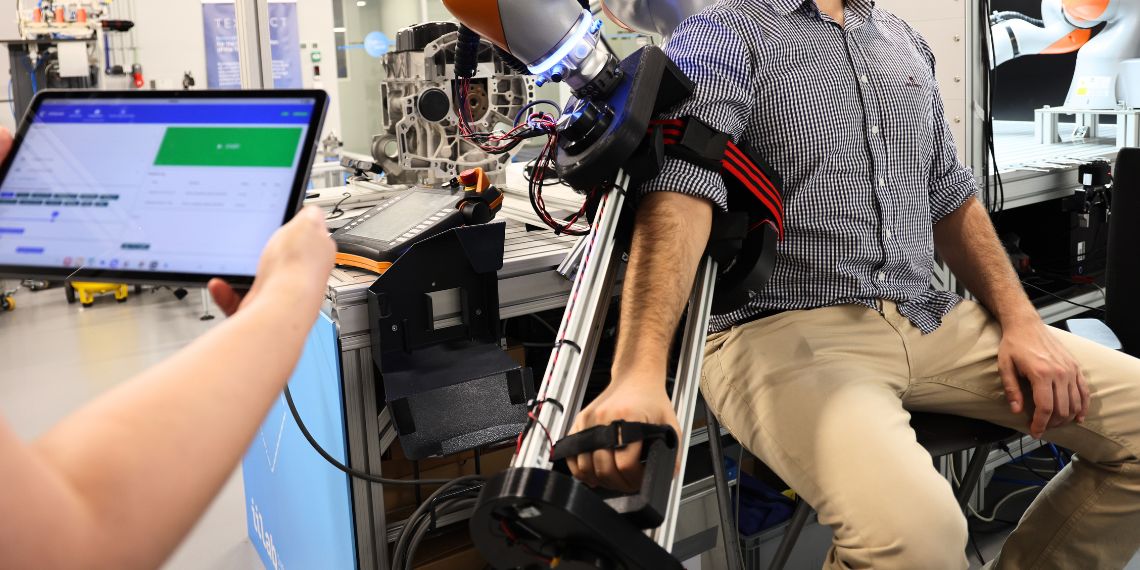
An INESC TEC-led exploratory project has laid the foundations for a future solution designed to help patients regain upper-limb mobility. AICare4U combines computer vision, collaborative robotics and serious games to identify incorrect movements in real time during motor rehabilitation and provide personalised assistance throughout rehabilitation exercises.
Regaining the use of an arm after a stroke can be a long and demanding process. Successful rehabilitation depends largely on consistently repeating exercises, performing them correctly and receiving ongoing support from healthcare professionals – a growing challenge in the face of an ageing population and increasing pressure on healthcare services; the AICare4U project aimed to address this question. It is based on “a system capable of supporting motor rehabilitation sessions autonomously while ensuring that exercises are performed correctly,” explained Cláudia Rocha, the INESC TEC researcher who led the project. The system’s key advantage is its ability to reduce compensatory movements. “Patients are often able to complete a task by relying on other parts of the body, such as the trunk or shoulder, but this reinforces incorrect motor patterns and limits the long-term recovery of the affected limb,” she says.
So, how does the solution work? It is an integrated platform that brings together a range of technologies, from Artificial Intelligence (AI) to collaborative robotics. Using an AI-powered computer vision system, the platform reconstructs the patient’s three-dimensional posture and automatically identifies compensatory movements, such as leaning the trunk, raising the shoulder or rotating the body. Whenever these movements are detected, the system can provide personalised assistance through a collaborative robotic device, helping the user perform the exercise correctly.
The platform goes beyond monitoring alone: the initiative enabled the development of a robotic upper-limb exoskeleton with two degrees of freedom (elbow flexion/extension and forearm pronation/supination), designed to either assist or resist movement depending on the stage of recovery. It also includes an intelligent control system that adapts the level of assistance to each patient’s abilities. In addition, the solution incorporates a serious game, developed with input from therapists, which turns motor rehabilitation exercises into more engaging activities. The game automatically adjusts the level of difficulty while recording objective indicators of the patient’s clinical progress.
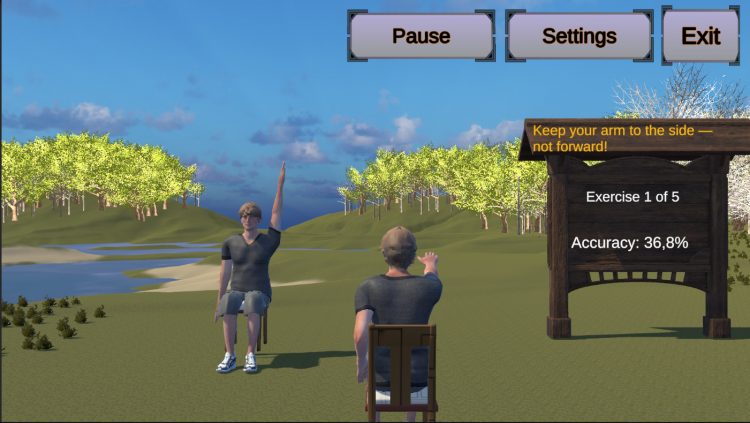
“We do not seek to replace therapists: our goal is to provide tools that help them monitor patients more objectively and in a more personalised way, enabling exercises to be adapted to each individual’s needs and improving the effectiveness of rehabilitation,” said the researcher.
Another important outcome of the project was the development of explainable AI models. Rather than operating as a “black box”, these algorithms make it possible to understand which joints underpin each decision, giving healthcare professionals a clear explanation as to why a particular movement has been classified as compensatory. This transparency increases clinicians’ confidence in the use of AI in rehabilitation settings.
The platform was also designed to support different stages of recovery. Depending on the user’s needs, the system can move the arm passively, help only when required or introduce resistance to promote muscle strengthening. Throughout each session, objective performance metrics are recorded, enabling therapists to monitor patient progress consistently and adjust treatment plans accordingly.
“The results demonstrate the platform’s potential to support upper-limb rehabilitation through the integration of robotics, Artificial Intelligence, and adaptive monitoring and assistance technologies,” mentioned Cláudia Rocha.
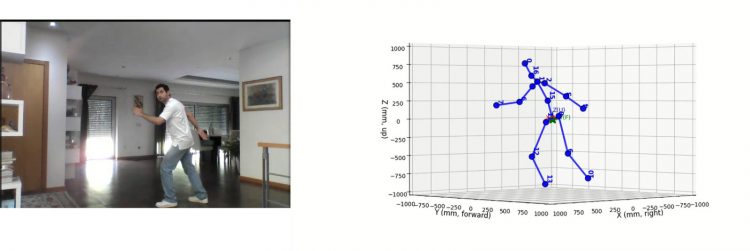
Although the project was developed with stroke survivors in mind, the methodologies and technologies created could, in the future, be adapted for other conditions affecting upper-limb motor function. They could even be used in gyms to help ensure that people perform exercises correctly, in line with instructors’ recommendations.
“Rather than developing standalone technologies, we set out to create an integrated platform that combines robotics, AI and gamification to address real rehabilitation needs. We believe this work could help make therapies more personalised, accessible and effective, with the potential to benefit both patients and healthcare professionals,” concluded Cláudia Rocha.
Although the platform is still at the prototype and experimental validation stage, the results obtained demonstrate the technical feasibility of the approach and provide a solid foundation for future development and clinical validation. “If the results continue to be positive, we will assess the most appropriate strategy for transferring the technology to the market,” Cláudia Rocha emphasised.
 News, current topics, curiosities and so much more about INESC TEC and its community!
