


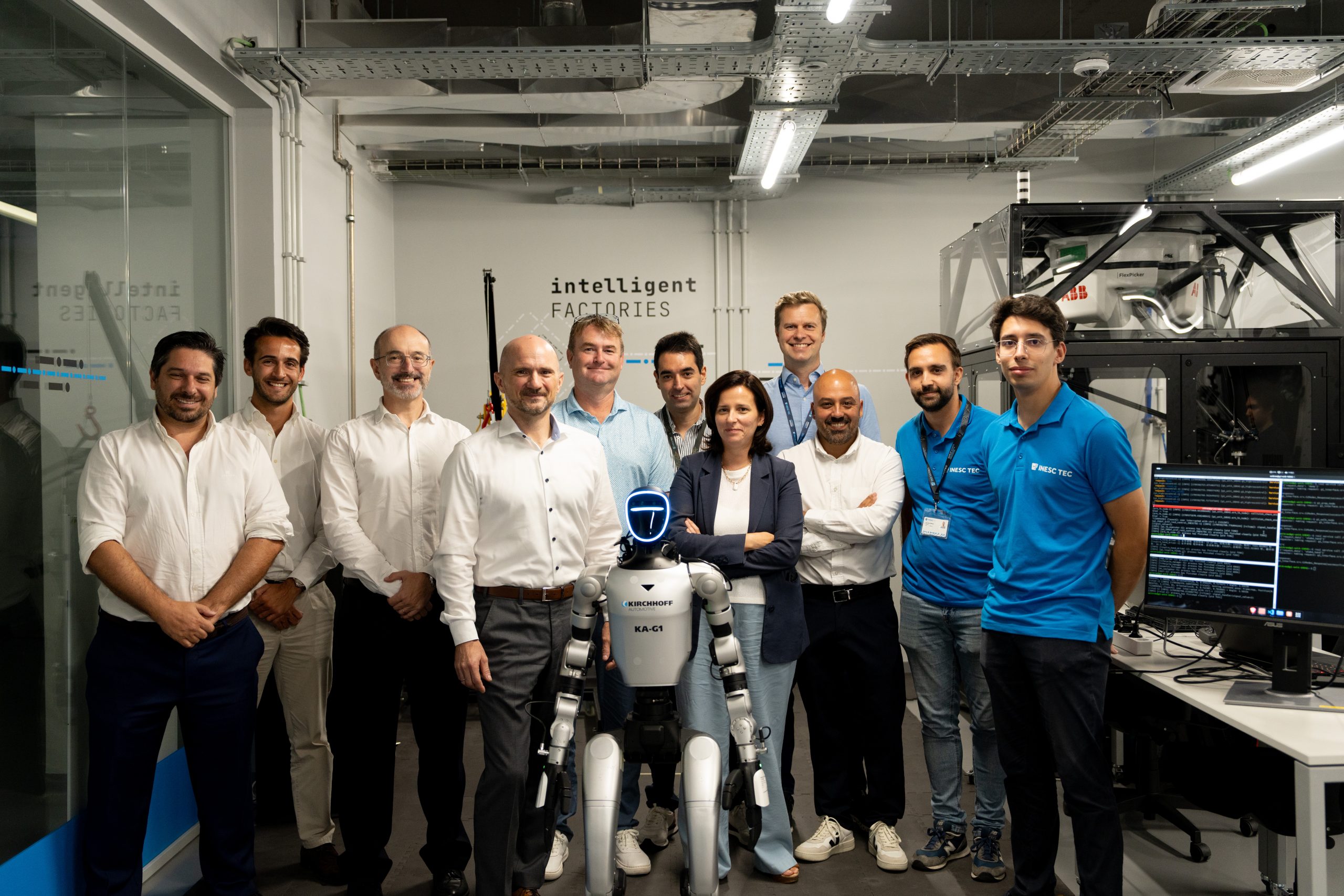
The MERIT project, which explores the potential of humanoid robotics in production operations by carrying out representative tasks in industrial environments, provided the opportunity for a visit from KIRCHHOFF Automotive delegation to INESC TEC – more specifically, to the Industry and Innovation Laboratory (iiLab). The initiative, which included institutional presentations from both organisations, enabled the discussion of new forms of collaboration by identifying potential areas of common interest and opportunities for future cooperation.
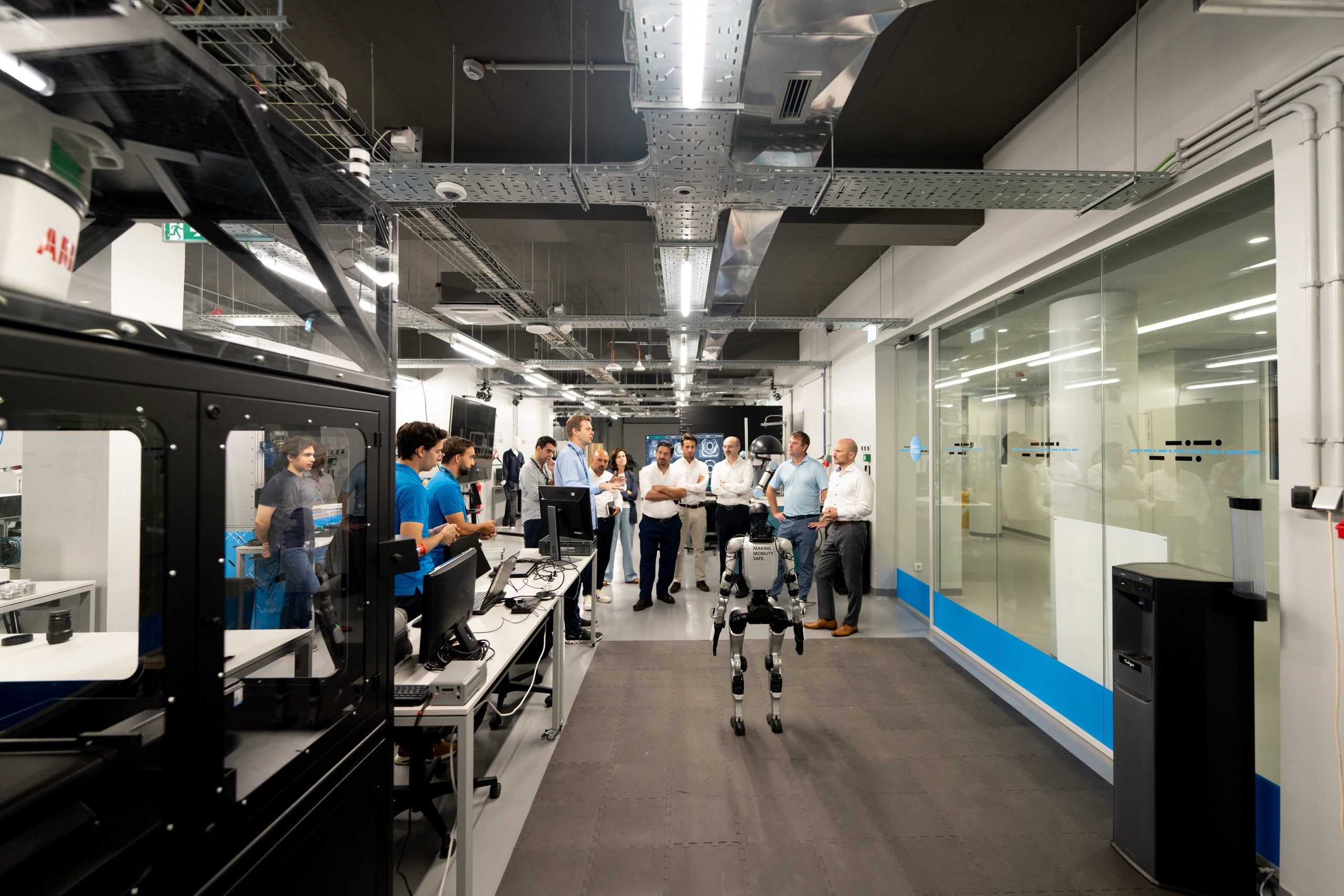
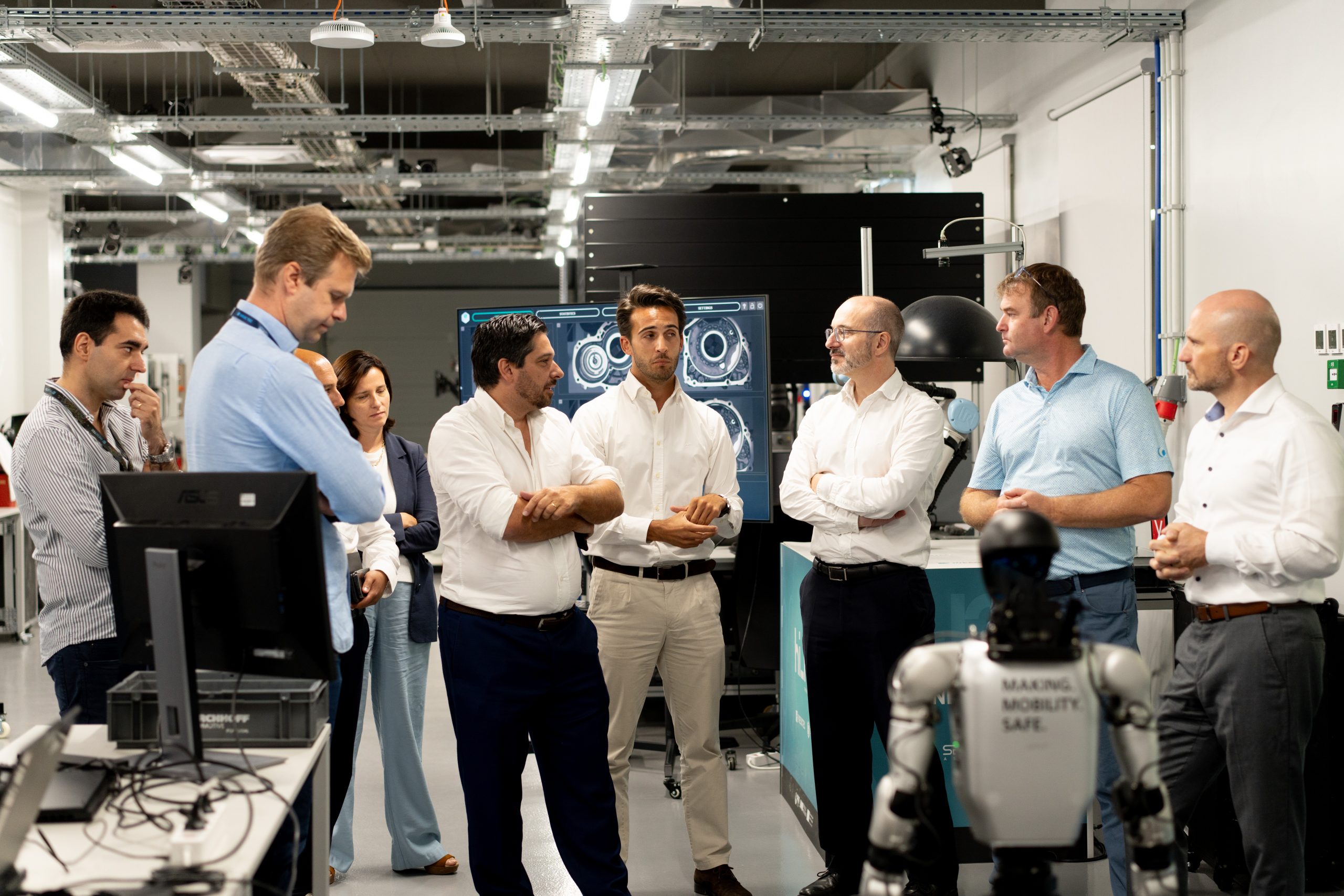
Taking advantage of the visit to INESC TEC’s technological development and prototyping space, the representatives had the opportunity to learn about the different demonstrators and technologies currently being developed. These included a solution dedicated to autonomous decontainerisation based on mobile manipulators, a robotic technology for quality inspection of metal parts, a projection system to support operators in industrial operations, and, finally, a demonstration of the most recent developments of the MERIT project, in line with the objectives defined for the visit.
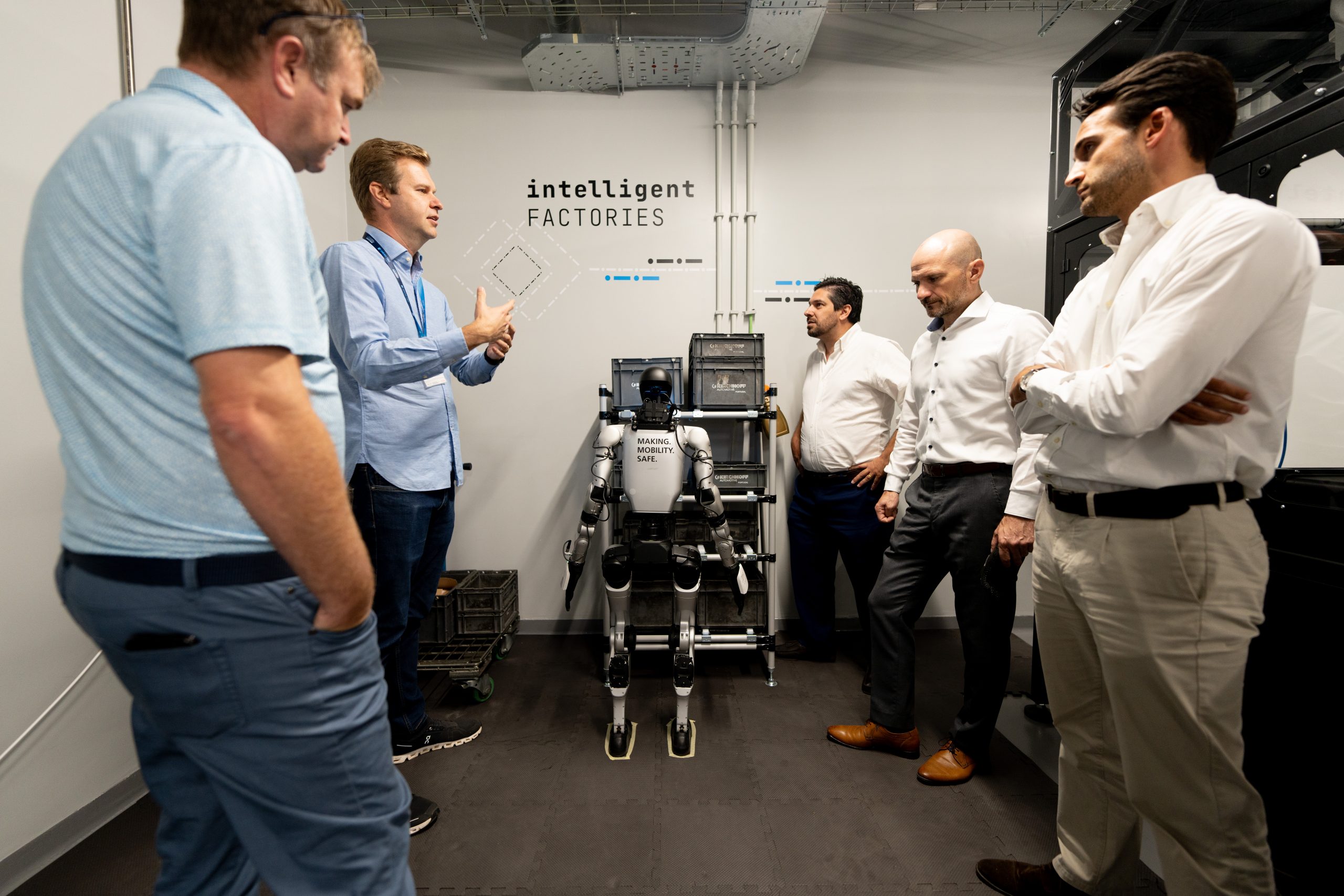
During this final demonstration, it was possible to observe a humanoid robot autonomously performing a full sequence of operations: “it moves to a rack, grasps a box and then navigates through the environment to the delivery point, where it hands the box over to an employee,” described Marcelo Petry, an INESC TEC researcher working on the MERIT project.
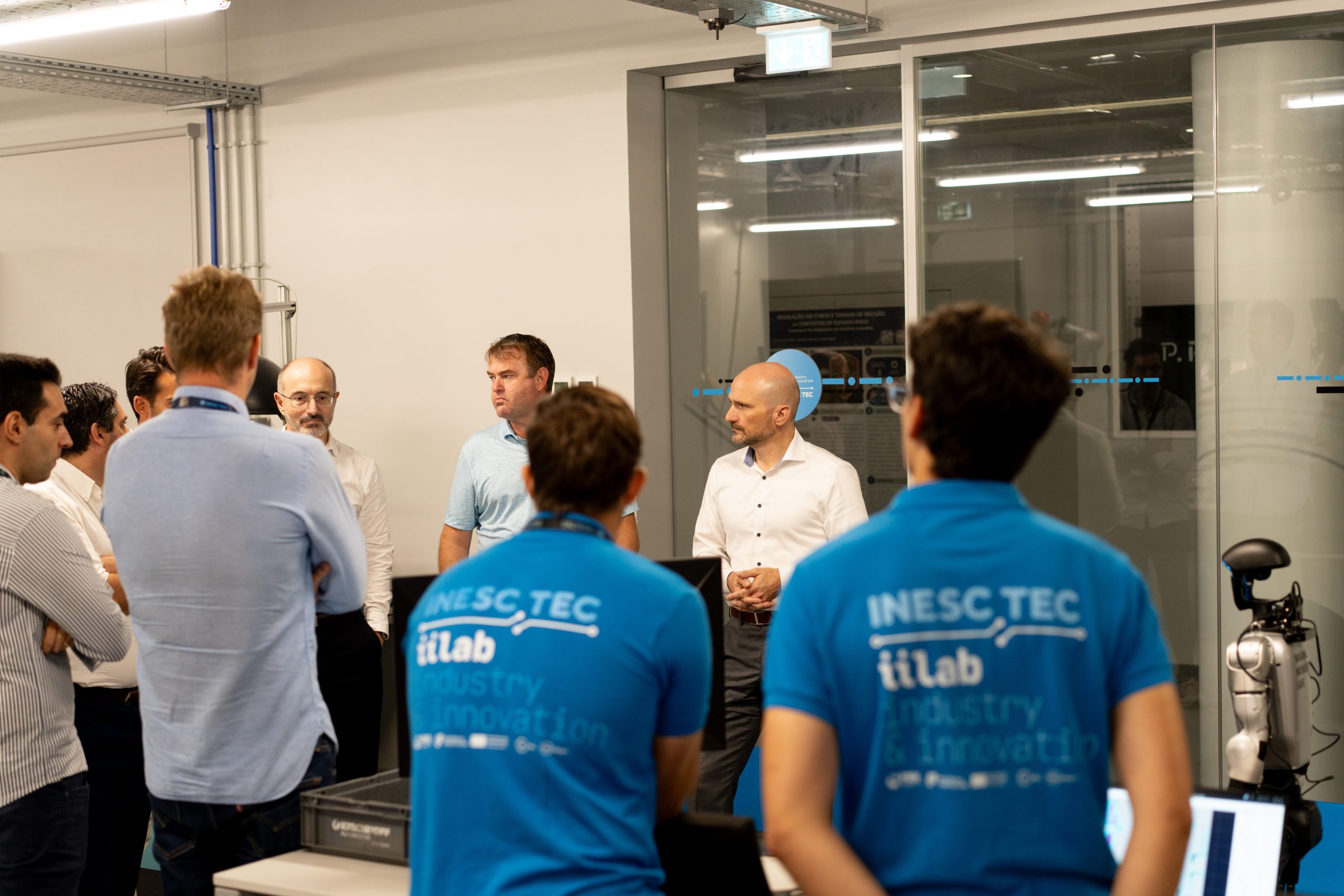
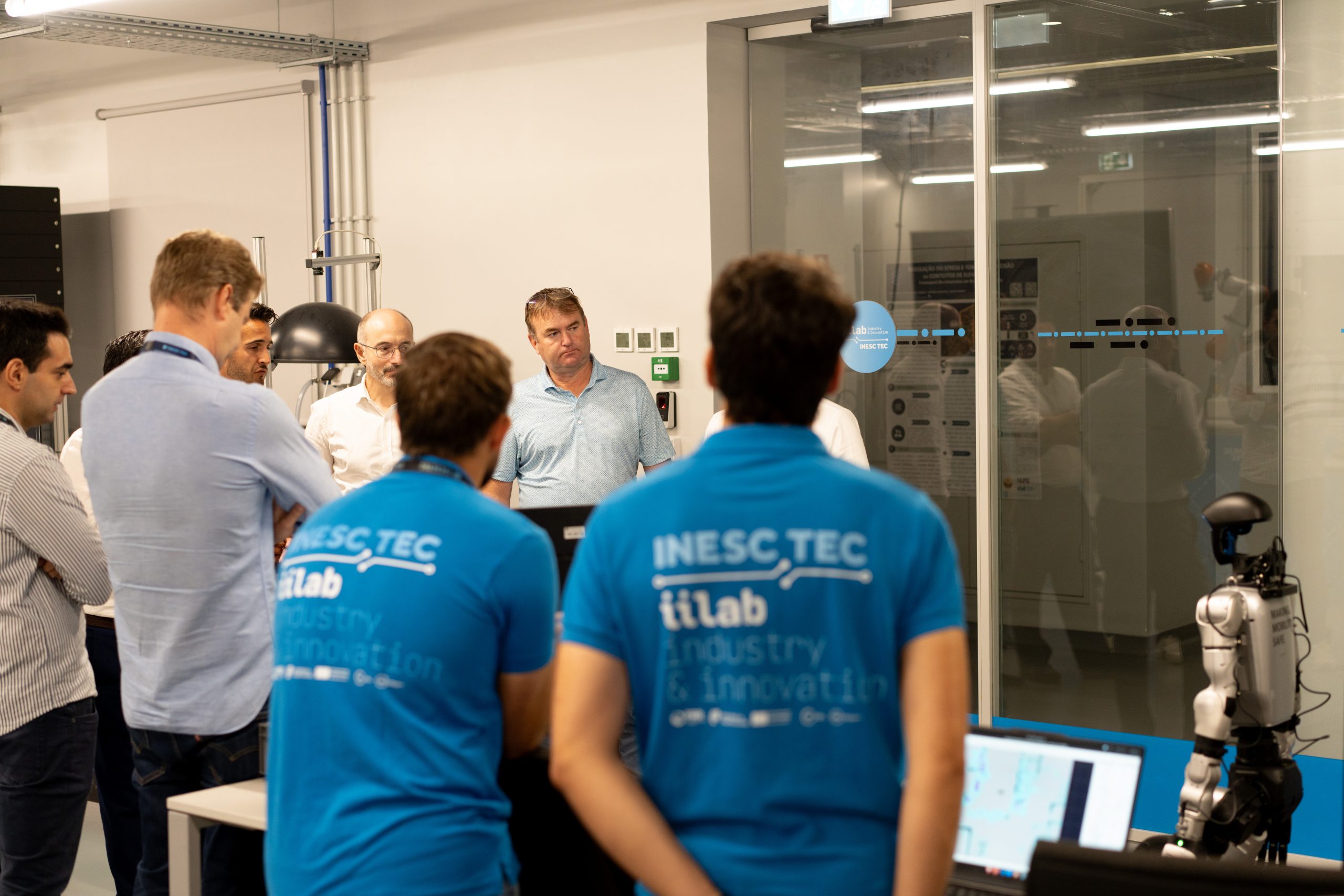
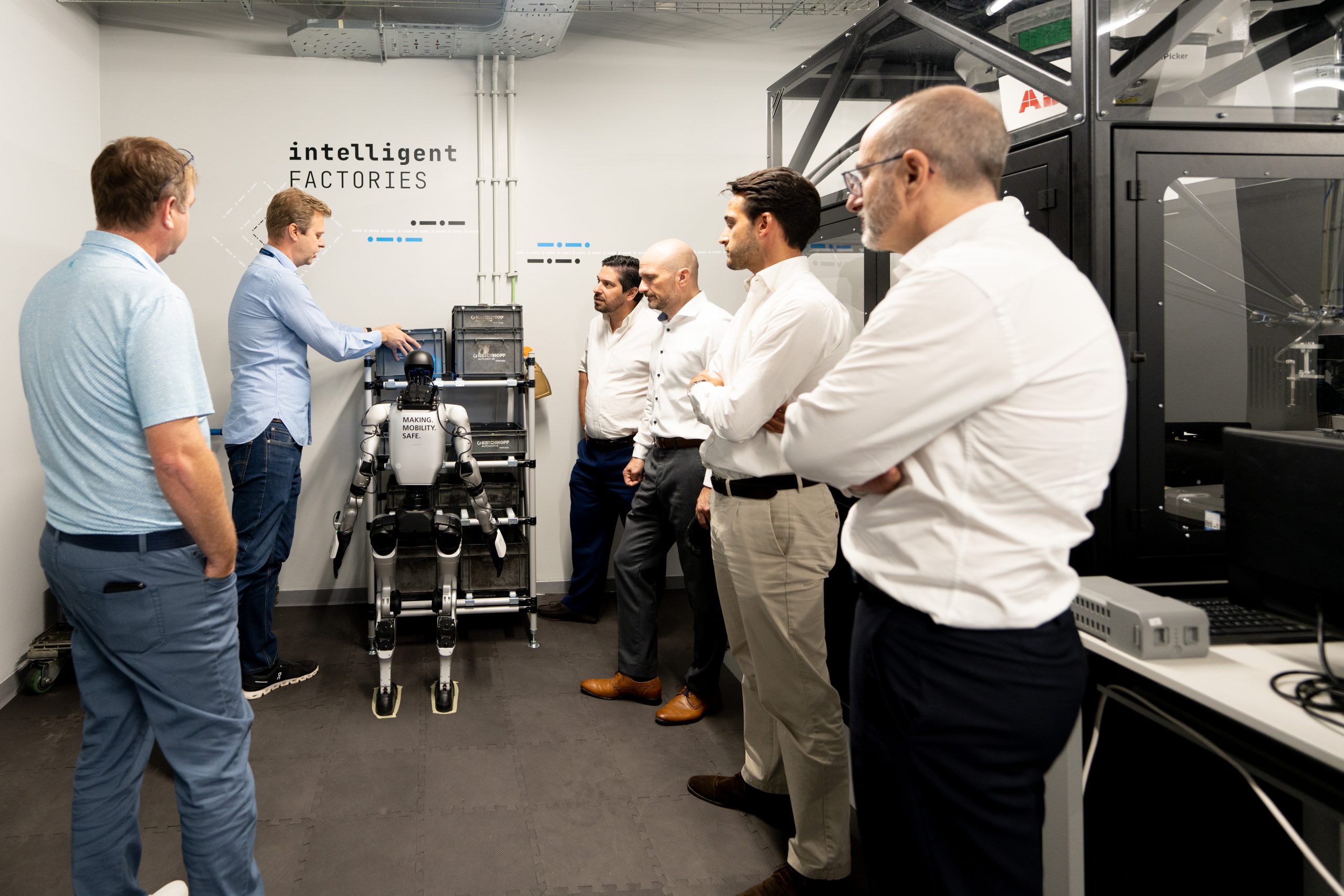
Clara Gouveia, member of the Board of Directors, Luís Rocha, researcher and one of the leaders of the Industrial Robotics and Intelligent Systems area, Marcelo Petry, Manuel Couto, João Martins, Maria Lopes, Rui Nascimento and Carlos Costa, also researchers, also took part in this visit. KIRCHHOFF Automotive was represented by Dr. Jochen Luft, Global COO, Josh Forquer, CTO for the North America area, Jorge Ferreira, Managing Director Ops PT, Armindo Jales, Managing Director Admin PT, Vitor Pereira, Continuous Improvement Manager PT, KAPS, and João Sousa e Silva, Senior Digitalization Consultant / Project Lead.
Complementarity as a central approach
Scheduled to run until November, the MERIT project’s approach focuses on assessing capabilities such as locomotion, manipulation, interaction with objects and material movement, while also identifying the technical limitations, integration requirements and safety conditions needed for the use of this technology on the shop floor. According to Marcelo Petry, “rather than replacing the operator,” the project aims to demonstrate how humanoid robots can act as a “complement to human work, taking on repetitive, physically demanding or material-handling tasks, and freeing employees for activities that require greater decision-making ability, experience and flexibility.”
“The aim is to explore an approach in which people and robotic systems can complement one another, keeping the operator as a central element of the production process,” concluded the researcher.
 News, current topics, curiosities and so much more about INESC TEC and its community!
