


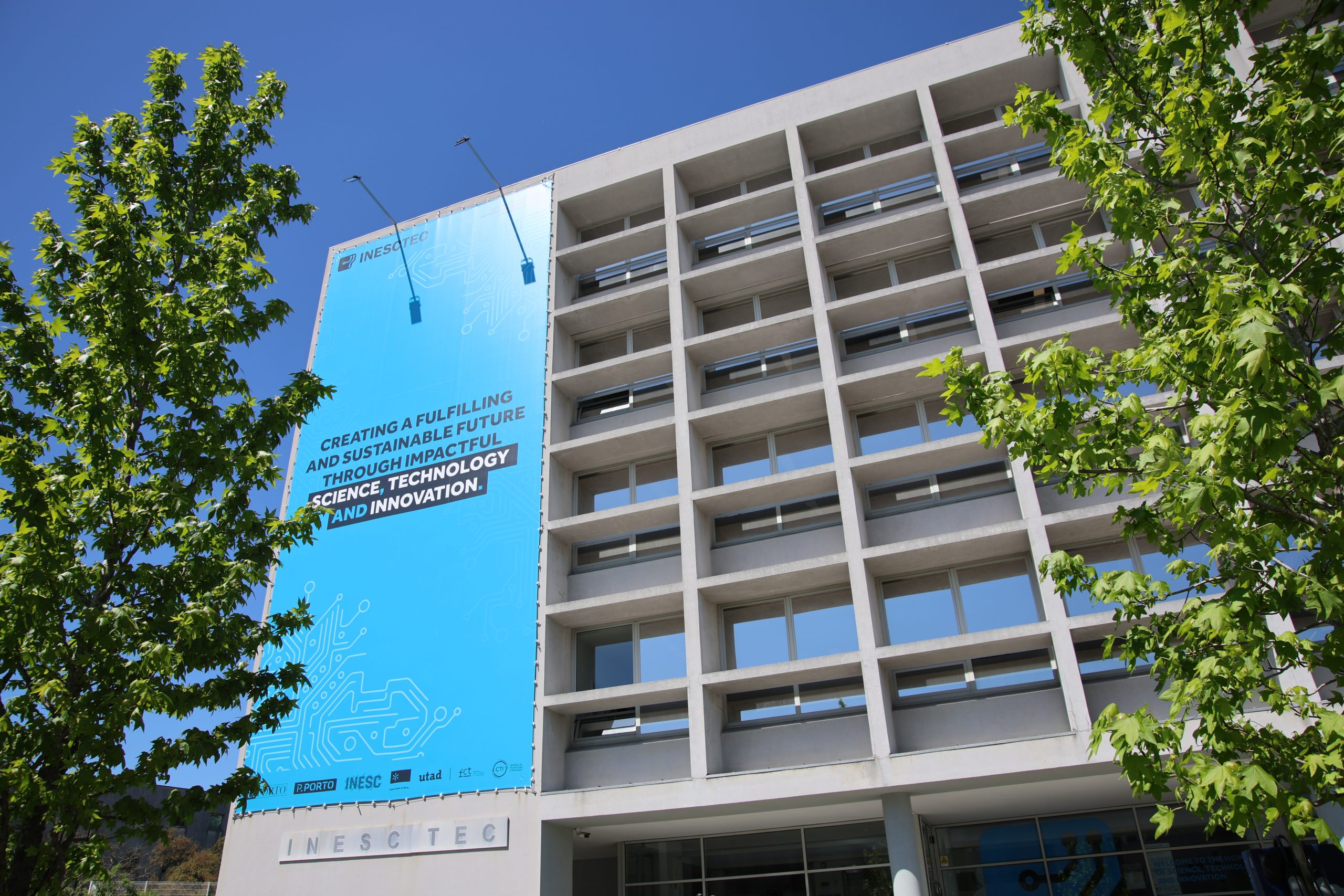
A recent study by Porto Business School (PBS), entitled Deep Tech Portugal Outlook 2026, shows that Portugal could create two to three global deep tech champions by 2030. Several Portuguese companies are highlighted as examples of the country’s ability to develop technology with international reach. PBS identifies INESC TEC as one of the research hubs underpinning Portugal’s deep tech ecosystem – a recognition that adds to others in this field, such as four consecutive years on the podium of the EARTO (European Association of Research and Technology Organisations) Innovation Awards and the ongoing presence among the leading Portuguese institutions filing patent applications, according to the EPO (European Patent Office).
According to the study, Portugal already features the three essential ingredients for a competitive deep tech ecosystem: recognised high-quality technical talent, European demand for computing, secure supply chains, space and defence, and a maturing venture capital market, strengthened by European public funds.
Deep tech funding in Portugal reached around €400 million in 2025 (almost three times the amount recorded in 2018) but still accounts for just 2% of the capital invested in Europe. The report is clear: Portugal is not competing on scale, but can lead in niches where science, industry and European sovereignty intersect.
This mapping of national scientific capacity highlights INESC TEC alongside institutions such as INL, IST, Fundação Champalimaud, iMM and i3S, as one of the centres underpinning priority areas identified by PBS – computing, photonics and micro/nanoelectronics – and as one of the scientific and business anchors of the Porto & Northern region, together with Critical Manufacturing and Sword Health.
The report highlights the fact that the challenge lies in turning science into companies that retain their headquarters, intellectual property and decision-making capacity in Portugal.
“The PBS study follows Mario Draghi report and puts forward interesting proposals that have been under discussion at European level, such as public procurement of innovation – ‘Make the State a ‘Customer Zero’ for Portuguese technology’ – as well as some degree of standardisation of intellectual property and spin-off management models. The European Commission has also been working in this direction, so it is critical that we remain observant and take action to increase the prosperity that is built on the science produced by our scientific and technological system,” explained Daniel Vasconcelos, Head of INESC TEC’s Technology Transfer Office.
This positioning adds to the recognition that INESC TEC has been consolidating at European level. Over the past four years, the Institute has consistently featured on the podium of the EARTO Innovation Awards – the most important European awards for research and technology organisations (RTOs). In 2026, AIR, a technology developed by LTPlabs (an INESC TEC spin-off), took third place in the Impact Created category, marking the first time a technology supported by the Institute reached the podium in this category, which recognises real-world market impact. In 2024, it was the turn of iLoF (intelligent Lab-on-a-Fiber), also born within the INESC TEC ecosystem, to win the Expected Impact category – an unprecedented distinction for a Portuguese institution.
Also, in the first half of 2026, the city of Porto – and INESC TEC in particular – hosted the G-30 of European Technology Transfer Offices. In June, INESC TEC organised the 17th annual plenary meeting of the TTO Circle, of which the Institute is the only Portuguese member. The TTO meeting addressed two of the areas highlighted in the study: Defence and dual-use technologies and Blue Economy, energy and green technologies, as well as several of the challenges also identified by the study.
 News, current topics, curiosities and so much more about INESC TEC and its community!
