


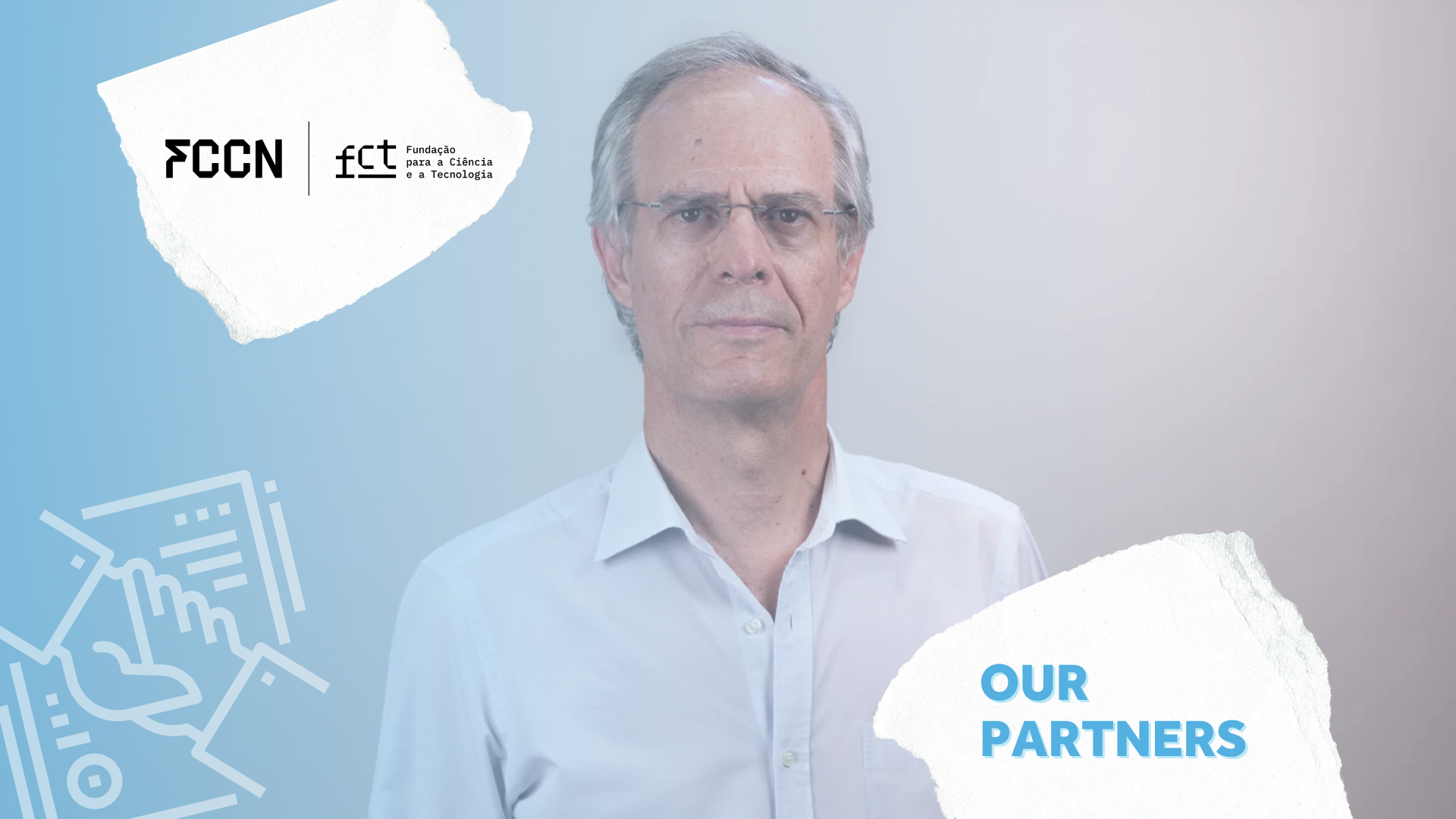
This month, we spoke with João Nuno Ferreira, General Coordinator of FCCN – the digital services unit of the Foundation for Science and Technology (FCT) – in a conversation focused on the role of digital infrastructures and technological innovation in supporting the scientific and academic community in Portugal.
As Vice-President of FCT, he explored several initiatives, challenges and opportunities in the field of advanced computing, as well as FCCN’s contribution to developing services that foster collaboration, knowledge and research at both national and international levels.
How did the collaboration between FCCN and INESC TEC begin?
The collaboration between FCCN and INESC TEC started within the context of the government’s strategic commitment to placing Portugal at the forefront of countries supporting the European Declaration on High-Performance Computing, signed on 23 March 2017 (Digital Day), in Rome. For Portugal to quickly catch up from the lag in HPC at the time, it was considered essential to establish strategic partnerships with relevant organisations.
At that time, the Board of Directors of the partnership between FCT and the University of Texas at Austin included Professors José Manuel Mendonça and Rui Oliveira, both associated with INESC TEC. One of the strands of that partnership was precisely HPC, supported by the excellence of the Texas Advanced Computing Center (TACC) – becoming one of the strategic partners for developing HPC in Portugal. It was likely at that point that the collaboration between FCCN and INESC TEC began.
What did the journey initiated with the Bob supercomputer represent for Portugal and for this partnership?
The Bob supercomputer, which operated between 2019 and 2023, represented a very important starting point in strengthening the national capacity for advanced computing, laying the technical and collaborative foundations that enabled the development of larger-scale and higher-impact infrastructures like Deucalion.
Bob made it possible to re-establish shared computing service provision practices and to build an initial user community. Several challenges had to be overcome during installation and operation, which were addressed through cooperation and joint efforts between FCCN, INESC TEC and other partner organisations.
Concerning Deucalion, how do you assess the impact on strengthening national advanced computing capacity and supporting science, innovation and industry, and what has been INESC TEC’s contribution?
Since becoming operational in 2024, Deucalion has significantly strengthened Portugal’s advanced computing capacity, supporting more than 600 scientific, innovation and industrial projects with high computational demands.
INESC TEC has made a highly relevant contribution to the operation, technical support and promotion of this strategic infrastructure for Portugal, participating in joint projects with FCT such as EuroCC2, EuroCC3 and the AI Factory BSC initiative.
Within the EuroCC2 project, and looking ahead to EuroCC3, how has collaboration been structured among national entities, including INESC TEC?
In EuroCC2, the National Competence Centre in HPC (High-Performance Computing) was coordinated by FCT until March 2026, involving several national entities – including INESC TEC, which contributed technical expertise, training and support for HPC adoption across academia, industry and public administration.
This cooperation is expected to be further strengthened in EuroCC3, which begins in April 2026 and is coordinated by CNCA – the National Advanced Computing Centre – an organisation of which both FCT and INESC TEC are members. The EuroCC project series, since the first edition, has been instrumental in supporting collaboration between national entities most engaged in advancing HPC in Portugal.
What do you value most in this experience with INESC TEC?
Key strengths include strong technical capability, culture of collaboration and interdisciplinary communication between teams, as well as proximity to the user community, and commitment to excellence, innovation and cooperation with the business sector. All these factors are essential for the success of national advanced computing initiatives driven by FCCN, FCT’s digital services unit, and can only be achieved through close collaboration with partners and organisations on the ground.
What can we expect from this collaboration in the upcoming years?
Further deepening of collaboration is expected, particularly around CNCA, Deucalion and initiatives such as EuroCC3 and the AI Factory BSC, strengthening access to advanced computing, user capacity-building and the impact of science and innovation in Portugal. INESC TEC’s teams will continue to contribute with technological expertise and technical support within this ecosystem.
Together, accelerating research and innovation in Portugal. INESC TEC has also played a key role in energy efficiency and in advanced computing processes.
 News, current topics, curiosities and so much more about INESC TEC and its community!
