


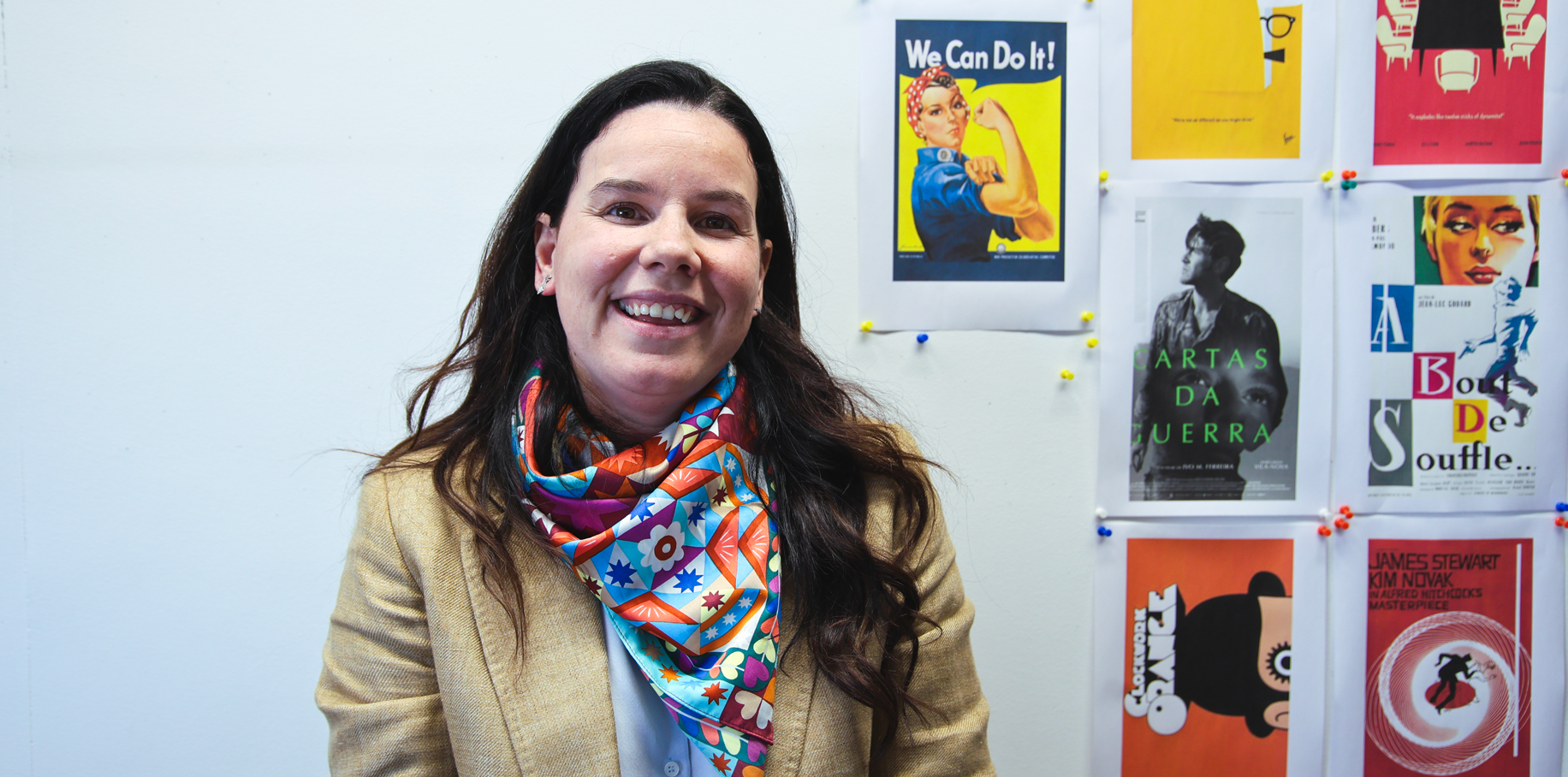
There’s probably not a single lab at INESC TEC without a “purchase” from Rita Barros, Head of the Legal Support Service; she’s seen how Law can have a “direct, real and tangible” impact, and has launched tenders for robotic arms (and for the most “exotic” objects). When she swaps roles, it’s the cinema she turns to – and even brings it into INESC TEC. The clapperboard sounded 10 years ago, and the scene is set to continue.
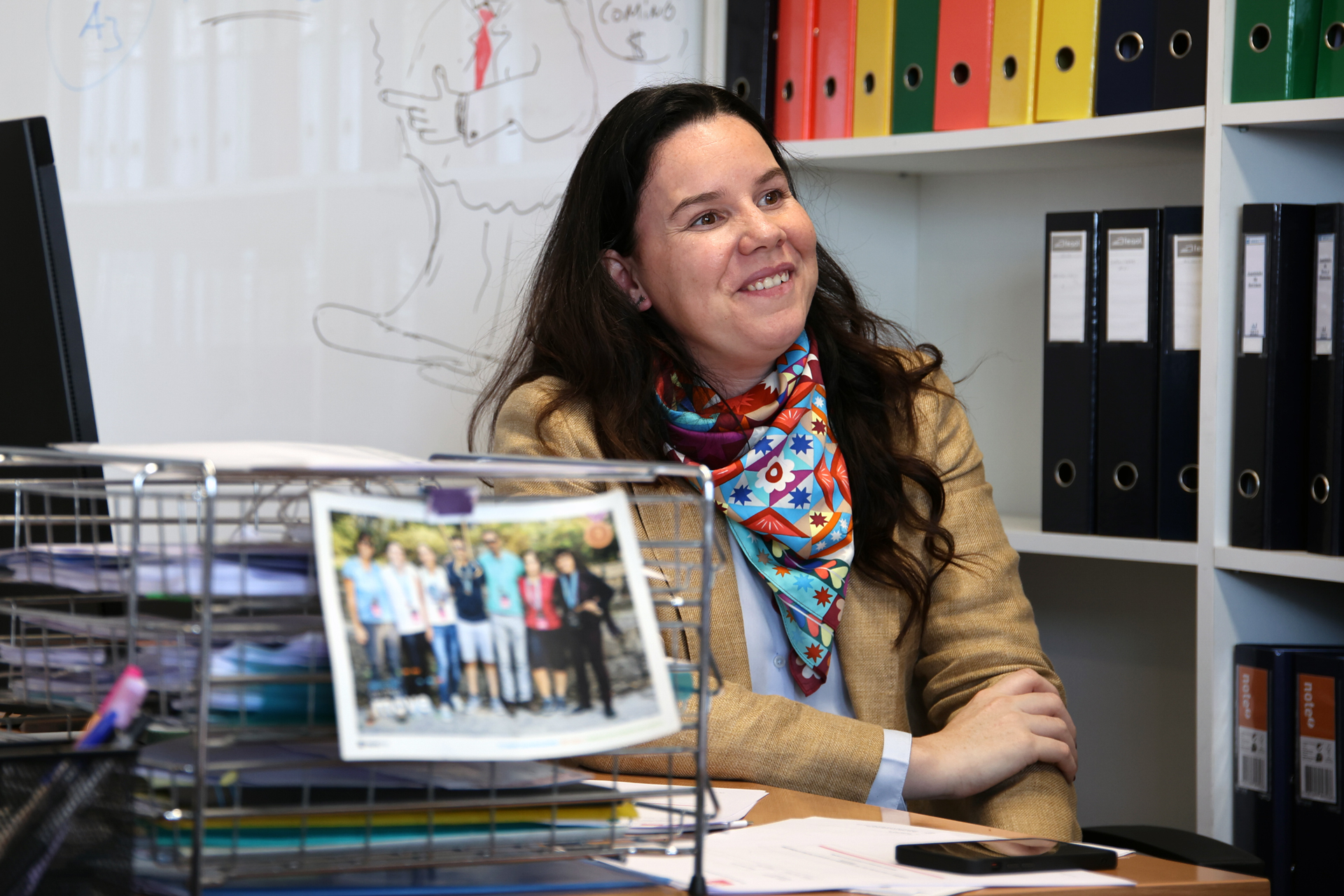
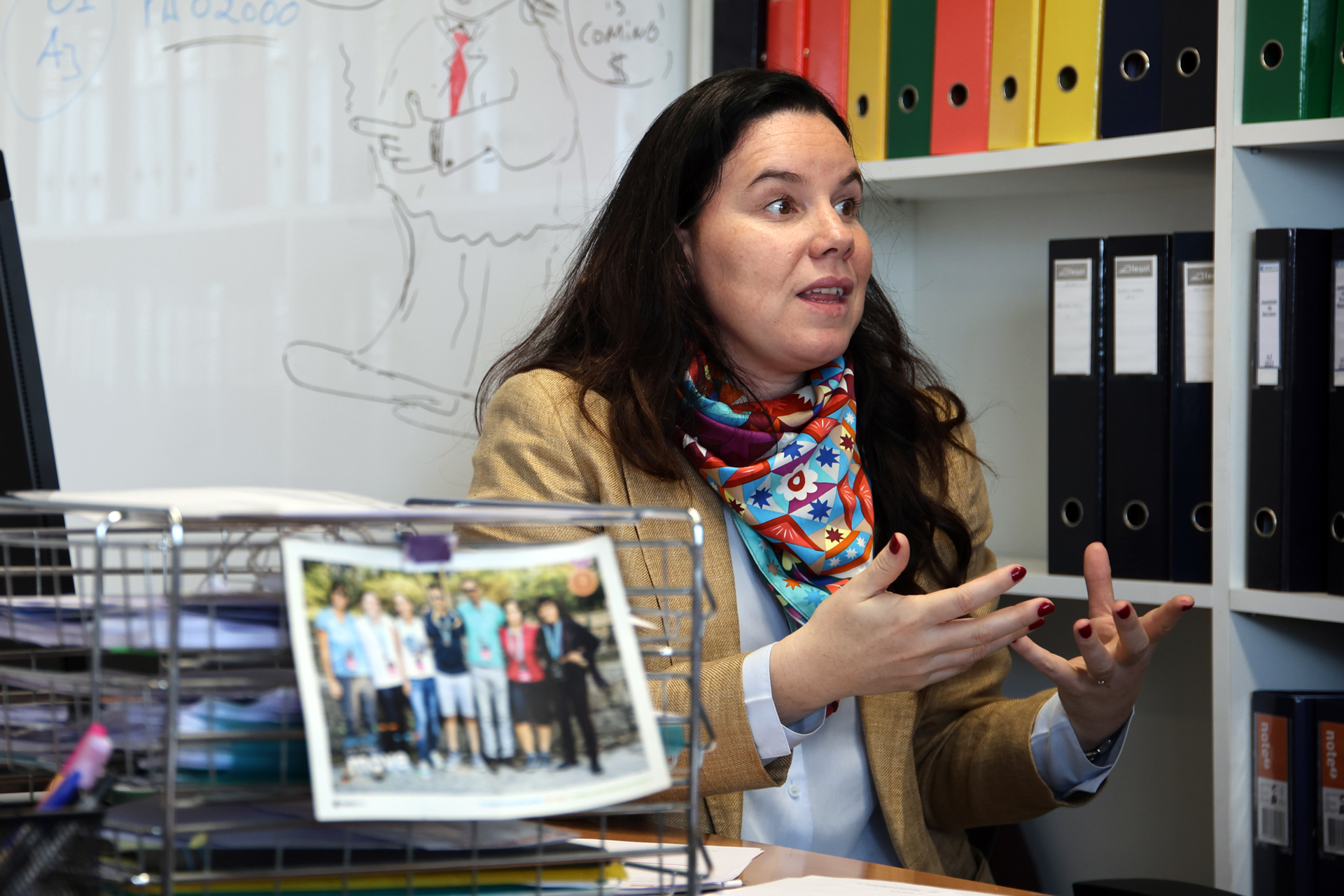
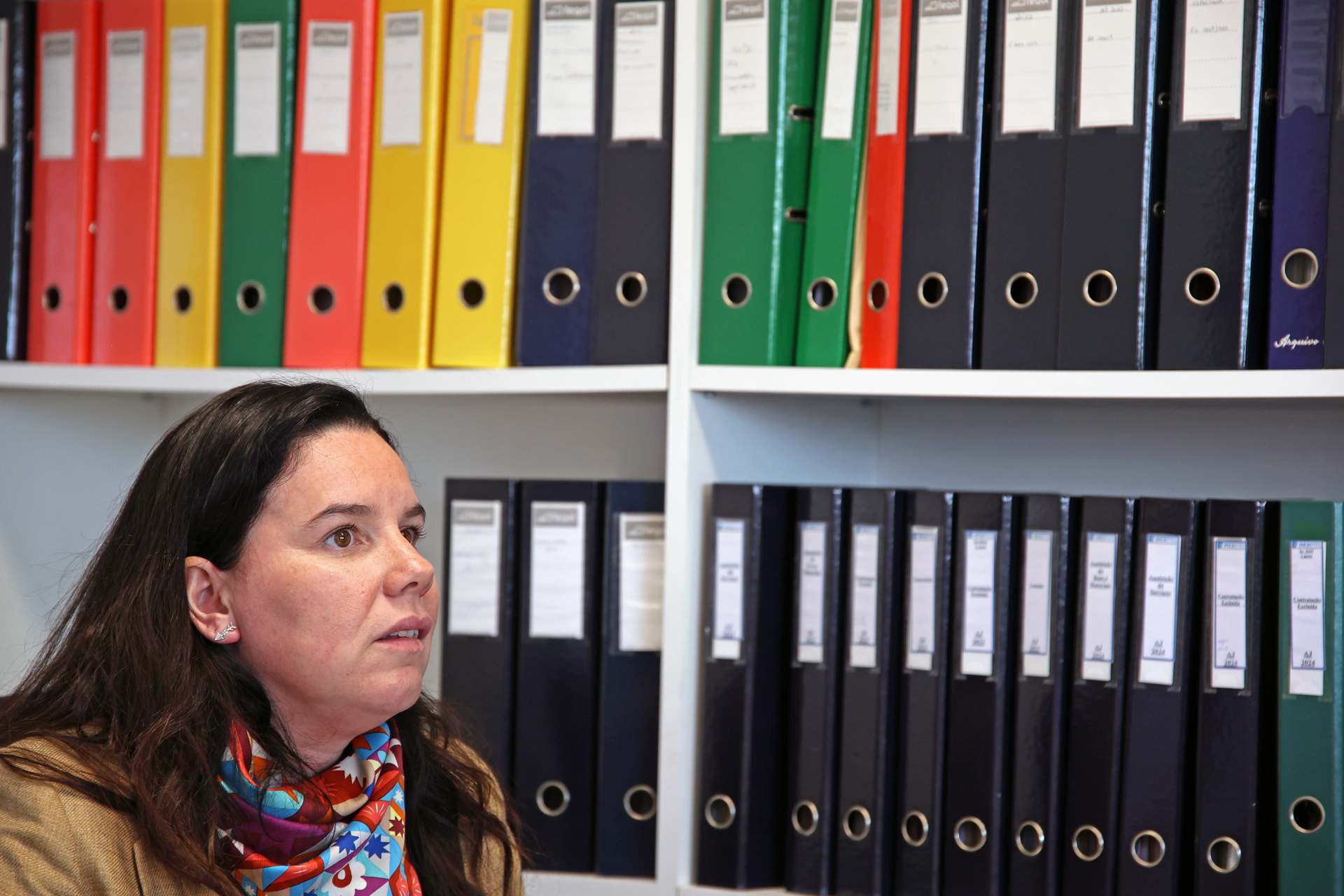
In a way, the walls that surround Rita Barros every day at INESC TEC end up telling the story. You walk into the glass-walled office flooded with light and, at the back, Rita works with a colourful tower behind her: the hundreds of archive folders hold much of what has been a decade spent ensuring the safest paths for INESC TEC’s technology to go further. On the opposite side of the room, the walls have gradually acquired colour thanks to paintings by her father and the other “gospel” she brought indoors: cinema. The posters of classics to “show the younger team members” the best that’s ever been shown on the silver screen also reflect the passing of time: INESC TEC has grown, and so has the Legal Support Service (AJ) team.
Rita has led the service for nearly five years; and what she really enjoys is no longer coming in halfway through the film – now she has “the full picture” of an institution she’s watched grow from the front row. “That’s what I enjoy most,” she mentioned. She understands how the “machine works”: how an idea is born, starts a journey, and knocks on AJ’s door for Rita and the team to break down the risks, define the best strategy or find in the market the missing piece.
It’s like we’re talking about a puzzle – and Rita likes having all the pieces. “In Law, I really enjoy the procedural processes, because I like understanding how everything fits together. But it’s only when you work in an institution like INESC TEC that you realise what you do has a real, tangible impact. Whether it’s opening a tender to buy components for a robot or handling a construction contract for an ocean basin that will become part of a centre of excellence. And the most rewarding part is that you then see it come to life.” Rita often saw it at showcases or follow-up visits: “I always like being there in those moments; witnessing things and thinking to myself ‘look, that’s what I purchased – and it actually makes a difference.’”
An arm, a boat, a disco ball
When Rita arrived, everything was different. She worked in a “very small office” as she took her first steps away from academia. She moved from lecture halls at the University of Minho, where she taught, to working in public procurement at INESC TEC. She quickly realised that, even within the familiar environment she found, everything would be different. “It was a funny feeling,” she said: she could finally see how what she explained in a classroom worked in real life.
“There’s also the notion that working in Law, in a firm or an institution, means being ready to face a bureaucratic monster. But I never felt that at INESC TEC. It’s different, because people explain what they want. You feel part of the process. Here, we try to simplify public procurement, because it’s always perceived as something huge, almost like a bureaucratic machine, very complicated. And we try to simplify it a bit, explain how a procedure unfolds, what’s needed – and then the ‘boring’ part and everything else stays with us,” she explained.
She still remembered her first “purchase”: a robotic arm. “Why do you need a robotic arm? What do you do with a robotic arm?” And they explained everything about it. “Realising that what I was doing had a concrete impact on research and, more broadly, on the institution’s strategy, really gave me a boost at the time.”
“Blimey, things are changing”
After that arm came many others – and even more “exotic” pieces. A better (and bigger) example: a vessel. “I never imagined I’d end up handling the purchase of a boat,” she said, smiling, referring to Mar Profundo, INESC TEC’s research vessel for testing maritime technologies. There was also a time she had to go shopping for a disco ball – not to turn offices into dance floors, but to send it to MASSIVE, INESC TEC’s virtual reality lab at the University of Trás-os-Montes and Alto Douro.
Between what’s needed for a research institute to operate day to day and the “more cryptic” requests, Rita holds a privileged position to sense an institution in constant growth. “Since I spent a long time in public procurement, you could always see a big jump from one year to the next. And I think the pace really picked up, especially after the pandemic.”
Everything is different from the early days, in the office that still had no laptops, which she shared with Vasco Rosa Dias – still connected to the service and now the institution’s Data Protection Officer – and Graça Barbosa, currently a member of the Board of Directors. That trio ended up shaping her early years at INESC TEC and guiding the approach she would take going forward. “[Graça] was the one who welcomed me and really passed on the importance of autonomy – being autonomous in our work. Even though we have guidance, we have our own space to act, to make suggestions and sometimes propose slightly out-of-the-box solutions.” In that office, she would hear discussions about the consortia INESC TEC was part of and watch the stack of service contracts grow year after year. “I started noticing it and thinking: ‘blimey, things are changing.’”
The Trindade moves to the sofa
Things were really changing. And to keep up, more “worker ants to keep the machine running” were needed. Rita now manages a team of six. The days always start the same way: with breakfast that doubles as a team meeting (the only moment of the day that feels like a routine). And if she can bring the film she watched the night before into the conversation, even better. There was a time when she would leave INESC TEC and still catch a screening at Cinema Trindade. Now, with a child at home, cinema looks different. The sofa is her go-to – with the help of a platform dedicated to European cinema, she manages to watch what “escapes” the more commercial circuits and split a film over several days. She put up posters of classics as a tribute to her favourite films, but also to bridge the gap with the younger members of the team – “we’ve got people in their thirties, but also in their twenties.”
Back in Rita Barros’s twenties, Porto had a stronger pull. “I think I really made the most of Porto and everything it had to offer at the right time. I loved downtown Porto when it was just starting to become lively. Now I can’t really go there anymore, it tires me out. I prefer other areas.” There’s one that will never tire her: at the Palácio de Cristal gardens she walks and holds on to old memories; the fact that it welcomes the Porto Book fair is also very important: she never misses the chance to go hunting for novels or dystopias – even better if they come with the Alfaguara label.
Books, films, legal codes and underlined pages, notebooks – she still keeps the notebook with her first notes about the service – covers upon covers: Rita has spent the last 10 years making sense of the stories that have landed on her desk and has always found a solution to reach the robotic arm, the vessel, the “cryptic” requests. It’s not yet clear which act this script is in, but everything seems to be heading towards a happy ending: “I really enjoy working here, I like the people – they can be a bit of a pain when needed – but it’s all part of it. And I see myself staying here, watching INESC TEC thrive and contributing to the Institute’s growth.”
 News, current topics, curiosities and so much more about INESC TEC and its community!
