


It is called ecoBOTs.PT – Robotics for Intelligent Precision Forestry and Viticulture, and of the 11 mini-agendas that INESC TEC has had approved under STEP, it secured the highest level of funding, totalling €2 million. The aim? To develop a new generation of robotic solutions for forestry and viticulture.
The project is led by Herculano and brings together, besides INESC TEC, nine further co-promoters: The Navigator Company, Altri, Sogrape, Fravizel, Tomix, Rocha, Strong Charon, ADVID and ADAI. ecoBOTs.PT thus unites some of the leading Portuguese manufacturers of agricultural and forestry equipment, benchmark producers in the forestry and wine sectors, scientific bodies and partners able to carry out validation in real-world settings.
The goal is to develop, industrialise and validate a modular, scalable and interoperable robotic ecosystem to automate critical operations in forestry and viticulture. To this end, the focus will be on integrating modular robotics, distributed artificial intelligence, multisensory semantic perception, autonomous navigation that is resilient to GNSS failures, decentralised energy with forest biomass valorisation, and autonomous wireless charging, promoting the democratisation of access to technology and contributing to environmental sustainability and carbon neutrality.
‘For truly autonomous robotics, recharging is a key element. Wireless charging, which transfers energy without direct electrical contact between the robot and a charging structure, will make it possible to recharge the robot without human intervention and without manual cable and plug connections exposed to dust, moisture and mud. This reduces the dependence on labour for support tasks and brings gains in practicality and operational independence,’ explains Pedro Pascoal, an INESC TEC researcher in the field of energy systems involved in the project.
INESC TEC is responsible for research and technological development in two scientific domains – robotics and power electronics – in a project that once again highlights the importance of the link between science and industry, and shows that doing science with impact means turning knowledge into solutions that reach the field and create value for society. ‘ecoBOTs.PT represents this path, bringing science and industry closer together to build the future of agricultural and forestry robotics in Portugal,’ explains INESC TEC researcher Filipe Neves dos Santos.
The Modular-E and Modular-X robotic platforms, already developed by INESC TEC, form the basis for a future phase of industrialisation and commercialisation. ‘Modular-E and Modular-X are highly mature technologies, already award-winning and demonstrated in agricultural, forestry and dual-use environments. They will be the basis for accelerating the arrival on the market of new national robotic solutions,’ says the researcher.
At the end of the project, besides the technological developments and their subsequent transfer to the market, the aim is to address a series of challenges facing these sectors, first and foremost labour shortages and the need for greater efficiency and sustainability in forestry and wine-growing activities.
‘From a societal point of view, ecoBOTs.PT will help to reduce workers’ exposure to repetitive or physically demanding operations in the forestry and wine-growing sectors,’ adds the researcher, who is also a lecturer at FEUP, stressing that ‘this project will also promote the technological modernisation of the primary sector, the creation of skilled jobs in low-density areas and the attraction of new generations to more digital, safe and sustainable agricultural and forestry activities’.
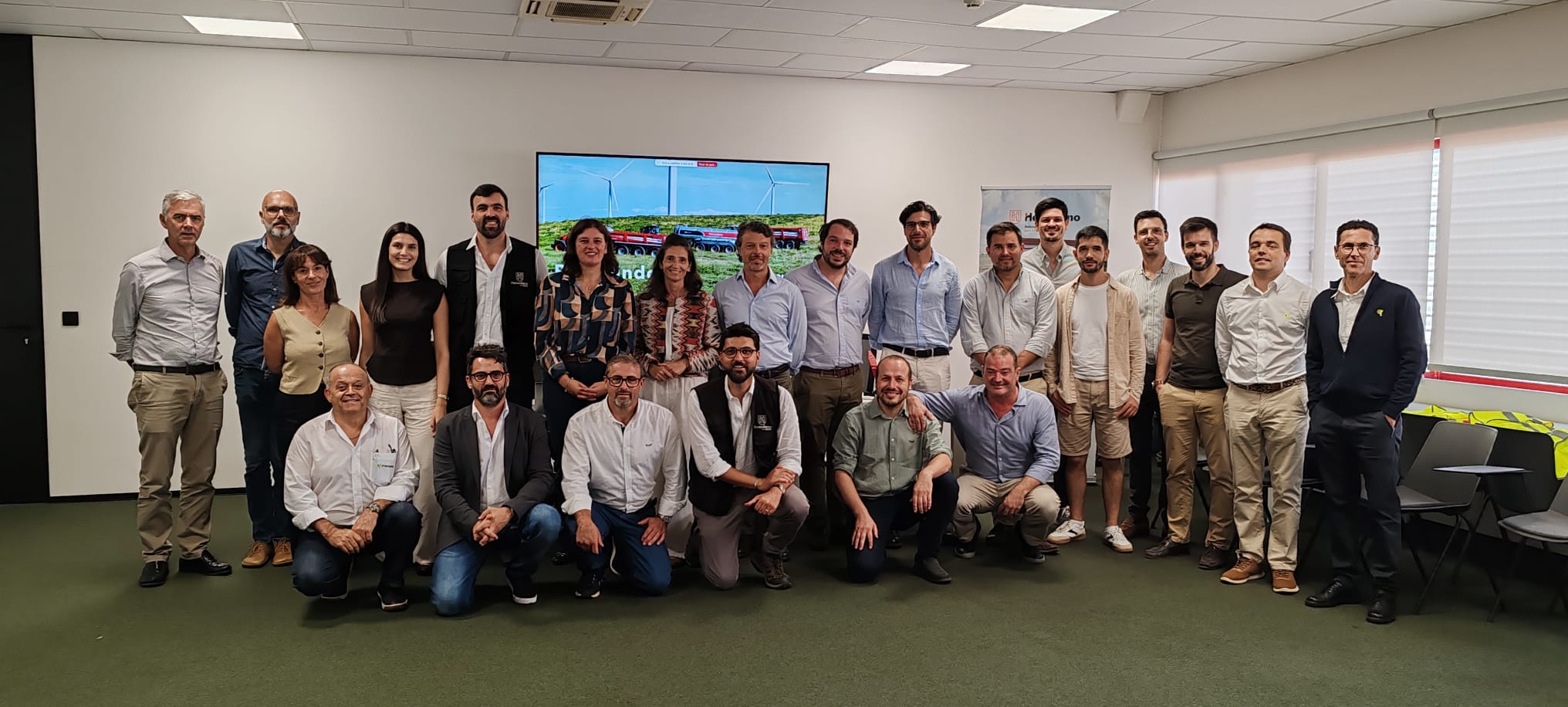
The official kick-off of ecoBOTs.PT took place on 15 September at Herculano’s premises, where the organisations involved in the project met.
Disclaimer: This article was translated by Claude.
 News, current topics, curiosities and so much more about INESC TEC and its community!
