


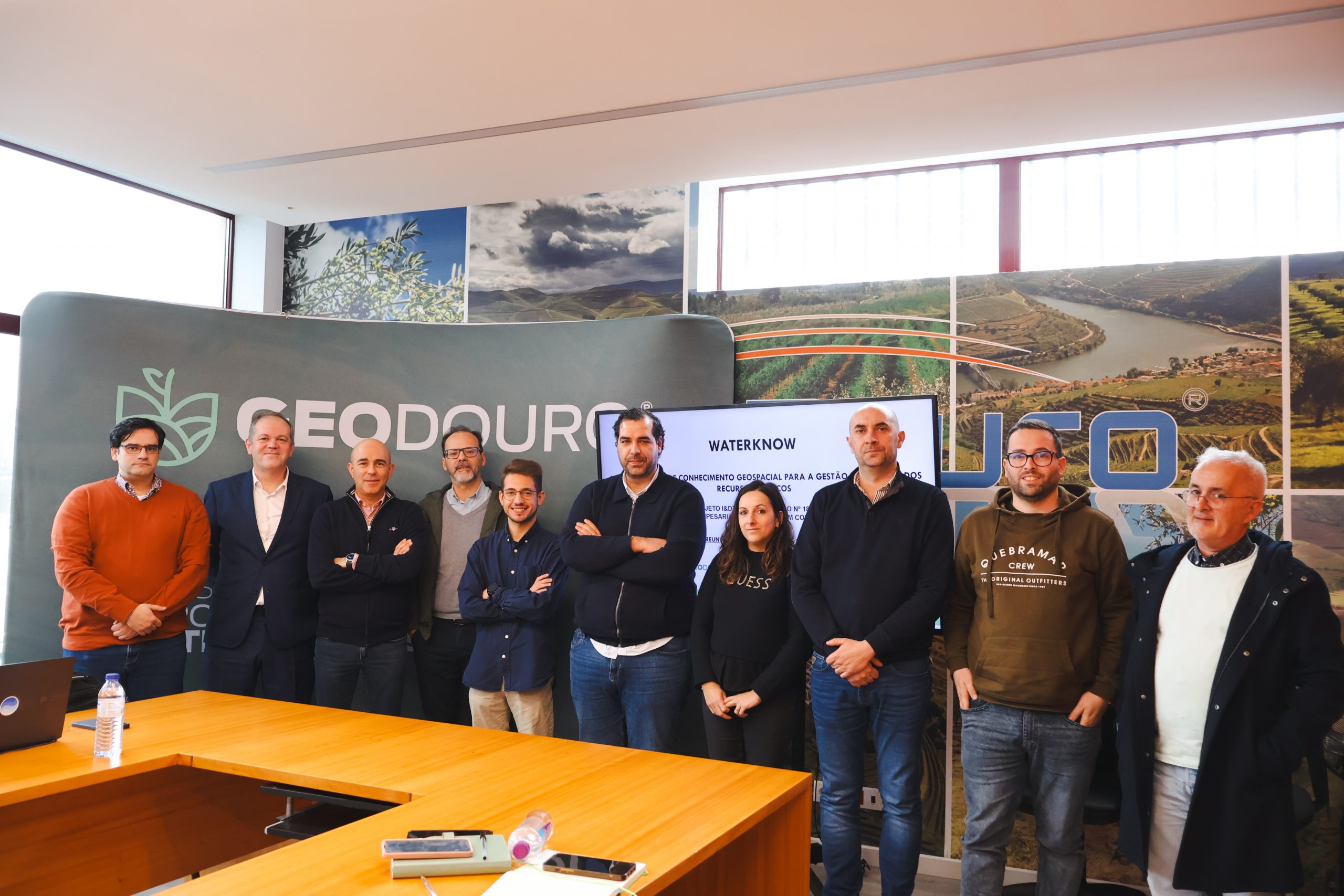
Extreme scenarios are becoming increasingly frequent, with ever more devastating consequences for populations and the environment. Persisting droughts and sudden, uncontrollable floods have been rising in both frequency and intensity. This is where the WATERKNOW project – Geospatial Knowledge Infrastructure for Water Resources Management – comes in. Led by GEODOURO, INESC TEC and UTAD (CITAB), the project is “developing a Geospatial Knowledge Infrastructure (GKI) oriented towards the intelligent management of water resources, with a focus on prevention and response to drought phenomena and other critical water-related events,” explained Lino Oliveira, one of the INESC TEC researchers involved in the project.
Imagine, for example, a hot summer in which Northern Portugal faces a severe drought, with river flow levels far below normal. The agricultural sector and municipalities depend on water from rivers and reservoirs for consumption, irrigation and industry. Without information, decision-making can become difficult.
“By combining advanced geospatial technologies with data analytics supported by generative Artificial Intelligence (GenAI), WATERKNOW will provide short-term hydrological forecasts and medium- to long-term climate scenarios, essential tools for proactive decision-making and more robust strategic planning,” the researcher explained.
In practice, this means that in such a scenario, using WATERKNOW, forecasting models would already have predicted reduced river flows, enabling early planning; medium- and long-term climate scenarios would indicate that the drought could persist, helping define water allocation and rationing strategies; and integrated data from sensors and large language models would enable automatic alerts for municipalities, farmers and dam operators.
The WATERKNOW platform will provide information to support future management and planning of water resources across several river basins in Northern Portugal, namely Sabor, Tâmega, Paiva, Ave and Cávado – all of them with diverse climatic conditions and differentiated projections for the coming decades, serving as case studies. The goal is to extend the system to other contexts
According to Lino Oliveira, “the implementation of a GKI for the intelligent management of water resources will benefit significantly from the integration of hydrological models with climate scenarios. This approach will enable more scientifically informed decision-making, helping to mitigate the impact of climate change and promote the sustainability of water resources.”
The initiative reflects the digitalisation of the water sector, promoting integrated, data-driven platforms for increasingly predictive and automated management, aligned with Portugal’s National Water Management Strategy (ENGA) in terms of water efficiency, climate adaptation and sustainable water availability.
With an investment of more than €450K and financial support from the European Union, the project aims to implement two pilots: one for the public sector and another dedicated to agricultural production, which will provide an important contribution to intelligent water resource management in a context of significant climate change.
WATERKNOW runs until June 2028.
 News, current topics, curiosities and so much more about INESC TEC and its community!
