


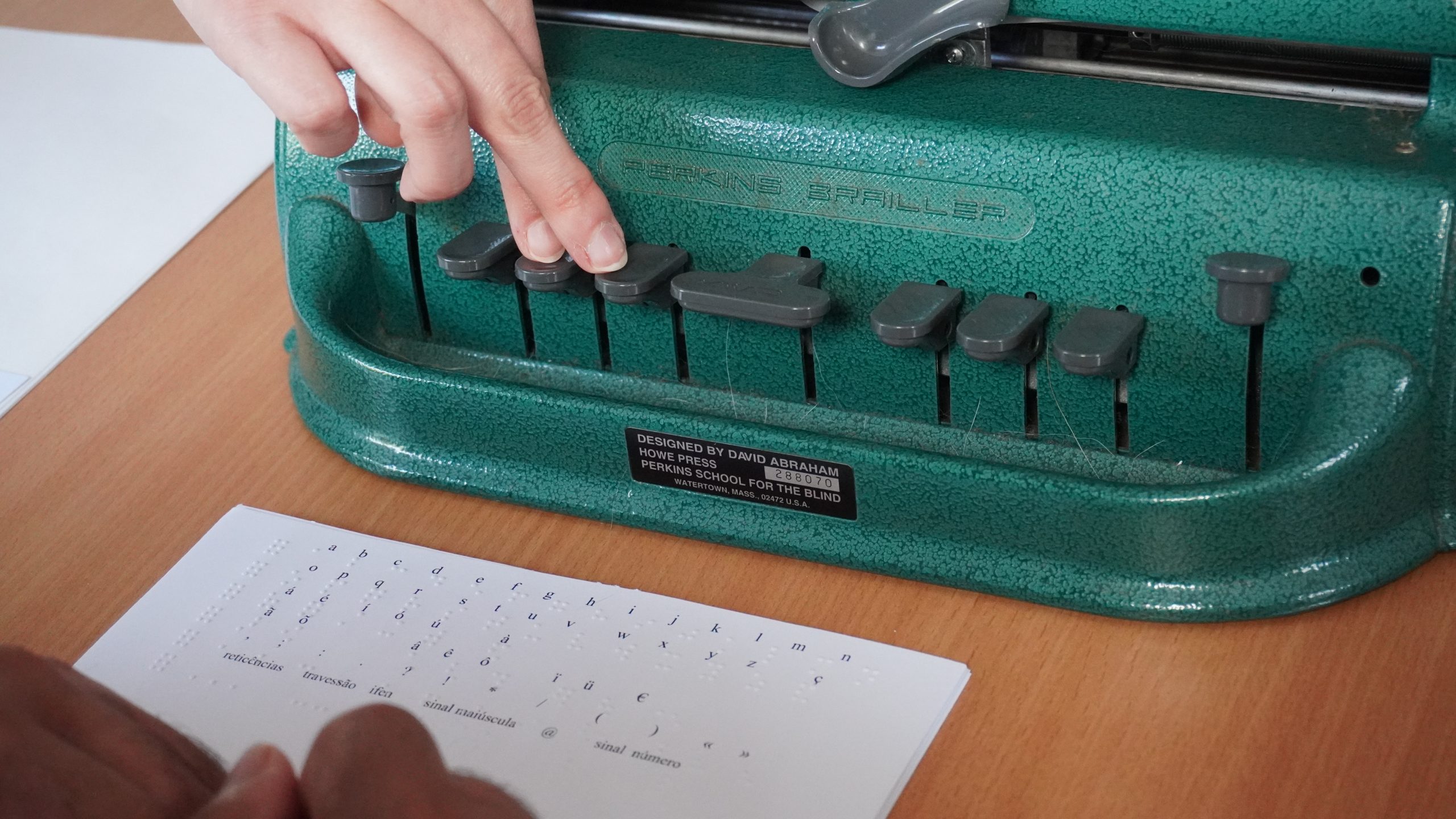
Vieses Inconscientes: reconhecer enviesamentos e promover inclusão was the title of a workshop provided by the Associação Portuguesa para a Diversidade e Inclusão (APPDI) for the INESC TEC community. Held as part of the recently established partnership between the Institute and APPDI, the workshop aimed to encourage reflection and raise awareness of diversity, equity and inclusion in organisational settings.
Organised by INESC TEC’s Diversity and Inclusion Committee, the workshop focused on the concept of unconscious bias, defined as automatic and involuntary associations that influence how we perceive people, situations and decisions, often shaping behaviours and interactions without us realising it.
Throughout the session, participants explored topics like Diversity, Inclusion, Belonging and Equity (DIBE), intersectionality – the way different aspects of a person’s identity overlap and shape how they are perceived and treated – the different types of unconscious bias (ableism and affinity bias) and their impact in the workplace, as well as practical strategies to mitigate them.
The session also included a discussion on microaggressions, hate speech and the role everyone can play as an ally within their teams. Participants took part in a series of group activities designed to explore their reactions to several statements intended to reveal unconscious biases.
“In an organisation such as INESC TEC, which brings together people from more than 60 nationalities, welcoming multicultural teams, diversity should be regarded as a strategic asset. During the session, Carolina Neto from APPDI showed us that multicultural teams bring, for example, a broader range of perspectives, but that we also need to understand how to create the conditions for everyone to thrive in a truly inclusive environment,” explained Ana Filipa Sequeira, chair of INESC TEC’s Diversity and Inclusion Committee.
The organisational benefits of diversity and inclusion include greater innovation and creativity, a more collaborative organisational culture, higher levels of employee satisfaction and motivation, improved reputation and credibility, more talent attraction and retention, better mental health, stronger employee performance, improved financial results and greater problem-solving capacity.
Naturally, implementing an organisational strategy based on the principles of diversity and inclusion also presents challenges. The first is the limited recognition of the importance of these issues – something INESC TEC has been working to address, formally since 2021 through the creation of its Diversity and Inclusion Committee. Other challenges include team management, respecting and embracing differences, and the simple fact that human beings are not naturally inclusive.
This is one of the concerns highlighted by Graça Barbosa, the Board Member responsible for Diversity and Inclusion at INESC TEC. She believes unconscious bias has a particularly significant impact on recruitment and selection processes, but also on career progression opportunities, nominations to leadership positions, and the composition of event panels, among other areas.
“Ideally, everyone serving on recruitment panels should receive training on this topic,” said Graça Barbosa, adding that it should be a key element to leadership development programmes.
In this sense, INESC TEC has continued to invest in awareness-raising initiatives and training for the internal community, including this workshop held on 17 June, as part of an ongoing commitment to fostering a diverse and inclusive organisational culture.
 News, current topics, curiosities and so much more about INESC TEC and its community!
