


Known as HARPA (Human-centred Approaches to Responsible Privacy for and with AI), the network brings together interdisciplinary scientific and technological research to address the urgent need to protect privacy in an era dominated by Artificial Intelligence (AI).
João Vilela, INESC TEC researcher in computing and a professor at the Faculty of Sciences of the University of Porto, has been chosen as one of Portugal’s two representatives on the HARPA Management Committee, joining a group of 27 transnational and cross-sectoral partners.
According to João Vilela, “the COST Action HARPA promotes European cooperation on an urgent issue: the use of AI in a way that respects privacy. This appointment reflects international collaboration and the work my team has been carrying out in this area.” The action will also organise training schools, networking events and grants for short-term scientific missions, among other initiatives. “As Portugal’s representative on the Management Committee, I will promote these opportunities and encourage the national community to get involved in the network’s activities,” said the researcher.

Although AI offers significant potential to boost productivity and innovation, it also increases privacy risks by processing personal data on a large scale, often without transparency or consent. The challenges are numerous, including fragmented knowledge, cross-border regulatory complexity, limited capacity and inclusion, and gaps in education and awareness. To address these issues, HARPA brings together experts in computing, law, psychology and human-computer interaction with a dual mission: to mitigate the privacy risks arising from the use of AI and to harness AI itself to develop usable, human-centred privacy solutions.
Funded by the European organisation COST Association (European Cooperation in Science and Technology), COST Action HARPA (CA25153) aims to develop a conceptual framework for human-centred privacy, harmonise methodologies and analyse recurring failures in the use of AI. At the same time, it seeks to establish an open repository, support the training of early-career researchers, raise awareness and turn ethical principles into practical solutions through interdisciplinary collaboration.
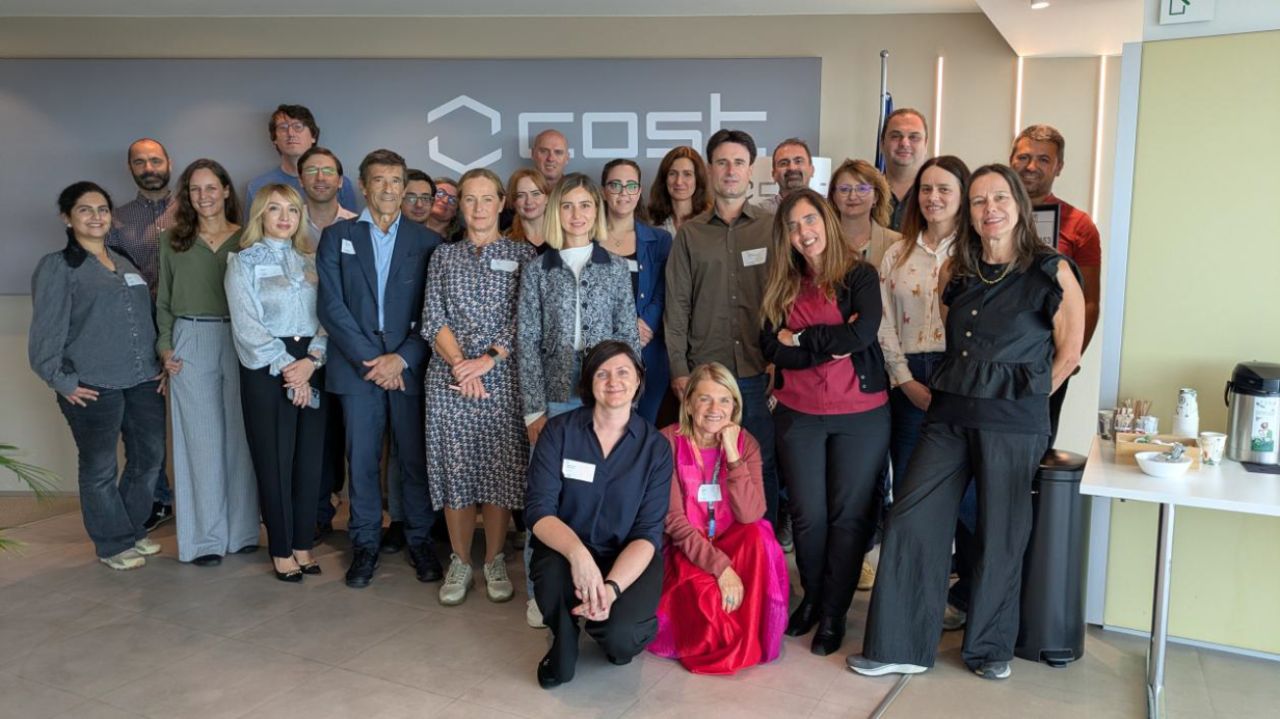
The network’s kick-off meeting took place in Brussels on 11 September. The project will run for four years, with approximately €600K in funding for cooperation and networking activities.
 News, current topics, curiosities and so much more about INESC TEC and its community!
