


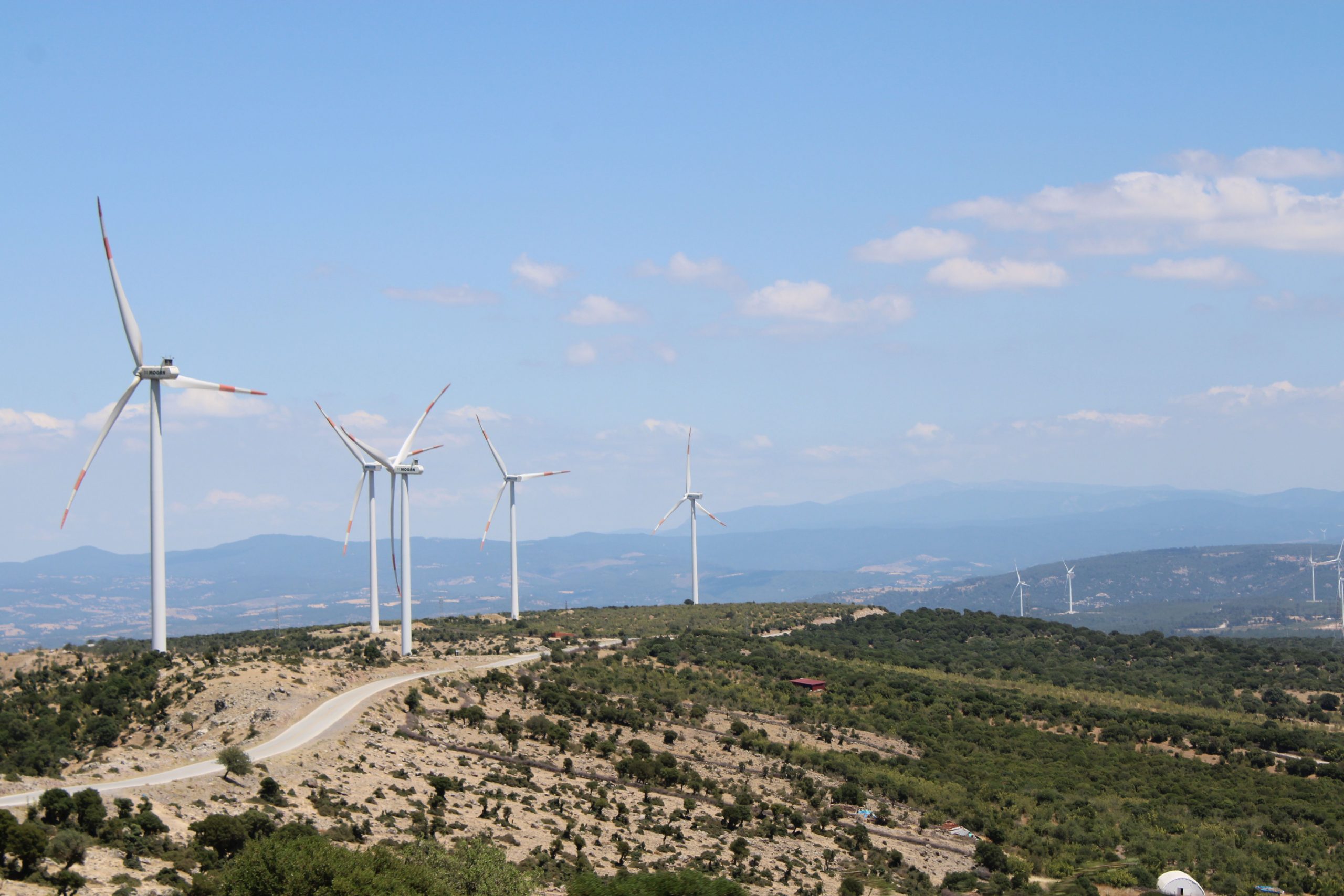
FS.AI4WIND (Fibersail Advanced Intelligence for WIND Energy) is a €1.26M Portugal 2030 project that brings together INESC TEC and Fibersail to develop an intelligent real-time monitoring platform for wind turbine blades, based on sensing technologies and Artificial Intelligence (AI) algorithms.
Led by Fibersail, the project brings together INESC TEC as the scientific partner, represented by a multidisciplinary team with expertise in wireless communications, Artificial Intelligence (AI), and Industrial Engineering and Management.
FS.AI4WIND will begin in July 2026 and run for 36 months; the project is expected to have a significant economic, societal and public policy impact.
The platform is seeks to reduce operation and maintenance costs while minimising unplanned downtime at wind farms – while extending the service life of wind energy assets, increasing energy production, creating new business models, and boosting the export and internationalisation potential of the technologies developed.
By promoting a more efficient and longer-lasting use of wind power infrastructures, the project will also contribute to sustainability goals, including the energy transition, carbon neutrality and the circular economy. It’ll also focus on extending the service life of wind turbine blades, reducing the environmental impact associated with component replacement (especially in offshore wind farms) and improving European technological autonomy in the energy sector.
INESC TEC will lead the research activities focused on structural damage detection in wind turbine blades using AI methodologies, as well as the design of an intelligent communications solution capable of leveraging multiple access technologies (satellite, cellular and LoRaWAN) together with generative AI for semantic data encoding. This approach will enable ultra-efficient and reliable data transmission between edge systems deployed in offshore wind farms and cloud-based processing infrastructures.
The Institute’s researchers will also be responsible for developing and validating laboratory prototypes of AI models for early damage detection, data communication modules and decision-support interfaces. The team will further contribute to the integration and testing of the solutions in operational environments, assessing the system’s performance under real-world conditions using real data. The project also includes the publication of scientific papers and participation in international conferences.
From a scientific and technological POV, the project is expected to deliver several key outcomes, including the development of the new monitoring platform, new AI models capable of detecting internal damage at an early stage and overcoming current limitations, decision-support tools for predictive maintenance aimed at extending the service life of wind turbines, reduced hardware costs through optimised sensing and edge processing, and new multi-technology communications solutions.
 News, current topics, curiosities and so much more about INESC TEC and its community!
