


A total of 11 mini-agendas have recently been approved across several of INESC TEC’s research domains, namely Power & Energy, Robotics, Artificial Intelligence (AI), Communications, Computer Science and Engineering, and Systems Engineering and Management. With total funding of almost €9M, INESC TEC, together with a range of Portuguese companies, aims to transform the national business landscape through new technological solutions.
Most of the approved mini-agendas stem from internal efforts to improve the competitiveness of Portuguese companies by leveraging the multidisciplinary expertise that the Institute has to offer.
Mini-agendas with funding above €1M
This is the case of the ecoBOTs.PT – Robótica para Floresta e Viticultura de Precisão Inteligente mini-agenda, which has secured the highest level of funding of all the approved initiatives, exceeding €2M – and led by Herculano-Alfaias Agrícolas.
In addition to Herculano and INESC TEC, the agenda brings together 10 further co-promoters: Navigator Forest Portugal, Altri Florestal, Sogrape Vinhos, Fravizel, Tomix, Pulverizadores Rocha, Strong Charon, ADVID and ADAI, bringing together some of Portugal’s leading agricultural and forestry equipment manufacturers, reference producers from the forestry and wine sectors, scientific organisations and partners with the capacity to validate solutions in real-world environments. Scheduled to start on 1 June, the project aims to develop, industrialise and validate a modular, scalable and interoperable robotic ecosystem to automate critical operations in forestry and precision viticulture. The endeavour focuses on integrating modular robotics, distributed AI, multi-sensor semantic perception, autonomous navigation resilient to GNSS failures, and decentralised energy systems with forest biomass valorisation, promoting wider access to technology while supporting environmental sustainability through carbon neutrality.
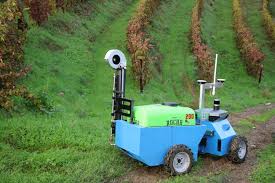
“The project builds on robotic solutions already developed by INESC TEC – namely the Modular-E and Modular-X platforms -, award-winning technologies that have been demonstrated in agricultural, forestry and dual-use environments. Building on this foundation, the mini-agenda aims to accelerate the market entry of new national robotic solutions, combining modular robotics, AI, multi-sensor perception, autonomous navigation resilient to GNSS failures, multi-robot coordination and Robotics-as-a-Service models,” explained INESC TEC researcher Filipe Neves dos Santos.
Through two of its scientific domains – Robotics and Power & Energy Systems -INESC TEC will play a central role in the scientific and technological development of this mini-agenda.
“From a societal perspective, ecoBOTs.PT will help reduce workers’ exposure to dangerous, repetitive or physically demanding operations in the forestry and wine sectors,” added the researcher, who is also a lecturer at FEUP. He further noted that “this mini-agenda will also promote the technological modernisation of the primary sector, the creation of skilled jobs in low-density regions, and attract new generations to more digital, safer and more sustainable agricultural and forestry activities.”
The RAISE – Retail AI for Scalability and Excellence mini-agenda is led by INESC TEC spin-off LTPLabs, with total funding of more than €1.1M. In addition to INESC TEC and LTPLabs, the agenda also includes Associação Laboratório Colaborativo em Transformação Digital, ADYTA, Datacentric, MC Shared Services, the Polytechnic Institute of Bragança and the University of Porto as co-promoters. The project’s main objective is to develop and validate advanced Artificial Intelligence-based technological solutions to optimise the entire retail value chain, while maintaining an architecture flexible enough to be applied to other sectors.
RAISE addresses relevant societal challenges through the application of advanced AI technologies, with the potential to improve customer experience, support employees and accelerate the digital transformation of organisations. The solutions developed will contribute to more efficient, personalised and secure retail environments, using intelligent systems capable of optimising operations, anticipating risks and supporting real-time decision-making.
The project also foresees the development of tools to support workers, including accident prevention mechanisms and personalised assistance solutions, contributing to improved working conditions and greater organisational well-being. At the same time, the technological modernisation promoted by the project strengthens companies’ digital capabilities and encourages the adoption of more innovative and sustainable practices across different sectors.
From an economic perspective, RAISE seeks to improve business competitiveness through the development of innovative, high-value technological solutions for the retail sector. The integration of technologies such as digital twins, genAI, machine learning and computer vision will optimise logistics, operational and commercial processes, driving efficiency gains, cost reductions and increased responsiveness to market demands.
The project also presents strong internationalisation potential, with plans to expand into new markets and increase the international business volume of the partners involved. In addition, the creation of knowledge-intensive services and the multiplier effect across suppliers, partners and value chains will contribute to strengthening an economy increasingly driven by innovation and technology.
Also receiving more than €1M in funding is the AtlantHAPS (Plataforma de Alta Altitude para Observação Atlântica) mini-agenda, another example of combining INESC TEC’s internal scientific expertise, this time in the fields of Communications and Robotics. Led by UAVision – Engenharia de Sistemas, the project also includes Optimal Structural Solutions, Moldit, Instituto de Comunicações, INESC INOV, INEGI and the University of the Azores as partners.
The main objective of AtlantHAPS is to design, develop and validate a new generation of national High-Altitude Platform Systems (HAPS) that are modular, energy-efficient and ready for industrial production, capable of operating continuously at altitudes of around 20 km. Through this, the project seeks to create cost-effective and highly persistent solutions for communications, remote observation and environmental monitoring, with direct applications in maritime surveillance, climate change mitigation and emergency response scenarios. To achieve this, the initiative combines a multidisciplinary R&D effort (aerodynamics, structures, propulsion and electronics) with industrial modernisation, aiming to test prototypes in real-world environments, achieve high technology readiness levels and position the consortium in the global market for high-altitude unmanned aircraft.
INESC TEC will lead the development of high-throughput communications and the study and development of a modular multi-mission payload, while also ensuring the processing and validation of data collected during flight.
Mini-agendas with contributions in the Power & Energy domain
The PowerUP – nova solução de carregamento elétrico de alta performance para veículos pesados agenda is another example of INESC TEC’s multidisciplinary expertise, combining competencies in Power & Energy systems, Industrial Engineering and Management, and Human-centred Computing. Led by i-charging, the consortium also includes Mizuru Tech, Petrogal and Galp Energia.
PowerUP aims to develop a new high-power electric charging solution for heavy-duty vehicles based on the Megawatt Charging System (MCS) concept, significantly reducing charging times while ensuring high levels of safety, efficiency and interoperability. The project focuses on a modular and scalable architecture, intelligent integration with the power grid through advanced energy management systems, storage and renewable energy sources, as well as the application of AI for predictive maintenance. It also includes the development of augmented reality solutions to support maintenance operations and advanced testing and industrialisation systems for MCS chargers.
Scheduled to begin on 1 June 2026, this mini-agenda will position INESC TEC as a key partner in the development of the project’s intelligent and digital components, contributing to the efficient integration of MCS chargers into the power grid and the optimisation of their operation. The Institute will develop models and tools to analyse the impact of high-power chargers on the grid, as well as advanced Energy Management Systems (EMS) capable of efficiently and sustainably coordinating chargers, storage systems and renewable generation.

“INESC TEC will also contribute to the development of AI and predictive maintenance algorithms, enabling failure anticipation, optimisation of equipment operation and increased infrastructure availability. We will also participate in the creation of monitoring and maintenance support platforms, including augmented reality features, and in the technical and scientific validation of the demonstrator in a real-world environment,” explained INESC TEC researchers João Peças Lopes, Fernando Cassola and António Almeida.
Still within this domain, but more specifically in the field of green hydrogen, is the H2SYMBIOTIC – Multi-Sector Hydrogen Integration for Decarbonisation and Circularity mini-agenda. Led by WinPower, the consortium includes 11 co-promoters: WinPower, FEUP, NET4CO2, HyLab, Built CoLAB, INESC TEC, SYSADVANCE, VentilAQUA, Águas e Energia do Porto, Fado Energy and Grama Maiúscula.
Scheduled to start on 1 July 2026, this mini-agenda aims to develop and demonstrate integrated green hydrogen hubs, combining production, storage, use and by-product valorisation in industrial and urban contexts. The project focuses on multi-sector hydrogen integration, water reuse, the valorisation of oxygen, heat, biogas and nutrients, and advanced digital tools for the planning, operation and optimisation of these systems.
“INESC TEC will play a central role in developing the project’s digital tools, particularly FlexPlanH2 for day-ahead operational planning of hydrogen hubs, and FlexTrackH2 for real-time optimisation. It will also contribute to the digital twin of the Freixo wastewater treatment plant, the digital architecture of the solutions, and the functional and techno-economic validation of the demonstrators in Sines and at the Freixo facility,” explained Joel Soares. “From a societal perspective, the project contributes to the decarbonisation of sectors that are difficult to electrify, to resource valorisation in wastewater treatment plants, and to more circular models for managing energy, water, carbon and nutrients. Economically, it will create replicable hydrogen hub solutions with national and international commercialisation potential, including digital tools and modular equipment. Scientifically, it will advance optimisation models, digital twins, forecasting and real-time control applied to complex multi-vector systems integrating electricity, hydrogen, oxygen, heat, biogas and nutrients,” concluded the researcher.
The IntelliCer – Towards Neutral Carbon Ceramics: Intelligent Energy and Resource Management Ecosystem for the Ceramics Industry mini-agenda is led by Primus Ceramics and includes 10 co-promoters. In addition to INESC TEC and the lead organisation, the project involves SACMI Ibérica, Adelino Duarte da Mota, VIDRES Portugal, MOLCER, RCSoft, CTCV and the University of Aveiro.
IntelliCer aims to support the transformation of the Portuguese ceramics industry, particularly the single-fired ceramic tile subsector, towards carbon neutrality. To this end, an intelligent energy and resource management ecosystem will be developed, combining energy efficiency solutions, multi-vector management, electrification, the use of renewable gases, energy storage, secondary raw material valorisation and the production of ceramics with a lower carbon footprint.
“INESC TEC will be responsible for developing IntelliCer’s intelligent energy management system. We will also lead the solution architecture, forecasting and multi-objective optimisation algorithms, real-time control and integration with industrial systems. The solution will enable the coordination of energy consumption, renewable generation, storage, market prices and operational constraints, supporting energy management decisions within industrial facilities,” said Joel Soares.
Contributing to national robotics
In addition to the ecoBOTs.PT and AtlantHAPS mini-agendas, INESC TEC’s robotics expertise is involved in other initiatives. One example is LOGIX – Intelligent Logistics Revolution, another multidisciplinary project where Industrial Engineering and Management also play a significant role. Led by Veryfex, the project includes Antípoda, Prozis.Tech, Nixfuste Nova and Roboplan as partners. The objective is to develop, integrate and validate a next-generation logistics ecosystem designed to transform automated intralogistics in real-world environments.
“The project’s ambition focuses on the development of seven disruptive and interdependent solutions which, together, will form an intelligent, scalable, resilient and energy-optimised logistics system. INESC TEC will be responsible for developing algorithms for the intelligent management of heterogeneous fleets, intelligent robotic picking systems, humanoid robots for returns sorting, and the integration of computer vision solutions,” explained Roberto Magalhães Silva.
This mini-agenda aims to transform the logistics sector, particularly e-commerce, through the development of disruptive intelligent automation solutions.
“The scientific contributions include advances in robotics and AI. INESC TEC will play a fundamental role in developing multi-robot coordination algorithms and intelligent energy management systems that will contribute to environmental sustainability. The project will also innovate in the integration of cyber-physical technologies and digital twins, fostering the evolution of Industry 4.0,” added Roberto Magalhães Silva.
The MACH30 – Machining, AI, Control and High-performance mini-agenda, another initiative that combines several of INESC TEC’s competencies in Robotics and Enterprise Systems, is led by PALBIT. Co-promoters include West Horse Powertrain Portugal, STREAk, CADFLOW, QUANTAL, INTERMOLDE, ANADIRROBOTIC, IBERONORMA, DATAIONT, BARBOSA WORLD BRASS, NOBRAC, INEGI, Instituto Pedro Nunes, the University of Aveiro, the University of Coimbra, FEUP, CENTIMFE and Associação POOL-NET.
This project seeks to drive the CNC machining sector through Industry 4.0 and advanced manufacturing. The consortium aims to address three central challenges facing manufacturing industries: the poor machinability of advanced alloys; the need for increased productivity and sustainability; and limitations imposed by proprietary digital ecosystems.
“INESC TEC will play a role in integrating robots and CNC machines into hybrid cells, developing advanced CAM (computer-aided manufacturing) strategies, and contributing to the adaptive clamping system responsible for ensuring the precision and stability of machining operations,” explained Luís Freitas Rocha.
The project will contribute to greater sustainability and the green transition by promoting the replacement of critical and polluting materials (such as lead in brass alloys) with more environmentally friendly and efficient solutions. It will also advance several scientific and technological fields, particularly through the development of new ceramic substrates and nano-structured PVD-HiPIMS coatings. These advances may have an impact across multiple industrial sectors, from automotive to aerospace. The project will also deepen research and development in manufacturing processes and advance the fields of digitalisation and AI.
Artificial Intelligence serving Portuguese companies
INESC TEC is involved in two mini-agendas where Artificial Intelligence expertise represents the largest component. Both have budgets exceeding €200K and are named RAICC and SmartVEG.
The RAICC (Responsible AI Call Center) mini-agenda is led by DAREDATA and includes TEKPRIVACY, NOS Comunicações, NOS Inovação, the University of Coimbra, Associação Fraunhofer Portugal Research, the Polytechnic Institute of Engineering of Porto, the University of Porto (FEUP and FCUP), NOVA University Lisbon and BrightFactory as partners.
The project aims to develop a range of innovative products and services based on responsible AI, including a Gen-OS (Generative AI Agents Operating System), new text-based GenAI tools for technically complex scenarios, and solutions that ensure the responsible creation and use of AI by rigorously assessing new models or agents while safeguarding data privacy.
INESC TEC will contribute to the project in the areas of responsible AI and narrative extraction and understanding. The work will focus on the explainability of multimodal predictive models and on creating functionalities capable of extracting, categorising and abstractively summarising narratives, supporting operators in information analysis and decision-making.
The SmartVEG (Solução Alimentar Inteligente com base em vegetação) mini-agenda is led by Sumol Compal Group and aims to drive the transformation of Portugal’s agro-food sector by promoting innovation, sustainability and digitalisation throughout the value chain. In addition to INESC TEC and Sumol Compal, the agenda includes Sense Test, ENESII Associação COLAB4Food, TAGUSVALLEY, the University of Aveiro, the University of Porto, the University of Minho, Associação Laboratório Colaborativo em Transformação Digital and the National Institute for Agrarian and Veterinary Research.
The composition of this consortium brings together complementary expertise in food engineering, biotechnology, nutrition, sensory science, data science and AI. This combination enables a multidisciplinary approach capable of integrating scientific research, technological development and productive innovation in an efficient and coordinated manner.
“The project’s central objective is to create an integrated food ecosystem capable of generating differentiated, nutritionally optimised and environmentally sustainable products while strengthening industrial efficiency and enhancing local resources. To achieve this objective, SmartVEG is organised around three interdependent areas of action: the valorisation of differentiated raw materials, the development of innovative food products, and the implementation of AI-based digital solutions,” explained Alípio Jorge, who coordinates the Artificial Intelligence domain at INESC TEC.
According to the researcher, who is also a lecturer at the Faculty of Sciences of the University of Porto (FCUP), INESC TEC’s role is associated with the project’s digital component and the development of AI tools. “These tools focus on optimising production processes, real-time quality control and the creation of predictive models of consumer behaviour,” he explained.
By combining technological innovation, the valorisation of local resources and digitalisation, SmartVEG positions itself as an agent of green and digital transition of the Portuguese agro-food sector, promoting sustainability, competitiveness, internationalisation and food literacy. The project meets the priorities of Portugal 2030, the Recovery and Resilience Plan (PRR) and European innovation and sustainability policies, while strengthening the sector’s capacity address the demands of increasingly conscious consumers and the challenges of international markets.
 News, current topics, curiosities and so much more about INESC TEC and its community!
